Decimals
Ages 9–11 · 13 lessons · Math
Build a strong foundation in tenths and hundredths, starting with visual models and place value
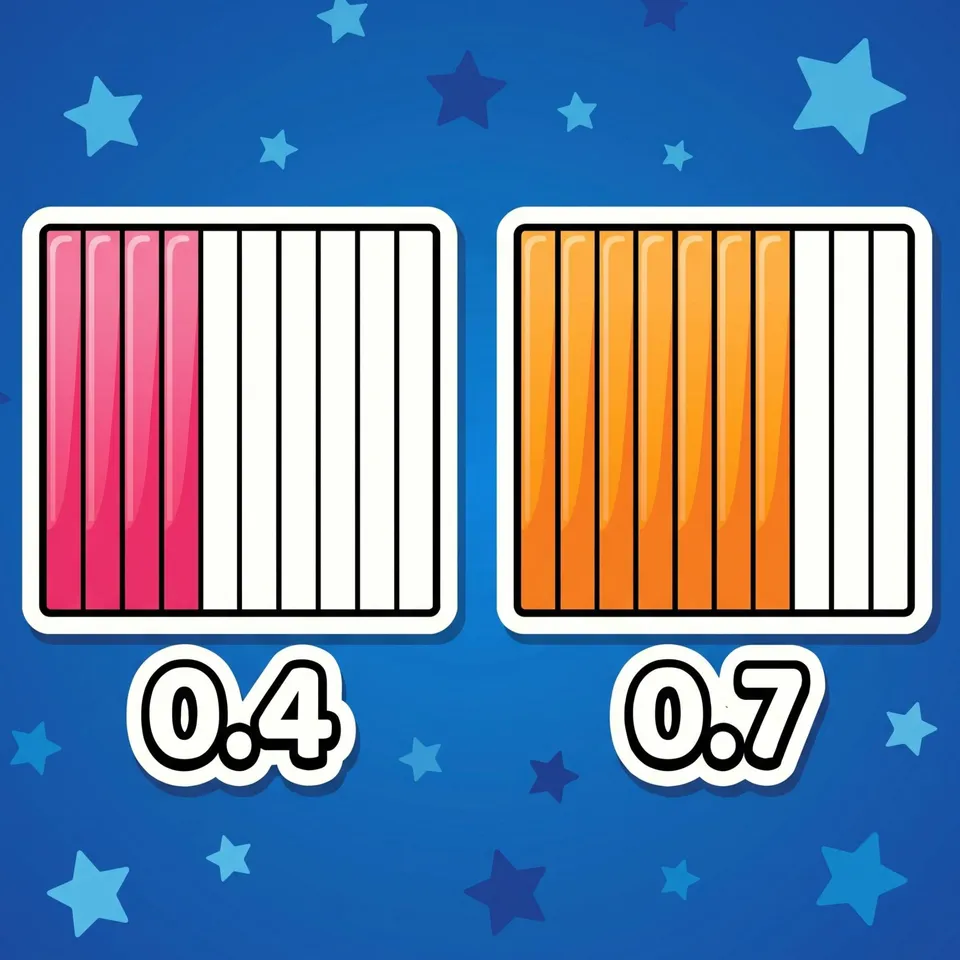
In this course, students will build a strong foundation in understanding and working with decimals. Starting with visual models like shaded grids and number lines, students will develop an intuitive sense of what decimals represent before moving into the mechanics of place value, equivalent decimals and expanded form. From there, they'll learn to compare and order decimals with confidence, including the tricky cases where a longer decimal isn't always the larger one. The course wraps up with adding and subtracting decimal numbers, connecting back to real-world contexts like money. By the end, students will be able to read, write, compare, and calculate decimals through the hundredths place and explain their thinking along the way.
Lessons
- Intro to Tenths (Ages 8–10): Represent tenths on a shaded grid model
- Tenths on a Number Line (Ages 9–11): Plot tenths on a number line
- Larger Numbers with Tenths (Ages 9–11): Place multi-digit decimals on a number line
- Intro to Hundredths (Ages 9–11): Represent hundredths with a grid model
- Hundredths on a Number Line (Ages 9–11): Identify and compare hundredths on a number line
- Decimals Place Value (Ages 9–11): Identify place value in decimal numbers
- Expanded Form Decimals (Ages 9–11): Write decimals in expanded form
- Rounding to the Nearest Tenth (Ages 9–11): Round decimals to the nearest tenth
- Comparing Decimals: Tenths (Ages 9–11): Compare decimal tenths using <, > or =
- Comparing Decimals: Hundredths (Ages 9–11): Compare decimal hundredths using <, > or =
- Ordering Decimals (Ages 9–11): Order decimals by comparing place values
- Adding Decimals (Ages 9–11): Add decimals with carrying
- Subtracting Decimals (Ages 9–11): Subtract decimals with borrowing