Piece-by-Piece Areas
Ages 8–11 · 7 minutes · Math
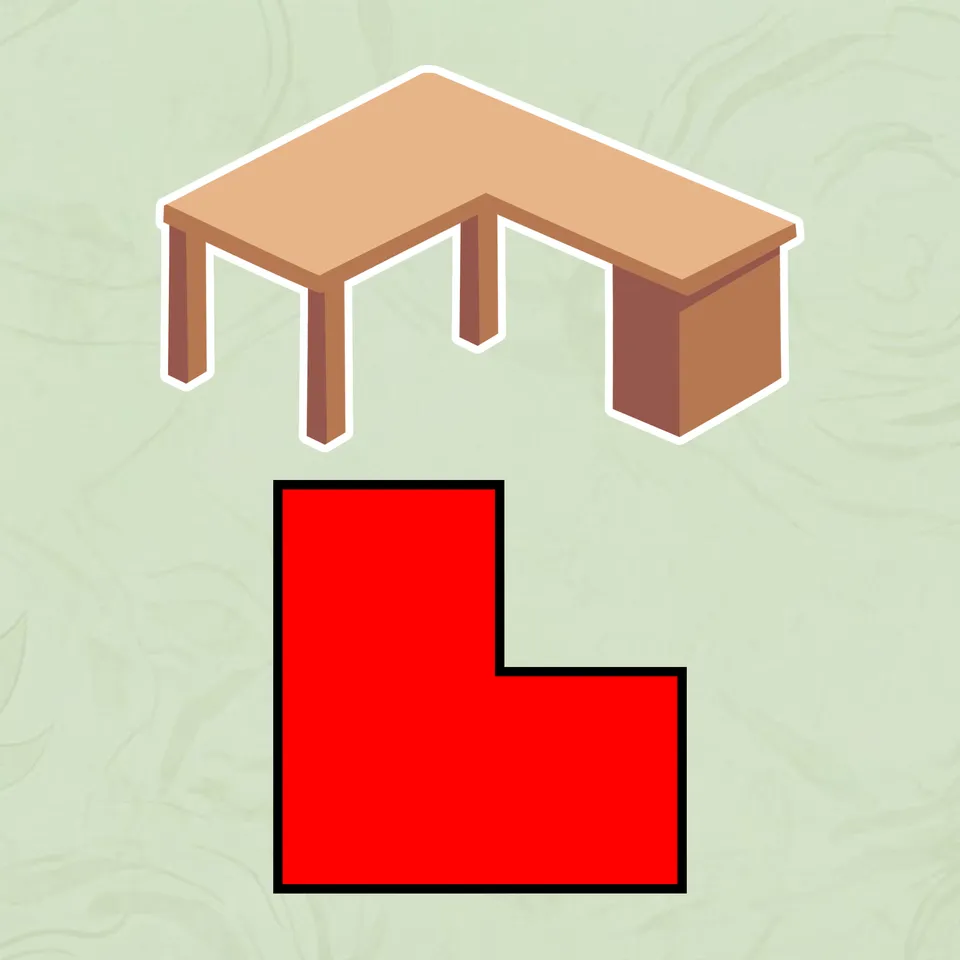
Explore areas of different shapes that are made of rectangles
Students will look at L-shaped figures, which can be broken down into rectangles for calculating the total area of each shape
Part of
Standards alignment
Common Core State Standards
- 3.MD.C.7.b — Multiply side lengths to find areas of rectangles with whole-number side lengths in the context of solving real world and mathematical problems, and represent whole-number products as rectangular areas in mathematical reasoning.
- 3.MD.C.7.d — Recognize area as additive. Find areas of rectilinear figures by decomposing them into non-overlapping rectangles and adding the areas of the non-overlapping parts, applying this technique to solve real world problems.
- 3.MD.C.7 — Relate area to the operations of multiplication and addition.
- MP7 — Look for and make use of structure.
Alabama
- MA19.3.23 — Decompose rectilinear figures into smaller rectangles to find the area, using concrete materials.
- MA19.3.22 — Relate area to the operations of multiplication using real-world problems, concrete materials, mathematical reasoning, and the distributive property.
- MA19.4.23 — Apply area and perimeter formulas for rectangles in real-world and mathematical situations.
Alaska
- 3.MD.9.b — Multiply side lengths to find areas of rectangles with whole number side lengths in the context of solving real world and mathematical problems, and represent whole-number products as rectangular areas in mathematical reasoning.
- 3.MD.9.d — Recognize area as additive. Find areas of rectilinear figures by decomposing them into non-overlapping rectangles and adding the areas of the non-overlapping parts, applying this technique to solve real world problems. For example, the area of a 7 by 8 rectangle can be determined by decomposing it into a 7 by 3 rectangle and a 7 by 5 rectangle.
- 3.MD.9 — Relate area to the operations of multiplication and addition.
Arizona
- 3.MD.C.7 * — Relate area to the operations of multiplication and addition.
- 3.MD.C.7.d — Understand that rectilinear figures can be decomposed into non-overlapping rectangles and that the sum of the areas of these rectangles is identical to the area of the original rectilinear figure. Apply this technique to solve problems in real-world contexts.
- 3.MD.C.7.b — Multiply side lengths to find areas of rectangles with whole-number side lengths in the context of solving real world and mathematical problems, and represent whole-number products as rectangular areas in mathematical reasoning.
Arkansas
- 4.GM.7 — Apply the area and perimeter formulas for rectangles and figures composed of two or more rectangles in real-world situations.
- 3.GM.7 — Multiply side lengths to find areas of rectangles with whole number side lengths in the context of solving real- world and mathematical problems.
California
- 3.MD.C.7.b — Multiply side lengths to find areas of rectangles with whole-number side lengths in the context of solving real world and mathematical problems, and represent whole-number products as rectangular areas in mathematical reasoning.
- 3.MD.C.7.d — Recognize area as additive. Find areas of rectilinear figures by decomposing them into non-overlapping rectangles and adding the areas of the non-overlapping parts, applying this technique to solve real world problems.
- 3.MD.C.7 — Relate area to the operations of multiplication and addition.
- MP7 — Look for and make use of structure.
Colorado
- 3.MD.C.7.b — Multiply side lengths to find areas of rectangles with whole-number side lengths in the context of solving real-world and mathematical problems, and represent whole-number products as rectangular areas in mathematical reasoning.
- 3.MD.C.7.d — Recognize area as additive. Find areas of rectilinear figures by decomposing them into non-overlapping rectangles and adding the areas of the non-overlapping parts, applying this technique to solve real- world problems.
- 3.MD.C.7 — Use concepts of area and relate area to the operations of multiplication and addition.
Connecticut
- 3.MD.C.7.b — Multiply side lengths to find areas of rectangles with whole-number side lengths in the context of solving real world and mathematical problems, and represent whole-number products as rectangular areas in mathematical reasoning.
- 3.MD.C.7.d — Recognize area as additive. Find areas of rectilinear figures by decomposing them into non-overlapping rectangles and adding the areas of the non-overlapping parts, applying this technique to solve real world problems.
- 3.MD.C.7 — Relate area to the operations of multiplication and addition.
- MP7 — Look for and make use of structure.
Delaware
- 3.MD.C.7.b — Multiply side lengths to find areas of rectangles with whole-number side lengths in the context of solving real world and mathematical problems, and represent whole-number products as rectangular areas in mathematical reasoning.
- 3.MD.C.7.d — Recognize area as additive. Find areas of rectilinear figures by decomposing them into non-overlapping rectangles and adding the areas of the non-overlapping parts, applying this technique to solve real world problems.
- 3.MD.C.7 — Relate area to the operations of multiplication and addition.
- MP7 — Look for and make use of structure.
Florida
- MA.3.GR.2.2 — Find the area of a rectangle with whole-number side lengths using a visual model and a multiplication formula.
- MA.3.GR.2.4 — Solve mathematical and real-world problems involving the perimeter and area of composite figures composed of non-overlapping rectangles with whole-number side lengths.
- MA.K12.MTR.5.1 — Use patterns and structure to help understand and connect mathematical concepts. Mathematicians who use patterns and structure to help understand and connect mathematical concepts: • Focus on relevant details within a problem. • Create plans and procedures to logically order events, steps or ideas to solve problems. • Decompose a complex problem into manageable parts. • Relate previously learned concepts to new concepts. • Look for similarities among problems. • Connect solutions of problems to more complicated large-scale situations.
Georgia
- 4.GSR.8.3 — Solve problems involving area and perimeter of composite rectangles involving whole numbers with known side lengths.
- 3.GSR.7.3 — Discover and explain how area can be found by multiplying the dimensions of a rectangle.
- 3.GSR.7.2 — Determine the area of rectangles (or shapes composed of rectangles) presented in relevant problems by tiling and counting.
Hawaii
- 3.MD.C.7b — Multiply side lengths to find areas of rectangles with whole-number side lengths in the context of solving real world and mathematical problems, and represent whole-number products as rectangular areas in mathematical reasoning.
- 3.MD.C.7d — Recognize area as additive. Find areas of rectilinear figures by decomposing them into non-overlapping rectangles and adding the areas of the non-overlapping parts, applying this technique to solve real world problems.
- 3.MD.C.7 — Relate area to the operations of multiplication and addition.
- MP7 — Look for and make use of structure.
Idaho
- 3.MD.C.7.b — Multiply side lengths to find areas of rectangles with whole-number side lengths in the context of solving real-world and mathematical problems, and represent whole-number products as rectangular areas in mathematical reasoning.
- 3.MD.C.7.c — Recognize area as additive. Find areas of rectilinear figures by decomposing them into non-overlapping rectangles and adding the areas of the nonoverlapping parts, applying this technique to solve real-world problems
- 3.MD.C.7 — Relate area to the operations of multiplication and addition.
Illinois
- 3.MD.C.7.b — Multiply side lengths to find areas of rectangles with whole-number side lengths in the context of solving real world and mathematical problems, and represent whole-number products as rectangular areas in mathematical reasoning.
- 3.MD.C.7.d — Recognize area as additive. Find areas of rectilinear figures by decomposing them into non-overlapping rectangles and adding the areas of the non-overlapping parts, applying this technique to solve real world problems.
- 3.MD.C.7 — Relate area to the operations of multiplication and addition.
- MP.7 — Look for and make use of structure.
Indiana
- 4.M.4 — Apply the area and perimeter formulas for rectangles to solve real-world and other mathematical problems. Investigate the area of complex shapes composed of rectangles by decomposing them into non-overlapping rectangles and adding the areas of the non-overlapping parts; apply this technique to solve real-world problems and other mathematical problems. (E)
- 3.M.5 — Find the area of a rectangle with whole-number side lengths by modeling with unit squares, and show that the area is the same as would be found by multiplying the side lengths. Identify and draw rectangles with the same perimeter and different areas or with the same area and different perimeters. (E)
- 3.CA.6 — Demonstrate fluency with mastery of multiplication facts and corresponding division facts of 0 to 10.
Iowa
- 3.MD.C.7.b — Multiply side lengths to find areas of rectangles with whole-number side lengths in the context of solving real world and mathematical problems.
- 3.MD.C.7.d — Recognize area as additive. Find areas of figures that can be decomposed into non-overlapping rectangles and add the areas of the non-overlapping parts, applying this technique to solve real world problems.
- 3.MD.C.7 — Relate area to the operations of multiplication and addition.
- SMP7 — Look for and make use of structure.
Kansas
- 3.MD.8 — Relate area to the operations of multiplication and addition
- 3.MD.8.d — Recognize area as additive. Find areas of rectilinear figures by decomposing them into non- overlapping rectangles and adding the areas of the non-overlapping parts, applying this technique to solve real world problems.
- 3.MD.8.b — Multiply side lengths to find areas of rectangles with whole-number side lengths in the context of solving real world and mathematical problems, and represent whole-number products as rectangular areas in mathematical reasoning.
- MP.7 — Look for and make use of structure.
Kentucky
- KY.3.MD.7.b — Multiply side lengths to find areas of rectangles with whole- number side lengths in the context of solving real world and mathematical problems and represent whole-number products as rectangular areas in mathematical reasoning.
- KY.3.MD.7.d — Recognize area as additive. Find areas of figures that can be decomposed into non-overlapping rectangles by adding the areas of the non-overlapping parts, applying this technique to solve real world problems.
- KY.3.MD.7 — Relate area to the operations of multiplication and addition.
- KY.4.MD.3 — Apply the area and perimeter formulas for rectangles in real world and mathematical problems.
Louisiana
- 3.MD.C.7.b — Multiply side lengths to find areas of rectangles with whole-number side lengths in the context of solving real world and mathematical problems, and represent whole-number products as rectangular areas in mathematical reasoning.
- 4.MD.D.8 — Recognize area as additive. Find areas of rectilinear figures by decomposing them into non-overlapping rectangles and adding the areas of the non-overlapping parts, applying this technique to solve real-world problems.
- 3.MD.C.7 — Relate area to the operations of multiplication and addition.
- MP7 — Look for and make use of structure.
Maine
- 3.MD.C.7b — Multiply side lengths to find areas of rectangles with whole-number side lengths in the context of solving real world and mathematical problems and represent whole-number products as rectangular areas in mathematical reasoning.
- 3.MD.C.7d — Recognize area as additive. Find areas of rectilinear figures by decomposing them into non-overlapping rectangles and adding the areas of the non-overlapping parts, applying this technique to solve real world problems.
- 3.MD.C.7 — Relate area to the operations of multiplication and addition.
Maryland
- 3.MD.C.7.b — Multiply side lengths to find areas of rectangles with whole-number side lengths in the context of solving real world and mathematical problems, and represent whole-number products as rectangular areas in mathematical reasoning.
- 3.MD.C.7.d — Recognize area as additive. Find areas of rectilinear figures by decomposing them into non-overlapping rectangles and adding the areas of the non-overlapping parts, applying this technique to solve real world problems.
- 3.MD.C.7 — Relate area to the operations of multiplication and addition.
Massachusetts
- 3.MD.C.7.b — Multiply side lengths to find areas of rectangles with whole-number side lengths in the context of solving real-world and mathematical problems, and represent whole-number products as rectangular areas in mathematical reasoning.
- 3.MD.C.7.d — Recognize area as additive. Find areas of rectilinear figures by decomposing them into non-overlapping rectangles and adding the areas of the non-overlapping parts, applying this technique to solve real-world problems.
- 3.MD.C.7 — Relate area to the operations of multiplication and addition.
- 4.MD.A.3 — Apply the area and perimeter formulas for rectangles in real-world and mathematical problems. For example, find the width of a rectangular room given the area of the flooring and the length, by viewing the area formula as a multiplication equation with an unknown factor. (Note: When finding areas of rectangular regions answers will be in square units. For example, the area of a 1 cm x 1 cm rectangular region will be 1 square centimeter (1 cm2 , students are not expected to use this notation.) When finding the perimeter of a rectangular region answers will be in linear units. For example, the perimeter of the region is: 1cm + 1cm + 1cm +1cm = 4 cm or 2(1cm) + 2(1cm) = 4 cm).
Michigan
- 3.MD.C.7.b — Multiply side lengths to find areas of rectangles with whole-number side lengths in the context of solving real world and mathematical problems, and represent whole-number products as rectangular areas in mathematical reasoning.
- 3.MD.C.7.d — Recognize area as additive. Find areas of rectilinear figures by decomposing them into non-overlapping rectangles and adding the areas of the non-overlapping parts, applying this technique to solve real world problems.
- 3.MD.C.7 — Relate area to the operations of multiplication and addition.
- MP7 — Look for and make use of structure.
Minnesota
- 4.3.2.4 — Find the areas of geometric figures and real-world objects that can be divided into rectangular shapes. Use square units to label area measurements.
- 4.3.2.3 — Understand that the area of a two-dimensional figure can be found by counting the total number of same size square units that cover a shape without gaps or overlaps. Justify why length and width are multiplied to find the area of a rectangle by breaking the rectangle into one unit by one unit squares and viewing these as grouped into rows and columns. For example: How many copies of a square sheet of paper are needed to cover the classroom door? Measure the length and width of the door to the nearest inch and compute the area of the door.
Mississippi
- 3.MD.7 — Relate area to the operations of multiplication and addition.
- 3.MD.7.d — Find areas of rectilinear figures by decomposing them into non-overlapping rectangles and adding the areas of the non-overlapping parts, applying this technique to solve real world problems. Recognize area as additive.
- 3.MD.7.b — Multiply side lengths to find areas of rectangles with whole-number side lengths (where factors can be between 1 and 10, inclusively) in the context of solving real world and mathematical problems, and represent whole-number products as rectangular areas in mathematical reasoning.
- MP7 — Look for and make use of structure.
Missouri
- 3.GM.C.12 — Multiply whole-number side lengths to solve problems involving the area of rectangles.
- 3.GM.C.14 — Decompose a rectangle into smaller rectangles to find the area of the original rectangle.
- 3.GM.C.10 — Label area measurements with squared units.
- 4.GM.C.8 — Apply the area and perimeter formulas for rectangles to solve problems.
Montana
- 3.MD.C.7 — Relate area to the operations of multiplication and addition.
- 3.MD.C.7.d — Recognize area as additive. Find areas of rectilinear figures by decomposing them into non-overlapping rectangles and adding the areas of the non-overlapping parts, applying this technique to solve real-world problems, including those of Montana American Indians.
- 3.MD.C.7.b — Multiply side lengths to find areas of rectangles with whole-number side lengths in the context of solving real world and mathematical problems, and represent whole-number products as rectangular areas in mathematical reasoning.
- MP7 — Look for and make use of structure.
Nebraska
- 3.G.2.c — Find the area of a rectangle with whole-number side lengths by modeling with unit squares; show that area can be additive and is the same as would be found by multiplying the side lengths.
- 3.G.2 — Area and Perimeter: Students will recognize perimeter and area as attributes of plane figures and understand concepts of area measurement.
- 4.G.3.a — Apply perimeter and area formulas for rectangles to solve authentic problems.
Nevada
- 3.MD.C.7.d — Recognize area as additive. Find areas of rectilinear figures by decomposing them into non-overlapping rectangles and adding the areas of the non-overlapping parts, applying this technique to solve real world problems.
- 3.MD.C.7 — Relate area to the operations of multiplication and addition.
- MP7 — Look for and make use of structure.
New Hampshire
- 3.MD.C.7.b — Multiply side lengths to find areas of rectangles with whole-number side lengths in the context of solving real world and mathematical problems, and represent whole-number products as rectangular areas in mathematical reasoning.
- 3.MD.C.7.d — Recognize area as additive. Find areas of rectilinear figures by decomposing them into non-overlapping rectangles and adding the areas of the non-overlapping parts, applying this technique to solve real world problems.
- 3.MD.C.7 — Relate area to the operations of multiplication and addition.
- MP7 — Look for and make use of structure.
New Jersey
- 3.MD.C.7b — Multiply side lengths to find areas of rectangles with whole number side lengths in the context of solving real world and mathematical problems, and represent whole-number products as rectangular areas in mathematical reasoning.
- 3.MD.C.7d — Recognize area as additive. Find areas of rectilinear figures by decomposing them into non-overlapping rectangles and adding the areas of the non-overlapping parts, applying this technique to solve real world problems.
- 3.MD.C.7 — Relate area to the operations of multiplication and addition.
- 7 — Look for and make use of structure.
New Mexico
- 3.MD.C.7.b — Multiply side lengths to find areas of rectangles with whole-number side lengths in the context of solving real world and mathematical problems, and represent whole-number products as rectangular areas in mathematical reasoning.
- 3.MD.C.7.d — Recognize area as additive. Find areas of rectilinear figures by decomposing them into non-overlapping rectangles and adding the areas of the non-overlapping parts, applying this technique to solve real world problems.
- 3.MD.C.7 — Relate area to the operations of multiplication and addition.
- MP7 — Look for and make use of structure.
New York
- NY-3.MD.7.b — Multiply side lengths to find areas of rectangles with whole-number side lengths in the context of solving real world and mathematical problems, and represent whole-number products as rectangular areas in mathematical reasoning.
- NY-3.MD.7.d — Recognize area as additive. Find areas of figures composed of non-overlapping rectangles, and apply this technique to solve real world problems.
- NY-3.MD.7 — Relate area to the operations of multiplication and addition.
- MP.7 — Look for and make use of structure.
North Carolina
- NC.3.MD.7 — Relate area to the operations of multiplication and addition. • Find the area of a rectangle with whole-number side lengths by tiling it, and show that the area is the same as would be found by multiplying the side lengths. • Multiply side lengths to find areas of rectangles with whole-number side lengths in the context of solving problems, and represent whole-number products as rectangular areas in mathematical reasoning. • Use tiles and/or arrays to illustrate and explain that the area of a rectangle can be found by partitioning it into two smaller rectangles, and that the area of the large rectangle is the sum of the two smaller rectangles.
North Dakota
- 3.GM.M.8 — Find the area of a rectangle with whole-number side lengths by modeling with unit squares; show that area can be additive and is the same as would be found by multiplying the side lengths.
- 4.GM.M.5 — Apply the area and perimeter formulas for rectangles, including connected rectangular figures, in problems.
Ohio
- 3.MD.7.b — Multiply side lengths to find areas of rectangles with whole number side lengths in the context of solving real-world and mathematical problems, and represent whole number products as rectangular areas in mathematical reasoning.
- 3.MD.7.d — Recognize area as additive. Find the area of figures composed of rectangles by decomposing into non-overlapping rectangles and adding the areas of the non-overlapping parts, applying this technique to solve real-world problems.
- 3.MD.7 — Relate area to the operations of multiplication and addition.
- MP.7 — Look for and make use of structure.
Oklahoma
- 4.GM.2.2 — Find the area of polygons by determining if they can be decomposed into rectangles.
- 4.GM.2 — Recognize and measure attributes in real-world and mathematical situations using various tools.
Oregon
- 3.GM.C.7 — Relate area to multiplication and addition. Use relevant representations to solve problems in authentic contexts.
- 4.GM.B.6 — Apply the area and perimeter formulas for rectangles in authentic contexts and mathematical problems.
- MP7 — Look for and make use of structure.
Pennsylvania
- CC.2.4.3.A.5 — Determine the area of a rectangle and apply the concept to multiplication and to addition.
- CC.2.2.3.A.4 — Solve problems involving the four operations, and identify and explain patterns in arithmetic.
Rhode Island
- 3.MD.C.7.b — Multiply side lengths to find areas of rectangles with whole-number side lengths in the context of solving real world and mathematical problems, and represent whole-number products as rectangular areas in mathematical reasoning.
- 3.MD.C.7.d — Recognize area as additive. Find areas of rectilinear figures by decomposing them into non-overlapping rectangles and adding the areas of the non-overlapping parts, applying this technique to solve real world problems.
- 3.MD.C.7 — Relate area to the operations of multiplication and addition.
- MP7 — Look for and make use of structure.
South Carolina
- 3.MDA.5c — Understand the concept of area measurement to include determine the area of a rectilinear polygon and relate to multiplication and addition.
- 3.PS.7a — Recognize complex mathematical objects as being composed of more than one simple object.
- 4.MDA.3 — Apply the area and perimeter formulas for rectangles.
South Dakota
- 3.MD.C.7.b — Multiply side lengths to find areas of rectangles with whole-number side lengths in the context of solving real world and mathematical problems, and represent whole-number products as rectangular areas in mathematical reasoning.
- 3.MD.C.7.d — Recognize area as additive. Find areas of rectilinear figures by decomposing them into non-overlapping rectangles and adding the areas of the non-overlapping parts, applying this technique to solve real world problems.
- 3.MD.C.7 — Relate area to the operations of multiplication and addition.
- MP7 — Look for and make use of structure.
Tennessee
- 3.MD.C.7.b — Multiply side lengths to find areas of rectangles with whole number side lengths in the context of solving real-world and mathematical problems and represent whole-number products as rectangular areas in mathematical reasoning.
- 3.MD.C.7.d — Recognize area as additive. Find areas of rectilinear figures by decomposing them into non-overlapping rectangles and adding the areas of the non-overlapping parts, applying this technique to solve real-world problems.
- 3.MD.C.7 — Relate area of rectangles to the operations of multiplication and addition.
Texas
- 3.6D — decompose composite figures formed by rectangles into non-overlapping rectangles to determine the area of the original figure using the additive property of area; and
- 3.6C — determine the area of rectangles with whole number side lengths in problems using multiplication related to the number of rows times the number of unit squares in each row;
Utah
- 3.MD.7.b — Multiply side lengths to find areas of rectangles with whole-number side lengths in the context of solving real-world and mathematical problems, and represent wholenumber products as rectangular areas in mathematical reasoning.
- 3.MD.7.d — Recognize area as additive. Find areas of rectilinear figures by decomposing them into non- overlapping rectangles and adding the areas of the non-overlapping parts, applying this technique to solve real-world problems.
- 3.MD.7 — Relate area to the operations of multiplication and addition (refer to 3.OA.5).
- 3.MP.7 — Look for and make use of structure.
Vermont
- 3.MD.C.7.b — Multiply side lengths to find areas of rectangles with whole-number side lengths in the context of solving real world and mathematical problems, and represent whole-number products as rectangular areas in mathematical reasoning.
- 3.MD.C.7.d — Recognize area as additive. Find areas of rectilinear figures by decomposing them into non-overlapping rectangles and adding the areas of the non-overlapping parts, applying this technique to solve real world problems.
- 3.MD.C.7 — Relate area to the operations of multiplication and addition.
- MP7 — Look for and make use of structure.
Virginia
- 4.MG.3b — Determine the area and perimeter of a rectangle when given the measure of two adjacent sides (in whole number units), with and without models.
- 4.MG.3 — The student will use multiple representations to develop and use formulas to solve problems, including those in context, involving area and perimeter limited to rectangles and squares (in both U.S. Customary and metric units). Students will demonstrate the following Knowledge and Skills:
- 4.MG.3f — Solve contextual problems involving area and perimeter of rectangles and squares.
- 3.MG.4 — The student will identify, describe, classify, compare, combine, and subdivide polygons. Students will demonstrate the following Knowledge and Skills:
Washington
- 3.MD.C.7.b — Multiply side lengths to find areas of rectangles with whole-number side lengths in the context of solving real world and mathematical problems, and represent whole-number products as rectangular areas in mathematical reasoning.
- 3.MD.C.7.d — Recognize area as additive. Find areas of rectilinear figures by decomposing them into non-overlapping rectangles and adding the areas of the non-overlapping parts, applying this technique to solve real world problems.
- 3.MD.C.7 — Relate area to the operations of multiplication and addition.
- MP7 — Look for and make use of structure.
Washington, D.C.
- 3.MD.C.7.b — Multiply side lengths to find areas of rectangles with whole-number side lengths in the context of solving real world and mathematical problems, and represent whole-number products as rectangular areas in mathematical reasoning.
- 3.MD.C.7.d — Recognize area as additive. Find areas of rectilinear figures by decomposing them into non-overlapping rectangles and adding the areas of the non-overlapping parts, applying this technique to solve real world problems.
- 3.MD.C.7 — Relate area to the operations of multiplication and addition.
West Virginia
- M.3.24 — Relate area to the operations of multiplication and addition. a. Find the area of a rectangle with whole-number side lengths by tiling it and show that the area is the same as would be found by multiplying the side lengths. b. Multiply side lengths to find areas of rectangles with whole number side lengths in the context of solving real-world and mathematical problems and represent wholenumber products as rectangular areas in mathematical reasoning. c. Use tiling to show in a concrete case that the area of a rectangle with wholenumber side lengths a and b + c is the sum of a x b and ax c. Use area models to represent the distributive property in mathematical reasoning. d. Recognize area as additive and find areas of rectilinear figures by decomposing them into non-overlapping rectangles and adding the areas of the non-overlapping parts, applying this technique to solve real-world problems.
- MHM7 — Look for and make use of structure.
Wisconsin
- M.3.MD.C.7 — Relate area to the operations of multiplication and addition. a. Find the area of a rectangle with whole-number side lengths by tiling it, and show that the area is the same as would be found by multiplying the side lengths. b. Multiply side lengths to find areas of rectangles with whole number side lengths in the context of solving real-world and mathematical problems, and represent whole-number products as rectangular areas in mathematical reasoning. c. Use tiling to show in a concrete case that the area of a rectangle with whole-number side lengths a and b + c is the sum of a x b and a x c. Use area models to represent the distributive property in mathematical reasoning. d. Recognize area as additive. Find areas of rectilinear figures by decomposing them into non-overlapping rectangles and adding the areas of the non-overlapping parts, applying this technique to solve real-world problems.
- M.4.MD.A.3 — Apply the area and perimeter formulas for rectangles in real-world and mathematical problems.
Wyoming
- 3.MD.I.7 — Relate area to the operations of multiplication and addition.
- 3.MD.I.7.B — Multiply side lengths to find areas of rectangles with whole-number side lengths in the context of solving real world and mathematical problems, and represent whole-number products as rectangular areas in mathematical reasoning.
- 4.MD.I.3 — Apply the area and perimeter formulas for rectangles in real world and mathematical problems.