Tommy and Tina Learn to Share
Ages 6–8 · 10 minutes · English
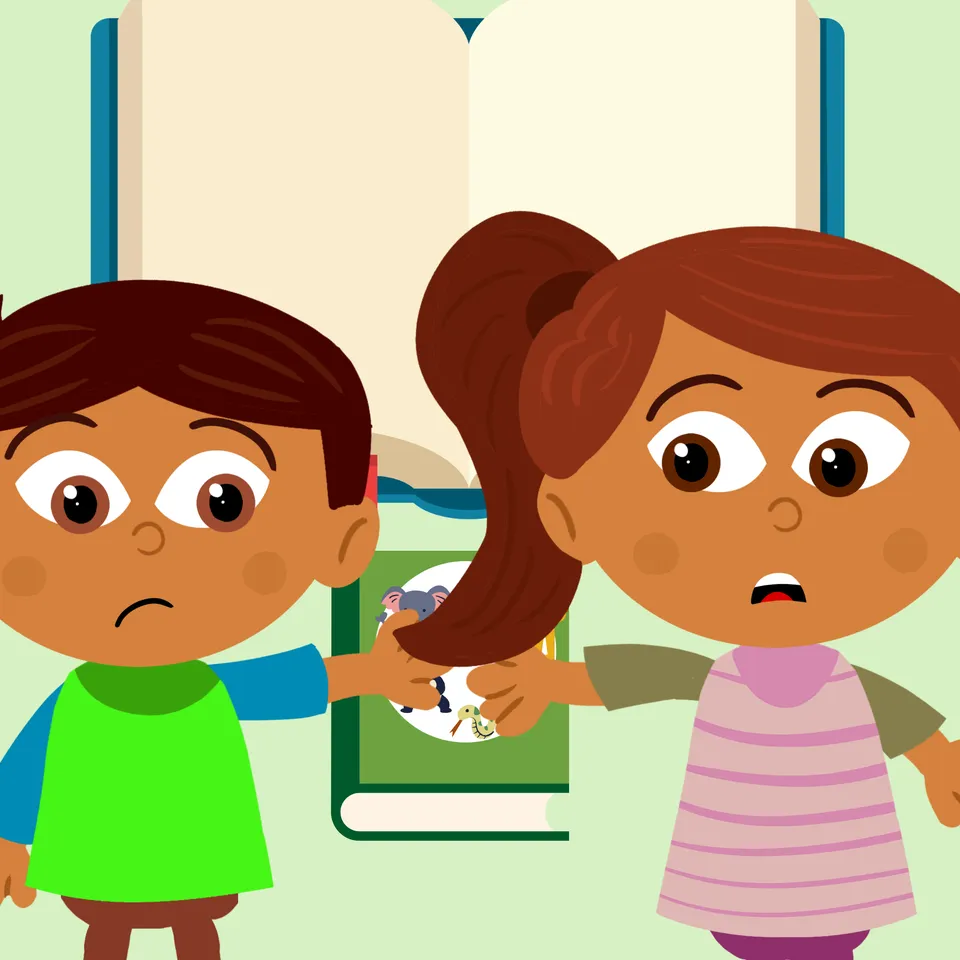
Tommy and Tina need to learn how to share after getting a new coloring book!
Students practice recalling important details while learning about sharing. Students read short passages to develop reading comprehension skills.
Prior knowledge required: ability to read sentences
Part of
Standards alignment
Common Core State Standards
- RL.1.2 — Retell stories, including key details, and demonstrate understanding of their central message or lesson.
- D2.Civ.8.K-2 — Individually and with others, students… Describe democratic principles such as equality, fairness, and respect for legitimate authority and rules.
Alabama
- ELA21.1.2 — Actively participate in shared reading experiences and collaborative discussions to build background knowledge and learn how oral reading should sound.
- ELA21.K.21 — Use new and previously-taught vocabulary to produce and expand complete sentences in shared language activities.
Alaska
- SL.1.2 — Ask and answer questions about key details in a text read aloud or information presented orally or through other media.
- RL.1.2 — Retell stories, using key details, and demonstrate understanding their message (e.g., teach a lesson, make you laugh, tell a scary story, tell about an event) or lesson.
- SL.1.1 — Participate in collaborative conversations with diverse partners about grade 1 topics and texts with peers and adults in small and larger groups.
Arizona
- 1.RL.3 — Describe characters, settings, and major events in a story, using key details.
Arkansas
- 1.RC.2.RF — Answer questions about key details in a text.
- 1.RC.4.RF — Build general and academic vocabulary and background knowledge of age and grade-appropriate topics through discussion, reading, and writing.
- 1.RC.6.RF — Demonstrate comprehension of age and grade-appropriate texts by speaking or writing.
- 1.RC.5.RF — Use background knowledge and details, including illustrations, charts, and graphs, to make predictions and inferences about what happens in a text.
California
- RL.1.1 — Ask and answer questions about key details in a text.
- RL.1.3 — Describe characters, settings, and major events in a story, using key details.
- K.1.1 — Follow rules, such as sharing and taking turns, and know the consequences of breaking them.
- RL.1.2 — Retell stories, including key details, and demonstrate understanding of their central message or lesson.
- SL.1.2 — Ask and answer questions about key details in a text read aloud or information presented orally or through other media.
Colorado
- RWC20-GR.1-S.2-GLE.1-EO.a.i — Ask and answer questions about key details in a text.
- RWC20-GR.1-S.2-GLE.1-EO.a.ii — Retell stories, including key details, and demonstrate understanding of their central message or lesson.
- RWC20-GR.1-S.2-GLE.1-EO.a.iii — Describe characters, settings, and major events in a story, using key details.
- RWC20-GR.1-S.2-GLE.3-EO.c.vi — Read words with inflectional endings.
Connecticut
- RL.1.1 — Ask and answer questions about key details in a text.
- RL.1.3 — Describe characters, settings, and major events in a story, using key details.
- RL.1.2 — Retell stories, including key details, and demonstrate understanding of their central message or lesson.
- SL.1.2 — Ask and answer questions about key details in a text read aloud or information presented orally or through other media.
Delaware
- RL.1.1 — Ask and answer questions about key details in a text.
- RL.1.2 — Retell stories, including key details, and demonstrate understanding of their central message or lesson.
- RL.1.3 — Describe characters, settings, and major events in a story, using key details.
- SL.1.2 — Ask and answer questions about key details in a text read aloud or information presented orally or through other media.
- C.4.K-3a — Students will demonstrate the skills necessary for participating in a group, including defining an objective, dividing responsibilities, and working cooperatively. Grade K
Florida
- ELA.1.F.1.3 — Use knowledge of grade-appropriate phonics and word-analysis skills to decode words accurately. • Decode words using knowledge of spelling-sound correspondences for common consonant digraphs, trigraphs, and blends. • Decode simple words with r-controlled vowels. • Decode and encode regularly spelled one-syllable words. • Decode words with inflectional endings. • Decode two-syllable words with regular patterns by breaking the words into syllables. • Decode words that use final –e and vowel teams to make long-vowel sound.
- ELA.1.F.1.4 — Read grade-level texts with accuracy, automaticity, and appropriate prosody or expression. • Recognize and read with automaticity the grade-level sight words.
- ELA.1.R.1.1 — Identify and describe the main story elements in a story.
- ELA.1.R.1.2 — Identify and explain the moral of a story.
Georgia
- ELAGSE1RL2 — Retell stories, including key details, and demonstrate understanding of their central message or lesson.
Hawaii
- 1.RL.1 — Ask and answer questions about key details in a text.
- 1.RL.2 — Retell stories, including key details, and demonstrate understanding of their central message or lesson.
- 1.SL.2 — Ask and answer questions about key details in a text read aloud or information presented orally or through other media.
Idaho
- 1.RC.TE.3 — Ask and answer questions about key details in texts heard or read.
Illinois
- RL.1.1 — Ask and answer questions about key details in a text.
- RL.1.3 — Describe characters, settings, and major events in a story, using key details.
- RF.1.3.f — Read words with inflectional endings.
- RL.1.2 — Retell stories, including key details, and demonstrate understanding of their central message or lesson.
- SL.1.2 — Ask and answer questions about key details in a text read aloud or information presented orally or through other media.
Indiana
- 1.RC.1 — Ask and answer questions about the main idea and key details to clarify and confirm understanding of a text. (E)
- 1.RC.4 — Make and confirm predictions about what will happen next in a story.
- 1.CC.4 — Ask and answer questions about key details in what is read, heard, or viewed to demonstrate comprehension. (E)
- 1.RC.3 — Using key details, identify and describe the elements of plot, character, and setting. (E)
- 1.RC.9 — Demonstrate comprehension that context clues (e.g., words and sentence clues) and text features (e.g., glossaries, illustrations) may be used to help understand unknown words.
Iowa
- RL.1.2 — Retell stories, including key details, and demonstrate understanding of their central message or lesson.
- SL.1.2 — Ask and answer questions about the main topic and key details in a text read aloud or information presented orally or through other media.
Kansas
- RL.1.1 — Ask and answer questions about key details in a text.
- RL.1.2 — Retell stories, including key details, and demonstrate understanding of their central message or lesson.
- RL.1.3 — Describe characters, settings, and major events in a story, using key details.
- SL.1.2 — Ask and answer questions about key details in a text read aloud or information presented orally or through other media.
Kentucky
- L.1.4.a — Use sentence-level context as a clue to the meaning of a word or phrase.
- L.1.4.d — Use words and phrases acquired through conversations, reading and being read to, and responding to texts, including using frequently occurring conjunctions to signal simple relationships.
- RF.2.4.a — Read grade-level text with purpose and understanding.
Louisiana
- RL.1.1 — Ask and answer questions about key details in a text.
- RF.1.3.f — Read words with inflectional endings.
- RL.1.3 — Describe characters, settings, and major events in a story, using key details.
- RL.1.2.a — Retell stories, including key details.
- SL.1.2 — Ask and answer questions about key details in a text read aloud or information presented orally or through other media.
Maine
- R.12.1.a — Read various on-level text with purpose and understanding.
- R.6.1.a — Describe characters, settings, and major events in a story, including details about who, what, when, where, and how.
- R.3.1.f — Read words with inflectional endings.
- R.5.1.a — Retell texts, including details about who, what, when, where, and how; demonstrate an understanding of the theme.
- SL.2.1.a — Ask and answer questions about key details in a text read aloud or information presented orally or through other media.
Maryland
- RL.1.1 — Ask and answer questions about key details in a text.
- RL.1.3 — Describe characters, settings, and major events in a story, using key details.
- RL.1.2 — Retell stories, including key details, and demonstrate understanding of their central message or lesson.
- SL.1.2 — Ask and answer questions about key details in a text read aloud or information presented orally or through other media.
- analyzing examples of how cooperation helps accomplish tasks at home and school.
Massachusetts
- RL.1.2 — Retell stories, including key details, and demonstrate understanding of their central message or lesson.
- K.T1.3 — With prompting and support, give examples from literature and informational texts read or read aloud of characters who show authority, fairness, caring, justice, responsibility, or who show how rules are created and followed.
- SL.2.2 — Recount or describe key ideas or details from a text read aloud or information presented orally or through other media.
Michigan
- RL.1.2 — Retell stories, including key details, and demonstrate understanding of their central message or lesson.
- SL.1.2 — Ask and answer questions about key details in a text read aloud or information presented orally or through other media.
Minnesota
- 1.1.4.1 — Ask and answer questions including who, what and where to demonstrate understanding of key details in a text; retell key details.
- 1.1.2.1 — Read independently and monitor understanding of grade-level text; self-correct as needed using strategies including, but not limited to, decoding, looking at context and making connections.
Mississippi
- RL.1.1 — Ask and answer questions about key details in a text.
- RL.1.2 — Retell stories, including key details, and demonstrate understanding of their central message or lesson.
Missouri
- 1.R.1.D.a — engaging with and reading text that is developmentally appropriate
- 2.R.1.A.c — seeking clarification and using information/ facts and details about texts and supporting answers with evidence from text
- K.RI.6.B.a — Explain how to resolve disputes peacefully in the classroom and on the playground
- 2.R.1.C.b — text to world (text ideas regarding experiences in the world)
Montana
- RL.1.1 — Ask and answer questions about key details in a text.
- RL.1.2 — Retell stories, including stories by and about American Indians, that include key details and demonstrate understanding of their central message or lesson.
- RL.1.3 — Describe characters, settings, and major events in a story, using key details.
- SL.1.2 — Ask and answer questions about key details in a text read aloud or information presented orally or through other media.
- RF.1.3.f — Read words with inflectional endings.
Nebraska
- LA.1.RP.6 — Ask and answer questions about key details in a literary text.
- LA.2.RP.2 — Describe characters and how they interact with one another.
- LA.2.RP.6 — Ask and answer literal (e.g., recall/details) and simple inferential (e.g., why or how) questions about key details in a literary text.
- LA.2.RP.8 — With scaffolding as needed, read and comprehend a wide range of literary texts of appropriate complexity for Grade 2.
- LA.1.RP.1 — Retell familiar stories, including key details, and demonstrate understanding of their central message or lesson from a literary text.
Nevada
- RL.1.1 — Ask and answer questions about key details in a text.
- RL.1.2 — Retell stories, including key details, and demonstrate understanding of their central message or lesson.
- RL.1.3 — Describe characters, settings, and major events in a story, using key details.
- SL.1.2 — Ask and answer questions about key details in a text read aloud or information presented orally or through other media.
- SS.1.10 — Share stories that illustrate honesty, courage, friendship, respect, and responsibility; have students explain how the stories show these qualities.
New Hampshire
- RL.1.1 — Ask and answer questions about key details in a text.
- RL.1.2 — Retell stories, including key details, and demonstrate understanding of their central message or lesson.
- SL.1.2 — Ask and answer questions about key details in a text read aloud or information presented orally or through other media.
- SS.CV.2.4.1 — Examine the responsibilities of individuals as members of a family, school and community, e.g., community helpers or chores at home and school. (Themes: B: Civic Ideals, Practices, and Engagement, C: People, Places and Environment)
New Jersey
- RF.1.4.a — Read grade-level text with purpose and understanding.
- RL.1.1 — Ask and answer questions about key details in a text.
- RL.1.2 — Retell stories, including key details, and demonstrate understanding of their central message or lesson.
- SL.1.2 — Ask and answer questions about key details in a text read aloud or information presented orally or through other media.
New Mexico
- RL.1.1 — Ask and answer questions about key details in a text.
- RL.1.NM.1 — Identify the main topic, retell key details of a text, and make predictions;
- RL.1.2 — Retell stories, including key details, and demonstrate understanding of their central message or lesson.
- SL.1.2 — Ask and answer questions about key details in a text read aloud or information presented orally or through other media.
New York
- 1R3 — Describe characters, settings, and major events in a story, or pieces of information in a text. (RI&RL)
- 1R2 — Identify a main topic or central idea in a text and retell important details. (RI&RL)
- 1RF4a — Read beginning reader texts, appropriate to individual student ability, orally with accuracy, appropriate rate, and expression on successive readings.
- 1R7 — Use illustrations and details in literary and informational texts to discuss story elements and/or topics. (RI&RL)
North Carolina
- RL.1.1 — Ask and answer questions about key details in a text.
- RL.1.3 — Describe characters, settings, and major events in a story, using key details.
- RL.1.2 — Retell stories, including key details, and demonstrate understanding of their central message or lesson.
North Dakota
- 2.R.2 — Ask and answer questions about key details before, during, and after reading a variety of literary and informational texts to compare, contrast, predict or infer.
- 2.F.11 — Use new academic, content-specific, grade-level vocabulary, connecting previously learned words and relating new words to background knowledge.
- 2.F.12 — Read accurately and automatically a variety of second-grade texts with expression, phrasing, purpose, and understanding.
- 2.R.5 — Determine the meaning of unknown words and phrases through a variety of text experiences.
- 2.F.8 — Decode words with phoneme-grapheme correspondences:
Ohio
- RL.1.1 — Ask and answer questions about key details in a text.
- RL.1.10 — With prompting and support, read prose and poetry of appropriate complexity for grade 1. Activate prior knowledge and draw on previous experiences in order to make text-to-self or text-to-text connections and comparisons.
- RL.1.3 — Describe characters, settings, and major events in a story, using key details.
- SL.1.2 — Ask and answer questions about key details in a text read aloud or information presented in various media and other formats (e.g., orally).
Oklahoma
- 2.3.R.5 — Students will use details from the literary or informational text to draw conclusions and make predictions.
- 2.4.R.5 — Students will acquire new grade-level vocabulary, relate new words to prior knowledge, and apply vocabulary in new situations.
- 2.2.F.2 — Students will orally and accurately read grade-level text at a smooth rate with expression that connotes comprehension.
- 2.2.F.1 — Students will expand their sight word vocabulary by reading regularly- and irregularly-spelled words in isolation and context with increasing automaticity.
Oregon
- 1.RL.1 — Ask and answer questions about key details in a text.
- 1.RL.2 — Retell stories, including key details, and demonstrate understanding of their central message or lesson.
- 1.RL.3 — Describe characters, settings, and major events in a story, using key details.
- K.2 — Use and identify respectful dialogue, taking turns, and explain how rules are different in different settings.
Pennsylvania
- CC.1.3.1.B — Ask and answer questions about key details in a text.
- CC.1.3.1.A — Retell stories, including key details, and demonstrate understanding of their central message or lesson.
- CC.1.3.1.C — Describe characters, settings, and major events in a story, using key details.
Rhode Island
- RL.1.1 — Ask and answer questions about key details in a text.
- RL.1.2 — Retell stories, including key details, and demonstrate understanding of their central message or lesson.
- RL.1.3 — Describe characters, settings, and major events in a story, using key details.
- SL.1.2 — Ask and answer questions about key details in a text read aloud or information presented orally or through other media.
South Carolina
- ELA.1.AOR.2.1 — Retell a story using main story elements and identify a lesson in a literary text.
- ELA.1.AOR.6 — Summarize and paraphrase text to support comprehension and understanding. (FK -1.3-2.18 LF BR-430)
- ELA.K.C.9.1 — Ask and answer questions in conversation on a topic.
South Dakota
- 1.RL.1 — Ask and answer questions about key details in a text.
- 1.RL.2 — Retell stories, including key details, and demonstrate understanding of their central message or lesson.
- 1.RL.3 — Describe characters, settings, and major events in a story, using key details.
- 1.SL.2 — Ask and answer questions about key details in a text read aloud, information presented orally, or through other media.
- 1.RF.3.f — Read words with inflectional endings.
Tennessee
- 1.RL.KID.1 — Ask and answer questions about key details in a text.
- 1.FL.PWR.3.h — Read grade-level decodable text with purpose and understanding.
- 1.RL.KID.2 — Retell stories, including key details, and demonstrate understanding of their central message or lesson.
- 1.RL.KID.3 — Using graphic organizers or including written details and illustrations when developmentally appropriate, describe characters, settings, and major events in a story using key details.
- 1.SL.CC.2 — Ask and answer questions about key details in a text read aloud or information presented orally or through other media.
Texas
- 1.6E — make connections to personal experiences, ideas in other texts, and society with adult assistance;
- 1.3B — use illustrations and texts the student is able to read or hear to learn or clarify word meanings;
- 1.6C — make and correct or confirm predictions using text features, characteristics of genre, and structures with adult assistance;
- 1.8A — discuss topics and determine theme using text evidence with adult assistance;
- 1.8C — describe plot elements, including the main events, the problem, and the resolution, for texts read aloud and independently; and
Utah
- K.R.6 — Retell familiar stories. (RL) Share key details from a text. (RI)
- K.2.1.b — Demonstrate positive relationships through play and friendship.
Vermont
- RL.1.2 — Retell stories, including key details, and demonstrate understanding of their central message or lesson.
- SL.2.2 — Recount or describe key ideas or details from a text read aloud or information presented orally or through other media.
- D2.Civ.8.K-2 — Individually and with others, students… Describe democratic principles such as equality, fairness, and respect for legitimate authority and rules.
Virginia
- 1.RL.1.A — Retell familiar stories sequentially and demonstrate an understanding of the story structure, the central message or lesson, and the details.
- 1.RV.1.A — Discuss meanings of words in context from a variety of texts.
- 1.DSR.A — Use knowledge of letter-sound correspondences to read a variety of decodable and gradelevel texts with accuracy, automaticity, appropriate rate, and meaningful expression in successive readings to support comprehension. Monitor while reading to confirm or selfcorrect word recognition and understanding, as necessary (Reading Fluency, K-12).
- 1.DSR.C — With prompting and support, when responding to text through discussions and/or writing, draw several pieces of evidence from read-alouds to support claims, conclusions, and inferences, including quoting or paraphrasing from texts accurately and tracing where relevant evidence is located (Textual Evidence, K-12).
- K.1.e — The student will apply history and social science skills to practice citizenship in the classroom by taking turns, sharing, and working well with others for the good of everyone.
Washington
- RL.1.1 — Ask and answer questions about key details in a text.
- RL.1.2 — Retell stories, including key details, and demonstrate understanding of their central message or lesson.
- RL.1.3 — Describe characters, settings, and major events in a story, using key details.
- SL.1.2 — Ask and answer questions about key details in a text read aloud or information presented orally or through other media.
- RI.1.7 — Use the illustrations and details in a text to describe its key ideas.
Washington, D.C.
- RL.1.1 — Ask and answer questions about key details in a text.
- RL.1.3 — Describe characters, settings, and major events in a story, using key details.
- RL.1.2 — Retell stories, including key details, and demonstrate understanding of their central message or lesson.
- SL.1.2 — Ask and answer questions about key details in a text read aloud or information presented orally or through other media.
West Virginia
- ELA.1.2 — Retell stories, including key details, and demonstrate understanding of their central message or lesson in literary texts.
- ELA.1.31 — Ask and answer questions about key details in a text read aloud or information presented orally or through other media.
- SS.K.1 — Develop an understanding of citizenship and patriotism through a variety of experiences (e.g., appropriate behavior, sharing, taking turns, volunteering, being honest and demonstrating responsibility for materials and personal belongings).
Wisconsin
- ELA.1.R.1 — Develop and answer questions about key ideas and details in a text. (RI&RL)
- ELA.1.R.2 — Identify a main topic or central idea in a text with guidance and support; retell important details. (RI&RL)
- ELA.1.R.3 — Describe characters, settings, and important events in a story or pieces of information in a text. (RI&RL)
- ELA.1.R.7 — Use illustrations and details in literary and informational texts to discuss story elements and/or topics. (RI&RL)
- ELA.1.RF.3.f — Read words with inflectional endings (i.e., -s, -ed, -ing).
Wyoming
- RL.1.1 — Ask and answer questions about key details in a text.
- RL.1.3 — Describe characters, settings, and major events in a story, using key details.
- RL.1.2 — Retell stories, including key details, and demonstrate understanding of their central message or lesson.
- RF.1.3.f — Read words with inflectional endings.