Ocean Habitats
Ages 5–8 · 9 minutes · Science, Geography
Dive into the ocean depths to learn all about food chains!
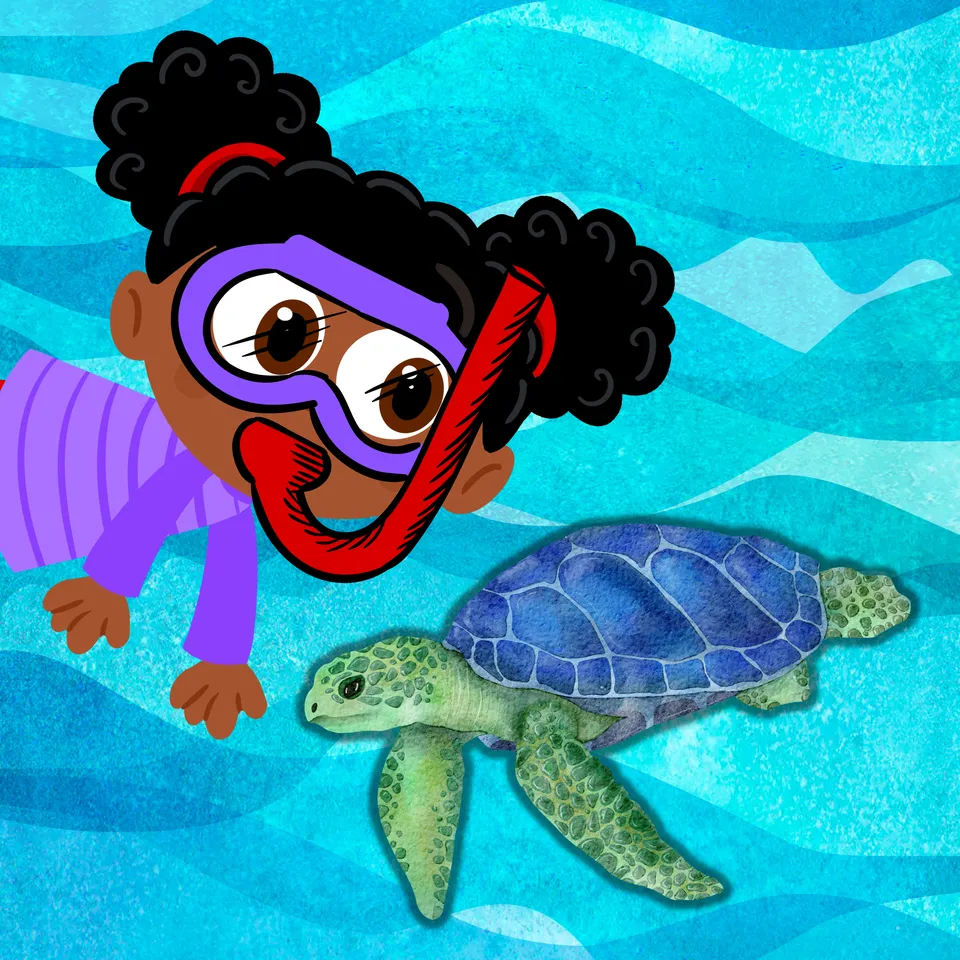
Food chains connect plants and animals by what they eat. Students journey into the deep with Jayda to experience some of these connections firsthand.
No specific background required.
Part of
Standards alignment
Common Core State Standards
- All animals need food in order to live and grow. They obtain their food from plants or from other animals. Plants need water and light to live and grow.
- The food of almost any kind of animal can be traced back to plants. Organisms are related in food webs in which some animals eat plants for food and other animals eat the animals that eat plants. Some organisms, such as fungi and bacteria, break down dead organisms (both plants or plants parts and animals) and therefore operate as “decomposers.” Decomposition eventually restores (recycles) some materials back to the soil. Organisms can survive only in environments in which their particular needs are met. A healthy ecosystem is one in which multiple species of different types are each able to meet their needs in a relatively stable web of life. Newly introduced species can damage the balance of an ecosystem.
- Use observations (firsthand or from media) to describe patterns and/or relationships in the natural and designed world(s) in order to answer scientific questions and solve problems.
- K-LS1-1 — Use observations to describe patterns of what plants and animals (including humans) need to survive.
Alabama
- SC23.2.7 — Obtain information to explain that there are many different kinds of living things that exist in habitats on land and in water.
- SC23.K.4 — Use observations to determine patterns of what plants and animals (including humans) need to survive, including light, water, and nutrients.
- SC23.K.6 — Use models of natural habitats to represent the interdependence among plants and animals native to their community.
- ELA21.1.11 — Utilize new academic, content-specific, grade-level vocabulary, make connections to previously learned words, and relate new words to background knowledge.
Alaska
- All animals need food in order to live and grow. They obtain their food from plants or from other animals. Plants need water and light to live and grow.
- The food of almost any kind of animal can be traced back to plants. Organisms are related in food webs in which some animals eat plants for food and other animals eat the animals that eat plants. Some organisms, such as fungi and bacteria, break down dead organisms (both plants or plants parts and animals) and therefore operate as “decomposers.” Decomposition eventually restores (recycles) some materials back to the soil. Organisms can survive only in environments in which their particular needs are met. A healthy ecosystem is one in which multiple species of different types are each able to meet their needs in a relatively stable web of life. Newly introduced species can damage the balance of an ecosystem.
- Use observations (firsthand or from media) to describe patterns and/or relationships in the natural and designed world(s) in order to answer scientific questions and solve problems.
- The energy released [from] food was once energy from the sun that was captured by plants in the chemical process that forms plant matter (from air and water).
Arizona
- 2.L2U1.10 — Develop a model representing how life on Earth depends on energy from the Sun and energy from other organisms.
- Identify questions and make predictions based on prior experiences.
- 3.L2U1.7 — Develop and use system models to describe the flow of energy from the Sun to and among living organisms.
- 3.L2U1.8 — Construct an argument from evidence that organisms are interdependent.
- L2 — Organisms require a supply of energy and materials for which they often depend on, or compete with, other organisms.
Arkansas
- All animals need food in order to live and grow. They obtain their food from plants or from other animals. Plants need water and light to live and grow.
- K-LS1-1 — Use observations to describe patterns of what plants and animals (including humans) need to survive.
- There are many different kinds of living things in any area, and they exist in different places on land and in water.
- 2-LS4-1 — Make observations of plants and animals to compare the diversity of life in different habitats.
California
- All animals need food in order to live and grow. They obtain their food from plants or from other animals. Plants need water and light to live and grow.
- The food of almost any kind of animal can be traced back to plants. Organisms are related in food webs in which some animals eat plants for food and other animals eat the animals that eat plants. Some organisms, such as fungi and bacteria, break down dead organisms (both plants or plants parts and animals) and therefore operate as “decomposers.” Decomposition eventually restores (recycles) some materials back to the soil. Organisms can survive only in environments in which their particular needs are met. A healthy ecosystem is one in which multiple species of different types are each able to meet their needs in a relatively stable web of life. Newly introduced species can damage the balance of an ecosystem.
- The energy released [from] food was once energy from the sun that was captured by plants in the chemical process that forms plant matter (from air and water).
- Use observations (firsthand or from media) to describe patterns and/or relationships in the natural and designed world(s) in order to answer scientific questions and solve problems.
Colorado
- LS1.C — Organization for Matter and Energy Flow in Organisms: All animals need food in order to live and grow. They obtain their food from plants or from other animals. Plants need water and light to live and grow.
- SC.K.2.1 — To live and grow, animals obtain food they need from plants or other animals, and plants need water and light.
- LS2.A — Interdependent Relationships in Ecosystems: Animals depend on their surroundings to get what they need, including food, water, shelter and a favorable temperature. Animals depend on plants or other animals for food. They use their senses to find food and water, and they use their body parts to gather, catch, eat and chew the food. Plants depend on air, water, minerals (in the soil) and light to grow. Animals can move around, but plants cannot, and they often depend on animals for pollination or to move their seeds around. Different plants survive better in different settings because they have varied needs for water, minerals and sunlight.
- SC.K.2.1.a — Use observations to describe patterns of what plants and animals (including humans) need to survive.
- Patterns in the natural world can be observed.
Connecticut
- All animals need food in order to live and grow. They obtain their food from plants or from other animals. Plants need water and light to live and grow.
- The food of almost any kind of animal can be traced back to plants. Organisms are related in food webs in which some animals eat plants for food and other animals eat the animals that eat plants. Some organisms, such as fungi and bacteria, break down dead organisms (both plants or plants parts and animals) and therefore operate as “decomposers.” Decomposition eventually restores (recycles) some materials back to the soil. Organisms can survive only in environments in which their particular needs are met. A healthy ecosystem is one in which multiple species of different types are each able to meet their needs in a relatively stable web of life. Newly introduced species can damage the balance of an ecosystem.
- Use observations (firsthand or from media) to describe patterns and/or relationships in the natural and designed world(s) in order to answer scientific questions and solve problems.
- K-LS1-1 — Use observations to describe patterns of what plants and animals (including humans) need to survive.
- There are many different kinds of living things in any area, and they exist in different places on land and in water.
Delaware
- All animals need food in order to live and grow. They obtain their food from plants or from other animals. Plants need water and light to live and grow.
- Use observations (firsthand or from media) to describe patterns and/or relationships in the natural and designed world(s) in order to answer scientific questions and solve problems.
- The food of almost any kind of animal can be traced back to plants. Organisms are related in food webs in which some animals eat plants for food and other animals eat the animals that eat plants. Some organisms, such as fungi and bacteria, break down dead organisms (both plants or plants parts and animals) and therefore operate as “decomposers.” Decomposition eventually restores (recycles) some materials back to the soil. Organisms can survive only in environments in which their particular needs are met. A healthy ecosystem is one in which multiple species of different types are each able to meet their needs in a relatively stable web of life. Newly introduced species can damage the balance of an ecosystem.
- K-LS1-1 — Use observations to describe patterns of what plants and animals (including humans) need to survive.
- 2-LS4-1 — Make observations of plants and animals to compare the diversity of life in different habitats.
Florida
- SC.4.L.17.3 — Trace the flow of energy from the Sun as it is transferred along the food chain through the producers to the consumers.
- SC.3.L.17.2 — Recognize that plants use energy from the Sun, air, and water to make their own food.
- SC.4.E.6.5 — Investigate how technology and tools help to extend the ability of humans to observe very small things and very large things.
- SC.4.L.17.2 — Explain that animals, including humans, cannot make their own food and that when animals eat plants or other animals, the energy stored in the food source is passed to them.
Georgia
- S4L1.b — Develop simple models to illustrate the flow of energy through a food web/food chain beginning with sunlight and including producers, consumers, and decomposers.
- S4L1.a — Develop a model to describe the roles of producers, consumers, and decomposers in a community.
Hawaii
- All animals need food in order to live and grow. They obtain their food from plants or from other animals. Plants need water and light to live and grow.
- Use observations (firsthand or from media) to describe patterns and/or relationships in the natural and designed world(s) in order to answer scientific questions and solve problems.
- The food of almost any kind of animal can be traced back to plants. Organisms are related in food webs in which some animals eat plants for food and other animals eat the animals that eat plants. Some organisms, such as fungi and bacteria, break down dead organisms (both plants or plants parts and animals) and therefore operate as “decomposers.” Decomposition eventually restores (recycles) some materials back to the soil. Organisms can survive only in environments in which their particular needs are met. A healthy ecosystem is one in which multiple species of different types are each able to meet their needs in a relatively stable web of life. Newly introduced species can damage the balance of an ecosystem.
- K-LS1-1 — Use observations to describe patterns of what plants and animals (including humans) need to survive.
Idaho
- All animals need food in order to live and grow. They obtain their food from plants or from other animals. Plants need water and light to live and grow. (K-LS-1.1)
- The food of almost any kind of animal can be traced back to plants. Organisms are related in food webs in which some animals eat plants for food and other animals eat the animals that eat plants. Some organisms, such as fungi and bacteria, break down dead organisms (both plants and animals) and therefore operate as “decomposers.” Decomposition eventually restores (recycles) some materials back to the soil. Organisms can survive only in environments in which their particular needs are met. A healthy ecosystem is one in which multiple species of different types are each able to meet their needs in a relatively stable web of life. Newly introduced species can damage the balance of an ecosystem. (5-LS-2.4)
- K-LS-1.1 — Students who demonstrate understanding can: Use observations to describe how plants and animals are alike and different in terms of how they live and grow.
- There are many different kinds of living things in any area, and they exist in different places on land and in water. (2-LS-2.1)
- The energy released from food was once energy from the Sun that was captured by plants in the chemical process that forms plant matter (from air and water). (5-LS-1.1, 5-PS-3.1)
Illinois
- LS1.C-P1 — All animals need food in order to live and grow. They obtain their food from plants or from other animals. Plants need water and light to live and grow.
- DATA-P3 — Use observations (firsthand or from media) to describe patterns in the natural world in order to answer scientific questions.
- K-LS1-1 — Use observations to describe patterns of what plants and animals (including humans) need to survive.
- LS2.A-E1 — The food of almost any kind of animal can be traced back to plants. Organisms are related in food webs in which some animals eat plants for food and other animals eat the animals that eat plants. Some organisms, such as fungi and bacteria, break down dead organisms (both plants or plants parts and animals) and therefore operate as “decomposers.” Decomposition eventually restores (recycles) some materials back to the soil. Organisms can survive only in environments in which their particular needs are met. A healthy ecosystem is one in which multiple species of different types are each able to meet their needs in a relatively stable web of life. Newly introduced species can damage the balance of an ecosystem.
Indiana
- K.LS.3 — Use observations to describe patterns of what plants and animals (including humans) need to survive.
- 1.LS.3 — Make observations of plants and animals to compare the diversity of life in different habitats.
Iowa
- All animals need food in order to live and grow. They obtain their food from plants or from other animals. Plants need water and light to live and grow.
- Use observations (firsthand or from media) to describe patterns and/or relationships in the natural and designed world(s) in order to answer scientific questions and solve problems.
- The food of almost any kind of animal can be traced back to plants. Organisms are related in food webs in which some animals eat plants for food and other animals eat the animals that eat plants. Some organisms, such as fungi and bacteria, break down dead organisms (both plants or plants parts and animals) and therefore operate as “decomposers.” Decomposition eventually restores (recycles) some materials back to the soil. Organisms can survive only in environments in which their particular needs are met. A healthy ecosystem is one in which multiple species of different types are each able to meet their needs in a relatively stable web of life. Newly introduced species can damage the balance of an ecosystem.
- K-LS1-1 — Use observations to describe patterns of what plants and animals (including humans) need to survive.
- 2-LS4-1 — Make observations of plants and animals to compare the diversity of life in different habitats.
Kansas
- All animals need food in order to live and grow. They obtain their food from plants or from other animals. Plants need water and light to live and grow.
- Use observations (firsthand or from media) to describe patterns and/or relationships in the natural and designed world(s) in order to answer scientific questions and solve problems.
- The food of almost any kind of animal can be traced back to plants. Organisms are related in food webs in which some animals eat plants for food and other animals eat the animals that eat plants. Some organisms, such as fungi and bacteria, break down dead organisms (both plants or plants parts and animals) and therefore operate as “decomposers.” Decomposition eventually restores (recycles) some materials back to the soil. Organisms can survive only in environments in which their particular needs are met. A healthy ecosystem is one in which multiple species of different types are each able to meet their needs in a relatively stable web of life. Newly introduced species can damage the balance of an ecosystem.
- There are many different kinds of living things in any area, and they exist in different places on land and in water.
Kentucky
- All animals need food in order to live and grow. They obtain their food from plants or from other animals. Plants need water and light to live and grow.
- Patterns in the natural and human designed world can be observed, used to describe phenomena, and used as evidence.
- The food of almost any kind of animal can be traced back to plants. Organisms are related in food webs in which some animals eat plants for food and other animals eat the animals that eat plants. Some organisms, such as fungi and bacteria, break down dead organisms (both plants or plants parts and animals) and therefore operate as “decomposers.” Decomposition eventually restores (recycles) some materials back to the soil. Organisms can survive only in environments in which their particular needs are met. A healthy ecosystem is one in which multiple species of different types are each able to meet their needs in a relatively stable web of life. Newly introduced species can damage the balance of an ecosystem.
- K-LS1-1 — Use observations to describe patterns of what plants and animals (including humans) need to survive.
- Make predictions based on prior experiences.
Louisiana
- Patterns in the natural and human designed world can be observed, used to describe phenomena, and used as evidence.
- Use observations (firsthand or from media) to describe patterns and/or relationships in the natural and designed world(s) in order to answer scientific questions and solve problems.
- 2-LS4-1 — Make observations of plants and animals to compare the diversity of life in different habitats.
- K-LS1-1 — Use observations to describe patterns of what plants and animals (including humans) need to survive.
Maine
- K-LS1-1 — Use observations to describe patterns of what plants and animals (including humans) need to survive.
Maryland
- DCI.LS1.C.K-2.1 — All animals need food in order to live and grow. They obtain their food from plants or from other animals. Plants need water and light to live and grow.
- DCI.LS2.A.3-5.1 — The food of almost any kind of animal can be traced back to plants. Organisms are related in food webs in which some animals eat plants for food and other animals eat the animals that eat plants. Some organisms, such as fungi and bacteria, break down dead organisms (both plants or plants parts and animals) and therefore operate as “decomposers.” Decomposition eventually restores (recycles) some materials back to the soil. Organisms can survive only in environments in which their particular needs are met. A healthy ecosystem is one in which multiple species of different types are each able to meet their needs in a relatively stable web of life. Newly introduced species can damage the balance of an ecosystem.
- K-LS1-1 — Use observations to describe patterns of what plants and animals (including humans) need to survive.
- SEP.4.K-2.3 — Use observations (firsthand or from media) to describe patterns and/or relationships in the natural and designed world(s) in order to answer scientific questions and solve problems.
- DCI.LS4.D.K-2.1 — There are many different kinds of living things in any area, and they exist in different places on land and in water.
Massachusetts
- K-LS1-1 — Observe and communicate that animals (including humans) and plants need food, water, and air to survive. Animals get food from plants or other animals. Plants make their own food and need light to live and grow.
- 2-LS2-3(MA) — Develop and use models to compare how plants and animals depend on their surroundings and other living things to meet their needs in the places they live.
- PreK-LS2-3(MA) — Give examples from the local environment of how animals and plants are dependent on one another to meet their basic needs.
Michigan
- 2-LS4-1 — Make observations of plants and animals to compare the diversity of life in different habitats.
Minnesota
- 0L.1.2.1.2 — Make observations of plants and animals to compare the diversity of life in different habitats. (P: 3, CC: 1, CI: LS4)
- 0L.2.1.1.3 — Record and use observations to describe patterns of what plants and animals (including humans) need to survive. (P: 4, CC: 1, CI: LS1)
- 2.1.1 — Students will be able to represent observations and data in order to recognize patterns in the data, the meaning of those patterns, and possible relationships between variables.
Mississippi
- L.K.3B.1 — Observe and communicate that animals get food from plants or other animals. Plants make their own food and need light to live and grow.
- L.2.3B.1 — Evaluate and communicate findings from informational text or other media to describe and to compare how animals interact with other animals and plants in the environment (i.e., predatorprey relationships, herbivore, carnivore, omnivore).
Missouri
- The food of almost any kind of animal can be traced back to plants. Organisms are related in food webs in which some animals eat plants for food and other animals eat the animals that eat plants. Some organisms, such as fungi and bacteria, break down dead organisms (both plants or plants parts and animals) and therefore operate as “decomposers.” Decomposition eventually restores (recycles) some materials back to the soil. Organisms can survive only in environments in which their particular needs are met. A healthy ecosystem is one in which multiple species of different types are each able to meet their needs in a relatively stable web of life. Newly introduced species can damage the balance of an ecosystem.
- All animals need food in order to live and grow. They obtain their food from plants or from other animals. Plants need water and light to live and grow.
- All organisms have external parts. Different animals use their body parts in different ways to see, hear, grasp objects, protect themselves, move from place to place, and seek, find, and take in food, water and air. Plants also have different parts (roots, stems, leaves, flowers, fruits) that help them survive and grow.
- Use observations (firsthand or from media) to describe patterns and/or relationships in the natural and designed world(s) in order to answer scientific questions and solve problems.
- There are many different kinds of living things in any area, and they exist in different places on land and in water.
Montana
- 2-LS4-1 — make observations of plants and animals to compare and contrast the diversity of life in different habitats.
- K-LS1-1 — use observations to describe patterns of what plants and animals, including humans, need to survive.
- L.1.5.b — Define words by category and by one or more key attributes (e.g., a duck is a bird that swims; a tiger is a large cat with stripes).
Nebraska
- All animals need food in order to live and grow. They obtain their food from plants or from other animals. Plants need water and light to live and grow.
- The food of almost any kind of animal can be traced back to plants. Organisms are related in food webs in which some animals eat plants for food and other animals eat the animals that eat plants. Some organisms, such as fungi and bacteria, break down dead organisms (both plants or plants parts and animals) and therefore operate as “decomposers.” Decomposition eventually restores (recycles) some materials back to the soil. Organisms can survive only in environments in which their particular needs are met. A healthy ecosystem is one in which multiple species of different types are each able to meet their needs in a relatively stable web of life. Newly introduced species can damage the balance of an ecosystem.
- Use observations (firsthand or from media) to describe patterns and/or relationships in the natural and designed world(s) in order to answer scientific questions and solve problems.
- SC.2.7.2 — Gather, analyze, and communicate evidence of interdependent relationships in ecosystems.
Nevada
- All animals need food in order to live and grow. They obtain their food from plants or from other animals. Plants need water and light to live and grow.
- The food of almost any kind of animal can be traced back to plants. Organisms are related in food webs in which some animals eat plants for food and other animals eat the animals that eat plants. Some organisms, such as fungi and bacteria, break down dead organisms (both plants or plants parts and animals) and therefore operate as “decomposers.” Decomposition eventually restores (recycles) some materials back to the soil. Organisms can survive only in environments in which their particular needs are met. A healthy ecosystem is one in which multiple species of different types are each able to meet their needs in a relatively stable web of life. Newly introduced species can damage the balance of an ecosystem.
- Use observations (firsthand or from media) to describe patterns and/or relationships in the natural and designed world(s) in order to answer scientific questions and solve problems.
- K-LS1-1 — Use observations to describe patterns of what plants and animals (including humans) need to survive.
New Hampshire
- All animals need food in order to live and grow. They obtain their food from plants or from other animals. Plants need water and light to live and grow.
- Use observations (firsthand or from media) to describe patterns and/or relationships in the natural and designed world(s) in order to answer scientific questions and solve problems.
- The food of almost any kind of animal can be traced back to plants. Organisms are related in food webs in which some animals eat plants for food and other animals eat the animals that eat plants. Some organisms, such as fungi and bacteria, break down dead organisms (both plants or plants parts and animals) and therefore operate as “decomposers.” Decomposition eventually restores (recycles) some materials back to the soil. Organisms can survive only in environments in which their particular needs are met. A healthy ecosystem is one in which multiple species of different types are each able to meet their needs in a relatively stable web of life. Newly introduced species can damage the balance of an ecosystem.
- K-LS1-1 — Use observations to describe patterns of what plants and animals (including humans) need to survive.
- There are many different kinds of living things in any area, and they exist in different places on land and in water.
New Jersey
- The food of almost any kind of animal can be traced back to plants. Organisms are related in food webs in which some animals eat plants for food and other animals eat the animals that eat plants. Some organisms, such as fungi and bacteria, break down dead organisms (both plants or plants parts and animals) and therefore operate as “decomposers.” Decomposition eventually restores (recycles) some materials back to the soil. Organisms can survive only in environments in which their particular needs are met. A healthy ecosystem is one in which multiple species of different types are each able to meet their needs in a relatively stable web of life. Newly introduced species can damage the balance of an ecosystem.
- The energy released [from] food was once energy from the sun that was captured by plants in the chemical process that forms plant matter (from air and water).
- Use observations (firsthand or from media) to describe patterns and/or relationships in the natural and designed world(s) in order to answer scientific questions and solve problems.
New Mexico
- All animals need food in order to live and grow. They obtain their food from plants or from other animals. Plants need water and light to live and grow.
- The food of almost any kind of animal can be traced back to plants. Organisms are related in food webs in which some animals eat plants for food and other animals eat the animals that eat plants. Some organisms, such as fungi and bacteria, break down dead organisms (both plants or plants parts and animals) and therefore operate as “decomposers.” Decomposition eventually restores (recycles) some materials back to the soil. Organisms can survive only in environments in which their particular needs are met. A healthy ecosystem is one in which multiple species of different types are each able to meet their needs in a relatively stable web of life. Newly introduced species can damage the balance of an ecosystem.
- Use observations (firsthand or from media) to describe patterns and/or relationships in the natural and designed world(s) in order to answer scientific questions and solve problems.
- There are many different kinds of living things in any area, and they exist in different places on land and in water.
New York
- All animals need food in order to live and grow. They obtain their food from plants or from other animals. Plants need water and light to live and grow.
- The food of almost any kind of animal can be traced back to plants. Organisms are related in food webs in which some animals eat plants for food and other animals eat the animals that eat plants. Some organisms, such as fungi and bacteria, break down dead organisms (both plants or plants parts and animals) and therefore operate as “decomposers.” Decomposition eventually restores (recycles) some materials back to the soil. Organisms can survive only in environments in which their particular needs are met. A healthy ecosystem is one in which multiple species of different types are each able to meet their needs in a relatively stable web of life. Newly introduced species can damage the balance of an ecosystem.
- Use observations (firsthand or from media) to describe patterns and/or relationships in the natural and designed world(s) in order to answer scientific questions and solve problems.
- Patterns in the natural and human designed world can be observed, used to describe phenomena, and used as evidence.
- There are many different kinds of living things in any area, and they exist in different places on land and in water.
North Carolina
- LS.K.1.2 — Use models to exemplify how animals use their body parts to obtain food and other resources, protect themselves, and move from place to place.
- LS.K.1.2 — Use models to exemplify how animals use their body parts to obtain food and other resources, protect themselves, and move from place to place.
North Dakota
- All animals need food in order to live and grow. They obtain their food from plants or from other animals. Plants need water and light to live and grow.
- There are many kinds of living things in any area, and they exist in different places on land and in water.
- 2-LS4-1 — Make observations of plants and animals to compare the diversity of life in different habitats.
- K-LS1-1 — Describe patterns, through observation, of what plants and animals (including humans) need to survive.
Ohio
- 1.LS.1 — Living things have basic needs, which are met by obtaining materials from the physical environment.
- K.LS.2 — Living things have physical traits and behaviors, which influence their survival.
- SL.1.2 — Ask and answer questions about key details in a text read aloud or information presented in various media and other formats (e.g., orally).
Oklahoma
- Animals obtain their food from plants or from other animals. (K.LS1.1)
- The food of almost any kind of animal can be traced back to plants. (5.LS2.1)
- Organisms are related in food webs in which some animals eat plants for food and other animals eat the animals that eat plants. (5.LS2.1)
- K.LS1.1 — Use observations to describe patterns of what plants and animals (including humans) need to survive.
- 2.LS4.1 — Make observations of plants and animals to compare the diversity of life in different habitats.
Oregon
- 2.LS4.1 — Make observations of plants and animals to compare the diversity of life in different habitats. [Clarification Statement: Emphasis is on the diversity of living things in each of a variety of different habitats.] [Assessment Boundary: Assessment does not include specific animal and plant names in specific habitats.]
- K.LS1.1 — Use observations to describe patterns of what plants and animals (including humans) need to survive. [Clarification Statement: Examples of patterns could include that animals need to take in food but plants do not; the different kinds of food needed by different types of animals; the requirement of plants to have light; and, that all living things need water.][assessment boundary: assessment is limited to patterns of light, food, or water as sources of matter and energy needed for growth. the process of photosynthesis is beyond the standard at this grade level.]
- K.ESS3.1 — Use a model to represent the relationship between the needs of different plants or animals (including humans) and the places they live. [Clarification Statement: Examples of relationships could include that deer eat buds and leaves, therefore, they usually live in forested areas; and, grasses need sunlight so they often grow in meadows. Plants, animals, and their surroundings make up a system.][assessment boundary: modeling is limited to describing the relationship and does not include patterns of structure and function to show how needs are met. impact on the environment is beyond the standard.]
Pennsylvania
- All animals need food in order to live and grow. They obtain their food from plants or from other animals. Plants need water and light to live and grow.
- There are many different kinds of living things in any area, and they exist in different places on land and in water.
- The food of almost any kind of animal can be traced back to plants. Organisms are related in food webs in which some animals eat plants for food and other animals eat the animals that eat plants. Some organisms, such as fungi and bacteria, break down dead organisms (both plants or plants parts and animals) and therefore operate as “decomposers.” Decomposition eventually restores (recycles) some materials back to the soil. Organisms can survive only in environments in which their particular needs are met. A healthy ecosystem is one in which multiple species of different types are each able to meet their needs in a relatively stable web of life. Newly introduced species can damage the balance of an ecosystem.
- Use observations (firsthand or from media) to describe patterns and/or relationships in the natural and designed world(s) in order to answer scientific questions and solve problems.
- 3.1.K.A — Use observations to describe patterns of what plants and animals (including humans) need to survive.
Rhode Island
- All animals need food in order to live and grow. They obtain their food from plants or from other animals. Plants need water and light to live and grow.
- The food of almost any kind of animal can be traced back to plants. Organisms are related in food webs in which some animals eat plants for food and other animals eat the animals that eat plants. Some organisms, such as fungi and bacteria, break down dead organisms (both plants or plants parts and animals) and therefore operate as “decomposers.” Decomposition eventually restores (recycles) some materials back to the soil. Organisms can survive only in environments in which their particular needs are met. A healthy ecosystem is one in which multiple species of different types are each able to meet their needs in a relatively stable web of life. Newly introduced species can damage the balance of an ecosystem.
- Use observations (firsthand or from media) to describe patterns and/or relationships in the natural and designed world(s) in order to answer scientific questions and solve problems.
- K-LS1-1 — Use observations to describe patterns of what plants and animals (including humans) need to survive.
- The energy released [from] food was once energy from the sun that was captured by plants in the chemical process that forms plant matter (from air and water).
South Carolina
- K-LS1-1. — Use observations to describe patterns of what plants and animals (including humans) need to survive. Clarification Statement: Examples of patterns could include that animals need to take in food, but plants make food; the different kinds of food needed by different types of animals; the requirement of plants to have light; and that all living things need water. Patterns could be described using multiple modes of representation.
- K-LS1-1.DCI.C: — Organization for Matter and Energy Flow in Organisms All animals need food in order to live and grow. They obtain their food from plants or from other animals. Plants need water and light to live and grow. NRC Framework Link
- 2-LS4-1. — Make observations of plants and animals to compare patterns of diversity within different habitats. Clarification Statement: Emphasis is on the diversity of living things in a variety of different habitats. State Assessment Boundary: Assessment does not include specific animal and plant names in specific habitats.
- K-LS1-1.SEP.A: — Analyzing and Interpreting Data Analyzing data in K-2 builds on prior experiences and progresses to collecting, recording, and sharing observations. Use observations (firsthand or from media) to describe patterns in the natural world in order to answer scientific questions. NRC Framework Link
- 2-LS4-1.DCI.D: — Biodiversity and Humans There are many different kinds of living things in any area, and they exist in different places on land and in water. NRC Framework Link
South Dakota
- What is the relationship between animals and what they eat, and how does that determine where they live?
- Use observations (firsthand or from media) to describe patterns and/or relationships in the natural and designed world(s) in order to answer scientific questions and solve problems.
- K-LS1-1 — Describe patterns of what plants and animals (including humans) need to survive.
- 2-LS4-1 — Make observations of plants and animals to compare the diversity of life in different habitats.
Tennessee
- 2.LS2.1 — Develop and use models to compare how animals depend on their surroundings and other living things to meet their needs in the places they live.
Texas
- 1.12C — identify and illustrate how living organisms depend on each other through food chains.
- 1.9C — gather evidence of interdependence among living organisms such as energy transfer through food chains or animals using plants for shelter.
- 2.12B — create and describe food chains identifying producers and consumers to demonstrate how animals depend on other living things; and
- 2.9C — compare the ways living organisms depend on each other and on their environments such as through food chains.
- K.3C — explore that scientists investigate different things in the natural world and use tools to help in their investigations.
Utah
- 2.2.1 — Obtain, evaluate, and communicate information about patterns of living things (plants and animals, including humans) in different habitats. Emphasize the diversity of living things in land and water habitats. Examples of *patterns*in habitats could include descriptions of temperature or precipitation and the types of plants and animals found in land habitats. (LS2.C, LS4.C, LS4.D)
- K.2.1 — Obtain, evaluate, and communicate information to describe patterns of what living things (plants and animals, including humans) need to survive. Emphasize the similarities and differences between the survival needs of all living things. Examples could include that plants depend on air, water, minerals, and light to survive, or animals depend on plants or other animals to survive. (LS1.C, LS2.B)
- Students describe cycling of matter and flow of energy through systems, including transfer, transformation, and conservation of energy and matter.
- Students investigate and explain causal relationships in order to make tests and predictions.
Vermont
- All animals need food in order to live and grow. They obtain their food from plants or from other animals. Plants need water and light to live and grow.
- The food of almost any kind of animal can be traced back to plants. Organisms are related in food webs in which some animals eat plants for food and other animals eat the animals that eat plants. Some organisms, such as fungi and bacteria, break down dead organisms (both plants or plants parts and animals) and therefore operate as “decomposers.” Decomposition eventually restores (recycles) some materials back to the soil. Organisms can survive only in environments in which their particular needs are met. A healthy ecosystem is one in which multiple species of different types are each able to meet their needs in a relatively stable web of life. Newly introduced species can damage the balance of an ecosystem.
- Use observations (firsthand or from media) to describe patterns and/or relationships in the natural and designed world(s) in order to answer scientific questions and solve problems.
- K-LS1-1 — Use observations to describe patterns of what plants and animals (including humans) need to survive.
Virginia
- 3.5.b — Relationships exist among organisms in an ecosystem.
- 2.5.a — Plants and animals are interdependent with their living and nonliving surroundings.
- K.1.a.iii — Make predictions based on observations.
- K.1.c.i — Describe patterns.
- K.1.b.i — Make observations to collect data.
Washington
- All animals need food in order to live and grow. They obtain their food from plants or from other animals. Plants need water and light to live and grow.
- The energy released [from] food was once energy from the sun that was captured by plants in the chemical process that forms plant matter (from air and water).
- Use observations (firsthand or from media) to describe patterns and/or relationships in the natural and designed world(s) in order to answer scientific questions and solve problems.
- The food of almost any kind of animal can be traced back to plants. Organisms are related in food webs in which some animals eat plants for food and other animals eat the animals that eat plants. Some organisms, such as fungi and bacteria, break down dead organisms (both plants or plants parts and animals) and therefore operate as “decomposers.” Decomposition eventually restores (recycles) some materials back to the soil. Organisms can survive only in environments in which their particular needs are met. A healthy ecosystem is one in which multiple species of different types are each able to meet their needs in a relatively stable web of life. Newly introduced species can damage the balance of an ecosystem.
- There are many different kinds of living things in any area, and they exist in different places on land and in water.
Washington, D.C.
- Patterns in the natural and human designed world can be observed, used to describe phenomena, and used as evidence.
- Use observations (firsthand or from media) to describe patterns and/or relationships in the natural and designed world(s) in order to answer scientific questions and solve problems.
- Make predictions based on prior experiences.
- 2-LS4-1 — Make observations of plants and animals to compare the diversity of life in different habitats.
- K-LS1-1 — Use observations to describe patterns of what plants and animals (including humans) need to survive.
West Virginia
- Tracking energy and matter flows into, out of, and within systems to understand system behavior
- Observing patterns
- Building and appropriately using science domain vocabulary and phrases
- S.K.3 — Use observations to describe patterns of what plants and animals (including humans) need to survive.
- S.2.7 — Make observations of plants and animals to compare the diversity of life in different habitats.
Wisconsin
- Animals obtain food they need from plants or other animals. Plants need water and light.
Wyoming
- Animals obtain food they need from plants or other animals. Plants need water and light.
- Use observations (firsthand or from media) to describe patterns and/or relationships in the natural and designed world(s) in order to answer scientific questions and solve problems.
- The food of almost any animal can be traced back to plants. Organisms are related in food webs in which some animals eat plants for food and other animals eat the animals that eat plants, while decomposers restore some materials back to the soil.
- K-LS1-1 — Use observations to describe patterns of what plants and animals (including humans) need to survive.
- 2-LS4-1 — Make observations of plants and animals to compare the diversity of life in different habitats.