Savanna Habitats
Ages 5–8 · 9 minutes · Science, Geography
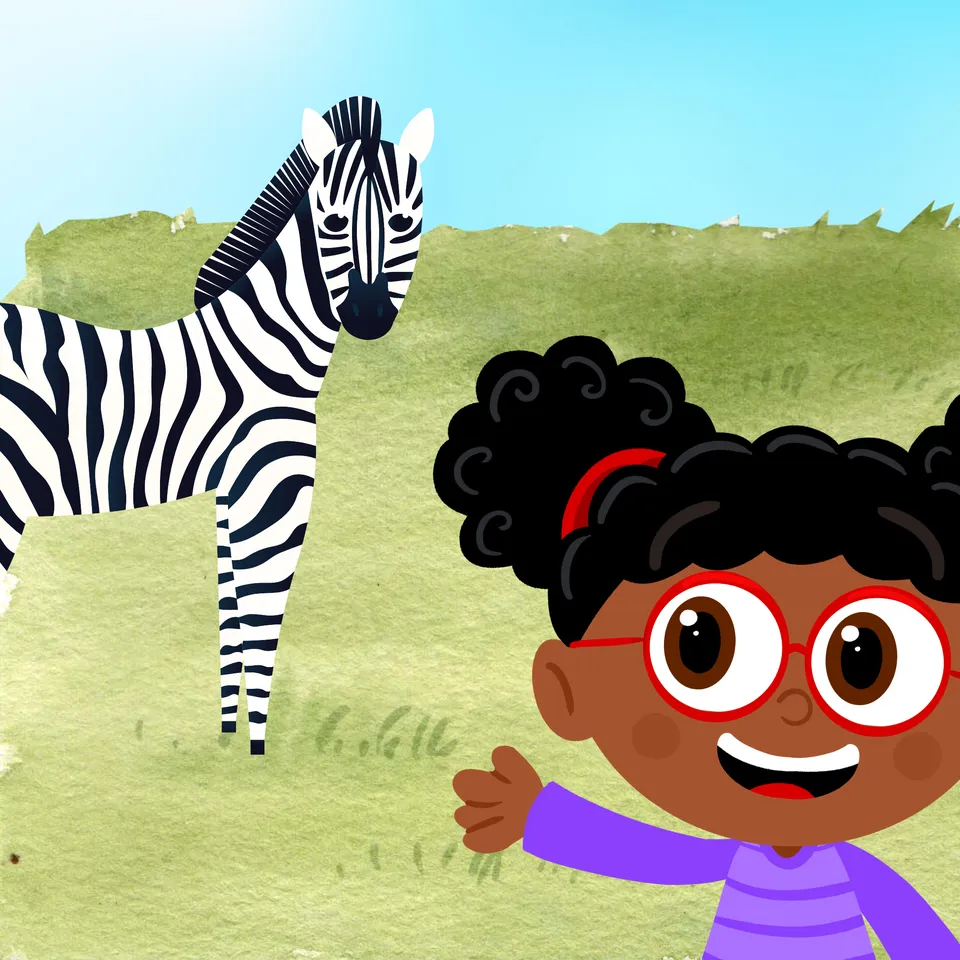
Journey with Jayda to the savanna for a trip all about migration!
Animals migrate for many reasons and travel truly amazing distances. Students join Jayda, Murphy, and a million wildebeest to see some of the most amazing migrations on the planet and learn what makes these epic trips successful or not.
No specific background required.
Part of
Standards alignment
Common Core State Standards
- Being part of a group helps animals obtain food, defend themselves, and cope with changes. Groups may serve different functions and vary dramatically in size.
- 2-LS4-1 — Make observations of plants and animals to compare the diversity of life in different habitats.
- When the environment changes in ways that affect a place’s physical characteristics, temperature, or availability of resources, some organisms survive and reproduce, others move to new locations, yet others move into the transformed environment, and some die.
- There are many different kinds of living things in any area, and they exist in different places on land and in water.
- 3-LS2-1 — Construct an argument that some animals form groups that help members survive.
Alabama
- SC23.2.7 — Obtain information to explain that there are many different kinds of living things that exist in habitats on land and in water.
- SC23.3.10 — Make a claim from evidence that an organism's likelihood of survival depends upon access to sufficient resources in its habitat, including sunlight, air, water, food, and shelter.
- SC23.3.11 — Construct explanations of how forming groups helps some organisms survive.
- SC23.3.12 — Obtain and communicate information regarding the impact of existing solutions on plant and animal populations when environmental changes occur.
Alaska
- Things that people do to live comfortably can affect the world around them. But they can make choices that reduce their impacts on the land, water, air, and other living things.
- When the environment changes in ways that affect a place’s physical characteristics, temperature, or availability of resources, some organisms survive and reproduce, others move to new locations, yet others move into the transformed environment, and some die.
- 2-LS4-1 — Make observations of plants and animals to compare the diversity of life in different habitats.
- 3-LS2-1 — Construct an argument that some animals form groups that help members survive.
- K-ESS3-3 — Communicate solutions that will reduce the impact of humans on the land, water, air, and/or other living things in the local environment.
Arizona
- K.E1U1.4 — Observe, describe, ask questions, and predict seasonal weather patterns; and how those patterns impact plants and animals (including humans).
- 1.L2U1.8 — Construct an explanation describing how organisms obtain resources from the environment including materials that are used again by other organisms.
- 2.E1U3.7 — Construct an argument from evidence regarding positive and negative changes in water and land systems that impact humans and the environment.
- 2.L2U1.9 — Obtain, analyze, and communicate evidence that organisms need a source of energy, air, water, and certain temperature conditions to survive.
Arkansas
- Being part of a group helps animals obtain food, defend themselves, and cope with changes. Groups may serve different functions and vary dramatically in size.
- When the environment changes in ways that affect a place’s physical characteristics, temperature, or availability of resources, some organisms survive and reproduce, others move to new locations, yet others move into the transformed environment, and some die.
- 3-LS2-1 — Construct an argument that some animals form groups that help members survive.
- K-ESS3-3 — Communicate solutions that will reduce the impact of humans on the land, water, air, and/or other living things in the local environment.
- 2-LS4-1 — Make observations of plants and animals to compare the diversity of life in different habitats.
California
- Being part of a group helps animals obtain food, defend themselves, and cope with changes. Groups may serve different functions and vary dramatically in size.
- When the environment changes in ways that affect a place’s physical characteristics, temperature, or availability of resources, some organisms survive and reproduce, others move to new locations, yet others move into the transformed environment, and some die.
- 3-LS2-1 — Construct an argument that some animals form groups that help members survive.
- 2-LS4-1 — Make observations of plants and animals to compare the diversity of life in different habitats.
- 3-LS4-4 — Make a claim about the merit of a solution to a problem caused when the environment changes and the types of plants and animals that live there may change.
Colorado
- LS2.C — Ecosystem Dynamics, Functioning, and Resilience: When the environment changes in ways that affect a place’s characteristics, temperature or availability of resources, some organisms survive and reproduce, others move to new locations, yet others move into the transformed environment, and some die.
- LS2.D — Social Interactions and Group Behavior: Being part of a group helps animals obtain food, defend themselves and cope with changes. Groups may serve different functions and vary dramatically in size.
- SC.3.2.2.a — Construct an argument that some animals form groups that help members survive.
- LS4.D — Biodiversity and Humans: Populations live in a variety of habitats, and change in those habitats affects the organisms living there.
- SC.3.2.5.b — Make a claim about the merit of a solution to a problem caused when the environment changes and the types of plants and animals that live there may change.
Connecticut
- When the environment changes in ways that affect a place’s physical characteristics, temperature, or availability of resources, some organisms survive and reproduce, others move to new locations, yet others move into the transformed environment, and some die.
- Being part of a group helps animals obtain food, defend themselves, and cope with changes. Groups may serve different functions and vary dramatically in size.
- There are many different kinds of living things in any area, and they exist in different places on land and in water.
- 2-LS4-1 — Make observations of plants and animals to compare the diversity of life in different habitats.
- 3-LS2-1 — Construct an argument that some animals form groups that help members survive.
- 3-LS4-4 — Make a claim about the merit of a solution to a problem caused when the environment changes and the types of plants and animals that live there may change.
Delaware
- 3-LS2-1 — Construct an argument that some animals form groups that help members survive.
- When the environment changes in ways that affect a place’s physical characteristics, temperature, or availability of resources, some organisms survive and reproduce, others move to new locations, yet others move into the transformed environment, and some die.
- 2-LS4-1 — Make observations of plants and animals to compare the diversity of life in different habitats.
- 3-LS4-4 — Make a claim about the merit of a solution to a problem caused when the environment changes and the types of plants and animals that live there may change.
- K-ESS3-3 — Communicate solutions that will reduce the impact of humans on the land, water, air, and/or other living things in the local environment.
Florida
- SC.2.L.17.2 — Recognize and explain that living things are found all over Earth, but each is only able to live in habitats that meet its basic needs.
- SC.3.L.17.1 — Describe how animals and plants respond to changing seasons.
- SC.1.L.17.1 — Through observation, recognize that all plants and animals, including humans, need the basic necessities of air, water, food, and space.
- SC.4.L.17.4 — Recognize ways plants and animals, including humans, can impact the environment.
- SC.K.L.14.3 — Observe plants and animals, describe how they are alike and how they are different in the way they look and in the things they do.
Georgia
- S3L1.b — Construct an explanation of how external features and adaptations (camouflage, hibernation, migration, mimicry) of animals allow them to survive in their habitat.
- S3L2.b — Explore, research, and communicate solutions, such as conservation of resources and recycling of materials, to protect plants and animals.
- S3L1.c — Use evidence to construct an explanation of why some organisms can thrive in one habitat and not in another.
Hawaii
- Being part of a group helps animals obtain food, defend themselves, and cope with changes. Groups may serve different functions and vary dramatically in size.
- Things that people do to live comfortably can affect the world around them. But they can make choices that reduce their impacts on the land, water, air, and other living things.
- When the environment changes in ways that affect a place’s physical characteristics, temperature, or availability of resources, some organisms survive and reproduce, others move to new locations, yet others move into the transformed environment, and some die.
- 2-LS4-1 — Make observations of plants and animals to compare the diversity of life in different habitats.
- 3-LS2-1 — Construct an argument that some animals form groups that help members survive.
Idaho
- There are many different kinds of living things in any area, and they exist in different places on land and in water. (2-LS-2.1)
- 2-LS-2.1 — Students who demonstrate understanding can: Make observations of plants and animals to compare the diversity of life in different habitats.
- Being part of a group helps animals obtain food, defend themselves, and cope with changes. Groups may serve different functions and vary dramatically in size. (3-LS-2.1)
- 3-LS-2.1 — Students who demonstrate understanding can: Construct an argument that some animals form groups that help members survive.
- K-ESS-1.2 — Students who demonstrate understanding can: With guidance and support, use evidence to construct an explanation of how plants and animals interact with their environment to meet their needs.
Illinois
- LS2.C-E1 — When the environment changes in ways that affect a place’s physical characteristics, temperature, or availability of resources, some organisms survive and reproduce, others move to new locations, yet others move into the transformed environment, and some die.
- LS2.D-E1 — Being part of a group helps animals obtain food, defend themselves, and cope with changes. Groups may serve different functions and vary dramatically in size (Note: Moved from K–2).
- 3-LS2-1 — Construct an argument that some animals form groups that help members survive.
- 3-LS4-4 — Make a claim about the merit of a solution to a problem caused when the environment changes and the types of plants and animals that live there may change.
- LS4.D-E1 — Populations live in a variety of habitats, and change in those habitats affects the organisms living there.
Indiana
- 1.LS.3 — Make observations of plants and animals to compare the diversity of life in different habitats.
- 1.LS.4 — Use a model to represent the relationship between the needs of different plants and animals (including humans) and the places they live.
- 3.LS.4 — Construct an argument that some animals form groups that help members survive.
- K.ESS.4 — Communicate solutions that will reduce the impact of humans on the land, water, air, and/or other living things in the local environment.
Iowa
- Being part of a group helps animals obtain food, defend themselves, and cope with changes. Groups may serve different functions and vary dramatically in size.
- 3-LS2-1 — Construct an argument that some animals form groups that help members survive.
- 2-LS4-1 — Make observations of plants and animals to compare the diversity of life in different habitats.
- K-ESS3-1 — Use a model to represent the relationship between the needs of different plants and animals (including humans) and the places they live.
Kansas
- Being part of a group helps animals obtain food, defend themselves, and cope with changes. Groups may serve different functions and vary dramatically in size.
- 3-LS2-1 — Construct an argument that some animals form groups that help members survive.
- When the environment changes in ways that affect a place’s physical characteristics, temperature, or availability of resources, some organisms survive and reproduce, others move to new locations, yet others move into the transformed environment, and some die.
- Things that people do to live comfortably can affect the world around them. But they can make choices that reduce their impacts on the land, water, air, and other living things.
- K-ESS3-3 — Communicate solutions that will reduce the impact of humans on the land, water, air, and/or other living things in the local environment.
- 2-LS4-1 — Make observations of plants and animals to compare the diversity of life in different habitats.
Kentucky
- When the environment changes in ways that affect a place’s physical characteristics, temperature, or availability of resources, some organisms survive and reproduce, others move to new locations, yet others move into the transformed environment, and some die.
- 3-LS2-1 — Construct an argument that some animals form groups that help members survive.
- Being part of a group helps animals obtain food, defend themselves, and cope with changes. Groups may serve different functions and vary dramatically in size.
- 2-LS4-1 — Make observations of plants and animals to compare the diversity of life in different habitats.
- Make predictions based on prior experiences.
Louisiana
- 3-LS2-1 — Construct an argument that some animals form groups that help members survive.
- K-ESS3-1 — Use a model to represent the relationship between the needs of different plants and animals (including humans) and the places they live.
- K-ESS3-3 — Communicate solutions that will reduce the impact of humans on the land, water, air, and/or other living things in the local environment.
- 2-LS4-1 — Make observations of plants and animals to compare the diversity of life in different habitats.
Maine
- 3-LS2-1 — Construct an argument that some animals form groups that help members survive.
- Make predictions based on prior experiences.
- 2-LS4-1 — Make observations of plants and animals to compare the diversity of life in different habitats.
- K-ESS3-3 — Communicate solutions that will reduce the impact of humans on the land, water, air, and/or other living things in the local environment.
Maryland
- DCI.LS2.C.3-5.1 — When the environment changes in ways that affect a place’s physical characteristics, temperature, or availability of resources, some organisms survive and reproduce, others move to new locations, yet others move into the transformed environment, and some die.
Massachusetts
- K-LS1-1 — Observe and communicate that animals (including humans) and plants need food, water, and air to survive. Animals get food from plants or other animals. Plants make their own food and need light to live and grow.
Michigan
- 3-LS2-1 — Construct an argument that some animals form groups that help members survive.
- 2-LS4-1 — Make observations of plants and animals to compare the diversity of life in different habitats.
- 3-LS4-4 — Make a claim about the merit of a solution to a problem caused when the environment changes and the types of plants and animals that live there may change.
- Individually and collaboratively, students identify and explain a range of local, regional, and global problems and some ways in which people are trying to address these problems.
Minnesota
- 3L.4.1.1.1 — Construct an argument about strategies animals use to survive. (P: 7, CC: 2, CI: LS2)
- 0L.2.1.1.3 — Record and use observations to describe patterns of what plants and animals (including humans) need to survive. (P: 4, CC: 1, CI: LS1)
- 0L.1.2.1.2 — Make observations of plants and animals to compare the diversity of life in different habitats. (P: 3, CC: 1, CI: LS4)
Mississippi
- L.3.1.3 — Obtain and communicate examples of physical features or behaviors of vertebrates and invertebrates and how these characteristics help them survive in particular environments, (e.g., animals hibernate, migrate, or estivate to stay alive when food is scarce or temperatures are not favorable).
- L.3.4.2 — Ask questions to predict how natural or man-made changes in a habitat cause plants and animals to respond in different ways, including hibernating, migrating, responding to light, death, or extinction (e.g., sea turtles, the dodo bird, or nocturnal species).
- L.2.3A.1 — Evaluate and communicate findings from informational text or other media to describe how animals change and respond to rapid or slow changes in their environment (fire, pollution, changes in tide, availability of food/water).
- L.3.4.1 — Obtain data from informational text to explain how changes in habitats (both those that occur naturally and those caused by organisms) can be beneficial or harmful to the organisms that live there.
- L.3.4.4 — Define and improve a solution to a problem created by environmental changes and any resulting impacts on the types of density and distribution of plant and animal populations living in the environment (e.g., replanting sea oats in coastal areas or developing or preserving wildlife corridors and green belts). Use an engineering design process to define the problem, design, construct, evaluate, and improve the environment.*
Missouri
- There are many different kinds of living things in any area, and they exist in different places on land and in water.
- When the environment changes in ways that affect a place’s physical characteristics, temperature, or availability of resources, some organisms survive and reproduce, others move to new locations, yet others move into the transformed environment, and some die.
- Things that people do to live comfortably can affect the world around them. But they can make choices that reduce their impacts on the land, water, air, and other living things.
- Being part of a group helps animals obtain food, defend themselves, and cope with changes. Groups may serve different functions and vary dramatically in size.
- Make predictions about what would happen if a variable changes.
Montana
- 3-LS2-1 — construct a cause and effect argument communicating some animals, including humans, form groups and communities that help members survive;
- K-ESS3-3 — communicate ideas about the impact of humans on the land, water, air, or other living things in the local environment;
- 2-LS4-1 — make observations of plants and animals to compare and contrast the diversity of life in different habitats.
- K-ESS3-1 — use a model to represent the relationship between the needs of different plants or animals, including humans, and the places they live;
- K-LS1-1 — use observations to describe patterns of what plants and animals, including humans, need to survive.
Nebraska
- SC.3.7.2.A — Construct an argument that some animals form groups that help members survive..
- Being part of a group helps animals obtain food, defend themselves, and cope with changes. Groups may serve different functions and vary dramatically in size.
- When the environment changes in ways that affect a place’s physical characteristics, temperature, or availability of resources, some organisms survive and reproduce, others move to new locations, yet others move into the transformed environment, and some die.
- SC.3.7.2.D — Make a claim about the merit of a solution to a problem caused when the environment changes and the types of plants and animals that live there may change.
- SC.K.7.2.D — Communicate solutions that will increase the positive impact of humans on the land, water, air, and/or other living things in the local environment..
Nevada
- 3-LS2-1 — Construct an argument that some animals form groups that help members survive.
- Being part of a group helps animals obtain food, defend themselves, and cope with changes. Groups may serve different functions and vary dramatically in size.
- When the environment changes in ways that affect a place’s physical characteristics, temperature, or availability of resources, some organisms survive and reproduce, others move to new locations, yet others move into the transformed environment, and some die.
- 2-LS4-1 — Make observations of plants and animals to compare the diversity of life in different habitats.
- K-ESS3-3 — Communicate solutions that will reduce the impact of humans on the land, water, air, and/or other living things in the local environment.
New Hampshire
- When the environment changes in ways that affect a place’s physical characteristics, temperature, or availability of resources, some organisms survive and reproduce, others move to new locations, yet others move into the transformed environment, and some die.
- Being part of a group helps animals obtain food, defend themselves, and cope with changes. Groups may serve different functions and vary dramatically in size.
- Things that people do to live comfortably can affect the world around them. But they can make choices that reduce their impacts on the land, water, air, and other living things.
- 2-LS4-1 — Make observations of plants and animals to compare the diversity of life in different habitats.
- 3-LS2-1 — Construct an argument that some animals form groups that help members survive.
- SS.GE.2.3.2 — Explore the components and distribution of ecosystems, e.g., desert or rain forest. (Themes: C: People, Places and Environment)
New Jersey
- When the environment changes in ways that affect a place’s physical characteristics, temperature, or availability of resources, some organisms survive and reproduce, others move to new locations, yet others move into the transformed environment, and some die.
- Being part of a group helps animals obtain food, defend themselves, and cope with changes. Groups may serve different functions and vary dramatically in size.
- Things that people do to live comfortably can affect the world around them. But they can make choices that reduce their impacts on the land, water, air, and other living things.
- 2-LS4-1 — Make observations of plants and animals to compare the diversity of life in different habitats.
- 3-LS2-1 — Construct an argument that some animals form groups that help members survive.
New Mexico
- 2-LS4-1 — Make observations of plants and animals to compare the diversity of life in different habitats.
- When the environment changes in ways that affect a place’s physical characteristics, temperature, or availability of resources, some organisms survive and reproduce, others move to new locations, yet others move into the transformed environment, and some die.
- 3-LS2-1 — Construct an argument that some animals form groups that help members survive.
- K-ESS3-3 — Communicate solutions that will reduce the impact of humans on the land, water, air, and/or other living things in the local environment.
New York
- Being part of a group helps animals obtain food, defend themselves, and cope with changes. Groups may serve different functions and vary dramatically in size.
- When the environment changes in ways that affect a place’s physical characteristics, temperature, or availability of resources, some organisms survive and reproduce, others move to new locations, yet others move into the transformed environment, and some die.
- 2-LS4-1 — Make observations of plants and animals to compare the diversity of life in different habitats.
- 3-LS2-1 — Construct an argument that some animals form groups that help members survive.
- K-ESS3-3 — Communicate solutions that will reduce the impact of humans on the land, water, air, and/or other living things in the local environment.
North Carolina
- ESS.4.3 — Understand changes caused by human impact on the environment.
- ESS.4.3.3 — Obtain, evaluate and communicate information to compare solutions to environmental problems impacting plants and animals.
- LS.4.1 — Understand the effects of environmental changes, adaptations, and behaviors that enable organisms to survive in changing habitats.
- 1.G.2.2 — Explain the various ways people impact the physical environment in different regions around the world.
North Dakota
- Being part of a group helps animals obtain food, defend themselves, and cope with changes. Groups may serve different functions and vary dramatically in size.
- 3-LS2-1 — Construct an argument that some animals form groups that help members survive.
- Things that people do to live comfortably can affect the world around them. They can make choices that reduce their impacts on the land, water, air, and other living things for sustainability.
- K-ESS3-3 — Communicate solutions that will reduce the impact of humans on the land, water, air, and/or other living things in the local environment.
- 2-LS4-1 — Make observations of plants and animals to compare the diversity of life in different habitats.
Ohio
- 1.LS.2 — Living things survive only in environments that meet their needs.
- 1.LS.1 — Living things have basic needs, which are met by obtaining materials from the physical environment.
- 2.LS.1 — Living things cause changes on Earth.
- K.LS.2 — Living things have physical traits and behaviors, which influence their survival.
Oklahoma
- Things that people do to live comfortably can affect the world around them, but they can make choices that reduce their impacts on the land, water, air, and other living things. (1.ESS3.1)
- Groups may serve different functions and vary dramatically in size. (3.LS2.1)
- Being part of a group helps animals obtain food, defend themselves, and cope with changes. (3.LS2.1)
- When the environment changes in ways that affect a place's physical characteristics, temperature, or availability of resources, some organisms survive and reproduce, others move to new locations, yet others move into the transformed environment, and some die. (3.LS4.4)
- Living things need water, air, and resources from the land, and they live in places that have the things they need. (K.ESS3.1)
Oregon
- 3.LS2.1 — Construct an argument that some animals form groups that help members survive. [Clarification Statement: Emphasis is on how being part of a group helps animals obtain food, defend themselves, and cope with changes, and does not cover how group behavior evolved as a result of a survival advantage.][assessment boundary: assessment does not include evolution of group behavior, altruism, and signaling behaviors.]
- 3.LS4.4 — Make a claim about the merit of a solution to a problem caused when the environment changes and the types of plants and animals that live there may change. [Clarification Statement: Examples of environmental changes could include global climate change, changes in land characteristics, water distribution, temperature, food, and other organisms.] [Assessment Boundary: Assessment is limited to a single environmental change.]
- K.ESS3.1 — Use a model to represent the relationship between the needs of different plants or animals (including humans) and the places they live. [Clarification Statement: Examples of relationships could include that deer eat buds and leaves, therefore, they usually live in forested areas; and, grasses need sunlight so they often grow in meadows. Plants, animals, and their surroundings make up a system.][assessment boundary: modeling is limited to describing the relationship and does not include patterns of structure and function to show how needs are met. impact on the environment is beyond the standard.]
- K.ESS3.3 — Communicate solutions that will reduce the impact of humans on the land, water, air, and/or other living things in the local environment. [Clarification Statement: Examples of human impact on the land could include cutting trees to produce paper and using resources to produce bottles. Examples of solutions could include reusing paper and recycling cans and bottles.][assessment boundary: assessment focuses on the ability to choose solutions and communicate ways to reduce the impact(s) on land, water, and air, and other living things. communication can be written, oral, drawings, modeling, or other ways that are comprehensible to others.]
- 2.LS4.1 — Make observations of plants and animals to compare the diversity of life in different habitats. [Clarification Statement: Emphasis is on the diversity of living things in each of a variety of different habitats.] [Assessment Boundary: Assessment does not include specific animal and plant names in specific habitats.]
Pennsylvania
- When the environment changes in ways that affect a place’s physical characteristics, temperature, or availability of resources, some organisms survive and reproduce, others move to new locations, yet others move into the transformed environment, and some die.
- 3.1.2.C — Make observations of plants and animals to compare the diversity of life in different habitats.
- Being part of a group helps animals obtain food, defend themselves, and cope with changes. Groups may serve different functions and vary dramatically in size.
- 3.1.3.B — Construct an argument that some animals form groups that help members survive.
- 3.4.3-5.A — Analyze how living organisms, including humans, affect the environment in which they live, and how their environment affects them.
Rhode Island
- Being part of a group helps animals obtain food, defend themselves, and cope with changes. Groups may serve different functions and vary dramatically in size.
- 2-LS4-1 — Make observations of plants and animals to compare the diversity of life in different habitats.
- When the environment changes in ways that affect a place’s physical characteristics, temperature, or availability of resources, some organisms survive and reproduce, others move to new locations, yet others move into the transformed environment, and some die.
- 3-LS2-1 — Construct an argument that some animals form groups that help members survive.
- K-ESS3-3 — Communicate solutions that will reduce the impact of humans on the land, water, air, and/or other living things in the local environment.
South Carolina
- 3-LS2-1. — Construct an argument that some animals form groups that help members survive.
- 3-LS4-4.DCI.C: — Ecosystem Dynamics, Functioning, and Resilience When the environment changes in ways that affect a place’s physical characteristics, temperature, or availability of resources, some organisms survive and reproduce, others move to new locations, yet others move into the transformed environment, and some die. (secondary) NRC Framework Link
- 2-ESS3-1.DCI.C: — Human Impacts on Earth Systems Things that people do to live can affect the world around them. But they can make choices that reduce their impacts on the land, water, air, and other living things. NRC Framework Link
- 3-LS2-1.DCI.D: — Social Interactions and Group Behavior Being part of a group helps animals obtain food, defend themselves, and cope with changes. Groups may serve different functions and vary dramatically in size. Groups can be collections of equal individuals, hierarchies with dominant members, small families, groups of single or mixed gender, or groups composed of individuals similar in age. Some groups are stable over long periods of time; others are fluid, with members moving in and out. Some groups assign specialized tasks to each member; in others, all members perform the same or a similar range of functions. NRC Framework Link
- 3-LS4-4.DCI.D: — Biodiversity and Humans Populations live in a variety of habitats and change in those habitats affects the organisms living there. NRC Framework Link
South Dakota
- 2-LS4-1 — Make observations of plants and animals to compare the diversity of life in different habitats.
- 3-LS2-1 — Construct an argument that some animals form groups that help members survive.
- K-ESS3-1 — Use a model to represent the relationship between the needs of different plants or animals (including humans) and the places they live.
- K-ESS3-3 — Communicate solutions that will reduce the impact of humans on the land, water, air, and/or other living things in the local environment.
- Using evidence to discuss the impact of humans on a changing environment and ecosystem. Discussing potential solutions to minimizing this impact.
Tennessee
- 2.LS2.1 — Develop and use models to compare how animals depend on their surroundings and other living things to meet their needs in the places they live.
- 2.LS2.2 — Predict what happens to animals when the environment changes (temperature, cutting down trees, wildfires, pollution, salinity, drought, land preservation).
- 3.LS2.1 — Construct an argument to explain why some animals benefit from forming groups.
- 3.LS4.1 — Explain the cause and effect relationship between a naturally changing environment and an organism's ability to survive.
Texas
- 2.13C — record and compare how being part of a group helps animals obtain food, defend themselves, and cope with changes; and
- 2.9B — identify factors in the environment, including temperature and precipitation, that affect growth and behavior such as migration, hibernation, and dormancy of living things; and
- 2.12A — describe how the physical characteristics of environments, including the amount of rainfall, support plants and animals within an ecosystem;
- K.12B — observe and identify the dependence of animals on air, water, food, space, and shelter.
Utah
- 2.2.1 — Obtain, evaluate, and communicate information about patterns of living things (plants and animals, including humans) in different habitats. Emphasize the diversity of living things in land and water habitats. Examples of *patterns*in habitats could include descriptions of temperature or precipitation and the types of plants and animals found in land habitats. (LS2.C, LS4.C, LS4.D)
- 3.2.4 — Construct an explanation showing how variations in traits and behaviors can affect the ability of an individual to survive and reproduce. Examples of traits could include large thorns protecting a plant from being eaten or strong smelling flowers to attracting certain pollinators. Examples of behaviors could include animals living in groups for protection or migrating to find more food. (LS2.D, LS4.B)
- K.2.2 — Obtain, evaluate, and communicate information about patterns in the relationships between the needs of different living things (plants and animals, including humans) and the places they live. Emphasize that living things need water, air, and resources and that they live in places that have the things they need. Examples could include investigating plants grown in various locations and comparing the results or comparing animals with the places they live. (LS2.A, LS2.B, ESS3.A)
- 3.2.6 — Design a solution to a problem caused by a change in the environment that impacts the types of plants and animals living in that environment. Define the problem, identify criteria and constraints, and develop possible solutions. Examples of environmental changes could include changes in land use, water availability, temperature, food, or changes caused by other organisms. (LS2.C, LS4.D, ETS1.A, ETS1.B, ETS1.C)
Vermont
- Being part of a group helps animals obtain food, defend themselves, and cope with changes. Groups may serve different functions and vary dramatically in size.
- There are many different kinds of living things in any area, and they exist in different places on land and in water.
- 2-LS4-1 — Make observations of plants and animals to compare the diversity of life in different habitats.
- K-ESS3-1 — Use a model to represent the relationship between the needs of different plants and animals (including humans) and the places they live.
- 3-LS2-1 — Construct an argument that some animals form groups that help members survive.
Virginia
- 2.5.c — Habitats change over time due to many influences.
- 2.7.a — Weather and seasonal changes affect the growth and behavior of living things.
- 1.1.a.i — Ask questions and make predictions based on observations.
- 1.5.a — Animals need air, food, water, shelter, and space (habitat).
Washington
- Things that people do to live comfortably can affect the world around them. But they can make choices that reduce their impacts on the land, water, air, and other living things.
- When the environment changes in ways that affect a place’s physical characteristics, temperature, or availability of resources, some organisms survive and reproduce, others move to new locations, yet others move into the transformed environment, and some die.
- 2-LS4-1 — Make observations of plants and animals to compare the diversity of life in different habitats.
- 3-LS2-1 — Construct an argument that some animals form groups that help members survive.
- K-ESS3-3 — Communicate solutions that will reduce the impact of humans on the land, water, air, and/or other living things in the local environment.
Washington, D.C.
- 3-LS2-1 — Construct an argument that some animals form groups that help members survive.
- 2-LS4-1 — Make observations of plants and animals to compare the diversity of life in different habitats.
- 3-LS4-4 — Make a claim about the merit of a solution to a problem caused when the environment changes and the types of plants and animals that live there may change.
- K-ESS3-1 — Use a model to represent the relationship between the needs of different plants and animals (including humans) and the places they live.
West Virginia
- S.K.6 — Communicate solutions that will reduce the impact of humans on the land, water, air, and/or other living things in the local environment.*
- Investigating and explaining cause and effect
- S.2.7 — Make observations of plants and animals to compare the diversity of life in different habitats.
- S.3.6 — Construct an argument that some animals form groups that help members survive. 5.3.7 Construct an argument with evidence that in a particular habitat some organisms can survive well. some survive less well. and some cannot survive at all. 5.3.8 Make a claim about the merit of a solution to a problem caused when the environment changes and the types of plants and animals that live there may change.*
- S.K.3 — Use observations to describe patterns of what plants and animals (including humans) need to survive.
Wisconsin
- Being part of a group helps animals obtain food, defend themselves, and cope with changes.
- Populations of organisms live in a variety of habitats. Change in those habitats affects the organisms living there.
- When the environment changes, some organisms survive and reproduce, some move to new locations, some move into transformed environments, and some die.
- There are many different kinds of living things in any area, and they exist in different places on land and in water.
- Students collect, record, and share observations. This includes the following: Record information (observations, thoughts, and ideas). Use and share pictures, drawings, or writings of observations. Use observations (firsthand or from media) to describe patterns or relationships in the natural and designed worlds in order to answer scientific questions and solve problems. Compare predictions (based on prior experiences) to what occurred (observable events). Analyze data from tests of an object or tool to determine if the object or tool works as intended.
Wyoming
- 2-LS4-1 — Make observations of plants and animals to compare the diversity of life in different habitats.
- When the environment changes some organisms survive and reproduce, some move to new locations, some move into the transformed environment, and some die.
- Being part of a group helps animals obtain food, defend themselves, and cope with changes.
- A range of different organisms lives in different places.
- 3-LS4-4 — Make a claim about the merit of a solution to a problem caused when the environment changes and the types of plants and animals that live there may change.