Tommy Gets a Fish!
Ages 6–8 · 9 minutes · English
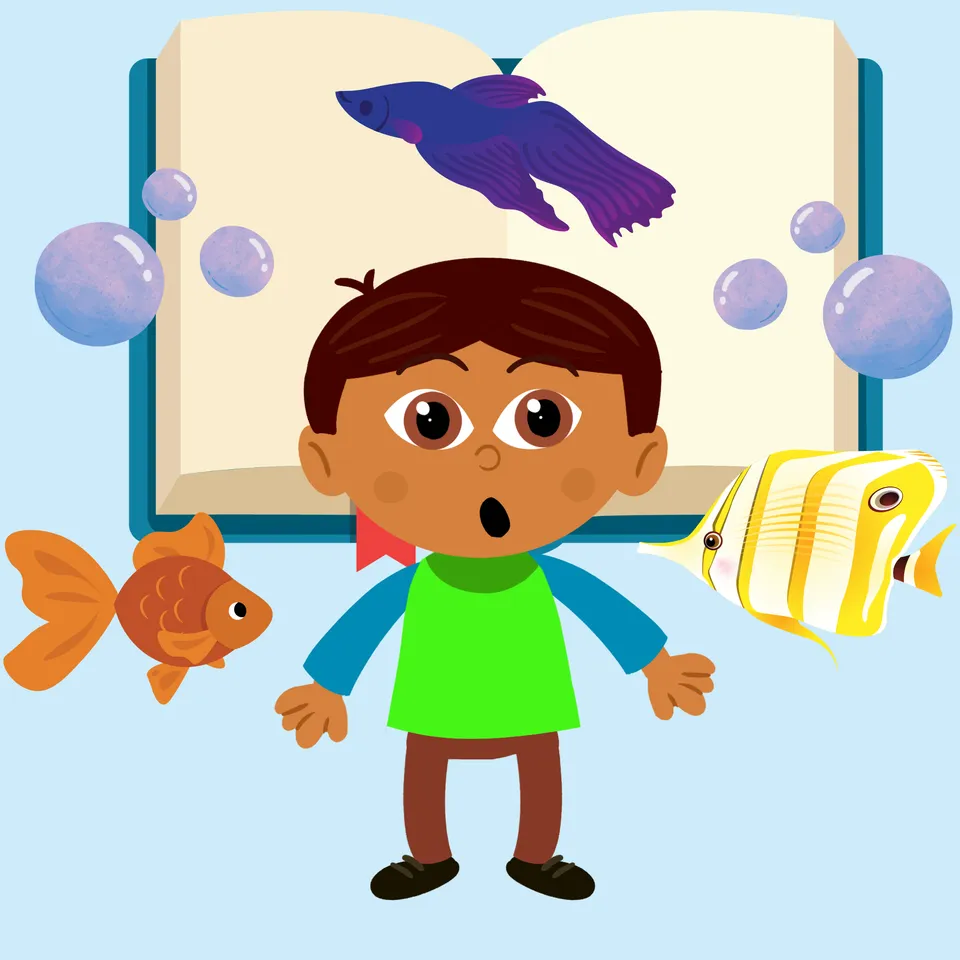
Tommy gets a new fish!
Tommy gets a new fish! Students practice recalling important details and making inferences. Students read short passages to develop reading comprehension skills.
Prior knowledge required: ability to read sentences
Part of
Standards alignment
Common Core State Standards
- RL.1.1 — Ask and answer questions about key details in a text.
Alabama
- ELA21.1.22 — Ask and answer questions about key details in literary and informational texts.
- ELA21.1.25 — Describe connections between two individuals, events, ideas, or pieces of information, including cause and effect, sequence, and problem and solution, in a literary text.
- ELA21.2.30 — Read and comprehend literary and informational texts.
- ELA21.2.30b — Use background knowledge to make connections to new text.
- ELA21.2.35 — Demonstrate listening skills and build background knowledge by asking and answering questions about texts read aloud.
Alaska
- RL.1.1 — Ask and answer questions about a literary text using key details from the text.
- RF.1.4.a — Read on-level text with purpose and understanding.
- RL.2.1 — Ask and answer such questions as who, what, where, when, why, and how to demonstrate understanding of a literary text using key details from the text.
Arizona
- 1.RF.4.a — Read on-level text with purpose and understanding.
- 1.RL.1 — Ask and answer questions such as who, what, where, why, when, and how about key details in a text.
- 1.RF.3 — Know and apply phonics and word analysis skills in decoding one-syllable or two-syllable words.
- 1.RL.3 — Describe characters, settings, and major events in a story, using key details.
- 1.RF.4.b — Read on‐level text orally with accuracy, appropriate rate, and expression on successive readings.
- CCRA.R.1 — Read carefully to determine what the text says explicitly and to make logical inferences from it.
Arkansas
- 1.RC.2.RF — Answer questions about key details in a text.
- 1.RC.5.RF — Use background knowledge and details, including illustrations, charts, and graphs, to make predictions and inferences about what happens in a text.
- 1.RC.4.RF — Build general and academic vocabulary and background knowledge of age and grade-appropriate topics through discussion, reading, and writing.
- 1.RC.6.RF — Demonstrate comprehension of age and grade-appropriate texts by speaking or writing.
- 2.RC.2.RF — Answer questions about key details in a text.
California
- RL.1.1 — Ask and answer questions about key details in a text.
- RF.1.4.a — Read on-level text with purpose and understanding.
- RL.1.3 — Describe characters, settings, and major events in a story, using key details.
- RL.2.1 — Ask and answer such questions as who, what, where, when, why, and how to demonstrate understanding of key details in a text.
- RL.1.2 — Retell stories, including key details, and demonstrate understanding of their central message or lesson.
Colorado
- RWC20-GR.1-S.2-GLE.1-EO.a.i — Ask and answer questions about key details in a text.
- RWC20-GR.1-S.2-GLE.1-EO.a.iii — Describe characters, settings, and major events in a story, using key details.
- RWC20-GR.1-S.2-GLE.3-EO.d.i — Read grade-level text with purpose and understanding.
- RWC20-GR.2-S.2-GLE.1-EO.a.ii — Ask and answer such questions as who, what, where, when, why, and how to demonstrate understanding of key details in a text.
- RWC20-GR.2-S.2-GLE.1-EO.a.i — Demonstrate use of self-monitoring comprehension strategies: rereading, checking context clues, predicting, questioning, clarifying, activating schema/background knowledge to construct meaning and draw inferences.
Connecticut
- RL.1.1 — Ask and answer questions about key details in a text.
- RF.1.4.a — Read on-level text with purpose and understanding.
- RL.1.3 — Describe characters, settings, and major events in a story, using key details.
- RL.2.1 — Ask and answer such questions as who, what, where, when, why, and how to demonstrate understanding of key details in a text.
Delaware
- RF.1.4.a — Read on-level text with purpose and understanding.
- RL.1.1 — Ask and answer questions about key details in a text.
- RL.1.3 — Describe characters, settings, and major events in a story, using key details.
- RL.2.1 — Ask and answer such questions as who, what, where, when, why, and how to demonstrate understanding of key details in a text.
Florida
- ELA.K12.EE.3.1 — Make inferences to support comprehension.
- ELA.1.F.1.3 — Use knowledge of grade-appropriate phonics and word-analysis skills to decode words accurately. • Decode words using knowledge of spelling-sound correspondences for common consonant digraphs, trigraphs, and blends. • Decode simple words with r-controlled vowels. • Decode and encode regularly spelled one-syllable words. • Decode words with inflectional endings. • Decode two-syllable words with regular patterns by breaking the words into syllables. • Decode words that use final –e and vowel teams to make long-vowel sound.
- ELA.1.F.1.4 — Read grade-level texts with accuracy, automaticity, and appropriate prosody or expression. • Recognize and read with automaticity the grade-level sight words.
- ELA.K.R.1.1 — Describe the main character(s), setting, and important events in a story.
Hawaii
- 1.RL.1 — Ask and answer questions about key details in a text.
- 1.RF.4a — Read on-level text with purpose and understanding.
- 1.RL.3 — Describe characters, settings, and major events in a story, using key details.
- 2.RL.1 — Ask and answer such questions as who, what, where, when, why, and how to demonstrate understanding of key details in a text.
- 1.RL.2 — Retell stories, including key details, and demonstrate understanding of their central message or lesson.
Idaho
- 1.RC.TE.3 — Ask and answer questions about key details in texts heard or read.
- 1.RC.RF.4 — Read grade-level text with accuracy, appropriate rate, and expression to support comprehension in successive readings (see the 2017 Hasbrouck and Tindal norms listed in the Resource Reference).
- 2.RC.TE.3 — Ask and answer such questions as who, what, where, when, why, and how to demonstrate understanding of key details in grade-level texts heard or read.
- 1.RC.L.5 — Use evidence from literature to demonstrate understanding of grade-level texts.
Illinois
- RL.1.1 — Ask and answer questions about key details in a text.
- RF.1.4.a — Read on-level text with purpose and understanding.
- RL.1.3 — Describe characters, settings, and major events in a story, using key details.
- RL.2.1 — Ask and answer such questions as who, what, where, when, why, and how to demonstrate understanding of key details in a text.
Indiana
- 1.RC.1 — Ask and answer questions about the main idea and key details to clarify and confirm understanding of a text. (E)
- 1.CC.4 — Ask and answer questions about key details in what is read, heard, or viewed to demonstrate comprehension. (E)
- 1.RF.8 — Orally read decodable texts with appropriate fluency (rate, accuracy, and prosody) while reading.
- 2.RC.1 — Ask and answer questions about the main idea and key details in a text to demonstrate comprehension. (E)
- 1.RC.6 — Retell main ideas and key details of a text. (E)
Iowa
- RL.1.1 — Ask and answer questions about key details in a text.
- RL.1.10 — With prompting and support, read stories and poetry of appropriate complexity for grade 1.
- RL.1.2 — Retell stories, including key details, and demonstrate understanding of their central message or lesson.
- RL.1.3 — Describe characters, settings, and major events in a story, using key details.
- RF.1.3.g — Read grade-appropriate high frequency words with accuracy and automaticity.
Kansas
- RF.1.4.a — Read on-level text with purpose and understanding.
- RL.1.1 — Ask and answer questions about key details in a text.
- RF.1.3.g — Recognize and read grade-appropriate words.
- RL.1.3 — Describe characters, settings, and major events in a story, using key details.
- RL.2.1 — Ask and answer such questions as who, what, where, when, why, and how to demonstrate understanding of key details in a text.
Kentucky
- RL.1.1 — With prompting and support, ask and answer explicit questions about key ideas and details, and make and support logical inferences to construct meaning from the text.
- RL.1.10 — With prompting and support, flexibly use a variety of comprehension strategies (i.e., questioning, monitoring, visualizing, inferencing, summarizing, using prior knowledge, determining importance) to make sense of grade-level appropriate, complex literary texts.
- RL.1.3 — Describe characters, settings and major events in a story, using key details in order to make meaning of the story development.
Louisiana
- RL.1.1 — Ask and answer questions about key details in a text.
- RF.1.4.a — Read on-level text with purpose and understanding.
- RL.2.1 — Ask and answer such questions as who, what, where, when, why, and how to demonstrate understanding of key details in a text.
- CCRA.R.1 — Read closely to determine what the text says explicitly and to make logical inferences from it; cite specific textual evidence when writing or speaking to support conclusions drawn from the text.
Maine
- R.4.1.a — Ask and answer questions about who, what, when, where, and how.
- R.12.1.a — Read various on-level text with purpose and understanding.
- R.5.1.a — Retell texts, including details about who, what, when, where, and how; demonstrate an understanding of the theme.
- R.6.1.a — Describe characters, settings, and major events in a story, including details about who, what, when, where, and how.
- R.6.1.b — Describe the connection between two individuals, events, ideas, or pieces of information in a text.
Maryland
- RL.1.1 — Ask and answer questions about key details in a text.
- RF.1.4.a — Read on-level text with purpose and understanding.
- RL.1.3 — Describe characters, settings, and major events in a story, using key details.
- RL.2.1 — Ask and answer such questions as who, what, where, when, why, and how to demonstrate understanding of key details in a text.
Massachusetts
- RL.1.1 — Ask and answer questions about key details in a text.
- RF.1.4.a — Read grade-level text with purpose and understanding.
- RL.1.3 — Describe characters, settings, and major events in a story, using key details.
- RL.2.1 — Ask and answer such questions as who, what, where, when, why, and how to demonstrate understanding of key details in a text.
Michigan
- RL.1.1 — Ask and answer questions about key details in a text.
- RL.1.3 — Describe characters, settings, and major events in a story, using key details.
- RL.2.1 — Ask and answer such questions as who, what, where, when, why, and how to demonstrate understanding of key details in a text.
- SL.1.2 — Ask and answer questions about key details in a text read aloud or information presented orally or through other media.
Minnesota
- 2.1.4.1 — Ask and answer questions including who, what, where, when, why and how to demonstrate understanding of key details in a text; recount the
- 1.1.2.1 — Read independently and monitor understanding of grade-level text; self-correct as needed using strategies including, but not limited to, decoding, looking at context and making connections.
- 1.1.4.1 — Ask and answer questions including who, what and where to demonstrate understanding of key details in a text; retell key details.
- 2.1.1.2.b — Know and apply grade-level phonics and word analysis skills in decoding words: decode multi-syllabic words that include prefixes,suffixes and vowel digraphs.
Mississippi
- RL.1.1 — Ask and answer questions about key details in a text.
- RF.1.4.a — Read grade-level text with purpose and understanding.
- RL.1.3 — Describe characters, settings, and major events in a story, using key details.
- RL.2.1 — Ask and answer such questions as who, what, where, when, why, and how to demonstrate understanding of key details in a text.
- SL.1.2 — Ask and answer questions about key details in a text read aloud or information presented orally or through other media.
Missouri
- 1.R.1.A.c — seeking clarification and locating facts and details about stories and other texts
- 1.R.1.A.b — asking and responding to relevant questions
- 1.RF.3.A.k — demonstrating decoding skills when reading
- 2.R.1.D.a — reading text that is developmentally appropriate
Montana
- RL.1.1 — Ask and answer questions about key details in a text.
- RF.1.4.a — Read on-level text with purpose and understanding.
- RL.1.3 — Describe characters, settings, and major events in a story, using key details.
Nebraska
- LA.2.RP.6 — Ask and answer literal (e.g., recall/details) and simple inferential (e.g., why or how) questions about key details in a literary text.
- LA.1.RP.6 — Ask and answer questions about key details in a literary text.
- LA.1.RP.8 — With prompting and support, read and comprehend a wide range of literary texts of appropriate complexity for Grade 1.
- LA.1.RP.2 — Identify the main character(s), setting, and important events, drawing on key details in a literary text.
Nevada
- RL.1.1 — Ask and answer questions about key details in a text.
- RF.1.4.a — Read on-level text with purpose and understanding.
- RL.1.3 — Describe characters, settings, and major events in a story, using key details.
- RL.2.1 — Ask and answer such questions as who, what, where, when, why, and how to demonstrate understanding of key details in a text.
New Hampshire
- RL.1.1 — Ask and answer questions about key details in a text.
- RL.1.3 — Describe characters, settings, and major events in a story, using key details.
- RL.2.1 — Ask and answer such questions as who, what, where, when, why, and how to demonstrate understanding of key details in a text.
- RF.2.4.a — Read on-level text with purpose and understanding.
New Jersey
- RF.1.4.a — Read grade-level text with purpose and understanding.
- RL.1.1 — Ask and answer questions about key details in a text.
- NJSLSA.R.1 — Read closely to determine what the text says explicitly and to make logical inferences and relevant connections from it; cite specific textual evidence when writing or speaking to support conclusions drawn from the text.
- RF.1.3.e — Decode two-syllable words following basic patterns by breaking the words into syllables using knowledge that every syllable must have a vowel sound.
- RF.1.4.b — Read grade-level text orally with accuracy, appropriate rate, and expression.
New Mexico
- RL.1.1 — Ask and answer questions about key details in a text.
- RL.1.3 — Describe characters, settings, and major events in a story, using key details.
- RL.1.NM.1 — Identify the main topic, retell key details of a text, and make predictions;
- RL.2.1 — Ask and answer such questions as who, what, where, when, why, and how to demonstrate understanding of key details in a text.
New York
- 1R1 — Develop and answer questions about key ideas and details in a text. (RI&RL)
- 1RF4 — Read beginning reader texts, appropriate to individual student ability, with sufficient accuracy and fluency to support comprehension.
- 1R3 — Describe characters, settings, and major events in a story, or pieces of information in a text. (RI&RL)
- 2R1 — Develop and answer questions to demonstrate an understanding of key ideas and details in a text. (RI&RL)
North Dakota
- 2.R.2 — Ask and answer questions about key details before, during, and after reading a variety of literary and informational texts to compare, contrast, predict or infer.
- 2.F.12 — Read accurately and automatically a variety of second-grade texts with expression, phrasing, purpose, and understanding.
- 2.R.1 — Comprehend information during and after listening to a grade-level text.
- 2.F.11 — Use new academic, content-specific, grade-level vocabulary, connecting previously learned words and relating new words to background knowledge.
Ohio
- RL.1.1 — Ask and answer questions about key details in a text.
- RL.1.10 — With prompting and support, read prose and poetry of appropriate complexity for grade 1. Activate prior knowledge and draw on previous experiences in order to make text-to-self or text-to-text connections and comparisons.
- RF.1.4.a — Read grade-level text with purpose and understanding.
- RL.1.3 — Describe characters, settings, and major events in a story, using key details.
- RL.2.1 — Ask and answer such questions as who, what, where, when, why, and how to demonstrate understanding of key details in a text.
Oklahoma
- 1.3.R.5 — Students will begin to use details from a text to draw conclusions and make predictions.
- 1.2.R.4 — Students will retell facts and details from an informational text.
Oregon
- 1.RF.4a — Read on-level text with purpose and understanding.
- 1.RL.1 — Ask and answer questions about key details in a text.
- 1.RL.3 — Describe characters, settings, and major events in a story, using key details.
- 2.RL.1 — Ask and answer such questions as who, what, where, when, why, and how to demonstrate understanding of key details in a text.
Pennsylvania
- CC.1.3.1.B — Ask and answer questions about key details in a text.
- CC.1.2.1.B — Ask and answer questions about key details in a text.
- CC.1.2.2.B — Ask and answer questions such as who, what, where, when, why, and how to demonstrate understanding of key details in a text.
- CC.1.2.3.B — Ask and answer questions about the text and make inferences from text; refer to text to support responses.
Rhode Island
- RL.1.1 — Ask and answer questions about key details in a text.
- RF.1.4.a — Read grade-level text with purpose and understanding.
- RL.1.10 — With prompting and support, read and comprehend literary texts representing a variety of genres, cultures, and perspectives and exhibiting complexity appropriate for at least grade 1.
- RL.1.3 — Describe characters, settings, and major events in a story, using key details.
- RL.1.2 — Retell stories, including key details, and demonstrate understanding of their central message or lesson.
South Carolina
- ELA.1.OE.3 — Make inferences to support comprehension.
- ELA.1.F.4 — Read and reread grade-appropriate texts with accuracy and expression at an appropriate rate to support comprehension. (FK -1.3-2.18 LF BR-430)
South Dakota
- 1.RL.1 — Ask and answer questions about key details in a text.
- 1.RF.4.a — Read grade-level text with purpose and understanding.
- 1.RL.3 — Describe characters, settings, and major events in a story, using key details.
- 2.RL.1 — Ask and answer such questions as who, what, where, when, why, and how to demonstrate understanding of key details in a text.
Tennessee
- 1.RL.KID.1 — Ask and answer questions about key details in a text.
- 1.FL.PWR.3.h — Read grade-level decodable text with purpose and understanding.
- 1.RL.KID.3 — Using graphic organizers or including written details and illustrations when developmentally appropriate, describe characters, settings, and major events in a story using key details.
- R.KID.1 — Read closely to determine what a text says explicitly and to make logical inferences from it; cite specific textual evidence when writing or speaking to support conclusions drawn from the text.
Texas
- 1.6F — make inferences and use evidence to support understanding with adult assistance;
- 1.6E — make connections to personal experiences, ideas in other texts, and society with adult assistance;
- 1.6G — evaluate details to determine what is most important with adult assistance;
- 1.6I — monitor comprehension and make adjustments such as re-reading, using background knowledge, checking for visual cues, and asking questions when understanding breaks down.
- 1.3B — use illustrations and texts the student is able to read or hear to learn or clarify word meanings;
Utah
- 1.R.5 — Ask and answer questions about key details in a text. (RL & RI)
- 1.R.7 — Describe characters, settings, and important events in a story (RL) or pieces of information in a text. (RI)
Vermont
- RL.1.1 — Ask and answer questions about key details in a text.
Virginia
- 2.DSR.C — When responding to text through discussion and/or writing, draw several pieces of evidence from read-alouds and grade-level texts to support claims, conclusions, and inferences, including quoting or paraphrasing from texts accurately and tracing where relevant evidence is located (Textual Evidence, K-12).
- 2.DSR.A — Read a variety of grade-level text with accuracy, automaticity, appropriate rate, and meaningful expression in successive readings to support comprehension. Monitor while reading to confirm or self-correct word recognition and understanding as necessary (Reading Fluency, K-12).
- 2.RV.1.A — Discuss meanings of new words or phrases acquired through conversations and literature.
Washington
- RL.1.1 — Ask and answer questions about key details in a text.
- RF.1.4.a — Read on-level text with purpose and understanding.
- RL.1.3 — Describe characters, settings, and major events in a story, using key details.
- RL.2.1 — Ask and answer such questions as who, what, where, when, why, and how to demonstrate understanding of key details in a text.
Washington, D.C.
- RF.1.4.a — Read on-level text with purpose and understanding.
- RL.1.1 — Ask and answer questions about key details in a text.
- RL.1.3 — Describe characters, settings, and major events in a story, using key details.
- RL.2.1 — Ask and answer such questions as who, what, where, when, why, and how to demonstrate understanding of key details in a text.
West Virginia
- ELA.1.1 — Ask and answer questions about key details in a literary text.
- ELA.1.3 — Describe characters, settings, and major events in a story, using key details in literary texts.
- ELA.1.I.a — Read on-level text with purpose and understanding.
- ELA.2.1 — Ask and answer key ideas such questions as who, what, where, when, why, and how to demonstrate understanding of key details in literary text
Wisconsin
- ELA.2.R.1 — Develop and answer questions to demonstrate an understanding of key ideas and details in a text. (RI&RL)
- ELA.1.R.1 — Develop and answer questions about key ideas and details in a text. (RI&RL)
- ELA.1.R.3 — Describe characters, settings, and important events in a story or pieces of information in a text. (RI&RL)
- ELA.1.RF.4 — Read emergent-reader texts with purpose, understanding, and sufficient accuracy and fluency to support comprehension. • Read grade-level text with purpose and understanding. • Read grade-level text orally with accuracy, appropriate rate, and expression on successive readings. • Use context to confirm or self-correct word recognition and understanding, rereading as necessary.
Wyoming
- RL.1.1 — Ask and answer questions about key details in a text.
- RF.1.4.a — Read on-level text with purpose and understanding.
- RL.1.3 — Describe characters, settings, and major events in a story, using key details.
- RL.2.1 — Ask and answer such questions as who, what, where, when, why, and how to demonstrate understanding of key details in a text.