Rainforest Habitats
Ages 5–8 · 11 minutes · Science, Geography
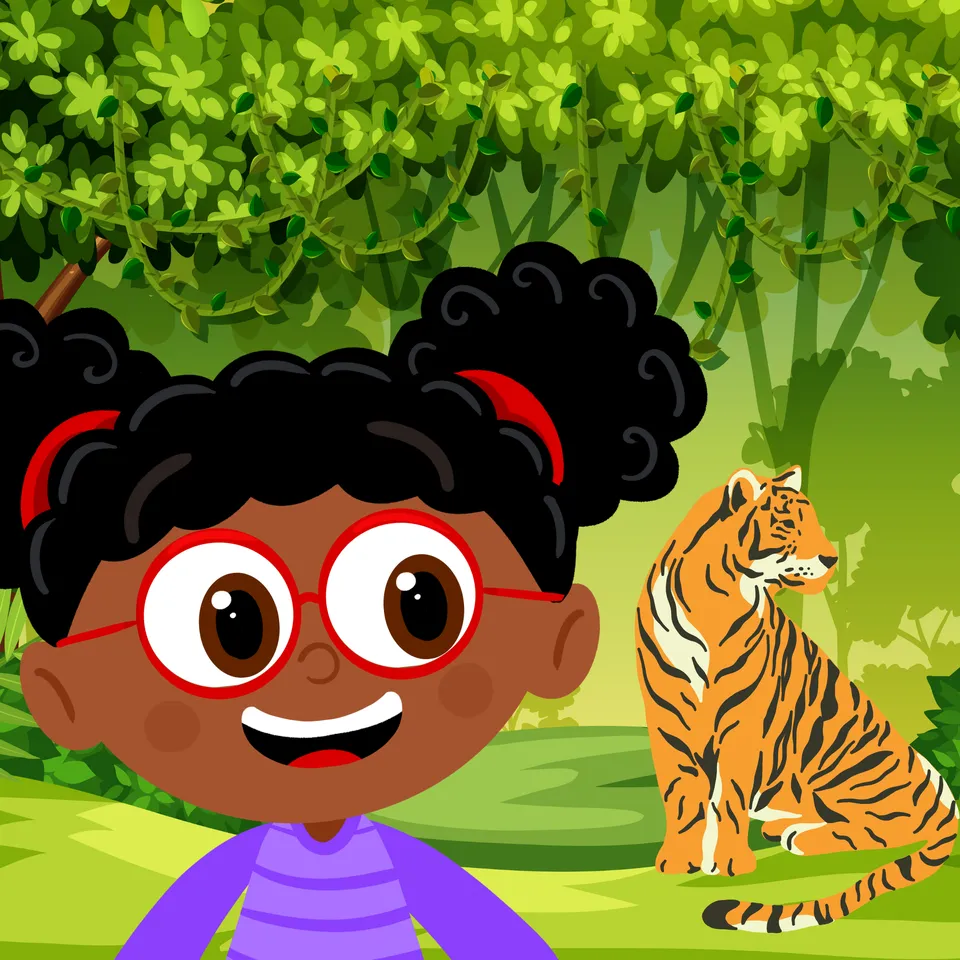
Bring an umbrella! We're going to the rainforest to learn about endangered animals.
Many animals in the rainforest are endangered, so students join Jayda and Murphy to find out why. They’ll observe tigers, orangutans, and more, and discuss how humans and animals impact each other when their habitats overlap.
No specific background required.
Part of
Standards alignment
Common Core State Standards
- Things that people do to live comfortably can affect the world around them. But they can make choices that reduce their impacts on the land, water, air, and other living things.
- D2.Geo.5.K-2 — Individually and with others, students… Describe how human activities affect the cultural and environmental characteristics of places or regions.
- D4.6.K-2 — Individually and with others, students… Identify and explain a range of local, regional, and global problems, and some ways in which people are trying to address these problems.
- K-ESS3-3 — Communicate solutions that will reduce the impact of humans on the land, water, air, and/or other living things in the local environment.
- There are many different kinds of living things in any area, and they exist in different places on land and in water.
Alabama
- SC23.3.10 — Make a claim from evidence that an organism's likelihood of survival depends upon access to sufficient resources in its habitat, including sunlight, air, water, food, and shelter.
- SS10.2.10.2 — Identifying positive and negative ways people affect the environment
- SC23.2.7 — Obtain information to explain that there are many different kinds of living things that exist in habitats on land and in water.
- SC23.3.12 — Obtain and communicate information regarding the impact of existing solutions on plant and animal populations when environmental changes occur.
- SS10.3.3 — Describe ways the environment is affected by humans in Alabama and the world. (Alabama)
Alaska
- Things that people do to live comfortably can affect the world around them. But they can make choices that reduce their impacts on the land, water, air, and other living things.
- K-ESS3-3 — Communicate solutions that will reduce the impact of humans on the land, water, air, and/or other living things in the local environment.
- Living things need water, air, and resources from the land, and they live in places that have the things they need. Humans use natural resources for everything they do.
- There are many different kinds of living things in any area, and they exist in different places on land and in water.
- 2-LS4-1 — Make observations of plants and animals to compare the diversity of life in different habitats.
Arizona
- 1.L4U3.11 — Ask questions and explain how factors can cause species to go extinct.
- 2.E1U3.7 — Construct an argument from evidence regarding positive and negative changes in water and land systems that impact humans and the environment.
- 2.G2.2 — Describe how human activities affect the communities and the environment of places or regions.
- 1.L4U1.10 — Develop a model to describe how animals and plants are classified into groups and subgroups according to their similarities.
Arkansas
- Things that people do to live comfortably can affect the world around them. But they can make choices that reduce their impacts on the land, water, air, and other living things.
- Populations live in a variety of habitats, and change in those habitats affects the organisms living there.
- 2-LS4-1 — Make observations of plants and animals to compare the diversity of life in different habitats.
- G.1.2.4 — Discuss the impact human choices have on the environment.
- K-ESS3-3 — Communicate solutions that will reduce the impact of humans on the land, water, air, and/or other living things in the local environment.
California
- Things that people do to live comfortably can affect the world around them. But they can make choices that reduce their impacts on the land, water, air, and other living things.
- There are many different kinds of living things in any area, and they exist in different places on land and in water.
- Living things need water, air, and resources from the land, and they live in places that have the things they need. Humans use natural resources for everything they do.
- K-ESS3-3 — Communicate solutions that will reduce the impact of humans on the land, water, air, and/or other living things in the local environment.
- 2-LS4-1 — Make observations of plants and animals to compare the diversity of life in different habitats.
Colorado
- ESS3.C — Human Impacts on Earth Systems: Things that people do to live comfortably can affect the world around them. But they can make choices that reduce their impacts on the land, water, air and other living things.
- SC.K.3.2 — Plants and animals meet their needs in their habitats and impact one another; people can prepare for severe weather.
- SC.K.3.2.c — Communicate solutions that will reduce the impact of humans on the land, water, air, and/or other living things in the local environment.
- LS4.D — Biodiversity and Humans: Populations live in a variety of habitats, and change in those habitats affects the organisms living there.
- SC.2.2.2.a — Make observations of plants and animals to compare the diversity of life in different habitats.
Connecticut
- Things that people do to live comfortably can affect the world around them. But they can make choices that reduce their impacts on the land, water, air, and other living things.
- K-ESS3-3 — Communicate solutions that will reduce the impact of humans on the land, water, air, and/or other living things in the local environment.
- There are many different kinds of living things in any area, and they exist in different places on land and in water.
- 2-LS4-1 — Make observations of plants and animals to compare the diversity of life in different habitats.
- GEO 2.5 — Explain how humans affect the culture and environment of places/region.
Delaware
- There are many different kinds of living things in any area, and they exist in different places on land and in water.
- Things that people do to live comfortably can affect the world around them. But they can make choices that reduce their impacts on the land, water, air, and other living things.
- K-ESS3-3 — Communicate solutions that will reduce the impact of humans on the land, water, air, and/or other living things in the local environment.
- Living things need water, air, and resources from the land, and they live in places that have the things they need. Humans use natural resources for everything they do.
- 2-LS4-1 — Make observations of plants and animals to compare the diversity of life in different habitats.
- Some kinds of plants and animals that once lived on Earth are no longer found anywhere.
Florida
- SC.2.L.17.2 — Recognize and explain that living things are found all over Earth, but each is only able to live in habitats that meet its basic needs.
- SC.K.L.14.3 — Observe plants and animals, describe how they are alike and how they are different in the way they look and in the things they do.
- ELA.2.V.1.3 — Identify and use context clues, word relationships, reference materials, and/or background knowledge to determine the meaning of unknown words.
- SC.1.L.17.1 — Through observation, recognize that all plants and animals, including humans, need the basic necessities of air, water, food, and space.
- SC.4.L.17.4 — Recognize ways plants and animals, including humans, can impact the environment.
Georgia
- S3L2.b — Explore, research, and communicate solutions, such as conservation of resources and recycling of materials, to protect plants and animals.
- S3L1.c — Use evidence to construct an explanation of why some organisms can thrive in one habitat and not in another.
- S2E3.b — Construct an explanation of the causes and effects of a change to the environment in your community.
Hawaii
- SS.2.2.14.1 — Explain how human activities impact the environment
- Things that people do to live comfortably can affect the world around them. But they can make choices that reduce their impacts on the land, water, air, and other living things.
- 2-LS4-1 — Make observations of plants and animals to compare the diversity of life in different habitats.
- K-ESS3-3 — Communicate solutions that will reduce the impact of humans on the land, water, air, and/or other living things in the local environment.
- There are many different kinds of living things in any area, and they exist in different places on land and in water.
Idaho
- K-ESS-2.3 — Students who demonstrate understanding can: Communicate ideas that would enable humans to interact in a beneficial way with the land, water, air, and/or other living things in the local environment.
- Things that people do can affect the world around them. People can reduce their effects on the land, water, air, and other living things. (K-ESS-2.3)
- 2-LS-2.1 — Students who demonstrate understanding can: Make observations of plants and animals to compare the diversity of life in different habitats.
- K-ESS-2.1 — Students who demonstrate understanding can: Use a model to represent the relationship between the needs of different plants and animals and the places they live.
Illinois
- ESS3.C-P1 — Things that people do to live comfortably can affect the world around them. But they can make choices that reduce their impacts on the land, water, air, and other living things.
- 2-LS4-1 — Make observations of plants and animals to compare the diversity of life in different habitats.
- K-ESS3-3 — Communicate solutions that will reduce the impact of humans on the land, water, air, and/or other living things in the local environment.
- LS4.D-P1 — There are many different kinds of living things in any area, and they exist in different places on land and in water.
- SS.1.G.2 — With guidance and support, describe how human activities affect the cultural and environmental characteristics of places or regions.
Indiana
- 1.LS.4 — Use a model to represent the relationship between the needs of different plants and animals (including humans) and the places they live.
- 1.ESS.4 — Develop solutions that could be implemented to reduce the impact of humans on the land, water, air, and/or other living things in the local environment.
- 1.LS.3 — Make observations of plants and animals to compare the diversity of life in different habitats.
- K.LS.2 — Describe and compare the physical features of common living plants and animals.
- K.LS.3 — Use observations to describe patterns of what plants and animals (including humans) need to survive.
Iowa
- Things that people do to live comfortably can affect the world around them. But they can make choices that reduce their impacts on the land, water, air, and other living things.
- 2-LS4-1 — Make observations of plants and animals to compare the diversity of life in different habitats.
- K-ESS3-1 — Use a model to represent the relationship between the needs of different plants and animals (including humans) and the places they live.
- K-ESS3-3 — Communicate solutions that will reduce the impact of humans on the land, water, air, and/or other living things in the local environment.
Kansas
- Things that people do to live comfortably can affect the world around them. But they can make choices that reduce their impacts on the land, water, air, and other living things.
- Living things need water, air, and resources from the land, and they live in places that have the things they need. Humans use natural resources for everything they do.
- Individuals of the same kind of plant or animal are recognizable as similar but can also vary in many ways.
- K-ESS3-3 — Communicate solutions that will reduce the impact of humans on the land, water, air, and/or other living things in the local environment.
- There are many different kinds of living things in any area, and they exist in different places on land and in water.
Kentucky
- There are many different kinds of living things in any area, and they exist in different places on land and in water.
- Things that people do to live comfortably can affect the world around them. But they can make choices that reduce their impacts on the land, water, air, and other living things.
- K-ESS3-3 — Communicate solutions that will reduce the impact of humans on the land, water, air, and/or other living things in the local environment.*
- 1.G.HE.1 — Describe ways people modify their environment.
- 2-LS4-1 — Make observations of plants and animals to compare the diversity of life in different habitats.
Louisiana
- K-ESS3-3 — Communicate solutions that will reduce the impact of humans on the land, water, air, and/or other living things in the local environment.
- 2-LS4-1 — Make observations of plants and animals to compare the diversity of life in different habitats.
- K-ESS3-1 — Use a model to represent the relationship between the needs of different plants and animals (including humans) and the places they live.
- K.20 — Identify ways people interact with their environment, including: a. Using natural resources b. Modifying their environment to create shelter
Maine
- K-ESS3-3 — Communicate solutions that will reduce the impact of humans on the land, water, air, and/or other living things in the local environment.
- Use observations (firsthand or from media) to describe patterns and/or relationships in the natural and designed world(s) in order to answer scientific questions and solve problems.
- 2-LS4-1 — Make observations of plants and animals to compare the diversity of life in different habitats.
- K-ESS3-1 — Use a model to represent the relationship between the needs of different plants and animals (including humans) and the places they live.
Maryland
- DCI.ESS3.C.K-2.1 — Things that people do to live comfortably can affect the world around them. But they can make choices that reduce their impacts on the land, water, air, and other living things.
- DCI.LS4.D.K-2.1 — There are many different kinds of living things in any area, and they exist in different places on land and in water.
- K-ESS3-3 — Communicate solutions that will reduce the impact of humans on the land, water, air, and/or other living things in the local environment.
- 2-LS4-1 — Make observations of plants and animals to compare the diversity of life in different habitats.
- K-ESS3-1 — Use a model to represent the relationship between the needs of different plants and animals (including humans) and the places they live.
Massachusetts
- 3-LS4-4 — Analyze and interpret given data about changes in a habitat and describe how the changes may affect the ability of organisms that live in that habitat to survive and reproduce.
- 2-LS4-1 — Use texts, media, or local environments to observe and compare (a) different kinds of living things in an area, and (b) differences in the kinds of living things living in different types of areas.
- K-ESS2-2 — Construct an argument supported by evidence for how plants and animals (including humans) can change the environment.
- 3-LS4-5(MA) — Provide evidence to support a claim that the survival of a population is dependent upon reproduction.
Michigan
- K-ESS3-3 — Communicate solutions that will reduce the impact of humans on the land, water, air, and/or other living things in the local environment.
- K-LS1-1 — Use observations to describe patterns of what plants and animals (including humans) need to survive.
- Individually and collaboratively, students identify and explain a range of local, regional, and global problems and some ways in which people are trying to address these problems.
- 2-LS4-1 — Make observations of plants and animals to compare the diversity of life in different habitats.
Minnesota
- 1E.4.2.1.1 — Communicate solutions that will reduce the impact of humans on the land, water, air, and/or other living things in the local environment.* (P: 8, CC: 4, CI: ESS3)
- 2.3.4.9.1 — Identify causes and consequences of human impact on the environment and ways that the environment influences people.
- 2L.4.1.1.1 — Construct an argument with evidence that evaluates how in a particular habitat some organisms can survive well, some survive less well, and some cannot survive at all. (P: 7, CC: 2, CI: LS4, ETS2)
Mississippi
- L.3.4.1 — Obtain data from informational text to explain how changes in habitats (both those that occur naturally and those caused by organisms) can be beneficial or harmful to the organisms that live there.
- L.2.3A.1 — Evaluate and communicate findings from informational text or other media to describe how animals change and respond to rapid or slow changes in their environment (fire, pollution, changes in tide, availability of food/water).
- L.3.4.2 — Ask questions to predict how natural or man-made changes in a habitat cause plants and animals to respond in different ways, including hibernating, migrating, responding to light, death, or extinction (e.g., sea turtles, the dodo bird, or nocturnal species).
- L.K.3A.2 — Construct explanations using observations to describe and report what animals need to live and grow (food, water, shelter, and space).
Missouri
- There are many different kinds of living things in any area, and they exist in different places on land and in water.
- Things that people do to live comfortably can affect the world around them. But they can make choices that reduce their impacts on the land, water, air, and other living things.
- K.ESS3.C.1 — Communicate solutions that will reduce the impact of humans on the land, water, air, and/or other living things in the local environment.
- K.ESS3.A.1 — Use a model to represent the relationship between the needs of different plants or animals (including humans) and the places they live.
Montana
- K-ESS3-3 — communicate ideas about the impact of humans on the land, water, air, or other living things in the local environment;
- 2-LS4-1 — make observations of plants and animals to compare and contrast the diversity of life in different habitats.
- K-ESS3-1 — use a model to represent the relationship between the needs of different plants or animals, including humans, and the places they live;
- K-LS1-1 — use observations to describe patterns of what plants and animals, including humans, need to survive.
- SS.G.2.2 — describe how geography and human activities impact each other.
Nebraska
- Things that people do to live comfortably can affect the world around them. But they can make choices that reduce their impacts on the land, water, air, and other living things.
- SC.K.7.2.D — Communicate solutions that will increase the positive impact of humans on the land, water, air, and/or other living things in the local environment..
- There are many different kinds of living things in any area, and they exist in different places on land and in water.
- Living things need water, air, and resources from the land, and they live in places that have the things they need. Humans use natural resources for everything they do.
- SC.K.7.2.A — Use observations to describe patterns of what plants and animals (including humans) need to survive.
Nevada
- Things that people do to live comfortably can affect the world around them. But they can make choices that reduce their impacts on the land, water, air, and other living things.
- K-ESS3-3 — Communicate solutions that will reduce the impact of humans on the land, water, air, and/or other living things in the local environment.
- There are many different kinds of living things in any area, and they exist in different places on land and in water.
- 2-LS4-1 — Make observations of plants and animals to compare the diversity of life in different habitats.
- Living things need water, air, and resources from the land, and they live in places that have the things they need. Humans use natural resources for everything they do.
New Hampshire
- SS.GE.2.3.2 — Explore the components and distribution of ecosystems, e.g., desert or rain forest. (Themes: C: People, Places and Environment)
New Jersey
- There are many different kinds of living things in any area, and they exist in different places on land and in water.
- Things that people do to live comfortably can affect the world around them. But they can make choices that reduce their impacts on the land, water, air, and other living things.
- Living things need water, air, and resources from the land, and they live in places that have the things they need. Humans use natural resources for everything they do.
- 2-LS4-1 — Make observations of plants and animals to compare the diversity of life in different habitats.
- K-ESS3-3 — Communicate solutions that will reduce the impact of humans on the land, water, air, and/or other living things in the local environment.
New Mexico
- Things that people do to live comfortably can affect the world around them. But they can make choices that reduce their impacts on the land, water, air, and other living things.
- K-ESS3-3 — Communicate solutions that will reduce the impact of humans on the land, water, air, and/or other living things in the local environment.
- 1.20 — Explain how people interact with their physical environment in ways that may have a positive or a negative effect on natural resources.
- 2-LS4-1 — Make observations of plants and animals to compare the diversity of life in different habitats.
New York
- Things that people do to live comfortably can affect the world around them. But they can make choices that reduce their impacts on the land, water, air, and other living things.
- K-ESS3-3 — Communicate solutions that will reduce the impact of humans on the land, water, air, and/or other living things in the local environment.
- 1.6c — People interact with their physical environment in ways that may have a positive or a negative effect.
- 2-LS4-1 — Make observations of plants and animals to compare the diversity of life in different habitats.
- K-ESS3-1 — Use a model to represent the relationship between the needs of different plants and animals (including humans) and the places they live.
North Carolina
- 1.G.2.2 — Explain the various ways people impact the physical environment in different regions around the world.
- 1.G.2 — Understand interactions between humans and the environment in different places and regions around the world.
- LS.K.2.1 — Analyze and interpret data to compare the characteristics of different types of the same animal to determine individual similarities and differences.
North Dakota
- There are many kinds of living things in any area, and they exist in different places on land and in water.
- K-ESS3-3 — Communicate solutions that will reduce the impact of humans on the land, water, air, and/or other living things in the local environment.
- Things that people do to live comfortably can affect the world around them. They can make choices that reduce their impacts on the land, water, air, and other living things for sustainability.
- Living things need water, air, and resources from the land, and they live in places that have the things they need. Humans use natural resources for everything they do.
- 2-LS4-1 — Make observations of plants and animals to compare the diversity of life in different habitats.
Ohio
- 1.LS.2 — Living things survive only in environments that meet their needs.
- 2.7 — Human activities alter the physical environment, both positively and negatively.
- 2.LS.2 — All organisms alive today result from their ancestors, some of which may be extinct. Not all kinds of organisms that lived in the past are represented by living organisms today.
- K.LS.2 — Living things have physical traits and behaviors, which influence their survival.
- 2.LS.1 — Living things cause changes on Earth.
Oklahoma
- 1.ESS3.1 — Communicate solutions that will reduce the impact of humans on the land, water, air, and/or other living things in the local environment.*
- Things that people do to live comfortably can affect the world around them, but they can make choices that reduce their impacts on the land, water, air, and other living things. (1.ESS3.1)
- Human activities in agriculture, industry, and everyday life have had major effects on the land, vegetation, streams, ocean, air and even outer space. But individuals and communities are doing things to help protect Earth's resources and environments. (5.ESS3.1)
- Populations live in a variety of habitats and change in those habitats affects the organisms living there. (3.LS4.4)
- 2.LS4.1 — Make observations of plants and animals to compare the diversity of life in different habitats.
Oregon
- K.ESS3.3 — Communicate solutions that will reduce the impact of humans on the land, water, air, and/or other living things in the local environment. [Clarification Statement: Examples of human impact on the land could include cutting trees to produce paper and using resources to produce bottles. Examples of solutions could include reusing paper and recycling cans and bottles.][assessment boundary: assessment focuses on the ability to choose solutions and communicate ways to reduce the impact(s) on land, water, and air, and other living things. communication can be written, oral, drawings, modeling, or other ways that are comprehensible to others.]
- 1.20 — Identify and explain a range of issues and problems and some ways that people are addressing them.
- 2.LS4.1 — Make observations of plants and animals to compare the diversity of life in different habitats. [Clarification Statement: Emphasis is on the diversity of living things in each of a variety of different habitats.] [Assessment Boundary: Assessment does not include specific animal and plant names in specific habitats.]
- 3.LS4.4 — Make a claim about the merit of a solution to a problem caused when the environment changes and the types of plants and animals that live there may change. [Clarification Statement: Examples of environmental changes could include global climate change, changes in land characteristics, water distribution, temperature, food, and other organisms.] [Assessment Boundary: Assessment is limited to a single environmental change.]
- K.ESS3.1 — Use a model to represent the relationship between the needs of different plants or animals (including humans) and the places they live. [Clarification Statement: Examples of relationships could include that deer eat buds and leaves, therefore, they usually live in forested areas; and, grasses need sunlight so they often grow in meadows. Plants, animals, and their surroundings make up a system.][assessment boundary: modeling is limited to describing the relationship and does not include patterns of structure and function to show how needs are met. impact on the environment is beyond the standard.]
Pennsylvania
- 3.3.K.E — Communicate solutions that will reduce the impact of humans on the land, water, air, and/or other living things in the local environment.
- Things that people do to live comfortably can affect the world around them. But they can make choices that reduce their impacts on the land, water, air, and other living things.
- There are many different kinds of living things in any area, and they exist in different places on land and in water.
- 3.1.2.C — Make observations of plants and animals to compare the diversity of life in different habitats.
- 7.4.3.B — Identify the impacts of people on physical systems.
Rhode Island
- Things that people do to live comfortably can affect the world around them. But they can make choices that reduce their impacts on the land, water, air, and other living things.
- There are many different kinds of living things in any area, and they exist in different places on land and in water.
- K-ESS3-3 — Communicate solutions that will reduce the impact of humans on the land, water, air, and/or other living things in the local environment.
- SS2.2.2 — Human interactions with and effects on global environments Analyze global environmental challenges that happen as a result of human-environmental interactions
- K-ESS3-1 — Use a model to represent the relationship between the needs of different plants and animals (including humans) and the places they live.
South Carolina
- 2-ESS3-1.DCI.C: — Human Impacts on Earth Systems Things that people do to live can affect the world around them. But they can make choices that reduce their impacts on the land, water, air, and other living things. NRC Framework Link
- 3-LS4-4.DCI.D: — Biodiversity and Humans Populations live in a variety of habitats and change in those habitats affects the organisms living there. NRC Framework Link
- 2-LS4-1. — Make observations of plants and animals to compare patterns of diversity within different habitats. Clarification Statement: Emphasis is on the diversity of living things in a variety of different habitats. State Assessment Boundary: Assessment does not include specific animal and plant names in specific habitats.
- 2-LS4-1.DCI.D: — Biodiversity and Humans There are many different kinds of living things in any area, and they exist in different places on land and in water. NRC Framework Link
- 3-LS4-4.DCI.C: — Ecosystem Dynamics, Functioning, and Resilience When the environment changes in ways that affect a place’s physical characteristics, temperature, or availability of resources, some organisms survive and reproduce, others move to new locations, yet others move into the transformed environment, and some die. (secondary) NRC Framework Link
South Dakota
- Using evidence to discuss the impact of humans on a changing environment and ecosystem. Discussing potential solutions to minimizing this impact.
- 2-LS4-1 — Make observations of plants and animals to compare the diversity of life in different habitats.
- K-ESS3-3 — Communicate solutions that will reduce the impact of humans on the land, water, air, and/or other living things in the local environment.
- Describing similarities and differences in different organisms of the same species and different species.
- K-ESS3-1 — Use a model to represent the relationship between the needs of different plants or animals (including humans) and the places they live.
Tennessee
- 2.LS2.2 — Predict what happens to animals when the environment changes (temperature, cutting down trees, wildfires, pollution, salinity, drought, land preservation).
- K.ESS3.3 — Communicate solutions that will reduce the impact from humans on land, water, air, and other living things in the local environment.
- 2.LS2.1 — Develop and use models to compare how animals depend on their surroundings and other living things to meet their needs in the places they live.
- K.ESS3.1 — Use a model to represent the relationship between the basic needs (shelter, food, water) of different plants and animals (including humans) and the places they live.
Texas
- K.12B — observe and identify the dependence of animals on air, water, food, space, and shelter.
- 2.12A — describe how the physical characteristics of environments, including the amount of rainfall, support plants and animals within an ecosystem;
- 2.9A — identify the basic needs of plants and animals;
- 3.3C — describe the effects of human processes such as building new homes, conservation, and pollution in shaping the landscape.
Utah
- 2.2.1 — Obtain, evaluate, and communicate information about patterns of living things (plants and animals, including humans) in different habitats. Emphasize the diversity of living things in land and water habitats. Examples of *patterns*in habitats could include descriptions of temperature or precipitation and the types of plants and animals found in land habitats. (LS2.C, LS4.C, LS4.D)
- 3.1.3.e — Make inferences about the positive and negative impacts of human-caused change to the physical environment.
- 3.2.6 — Design a solution to a problem caused by a change in the environment that impacts the types of plants and animals living in that environment. Define the problem, identify criteria and constraints, and develop possible solutions. Examples of environmental changes could include changes in land use, water availability, temperature, food, or changes caused by other organisms. (LS2.C, LS4.D, ETS1.A, ETS1.B, ETS1.C)
- K.2.3 — Obtain, evaluate, and communicate information about how living things (plants and animals, including humans) affect their surroundings to survive. Examples could include squirrels digging in the ground to hide their food, plant roots breaking concrete, or humans building shelters. (ESS2.E)
Vermont
- Things that people do to live comfortably can affect the world around them. But they can make choices that reduce their impacts on the land, water, air, and other living things.
- Individuals of the same kind of plant or animal are recognizable as similar but can also vary in many ways.
- Living things need water, air, and resources from the land, and they live in places that have the things they need. Humans use natural resources for everything they do.
- K-ESS3-3 — Communicate solutions that will reduce the impact of humans on the land, water, air, and/or other living things in the local environment.
- D2.Geo.6.K-2 — Individually and with others, students… Identify some cultural and environmental characteristics of specific places.
Virginia
- 1.5.a — Animals need air, food, water, shelter, and space (habitat).
- 2.5.c — Habitats change over time due to many influences.
- 2.5.b — An animal’s habitat provides all of its basic needs.
- 3.8.a — Human activity affects the quality of air, water, and habitats.
- 1.1.b.ii — Identify characteristics and properties of objects by observations.
Washington
- Things that people do to live comfortably can affect the world around them. But they can make choices that reduce their impacts on the land, water, air, and other living things.
- There are many different kinds of living things in any area, and they exist in different places on land and in water.
- Living things need water, air, and resources from the land, and they live in places that have the things they need. Humans use natural resources for everything they do.
- 2-LS4-1 — Make observations of plants and animals to compare the diversity of life in different habitats.
- K-ESS3-3 — Communicate solutions that will reduce the impact of humans on the land, water, air, and/or other living things in the local environment.
Washington, D.C.
- K-ESS3-3 — Communicate solutions that will reduce the impact of humans on the land, water, air, and/or other living things in the local environment.
- 2-LS4-1 — Make observations of plants and animals to compare the diversity of life in different habitats.
- K-ESS3-1 — Use a model to represent the relationship between the needs of different plants and animals (including humans) and the places they live.
- 1.24 — Identify a problem caused by humans to the local environment, and propose a solution.
West Virginia
- S.K.3 — Use observations to describe patterns of what plants and animals (including humans) need to survive.
- S.K.6 — Communicate solutions that will reduce the impact of humans on the land, water, air, and/or other living things in the local environment.*
- Building and appropriately using science domain vocabulary and phrases
- S.2.7 — Make observations of plants and animals to compare the diversity of life in different habitats.
- S.K.5 — Use a model to represent the relationship between the needs of different plants or animals (including humans) and the places they live.
Wisconsin
- Populations of organisms live in a variety of habitats. Change in those habitats affects the organisms living there.
- When the environment changes, some organisms survive and reproduce, some move to new locations, some move into transformed environments, and some die.
- There are many different kinds of living things in any area, and they exist in different places on land and in water.
- Things people do can affect the environment but they can make choices to reduce their impacts.
- SS.Geog5.b.5 — Examine how human actions modify the physical environment when using natural resources (renewable and nonrenewable).
Wyoming
- Things people do can affect the environment but they can make choices to reduce their impacts.
- K-ESS3-3 — Communicate solutions that will manage the impact of humans on the land, water, air, and/or other living things in the local environment.
- A range of different organisms lives in different places.
- Populations of organisms live in a variety of habitats. Change in those habitats affects the organisms living there.
- 2-LS4-1 — Make observations of plants and animals to compare the diversity of life in different habitats.