Read-Along! Goldilocks and the Three Bears
Ages 6–9 · 10 minutes · English, Stories
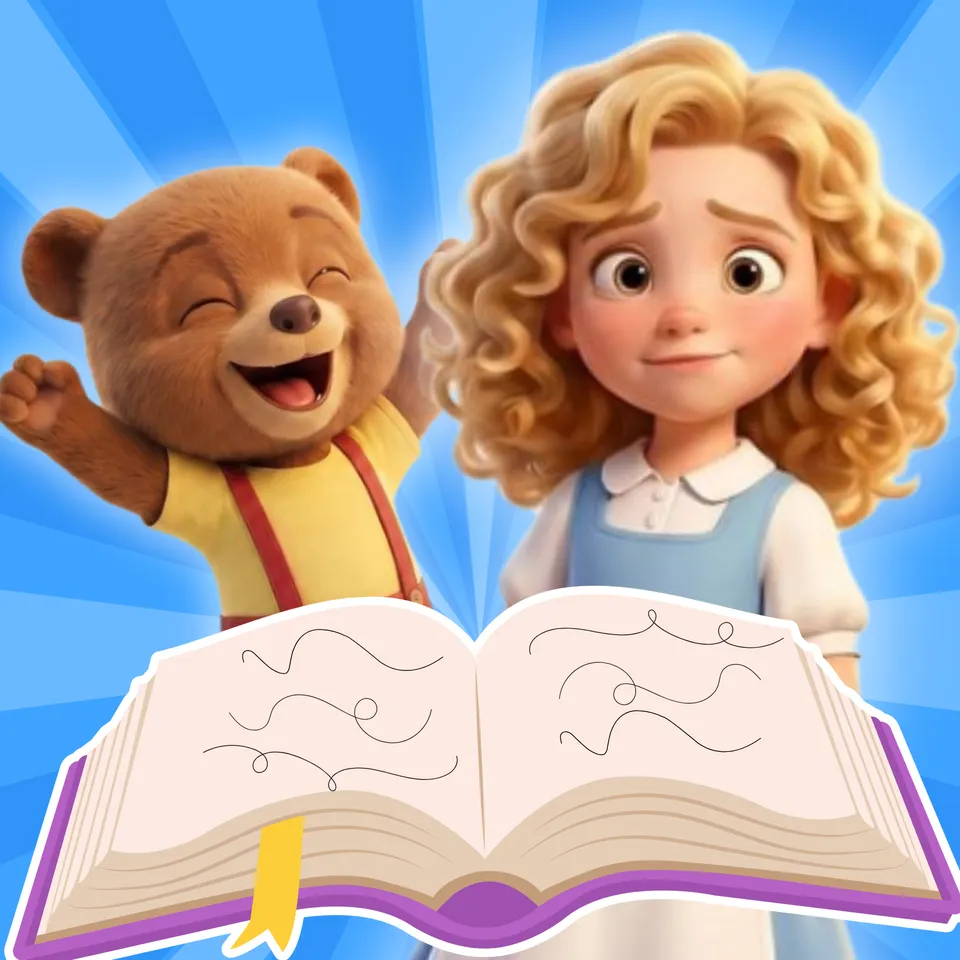
Goldilocks can barely bear it when she's awakened by three bears!
Goldilocks can barely bear it when she's awakened by three bears! Join the adventure and read along! This lesson adapts to readers of many levels, from those who can read smaller words to those who can read full sentences. You might say it's juuust right!
Part of
Standards alignment
Common Core State Standards
- RF.1.4.b — Read on-level text orally with accuracy, appropriate rate, and expression on successive readings.
- RL.1.10 — With prompting and support, read prose and poetry of appropriate complexity for grade 1.
- RL.K.10 — Actively engage in group reading activities with purpose and understanding.
Alabama
- ELA21.1.2 — Actively participate in shared reading experiences and collaborative discussions to build background knowledge and learn how oral reading should sound.
- ELA21.K.3 — Actively participate in teacher-led choral and shared reading experiences.
- ELA21.2.30 — Read and comprehend literary and informational texts.
Alaska
- RF.1.4.a — Read on-level text with purpose and understanding.
- RF.1.4.b — Read on-level text orally with accuracy, appropriate rate, and expression on successive readings.
- RF.1.4.c — Use context to confirm or self-correct word recognition and understanding, rereading as necessary.
- RF.K.3.c — Read common high-frequency words by sight. (e.g., the, of, to, you, she, my, is, are, do, does).
- RL.1.10 — With prompting and support, read prose and poetry from a variety of cultures of appropriate complexity for grade 1.
Arizona
- 1.RF.4.a — Read on-level text with purpose and understanding.
- 1.RF.4.b — Read on‐level text orally with accuracy, appropriate rate, and expression on successive readings.
- 1.RL.10 — With prompting and support, read stories, drama, and poetry of appropriate complexity for grade 1.
- K.RL.10 — With prompting and support, actively engage in group reading activities with purpose and understanding.
Arkansas
- 1.FR.10.PD — Read high-frequency words.
- K.FR.22.F — Orally read texts consisting of previously taught grapheme-phoneme correspondences, self-correcting as necessary.
California
- RF.1.4.a — Read on-level text with purpose and understanding.
- RF.1.4.b — Read on-level text orally with accuracy, appropriate rate, and expression on successive readings.
- RL.1.10 — With prompting and support, read prose and poetry of appropriate complexity for grade 1.
- RF.K.3.c — Read common high-frequency words by sight (e.g., the, of, to, you, she, my, is, are, do, does).
- RL.K.10 — Actively engage in group reading activities with purpose and understanding.
Colorado
- RWC20-GR.1-S.2-GLE.3-EO.d.ii — Read grade-level text orally with accuracy, appropriate rate, and expression.
- RWC20-GR.1-S.2-GLE.1-EO.d.i — With prompting and support, read prose and poetry of appropriate complexity for grade 1.
- RWC20-GR.K-S.2-GLE.3-EO.b.vi — Read text consisting of short sentences comprised of learned sight words and consonant-vowel-consonant (CVC) words.
- RWC20-GR.K-S.2-GLE.3-EO.c.iii — Read common high-frequency words by sight (for example: the, of, to, you, she, my, is, are, do, does).
- RWC20-GR.1-S.2-GLE.3-EO.c.vii — Read grade-appropriate irregularly spelled words.
Connecticut
- RF.1.4.a — Read on-level text with purpose and understanding.
- RF.1.4.b — Read on-level text orally with accuracy, appropriate rate, and expression on successive readings.
- RF.1.4.c — Use context to confirm or self-correct word recognition and understanding, rereading as necessary.
- RF.K.3.c — Read common high-frequency words by sight (e.g., the, of, to, you, she, my, is, are, do, does).
- RL.1.10 — With prompting and support, read prose and poetry of appropriate complexity for grade 1.
Delaware
- RF.1.4.a — Read on-level text with purpose and understanding.
- RF.1.4.b — Read on-level text orally with accuracy, appropriate rate, and expression on successive readings.
- RL.1.10 — With prompting and support, read prose and poetry of appropriate complexity for grade 1.
- RF.1.4.c — Use context to confirm or self-correct word recognition and understanding, rereading as necessary.
- RF.K.3.c — Read common high-frequency words by sight (e.g., the, of, to, you, she, my, is, are, do, does).
Florida
- ELA.1.R.1.2 — Identify and explain the moral of a story.
Georgia
- ELAGSE1RF3.f — Read words with inflectional endings.
Hawaii
- 1.RF.4a — Read on-level text with purpose and understanding.
- 1.RF.4b — Read on-level text orally with accuracy, appropriate rate, and expression on successive readings.
- 1.RF.4c — Use context to confirm or self-correct word recognition and understanding, rereading as necessary.
- 1.RL.10 — With prompting and support, read prose and poetry of appropriate complexity for grade 1.
- K.RF.3c — Read common high-frequency words by sight (e.g., the, of, to, you, she, my, is, are, do, does).
Idaho
- 1.RC.RF.4 — Read grade-level text with accuracy, appropriate rate, and expression to support comprehension in successive readings (see the 2017 Hasbrouck and Tindal norms listed in the Resource Reference).
- K.RC.RF.4 — Read emergent-reader texts (e.g., rhymes, songs, simple poems) with purpose and understanding.
Illinois
- RF.1.4.a — Read on-level text with purpose and understanding.
- RF.1.4.b — Read on-level text orally with accuracy, appropriate rate, and expression on successive readings.
- RF.1.4.c — Use context to confirm or self-correct word recognition and understanding, rereading as necessary.
- RF.K.3.c — Read common high-frequency words by sight (e.g., the, of, to, you, she, my, is, are, do, does).
- RL.1.10 — With prompting and support, read prose and poetry of appropriate complexity for grade 1.
Indiana
- 1.RF.8 — Orally read decodable texts with appropriate fluency (rate, accuracy, and prosody) while reading.
- 2.RF.4 — Orally read decodable/grade-level appropriate or higher texts with fluency (rate, accuracy, and prosody) while reading.
Iowa
- RF.1.4.a — Read grade-level text with purpose and understanding.
- RF.1.4.c — Read grade-level text orally with accuracy, appropriate rate, and expression on successive readings.
- RF.K.3.c — Read common high-frequency words with accuracy and automaticity (e.g., the, of, to, you, she, my, is, are, do, does).
- RL.1.10 — With prompting and support, read stories and poetry of appropriate complexity for grade 1.
Kansas
- RL.1.13 — With prompting and support, read and comprehend high quality dramas, prose and poetry of appropriate quantitative and qualitative complexity for Grade 1.
- RL.2.13 — Read and comprehend high quality dramas, prose and poetry of appropriate quantitative and qualitative complexity for Grade 2.
- RL.1.2 — Retell stories, including key details, and demonstrate understanding of their central message or lesson.
Kentucky
- RF.1.3.f — Read words with inflectional endings.
- RL.1.2 — With prompting and support, recognize key details from a summary to demonstrate understanding of the author’s message, lesson learned and/or moral.
Louisiana
- RF.1.4.a — Read on-level text with purpose and understanding.
- RF.1.4.b — Read on-level text orally with accuracy, appropriate rate, and expression on successive readings.
- RL.1.10 — With prompting and support, read prose and poetry of appropriate complexity for grade 1.
- RF.K.3.c — Read common high-frequency words by sight (e.g., the, of, to, you, she, my, is, are, do, does).
Maine
- R.12.1.b — Read various on-level text with accuracy, appropriate rate, and expression on successive readings.
- R.3.1.b — Decode regularly spelled one-syllable words.
- R.12.1.a — Read various on-level text with purpose and understanding.
- R.12.1.c — Use context to confirm or self-correct word recognition and understanding, rereading as necessary.
- R.3.1.g — Recognize and read grade- appropriate irregularly spelled words.
Maryland
- RF.1.4.a — Read on-level text with purpose and understanding.
- RF.1.4.b — Read on-level text orally with accuracy, appropriate rate, and expression on successive readings.
- RL.1.10 — With prompting and support, read prose and poetry of appropriate complexity for grade 1.
- RF.K.3.c — Read common high-frequency words by sight (e.g., the, of, to, you, she, my, is, are, do, does).
- RL.K.10 — Actively engage in group reading activities with purpose and understanding.
Massachusetts
- RF.1.4.b — Read grade-level text orally with accuracy, appropriate rate, and expression on successive readings.
- RF.K.3.c — Read common high-frequency words by sight (e.g., the, of, to, you, she, my, is, are, do, does).
- RL.K.10 — Actively engage in group reading activities with purpose and understanding.
- RF.2.4.b — Read grade-level text orally with accuracy, appropriate rate, and expression on successive readings.
Michigan
- RF.1.4.b — Read on-level text orally with accuracy, appropriate rate, and expression on successive readings.
- RF.K.3.c — Read common high-frequency words by sight (e.g., the, of, to, you, she, my, is, are, do, does).
- RF.1.4.a — Read on-level text with purpose and understanding.
- RL.1.10 — With prompting and support, read prose and poetry of appropriate complexity for grade 1.
Minnesota
- 1.1.1.2.b — Know and apply grade-level phonics and word analysis skills in decoding words: decode regularly spelled one-syllable words including final e and vowel teams, consonant digraphs and diphthongs, and inflectional suffixes and two-syllable words that follow six-syllable types, demonstrating both accuracy and automaticity.
- 1.1.1.3 — Read decodable texts accurately and with automaticity.
- 1.1.1.2 — Know and apply grade-level phonics and word analysis skills in decoding words:
- 1.1.1.2.c — Know and apply grade-level phonics and word analysis skills in decoding words: read high-frequency words, in and out of context, demonstrating both accuracy and automaticity.
Mississippi
- RF.1.4.a — Read grade-level text with purpose and understanding.
- RF.1.4.b — Read grade-level text orally with accuracy, appropriate rate, and expression on successive readings.
- RL.1.10 — With prompting and support, read prose and poetry of appropriate complexity for grade 1.
- RF.K.3.c — Read common high-frequency words by sight (e.g., the, of, to, you, she, my, is, are, do, does).
Missouri
- 1.R.1.D.a — engaging with and reading text that is developmentally appropriate
- 2.R.1.D.a — reading text that is developmentally appropriate
- K.R.1.D.a — engaging with text as developmentally appropriate
Montana
- RF.1.4.a — Read on-level text with purpose and understanding.
- RF.1.4.b — Read on-level text orally with accuracy, appropriate rate, and expression on successive readings.
- RL.1.10 — With prompting and support, read prose and poetry of appropriate complexity for grade 1.
- RF.1.4.c — Use context to confirm or self-correct word recognition and understanding, rereading as necessary.
- RF.K.3.c — Read common high-frequency words by sight (e.g., the, of, to, you, she, my, is, are, do, does).
Nebraska
- LA.1.RP.8 — With prompting and support, read and comprehend a wide range of literary texts of appropriate complexity for Grade 1.
Nevada
- RF.1.4.a — Read on-level text with purpose and understanding.
- RF.1.4.b — Read on-level text orally with accuracy, appropriate rate, and expression on successive readings.
- RL.1.10 — With prompting and support, read prose and poetry of appropriate complexity for grade 1.
- RF.K.3.c — Read common high-frequency words by sight (e.g., the, of, to, you, she, my, is, are, do, does).
- RL.K.10 — Actively engage in group reading activities with purpose and understanding.
New Hampshire
- RF.1.4.a — Read on-level text with purpose and understanding.
- RF.1.4.b — Read on-level text orally with accuracy, appropriate rate, and expression on successive readings.
- RF.1.4.c — Use context to confirm or self-correct word recognition and understanding, rereading as necessary.
- RF.K.3.c — Read common high-frequency words by sight (e.g., the, of, to, you, she, my, is, are, do, does).
- RL.1.10 — With prompting and support, read prose and poetry of appropriate complexity for grade 1.
New Jersey
- RF.1.4.a — Read grade-level text with purpose and understanding.
- RF.1.4.b — Read grade-level text orally with accuracy, appropriate rate, and expression.
- RF.1.4.c — Use context to confirm or self-correct word recognition and understanding, rereading as necessary.
- RL.1.10 — With prompting and support, read and comprehend stories and poetry at grade level text complexity or above.
- RF.K.3.c — Read high-frequency and sight words with automaticity.
New Mexico
- RF.1.4.a — Read on-level text with purpose and understanding.
- RF.1.4.b — Read on-level text orally with accuracy, appropriate rate, and expression on successive readings.
- RF.K.3.c — Read common high-frequency words by sight (e.g., the, of, to, you, she, my, is, are, do, does).
- RL.1.10 — With prompting and support, read prose and poetry of appropriate complexity for grade 1.
New York
- 1RF3c — Decode regularly spelled one-syllable words.
- 1RF4 — Read beginning reader texts, appropriate to individual student ability, with sufficient accuracy and fluency to support comprehension.
- 1RF4a — Read beginning reader texts, appropriate to individual student ability, orally with accuracy, appropriate rate, and expression on successive readings.
- 1RF3g — Read most common high-frequency words by sight
- 1RF4b — Use context to confirm or self-correct word recognition and understanding, rereading as necessary.
North Carolina
- RF.1.5.a — Read on-level text with purpose and understanding.
- RF.1.5.b — Read on-level text orally with accuracy, appropriate rate, and expression on successive readings.
- RF.K.4.c — Read common high-frequency words by sight.
- RL.1.10 — With prompting and support, read and understand literature of appropriate complexity for grade 1 for sustained periods of time.
- RL.K.10 — Actively engage in group reading activities with purpose and understanding.
North Dakota
- 3.F.9j — irregularly spelled high-frequency words
Ohio
- RF.1.4.a — Read grade-level text with purpose and understanding.
- RF.1.4.b — Read grade-level text orally with accuracy, appropriate rate, and expression on successive readings.
- RF.1.4.c — Use context to confirm or self-correct word recognition and understanding, rereading as necessary.
- RL.1.10 — With prompting and support, read prose and poetry of appropriate complexity for grade 1. Activate prior knowledge and draw on previous experiences in order to make text-to-self or text-to-text connections and comparisons.
Oklahoma
- K.8.R — Students will listen and respond to read-alouds, participate in shared reading, and interact independently with texts.
Oregon
- 1.RF.4a — Read on-level text with purpose and understanding.
- 1.RF.4b — Read on-level text orally with accuracy, appropriate rate, and expression on successive readings.
- 1.RL.10 — With prompting and support, read prose and poetry of appropriate complexity for grade 1.
- K.RL.10 — Actively engage in group reading activities with purpose and understanding.
Pennsylvania
- CC.1.1.K.E — Read emergent-reader text with purpose and understanding.
- CC.1.3.1.K — Read and comprehend literature on grade level, reading independently and proficiently.
- CC.1.3.K.K — Actively engage in group reading activities with purpose and understanding.
Rhode Island
- RF.1.4.a — Read grade-level text with purpose and understanding.
- RF.1.4.b — Read grade-level text orally with accuracy, appropriate rate, and expression on successive readings.
- RF.K.3.c — Read common high-frequency words by sight (e.g., the, of, to, you, she, my, is, are, do, does).
- RL.1.10 — With prompting and support, read and comprehend literary texts representing a variety of genres, cultures, and perspectives and exhibiting complexity appropriate for at least grade 1.
South Carolina
- ELA.1.F.4 — Read and reread grade-appropriate texts with accuracy and expression at an appropriate rate to support comprehension. (FK -1.3-2.18 LF BR-430)
- ELA.1.F.4.2 — Read texts orally with accuracy, appropriate rate, and expression.
- ELA.K.F.4.2 — Read texts orally with accuracy and expression.
South Dakota
- 1.RF.3.g — Recognize and read grade-appropriate high frequency words.
- 1.RF.4.b — Read grade-level text orally with accuracy, appropriate rate, and prosody (stress, phrasing, intonation, and expression) on consecutive readings.
- 1.RF.4.c — Use context to confirm or self-correct word recognition and understanding, rereading as necessary.
- 1.RL.10 — By the end of the year, read and comprehend a variety of literary text.
Tennessee
- 1.RL.RRTC.10 — With prompting and support, read stories and poems of appropriate complexity for grade 1.
- K.RL.RRTC.10 — With prompting and support, read stories and poems of appropriate complexity for Kindergarten.
Texas
- 1.9A — demonstrate knowledge of distinguishing characteristics of well-known children's literature such as folktales, fables, fairy tales, and nursery rhymes;
- 2.9A — demonstrate knowledge of distinguishing characteristics of well-known children's literature such as folktales, fables, and fairy tales;
- 3.2A.vii — identifying and reading high-frequency words from a research-based list;
Utah
- 1.R.3.i — Read and spell common irregular words.
- 1.R.3.d — Blend words with 4-5 phonemes when reading.
- 1.R.3.g — Read age-appropriate compound words.
- 1.R.3.h — Read words with inflectional endings (i.e., -s, -ed, -ing, -er, -est).
Vermont
- RF.1.4.b — Read on-level text orally with accuracy, appropriate rate, and expression on successive readings.
- RL.1.10 — With prompting and support, read prose and poetry of appropriate complexity for grade 1.
- RL.K.10 — Actively engage in group reading activities with purpose and understanding.
- CCRA.R.10 — Read and comprehend complex literary and informational texts independently and proficiently.
Virginia
- 1.DSR.A — Use knowledge of letter-sound correspondences to read a variety of decodable and gradelevel texts with accuracy, automaticity, appropriate rate, and meaningful expression in successive readings to support comprehension. Monitor while reading to confirm or selfcorrect word recognition and understanding, as necessary (Reading Fluency, K-12).
- 1.C.2.C — Participate in a variety of oral language activities, including choral speaking and recitation of short poems, rhymes, songs, and stories with repeated patterns and refrains.
- 2.DSR.A — Read a variety of grade-level text with accuracy, automaticity, appropriate rate, and meaningful expression in successive readings to support comprehension. Monitor while reading to confirm or self-correct word recognition and understanding as necessary (Reading Fluency, K-12).
Washington
- RF.1.4.a — Read on-level text with purpose and understanding.
- RF.1.4.b — Read on-level text orally with accuracy, appropriate rate, and expression on successive readings.
- RF.1.4.c — Use context to confirm or self-correct word recognition and understanding, rereading as necessary.
- RF.K.3.c — Read common high-frequency words by sight (e.g., the, of, to, you, she, my, is, are, do, does).
- RL.1.10 — With prompting and support, read prose and poetry of appropriate complexity for grade 1.
Washington, D.C.
- RF.1.4.a — Read on-level text with purpose and understanding.
- RL.1.10 — With prompting and support, read prose and poetry of appropriate complexity for grade 1.
- RF.1.4.b — Read on-level text orally with accuracy, appropriate rate, and expression on successive readings.
- RF.K.3.c — Read common high-frequency words by sight (e.g., the, of, to, you, she, my, is, are, do, does).
- RL.K.10 — Actively engage in group reading activities with purpose and understanding.
West Virginia
- ELA.1.18 — With prompting and support, read prose and poetry of appropriate complexity for grade 1 in literary texts.
- ELA.K.18 — Actively engage in group reading activities of literary texts with purpose and understanding.
- ELA.1.II.f — Read words with inflectional endings.
Wisconsin
- ELA.1.RF.3.b — Decode and encode regularly spelled one-syllable words (e.g., cat, fox, bet, cup, fit, etc.).
- ELA.1.RF.3.g — Recognize and read grade-appropriate irregularly spelled words.
- ELA.2.RF.4.b — Read grade-level text orally with accuracy, appropriate rate, and expression on successive readings.
- ELA.K.RF.3.c — Read common high-frequency words by sight (e.g., the, of, to, you, she, my, is, are, do, does).
- ELA.1.RF.3.e — Decode two-syllable words following basic (known) patterns by breaking the words into syllables.
Wyoming
- RF.1.4.a — Read on-level text with purpose and understanding.
- RF.1.4.b — Read on-level text orally with accuracy, appropriate rate, and expression on successive readings.
- RL.1.10 — With prompting and support, read prose and poetry of appropriate complexity for grade 1.
- RF.1.4.c — Use context to confirm or self-correct word recognition and understanding, rereading as necessary.
- RF.K.3.c — Read common high-frequency words by sight (e.g., the, of, to, you, she, my, is, are, do, does).