Earth and the Moon
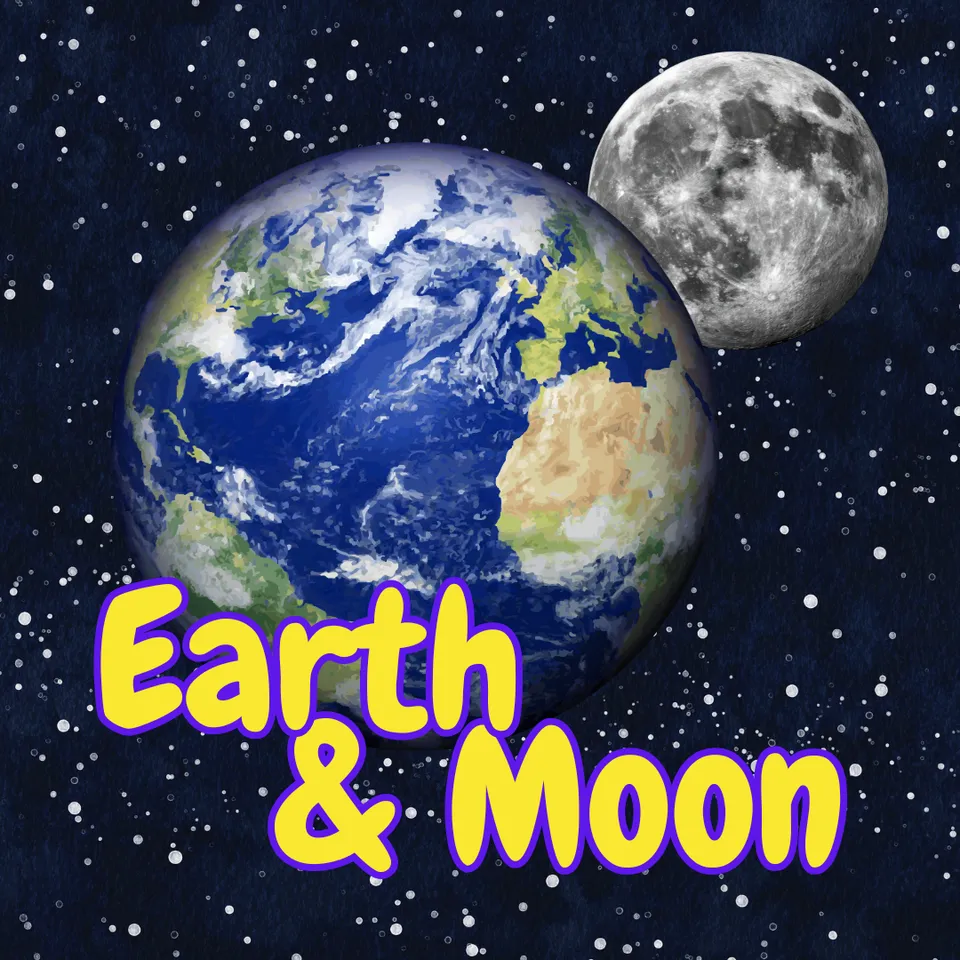
Ages 7–10 · 8 minutes · Science
There's no place like home!
Students will learn all about Earth and the Moon from an astronomer's perspective, including:
- what makes Earth uniquely suited for life
- how long it takes light to travel from the Sun to Earth
- where craters come from and why they don't vanish on the Moon
- the Apollo 11 mission and the history of humans travel to the Moon
Part of
Standards alignment
Common Core State Standards
- The orbits of Earth around the sun and of the moon around Earth, together with the rotation of Earth about an axis between its North and South poles, cause observable patterns. These include day and night; daily changes in the length and direction of shadows; and different positions of the sun, moon, and stars at different times of the day, month, and year.
- 1-ESS1-1 — Use observations of the sun, moon, and stars to describe patterns that can be predicted.
Alabama
- SC23.5.11 — Analyze data that reveal patterns of daily changes in length and direction of shadows, day and night, phases of the moon, and seasonal appearance of some stars in the night sky.
- SC23.6.4 — Analyze and use data to determine scale properties and characteristics of objects in the solar system including sizes, distances, orbital periods, basic composition, and ability to support life.
- SC23.6.1b — Construct an evidence-based explanation of how the relative positions of the sun, moon, and Earth result in observable phenomena, including lunar cycles, eclipses, and tidal cycles.
Alaska
- The orbits of Earth around the sun and of the moon around Earth, together with the rotation of Earth about an axis between its North and South poles, cause observable patterns. These include day and night; daily changes in the length and direction of shadows; and different positions of the sun, moon, and stars at different times of the day, month, and year.
Arizona
- 2.E2U1.8 — Observe and explain the Sun’s position at different times during a twenty-four-hour period and changes in the apparent shape of the Moon from one night to another.
- 5.E2U1.7 — Develop, revise, and use models based on evidence to construct explanations about the movement of the Earth and Moon within our solar system.
- E2 — The Earth and our solar system are a very small part of one of many galaxies within the Universe.
- 4.E1U3.9 — Construct and support an evidence-based argument about the availability of water and its impact on life.
Arkansas
- The orbits of Earth around the sun and of the moon around Earth, together with the rotation of Earth about an axis between its North and South poles, cause observable patterns. These include day and night; daily changes in the length and direction of shadows; and different positions of the sun, moon, and stars at different times of the day, month, and year.
- 1-ESS1-1 — Use observations of the sun, moon, and stars to describe patterns that can be predicted.
California
- The orbits of Earth around the sun and of the moon around Earth, together with the rotation of Earth about an axis between its North and South poles, cause observable patterns. These include day and night; daily changes in the length and direction of shadows; and different positions of the sun, moon, and stars at different times of the day, month, and year.
- Rainfall helps to shape the land and affects the types of living things found in a region. Water, ice, wind, living organisms, and gravity break rocks, soils, and sediments into smaller particles and move them around.
- Living things need water, air, and resources from the land, and they live in places that have the things they need. Humans use natural resources for everything they do.
Colorado
- ESS1.B — Earth and the Solar System: The orbits of Earth around the sun and of the moon around Earth, together with the rotation of Earth about an axis between its North and South poles, cause observable patterns. These include day and night; daily changes in the length and direction of shadows; and different positions of the sun, moon and stars at different times of the day, month and year.
- SC.1.3.1 — Patterns of movement of the sun, moon and stars as seen from Earth can be observed, described and predicted.
Connecticut
- The orbits of Earth around the sun and of the moon around Earth, together with the rotation of Earth about an axis between its North and South poles, cause observable patterns. These include day and night; daily changes in the length and direction of shadows; and different positions of the sun, moon, and stars at different times of the day, month, and year.
- Living things need water, air, and resources from the land, and they live in places that have the things they need. Humans use natural resources for everything they do.
Delaware
- The orbits of Earth around the sun and of the moon around Earth, together with the rotation of Earth about an axis between its North and South poles, cause observable patterns. These include day and night; daily changes in the length and direction of shadows; and different positions of the sun, moon, and stars at different times of the day, month, and year.
- Rainfall helps to shape the land and affects the types of living things found in a region. Water, ice, wind, living organisms, and gravity break rocks, soils, and sediments into smaller particles and move them around.
- MS-ESS1-1 — Develop and use a model of the Earth-sun-moon system to describe the cyclic patterns of lunar phases, eclipses of the sun and moon, and seasons.
Florida
- SC.5.E.5.3 — Distinguish among the following objects of the Solar System -- Sun, planets, moons, asteroids, comets -- and identify Earth's position in it.
- SC.4.E.5.2 — Describe the changes in the observable shape of the moon over the course of about a month.
- SC.5.E.5.2 — Recognize the major common characteristics of all planets and compare/contrast the properties of inner and outer planets.
Georgia
- S4E1.d — Evaluate strengths and limitations of models of our solar system in describing relative size, order, appearance and composition of planets and the sun.
- S4E2.b — Develop a model based on observations to describe the repeating pattern of the phases of the moon (new, crescent, quarter, gibbous, and full).
- SS5H6.d — Discuss the significance of the technologies of television and space exploration.
Hawaii
- The orbits of Earth around the sun and of the moon around Earth, together with the rotation of Earth about an axis between its North and South poles, cause observable patterns. These include day and night; daily changes in the length and direction of shadows; and different positions of the sun, moon, and stars at different times of the day, month, and year.
- SS.1.3.17.1 — Investigate historically significant events, people, and observances in history
- Living things need water, air, and resources from the land, and they live in places that have the things they need. Humans use natural resources for everything they do.
Idaho
- The orbits of Earth around the Sun and of the Moon around Earth, together with the rotation of Earth about an axis between its North and South poles, cause observable patterns. These include day and night; daily changes in the length and direction of shadows; and different positions of the Sun, Moon, and stars at different times of the day, month, and year. (5-ESS1.2)
- Living things need water, air, and resources from the land. They live in places that have the things they need. (K-ESS-2.1)
Illinois
- ESS1.B-E1 — The orbits of Earth around the sun and of the moon around Earth, together with the rotation of Earth about an axis between its North and South poles, cause observable patterns. These include day and night; daily changes in the length and direction of shadows; and different positions of the sun, moon, and stars at different times of the day, month, and year.
- ESS2.A-E2 — Rainfall helps to shape the land and affects the types of living things found in a region. Water, ice, wind, living organisms, and gravity break rocks, soils, and sediments into smaller particles and move them around.
Indiana
- 6.ESS.3 — Compare and contrast the Earth, its moon, and other planets in the solar system, including comets and asteroids. (Comparisons should be made in regard to size, surface features, atmospheric characteristics, and the ability to support life.)
Iowa
- The orbits of Earth around the sun and of the moon around Earth, together with the rotation of Earth about an axis between its North and South poles, cause observable patterns. These include day and night; daily changes in the length and direction of shadows; and different positions of the sun, moon, and stars at different times of the day, month, and year.
- MS-ESS1-1 — Develop and use a model of the Earth-sun-moon system to describe the cyclic patterns of lunar phases, eclipses of the sun and moon, and seasons.
- 1-ESS1-1 — Use observations of the sun, moon, and stars to describe patterns that can be predicted.
Kansas
- The orbits of Earth around the sun and of the moon around Earth, together with the rotation of Earth about an axis between its North and South poles, cause observable patterns. These include day and night; daily changes in the length and direction of shadows; and different positions of the sun, moon, and stars at different times of the day, month, and year.
- Rainfall helps to shape the land and affects the types of living things found in a region. Water, ice, wind, living organisms, and gravity break rocks, soils, and sediments into smaller particles and move them around.
Kentucky
- The orbits of Earth around the sun and of the moon around Earth, together with the rotation of Earth about an axis between its North and South poles, cause observable patterns. These include day and night; daily changes in the length and direction of shadows; and different positions of the sun, moon, and stars at different times of the day, month, and year.
- Living things need water, air, and resources from the land, and they live in places that have the things they need. Humans use natural resources for everything they do.
- The solar system consists of the sun and a collection of objects, including planets, their moons, and asteroids that are held in orbit around the sun by its gravitational pull on them.
Louisiana
- 1-ESS1-1 — Use observations of the sun, moon, and stars to describe patterns that can be predicted.
- 3.7 — Describe the significance of major events in the history of the United States, including the American Revolution, Louisiana Purchase, Lewis and Clark Expedition, the abolition of slavery following the Civil War, women’s suffrage movement, civil rights movement, and the Space Race.
- MS-ESS1-1 — Develop and use a model of the Earth-sun-moon system to describe the recurring patterns of lunar phases, eclipses of the sun and moon, and seasons.
- Natural objects and/or observable phenomena exist from the very small to the immensely large or from very short to very long time periods.
Maine
- Natural objects and/or observable phenomena exist from the very small to the immensely large or from very short to very long time periods.
- MS-ESS1-1 — Develop and use a model of the Earth-sun-moon system to describe the cyclic patterns of lunar phases, eclipses of the sun and moon, and seasons.
- 1-ESS1-1 — Use observations of the sun, moon, and stars to describe patterns that can be predicted.
Maryland
- DCI.ESS1.B.3-5.1 — The orbits of Earth around the sun and of the moon around Earth, together with the rotation of Earth about an axis between its North and South poles, cause observable patterns. These include day and night; daily changes in the length and direction of shadows; and different positions of the sun, moon, and stars at different times of the day, month, and year.
- DCI.ESS2.A.3-5.1 — Rainfall helps to shape the land and affects the types of living things found in a region. Water, ice, wind, living organisms, and gravity break rocks, soils, and sediments into smaller particles and move them around.
- DCI.ESS3.A.K-2.1 — Living things need water, air, and resources from the land, and they live in places that have the things they need. Humans use natural resources for everything they do.
Massachusetts
- 6.MS-ESS1-1a. — Develop and use a model of the Earth-Sun-Moon system to explain the causes of lunar phases and eclipses of the Sun and Moon.
- 5-ESS1-2 — Use a model to communicate Earth’s relationship to the Sun, Moon, and other stars that explain (a) why people on Earth experience day and night, (b) patterns in daily changes in length and direction of shadows over a day, and (c) changes in the apparent position of the Sun, Moon, and stars at different times during a day, over a month, and over a year.
Michigan
- 1-ESS1-1 — Use observations of the sun, moon, and stars to describe patterns that can be predicted.
- MS-ESS1-1 — Develop and use a model of the Earth-sun-moon system to describe the cyclic patterns of lunar phases, eclipses of the sun and moon, and seasons.
Minnesota
- 3E.2.1.1.1 — Record observations of the sun, moon, and stars and use them to describe patterns that can be predicted. (P: 4, CC: 1, CI: ESS1)
- 6E.2.1.1.1 — Analyze and interpret data to determine similarities and differences among features and processes occurring on solar system objects. (P: 4, CC: 3, CI: ESS1)
- 6E.4.2.2.1 — Communicate how a series of models, including those used by Minnesota American Indian Tribes and communities and other cultures, are used to explain how motion in the Earth-Sun-Moon system causes the cyclic patterns of lunar phases, eclipses and seasons. (P: 8, CC: 1, CI: ESS1)
Mississippi
- E.2.8.3 — Observe and compare the details in images of the moon and planets using the perspective of the naked eye, telescopes, and data from space exploration.
- E.2.8.4 — With teacher support, gain an understanding that scientists are humans who use observations and experiments to learn about space. Obtain information from informational text or other media about scientists who have made important discoveries about objects in space (e.g., Galileo Galilei, Johannes Kepler, George Ellery Hale, Jill Tarter) or the development of technologies (e.g., various telescopes and detection devices, computer modeling, and space exploration).
- E.2.8.5 — Use informational text and other media to observe, describe and predict the visual patterns of motion of the Sun (sunrise, sunset) and Moon (phases).
Missouri
- The orbits of Earth around the sun and of the moon around Earth, together with the rotation of Earth about an axis between its North and South poles, cause observable patterns. These include day and night; daily changes in the length and direction of shadows; and different positions of the sun, moon, and stars at different times of the day, month, and year.
- Rainfall helps to shape the land and affects the types of living things found in a region. Water, ice, wind, living organisms, and gravity break rocks, soils, and sediments into smaller particles and move them around.
- 6-8.ESS1.A.1 — Develop and use a model of the Earth-sun-moon system to explain the cyclic patterns of lunar phases and eclipses of the sun and moon.
Montana
- 1- ESS1-1 — use observations of the sun, moon, and stars to describe patterns that can be predicted; and
- 4- ESS2-1 — make observations or measurements to provide evidence of the effects of weathering or the rate of erosion by water, ice, wind, or vegetation;
Nebraska
- The orbits of Earth around the sun and of the moon around Earth, together with the rotation of Earth about an axis between its North and South poles, cause observable patterns. These include day and night; daily changes in the length and direction of shadows; and different positions of the sun, moon, and stars at different times of the day, month, and year.
- SC.5.11.3 — Gather and analyze data to communicate understanding of space systems: Earth’s stars and solar system.
- Rainfall helps to shape the land and affects the types of living things found in a region. Water, ice, wind, living organisms, and gravity break rocks, soils, and sediments into smaller particles and move them around.
Nevada
- The orbits of Earth around the sun and of the moon around Earth, together with the rotation of Earth about an axis between its North and South poles, cause observable patterns. These include day and night; daily changes in the length and direction of shadows; and different positions of the sun, moon, and stars at different times of the day, month, and year.
- Living things need water, air, and resources from the land, and they live in places that have the things they need. Humans use natural resources for everything they do.
- MS-ESS1-1 — Develop and use a model of the Earth-sun-moon system to describe the cyclic patterns of lunar phases, eclipses of the sun and moon, and seasons.
New Hampshire
- The orbits of Earth around the sun and of the moon around Earth, together with the rotation of Earth about an axis between its North and South poles, cause observable patterns. These include day and night; daily changes in the length and direction of shadows; and different positions of the sun, moon, and stars at different times of the day, month, and year.
- Rainfall helps to shape the land and affects the types of living things found in a region. Water, ice, wind, living organisms, and gravity break rocks, soils, and sediments into smaller particles and move them around.
- The solar system consists of the sun and a collection of objects, including planets, their moons, and asteroids that are held in orbit around the sun by its gravitational pull on them.
New Jersey
- The orbits of Earth around the sun and of the moon around Earth, together with the rotation of Earth about an axis between its North and South poles, cause observable patterns. These include day and night; daily changes in the length and direction of shadows; and different positions of the sun, moon, and stars at different times of the day, month, and year.
- Rainfall helps to shape the land and affects the types of living things found in a region. Water, ice, wind, living organisms, and gravity break rocks, soils, and sediments into smaller particles and move them around.
- 1-ESS1-1 — Use observations of the sun, moon, and stars to describe patterns that can be predicted.
New Mexico
- The orbits of Earth around the sun and of the moon around Earth, together with the rotation of Earth about an axis between its North and South poles, cause observable patterns. These include day and night; daily changes in the length and direction of shadows; and different positions of the sun, moon, and stars at different times of the day, month, and year.
- Rainfall helps to shape the land and affects the types of living things found in a region. Water, ice, wind, living organisms, and gravity break rocks, soils, and sediments into smaller particles and move them around.
- Living things need water, air, and resources from the land, and they live in places that have the things they need. Humans use natural resources for everything they do.
New York
- The orbits of Earth around the sun and of the moon around Earth, together with the rotation of Earth about an axis between its North and South poles, cause observable patterns. These include day and night; daily changes in the length and direction of shadows; and different positions of the sun, moon, and stars at different times of the day, month, and year.
- The solar system consists of the sun and a collection of objects, including planets, their moons, and asteroids that are held in orbit around the sun by its gravitational pull on them.
- Rainfall helps to shape the land and affects the types of living things found in a region. Water, ice, wind, living organisms, and gravity break rocks, soils, and sediments into smaller particles and move them around.
North Carolina
- ESS.3.1.1 — Use models to recognize that the Earth is part of a system called the solar system that includes the sun (a star), planets, and many moons, and that the Earth is the third planet from the sun.
- ESS.3.1 — Remember the major components and patterns observed in the earth/moon/sun system.
- ESS.4.1.2 — Use models to explain the repeating pattern of the phases of the moon (new, crescent, quarter, gibbous, and full).
North Dakota
- Patterns of the motion of the sun, moon, and stars in the sky can be observed, described, and predicted.
- 1-ESS1-1 — Describe patterns that can be predicted through observations of the sun, moon, and stars.
- The orbits of Earth around the sun and of the moon around Earth, together with the rotation of Earth about an axis between its North and South poles, cause observable patterns. These include day and night; daily changes in the length and direction of shadows; and different positions of the sun, moon, and stars at different times of the day, month, and year.
Ohio
- 5.ESS.1 — The solar system includes the sun and all celestial bodies that orbit the sun. Each planet in the solar system has unique characteristics.
- 5.PS.2 — Light and sound are forms of energy that behave in predictable ways.
- 4.ESS.2 — The surface of Earth changes due to weathering.
Oklahoma
- Living things need water, air, and resources from the land, and they live in places that have the things they need. (K.ESS3.1)
- The orbits of Earth around the sun and of the moon around Earth, together with the rotation of Earth about an axis between its North and South poles, cause observable patterns. These include day and night; daily changes in the length and direction of shadows; and different positions of the Sun, Moon, and stars at different times of the day, month, and year. (5.ESS1.2)
- Wind and water can change the shape of the land. (2.ESS2.1)
Oregon
- 1.ESS1.1 — Use observations of the sun, moon, and stars to describe patterns that can be predicted. [Clarification Statement: Examples of patterns could include that the sun and moon appear to rise in one part of the sky, move across the sky, and set; and stars other than our sun are visible at night but not during the day.] [Assessment Boundary: Assessment of star patterns is limited to stars being seen at night and not during the day.]
Pennsylvania
- The orbits of Earth around the sun and of the moon around Earth, together with the rotation of Earth about an axis between its North and South poles, cause observable patterns. These include day and night; daily changes in the length and direction of shadows; and different positions of the sun, moon, and stars at different times of the day, month, and year.
- Rainfall helps to shape the land and affects the types of living things found in a region. Water, ice, wind, living organisms, and gravity break rocks, soils, and sediments into smaller particles and move them around.
Rhode Island
- The orbits of Earth around the sun and of the moon around Earth, together with the rotation of Earth about an axis between its North and South poles, cause observable patterns. These include day and night; daily changes in the length and direction of shadows; and different positions of the sun, moon, and stars at different times of the day, month, and year.
- 1-ESS1-1 — Use observations of the sun, moon, and stars to describe patterns that can be predicted.
South Carolina
- 5-ESS1-2.DCI.B: — Earth and the Solar System The orbits of Earth around the sun and of the moon around Earth, together with the rotation of Earth about an axis between its North and South poles, cause observable patterns. These include day and night; daily changes in the length and direction of shadows; and different positions of the sun, moon, and stars at different times of the day, month, and year. NRC Framework Link
- 2-ESS2-1.DCI.A: — Earth Materials and Systems Wind and water can change the shape of the land. NRC Framework Link
South Dakota
- Modeling the Earth-sun-moon system to describe the repetition of patterns in each.
- MS-ESS1-1 — Develop and use a model of the Earth-sun-moon system to describe the cyclic patterns of lunar phases, eclipses of the sun and moon, and seasons.
- MS-ESS1-3 — Analyze and interpret data to determine scale properties of objects in the solar system.
Tennessee
- 2.29 — Examine the significant contributions made by people of the U.S., including: • Neil Armstrong • Martin Luther King, Jr. • Wilma Rudolph • David Crockett • Rosa Parks • Sequoyah • Benjamin Franklin • Jackie Robinson • George Washington
- 5.ESS1.4 — Explain the cause and effect relationship between the positions of the sun, earth, and moon and resulting eclipses, position of constellations, and appearance of the moon.
Texas
- 3.8D — identify the planets in Earth's solar system and their position in relation to the Sun.
- 2.8C — observe, describe, and record patterns of objects in the sky, including the appearance of the Moon.
- 3.8C — construct models that demonstrate the relationship of the Sun, Earth, and Moon, including orbits and positions; and
- 5.8D — identify and compare the physical characteristics of the Sun, Earth, and Moon.
Utah
- 6.1.1 — Develop and use a model of the Sun-Earth-Moon system to describe the cyclic patterns of lunar phases, eclipses of the Sun and Moon, and seasons. Examples of models could be physical, graphical, or conceptual. (ESS1.A, ESS1.B)
- 6.1.3 — Use computational thinking to analyze data and determine the scale and properties of objects in the solar system. Examples of scale could include size or distance. Examples of properties could include layers, temperature, surface features, or orbital radius. Data sources could include Earth and space-based instruments such as telescopes or satellites. Types of data could include graphs, data tables, drawings, photographs, or models. (ESS1.A, ESS1.B)
Vermont
- The orbits of Earth around the sun and of the moon around Earth, together with the rotation of Earth about an axis between its North and South poles, cause observable patterns. These include day and night; daily changes in the length and direction of shadows; and different positions of the sun, moon, and stars at different times of the day, month, and year.
- Rainfall helps to shape the land and affects the types of living things found in a region. Water, ice, wind, living organisms, and gravity break rocks, soils, and sediments into smaller particles and move them around.
- Living things need water, air, and resources from the land, and they live in places that have the things they need. Humans use natural resources for everything they do.
Virginia
- 4.5.b — Planets have characteristics and a specific order in the solar system.
- 4.6.a — The student will investigate and understand that there are relationships among Earth, the moon, and the sun. Key relationships include the motions of Earth, the moon, and the sun.
- 4.6.c — The student will investigate and understand that there are relationships among Earth, the moon, and the sun. Key relationships include the causes for the four major phases of the moon and the relationship to the tide cycles.
- 4.5.a — Planets rotate on their axes and revolve around the sun.
Washington
- The orbits of Earth around the sun and of the moon around Earth, together with the rotation of Earth about an axis between its North and South poles, cause observable patterns. These include day and night; daily changes in the length and direction of shadows; and different positions of the sun, moon, and stars at different times of the day, month, and year.
- Rainfall helps to shape the land and affects the types of living things found in a region. Water, ice, wind, living organisms, and gravity break rocks, soils, and sediments into smaller particles and move them around.
- Living things need water, air, and resources from the land, and they live in places that have the things they need. Humans use natural resources for everything they do.
Washington, D.C.
- 1-ESS1-1 — Use observations of the sun, moon, and stars to describe patterns that can be predicted.
- MS-ESS1-1 — Develop and use a model of the Earth-sun-moon system to describe the cyclic patterns of lunar phases, eclipses of the sun and moon, and seasons.
- Natural objects and/or observable phenomena exist from the very small to the immensely large or from very short to very long time periods.
West Virginia
- S.1.8 — Use observations of the sun, moon, and stars to describe patterns that can be predicted.
- Building and appropriately using science domain vocabulary and phrases
- S.6.13 — Develop and use a model of the Earth-sun-moon system to describe the cyclic patterns of lunar phases, eclipses of the sun and moon, and seasons.
Wisconsin
- 5 — The Earth’s orbit and rotation, and the orbit of the moon around the Earth cause observable patterns.
- Students recognize natural objects and observable phenomena exist from the very small to the immensely large. They use standard units to measure and describe physical quantities such as mass, time, temperature, and volume.
Wyoming
- The Earth’s orbit and rotation, and the orbit of the moon around the Earth cause observable patterns.
- Four major Earth systems interact. Rainfall helps to shape the land and affects the types of living things found in a region. Water, ice, wind, organisms, and gravity break rocks, soils, and sediments into smaller pieces and move them around.