Border Collies
Ages 5–10 · 11 minutes · Science
Woof! Woof!
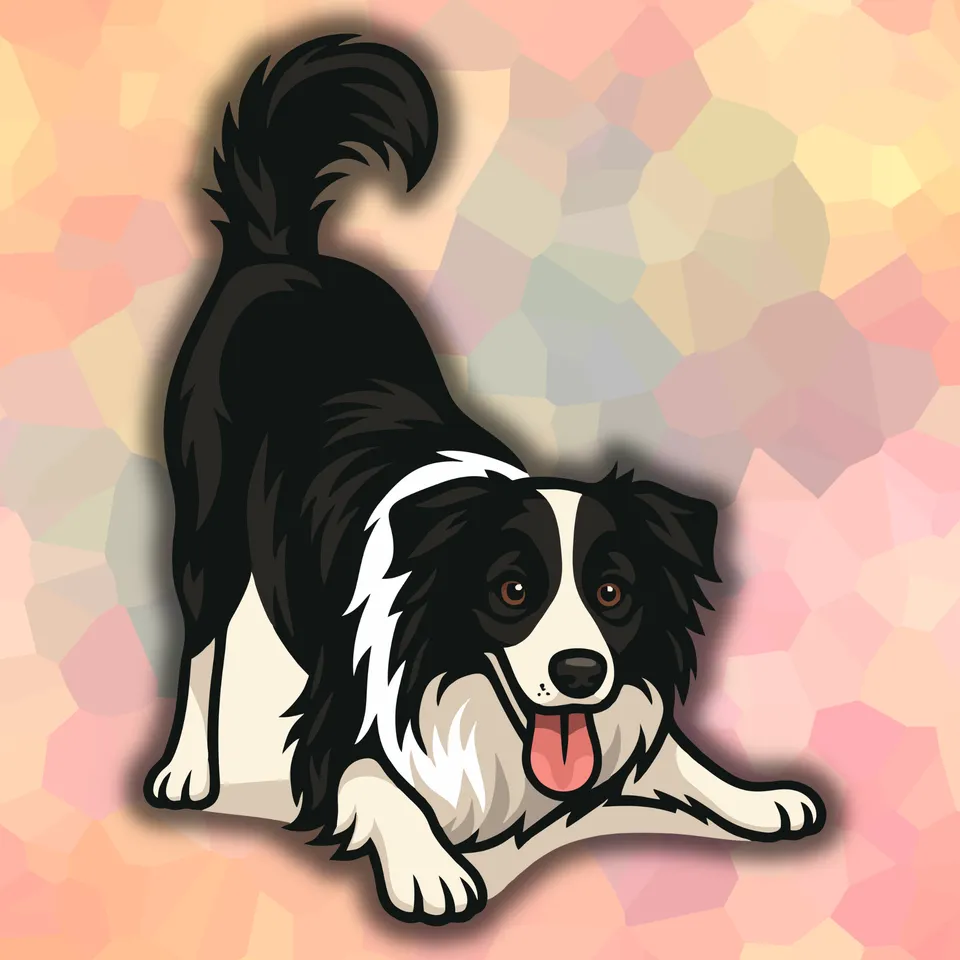
Border collies are super-smart, super-energetic dogs who love to learn and work! They are famous for their quick thinking, speedy running and amazing herding skills. These playful pups enjoy games, puzzles and staying busy.
Part of
Standards alignment
Common Core State Standards
- Animals have body parts that capture and convey different kinds of information needed for growth and survival. Animals respond to these inputs with behaviors that help them survive. Plants also respond to some external inputs.
- ELD-SI.K-3.Inform — Multilingual learners will… • Define and classify objects or concepts • Describe characteristics, patterns, or behavior • Describe parts and wholes • Sort, clarify, and summarize ideas • Summarize information from interaction with others and from learning experiences
- L.1.5.b — Define words by category and by one or more key attributes (e.g., a duck is a bird that swims; a tiger is a large cat with stripes).
- Different sense receptors are specialized for particular kinds of information, which may be then processed by the animal’s brain. Animals are able to use their perceptions and memories to guide their actions.
Alabama
- ELA21.2.30a — State and confirm predictions about a text.
- SC23.1.5 — Use information from observations to explain how various external features help living things survive, grow, and meet their needs.
- SC23.4.9 — Carry out investigations to support a claim that different animals receive information through their senses, process that information, and respond in various ways.
Alaska
- Animals have body parts that capture and convey different kinds of information needed for growth and survival. Animals respond to these inputs with behaviors that help them survive. Plants also respond to some external inputs.
- In artificial selection, humans have the capacity to influence certain characteristics of organisms by selective breeding. One can choose desired parental traits determined by genes, which are then passed on to offspring.
- Different sense receptors are specialized for particular kinds of information, which may be then processed by the animal’s brain. Animals are able to use their perceptions and memories to guide their actions.
Arizona
- Identify questions and make predictions based on prior experiences.
- 1.L4U1.10 — Develop a model to describe how animals and plants are classified into groups and subgroups according to their similarities.
- 1.SL.2 — Ask and answer questions about key details in a text read aloud or information presented orally or through other media.
- K.L1U1.6 — Obtain, evaluate, and communicate information about how organisms use different body parts for survival.
Arkansas
- 1.RC.4.RF — Build general and academic vocabulary and background knowledge of age and grade-appropriate topics through discussion, reading, and writing.
- 1.RC.5.RF — Use background knowledge and details, including illustrations, charts, and graphs, to make predictions and inferences about what happens in a text.
- Animals have body parts that capture and convey different kinds of information needed for growth and survival. Animals respond to these inputs with behaviors that help them survive. Plants also respond to some external inputs.
- 1.RC.17.RI — Explain how visual images (e.g., charts, graphs, illustrations) support a text by clarifying or providing key details.
California
- L.1.5.b — Define words by category and by one or more key attributes (e.g., a duck is a bird that swims; a tiger is a large cat with stripes).
- RI.1.10.b — Confirm predictions about what will happen next in a text.
- Animals have body parts that capture and convey different kinds of information needed for growth and survival. Animals respond to these inputs with behaviors that help them survive. Plants also respond to some external inputs.
Colorado
- Similarities and differences in patterns can be used to sort and classify natural phenomena.
- LS1.D — Information Processing: Animals have body parts that capture and convey different kinds of information needed for growth and survival - for example, eyes for light, ears for sounds, and skin for temperature or touch. Animals respond to these inputs with behaviors that help them survive (e.g., find food, run from a predator). Plants also respond to some external inputs (e.g., turn leaves toward the sun).
- LS3.A — Inheritance of Traits: Many characteristics of organisms are inherited from their parents. Other characteristics result from individuals’ interactions with the environment, which can range from diet to learning. Many characteristics involve both inheritance and environment.
- LS1.A — Structure and Function: All organisms have external parts. Different animals use their body parts in different ways to see, hear, grasp objects, protect themselves, move from place to place and seek, find and take in food, water and air. Plants also have different parts (roots, stems, leaves, flowers, fruits) that help them survive, grow and produce more plants.
Connecticut
- In artificial selection, humans have the capacity to influence certain characteristics of organisms by selective breeding. One can choose desired parental traits determined by genes, which are then passed on to offspring.
- Different sense receptors are specialized for particular kinds of information, which may be then processed by the animal’s brain. Animals are able to use their perceptions and memories to guide their actions.
- 4-LS1-2 — Use a model to describe that animals receive different types of information through their senses, process the information in their brain, and respond to the information in different ways.
- L.1.5.b — Define words by category and by one or more key attributes (e.g., a duck is a bird that swims; a tiger is a large cat with stripes).
Delaware
- Different sense receptors are specialized for particular kinds of information, which may be then processed by the animal’s brain. Animals are able to use their perceptions and memories to guide their actions.
- L.1.5.b — Define words by category and by one or more key attributes (e.g., a duck is a bird that swims; a tiger is a large cat with stripes).
- In artificial selection, humans have the capacity to influence certain characteristics of organisms by selective breeding. One can choose desired parental traits determined by genes, which are then passed on to offspring.
- 4-LS1-2 — Use a model to describe that animals receive different types of information through their senses, process the information in their brain, and respond to the information in different ways.
Florida
- SC.3.L.15.1 — Classify animals into major groups (mammals, birds, reptiles, amphibians, fish, arthropods, vertebrates and invertebrates, those having live births and those which lay eggs) according to their physical characteristics and behaviors.
- SC.4.L.16.3 — Recognize that animal behaviors may be shaped by heredity and learning.
- SC.K.N.1.5 — Recognize that learning can come from careful observation.
- SC.K.L.14.2 — Recognize that some books and other media portray animals and plants with characteristics and behaviors they do not have in real life.
Georgia
- SKL2.a — Construct an argument supported by evidence for how animals can be grouped according to their features.
- ELAGSE1SL2 — Ask and answer questions about key details in a text read aloud or information presented orally or through other media.
- S5L1.a — Develop a model that illustrates how animals are sorted into groups (vertebrate and invertebrate) and how vertebrates are sorted into groups (fish, amphibian, reptile, bird, and mammal) using data from multiple sources.
- S5L2.a — Ask questions to compare and contrast instincts and learned behaviors.
Hawaii
- Different sense receptors are specialized for particular kinds of information, which may be then processed by the animal’s brain. Animals are able to use their perceptions and memories to guide their actions.
- Many characteristics of organisms are inherited from their parents.
- 4-LS1-2 — Use a model to describe that animals receive different types of information through their senses, process the information in their brain, and respond to the information in different ways.
Idaho
- Populations of animals are classified by their characteristics. (5-LS-2.2)
- 1.RC.TE.3 — Ask and answer questions about key details in texts heard or read.
- Different sense receptors are specialized for particular kinds of information, which may be then processed by the animal’s brain. Animals are able to use their perceptions and memories to guide their actions. (4-LS-1.2)
- 1.VD.WB.2a — Sort words into categories (e.g., tools, pets) and define those words by one or more key attributes (e.g., *a saw is a tool that cuts; a goldfish is a pet that lives in water*).
Illinois
- LS1.D-E1 — Different sense receptors are specialized for particular kinds of information, which may be then processed by the animal’s brain. Animals are able to use their perceptions and memories to guide their actions.
- LS3.A-E1 — Many characteristics of organisms are inherited from their parents.
- LS1.D-P1 — Animals have body parts that capture and convey different kinds of information needed for growth and survival. Animals respond to these inputs with behaviors that help them survive. Plants also respond to some external inputs.
- LS3.A-E2 — Other characteristics result from individuals’ interactions with the environment, which can range from diet to learning. Many characteristics involve both inheritance and environment.
Indiana
- 1.RC.4 — Make and confirm predictions about what will happen next in a story.
- 2.LS.1 — Determine patterns and behavior (adaptations) of parents and offspring which help offspring to survive.
- 5.LS.3 — Use a model to describe that animals receive different types of information through their senses, process the information in their brain, and respond to the information in different ways.
Iowa
- SL.1.2 — Ask and answer questions about the main topic and key details in a text read aloud or information presented orally or through other media.
- L.1.5.b — Define words by category and by one or more key attributes (e.g., a duck is a bird that swims; a tiger is a large cat with stripes).
- Different organisms vary in how they look and function because they have different inherited information.
- Different sense receptors are specialized for particular kinds of information, which may be then processed by the animal’s brain. Animals are able to use their perceptions and memories to guide their actions.
Kansas
- Make predictions based on prior experiences.
- Similarities and differences in patterns can be used to sort, classify, communicate and analyze simple rates of change for natural phenomena and designed products.
- Different sense receptors are specialized for particular kinds of information, which may be then processed by the animal’s brain. Animals are able to use their perceptions and memories to guide their actions.
Kentucky
- Different sense receptors are specialized for particular kinds of information, which may be then processed by the animal’s brain. Animals are able to use their perceptions and memories to guide their actions.
- 4-LS1-2 — Use a model to describe that animals receive different types of information through their senses, process the information in their brain, and respond to the information in different ways.
- L.1.5.b — Define words by category and by one or more key attributes (e.g., a duck is a bird that swims; a tiger is a large cat with stripes).
- In artificial selection, humans have the capacity to influence certain characteristics of organisms by selective breeding. One can choose desired parental traits determined by genes, which are then passed on to offspring.
Louisiana
- Make predictions based on prior experiences.
- Patterns in the natural and human designed world can be observed, used to describe phenomena, and used as evidence.
- L.K.5.a — Sort common objects into categories (e.g., shapes, foods) to gain a sense of the concepts the categories represent.
- L.1.5.b — Define words by category and by one or more key attributes (e.g., a duck is a bird that swims; a tiger is a large cat with stripes).
Maine
- Make predictions based on prior experiences.
- L.5.1.b — Define words by category and by one or more key attributes (e.g., a duck is a bird that swims; a tiger is a large cat with stripes).
- 3-LS3-1 — Analyze and interpret data to provide evidence that plants and animals have traits inherited from parents and that variation of these traits exists in a group of similar organisms.
- 4-LS1-2 — Use a model to describe that animals receive different types of information through their senses, process the information in their brain, and respond to the information in different ways.
Maryland
- DCI.LS1.D.K-2.1 — Animals have body parts that capture and convey different kinds of information needed for growth and survival. Animals respond to these inputs with behaviors that help them survive. Plants also respond to some external inputs.
- L.1.5.b — Define words by category and by one or more key attributes (e.g., a duck is a bird that swims; a tiger is a large cat with stripes).
- DCI.LS3.A.3-5.1 — Many characteristics of organisms are inherited from their parents.
Massachusetts
- L.1.5.b — Define words by category and by one or more key attributes (e.g., a duck is a bird that swims; a tiger is a large cat with stripes).
- SL.PK.2 — Recall information for short periods of time and retell, act out, or represent information from a text read aloud, a recording, or a video (e.g., watch a video about birds and their habitats and make drawings or constructions of birds and their nests).
- 3-LS3-1 — Provide evidence, including through the analysis of data, that plants and animals have traits inherited from parents and that variation of these traits exist in a group of similar organisms.
Michigan
- 3-LS3-1 — Analyze and interpret data to provide evidence that plants and animals have traits inherited from parents and that variation of these traits exists in a group of similar organisms.
- L.1.5.b — Define words by category and by one or more key attributes (e.g., a duck is a bird that swims; a tiger is a large cat with stripes).
- 3-LS4-2 — Use evidence to construct an explanation for how the variations in characteristics among individuals of the same species may provide advantages in surviving, finding mates, and reproducing.
Minnesota
- 0L.2.1.1.3 — Record and use observations to describe patterns of what plants and animals (including humans) need to survive. (P: 4, CC: 1, CI: LS1)
- 4L.4.2.1.2 — Obtain information from various media sources to determine that plants and animals have traits inherited from parents and that variation of these traits exists in a group of similar organisms. (P: 8, CC: 1, CI: LS3)
Mississippi
- L.2.1.2 — Classify vertebrates (mammals, fish, birds, amphibians, and reptiles) based on their physical characteristics.
- L.2.3B.1 — Evaluate and communicate findings from informational text or other media to describe and to compare how animals interact with other animals and plants in the environment (i.e., predatorprey relationships, herbivore, carnivore, omnivore).
Missouri
- Animals have body parts that capture and convey different kinds of information needed for growth and survival. Animals respond to these inputs with behaviors that help them survive. Plants also respond to some external inputs.
- Asking questions, making observations, and gathering information are helpful in thinking about problems.
Montana
- SL.1.2 — Ask and answer questions about key details in a text read aloud or information presented orally or through other media.
- CCRA.SL.2 — Integrate and evaluate information presented in diverse media and formats, including visually, quantitatively, and orally.
- L.1.5.b — Define words by category and by one or more key attributes (e.g., a duck is a bird that swims; a tiger is a large cat with stripes).
- SL.2.2 — Recount or describe key ideas or details from a text read aloud or information presented orally or through other media.
- 4-LS1-2 — use a model to describe that animals receive different types of information through their senses, process the information in their brain, and respond to the information in different ways.
Nebraska
- Animals have body parts that capture and convey different kinds of information needed for growth and survival. Animals respond to these inputs with behaviors that help them survive. Plants also respond to some external inputs.
- Different sense receptors are specialized for particular kinds of information, which may be then processed by the animal’s brain. Animals are able to use their perceptions and memories to guide their actions.
- In artificial selection, humans have the capacity to influence certain characteristics of organisms by selective breeding. One can choose desired parental traits determined by genes, which are then passed on to offspring.
- LA.1.V.2.b — Define words by their category and simple attributes (e.g., a duck is a bird that swims).
Nevada
- Different sense receptors are specialized for particular kinds of information, which may be then processed by the animal’s brain. Animals are able to use their perceptions and memories to guide their actions.
- In artificial selection, humans have the capacity to influence certain characteristics of organisms by selective breeding. One can choose desired parental traits determined by genes, which are then passed on to offspring.
- 4-LS1-2 — Use a model to describe that animals receive different types of information through their senses, process the information in their brain, and respond to the information in different ways.
New Hampshire
- Animals have body parts that capture and convey different kinds of information needed for growth and survival. Animals respond to these inputs with behaviors that help them survive. Plants also respond to some external inputs.
- L.1.5.b — Define words by category and by one or more key attributes (e.g., a duck is a bird that swims; a tiger is a large cat with stripes).
- In artificial selection, humans have the capacity to influence certain characteristics of organisms by selective breeding. One can choose desired parental traits determined by genes, which are then passed on to offspring.
New Jersey
- Animals have body parts that capture and convey different kinds of information needed for growth and survival. Animals respond to these inputs with behaviors that help them survive. Plants also respond to some external inputs.
- Many characteristics of organisms are inherited from their parents.
- 4-LS1-2 — Use a model to describe that animals receive different types of information through their senses, process the information in their brain, and respond to the information in different ways.
- L.1.5.b — Define words by category and by one or more key attributes (e.g., a duck is a bird that swims; a tiger is a large cat with stripes).
New Mexico
- RL.K.NM.1 — Identify the main topic, retell key details of a text, and make predictions.
- In artificial selection, humans have the capacity to influence certain characteristics of organisms by selective breeding. One can choose desired parental traits determined by genes, which are then passed on to offspring.
- L.1.5.b — Define words by category and by one or more key attributes (e.g., a duck is a bird that swims; a tiger is a large cat with stripes).
New York
- Different sense receptors are specialized for particular kinds of information, which may be then processed by the animal’s brain. Animals are able to use their perceptions and memories to guide their actions.
- 4-LS1-2 — Use a model to describe that animals receive different types of information through their senses, process the information in their brain, and respond to the information in different ways.
- 1L5b — Define words by category and by one or more key attributes (e.g., a duck is a bird that swims; a tiger is a large cat with stripes).
North Carolina
- CCR Anchor Standard SL.2 — Integrate and evaluate information presented in diverse media and formats, including visually, quantitatively, and orally
- SL.2.2 — Recount or describe key ideas or details from a text read aloud or information presented orally or through other media.
- SL.2.3 — Ask and answer questions about what a speaker says in order to clarify comprehension, gather additional information, or deepen understanding of a topic or issue.
- LS.5.3.1 — Ask questions to compare instincts and learned behaviors.
North Dakota
- Different sense receptors are specialized for information, which may be processed by the animal’s brain. Animals are able to use their perceptions and memories to guide their actions.
- Animals have body parts that capture and convey different kinds of information needed for growth and survival. Animals respond to these inputs with behaviors that help them survive. Plants also respond to some external inputs.
- 4-LS1-2 — Form an explanation to describe that animals receive different types of information through their senses, process the information in their brain, and respond to the information in different ways.
Ohio
- K.LS.2 — Living things have physical traits and behaviors, which influence their survival.
- SL.1.2 — Ask and answer questions about key details in a text read aloud or information presented in various media and other formats (e.g., orally).
- K.LS.1 — Living things have specific characteristics and traits.
- SL.2.2 — Retell or describe key ideas or details from a text read aloud or information presented in various media and other formats (e.g., orally)
- L.1.5.b — Define words by category and by one or more key attributes (e.g., a duck is a bird that swims; a tiger is a large cat with stripes).
Oklahoma
- Animals are able to use their perceptions and memories to guide their actions. (4.LS1.2)
- Asking questions, making observations, and gathering information are helpful in thinking about problems.
Oregon
- 1.SL.2 — Ask and answer questions about key details in a text read aloud or information presented orally or through other media.
- 2.SL.2 — Recount or describe key ideas or details from a text read aloud or information presented orally or through other media.
- 3.SL.2 — Determine the main ideas and supporting details of a text read aloud or information presented in diverse media and formats, including visually, quantitatively, and orally.
- 1.SL.1 — Participate in collaborative conversations with diverse partners about grade 1 topics and texts with peers and adults in small and larger groups
Pennsylvania
- Different sense receptors are specialized for particular kinds of information, which may be then processed by the animal’s brain. Animals are able to use their perceptions and memories to guide their actions.
- Animals have body parts that capture and convey different kinds of information needed for growth and survival. Animals respond to these inputs with behaviors that help them survive. Plants also respond to some external inputs.
Rhode Island
- Different sense receptors are specialized for particular kinds of information, which may be then processed by the animal’s brain. Animals are able to use their perceptions and memories to guide their actions.
- In artificial selection, humans have the capacity to influence certain characteristics of organisms by selective breeding. One can choose desired parental traits determined by genes, which are then passed on to offspring.
- 4-LS1-2 — Use a model to describe that animals receive different types of information through their senses, process the information in their brain, and respond to the information in different ways.
- L.1.5.b — Define words by category and by one or more key attributes (e.g., a duck is a bird that swims; a tiger is a large cat with stripes).
South Carolina
- 3-LS3-1.DCI.A: — Inheritance of Traits Many characteristics of organisms are inherited from their parents. NRC Framework Link
- 4-LS1-2.DCI.D: — Information Processing Different sense receptors are specialized for particular kinds of information, which may be then processed by the animal’s brain. Animals are able to use their perceptions and memories to guide their actions. NRC Framework Link
- 3-LS3-2.DCI.A: — Inheritance of Traits Some characteristics result from individuals’ interactions with the environment, which can range from diet to learning. Many characteristics involve both inheritance and environment. NRC Framework Link
South Dakota
- Using data to provide evidence of variable traits in plants and animals. Understanding that traits can be influenced by both inheritance and environment.
- Describing how human influence and technologies can influence the inheritance of specific traits over time. Developing competing design solutions for maintaining biodiversity in a given population.
- 4-LS1-2 — Use a model to describe that animals receive different types of information through their senses, process the information in their brain, and respond to the information in different ways.
Tennessee
- 2.LS1.2 — Obtain and communicate information to classify animals (vertebrates-mammals, birds, amphibians, reptiles, fish, invertebrates-insects) based on their physical characteristics.
- 2.SL.CC.2 — Recount or describe key ideas or details from a text read aloud or information presented orally or through other media.
- 5.LS1.1 — Compare and contrast animal responses that are instinctual versus those that that are gathered through the senses, processed, and stored as memories to guide their actions.
- 2.LS3.1 — Use evidence to explain that living things have physical traits inherited from parents and that variations of these traits exist in groups of similar organisms.
Texas
- 1.3B — make predictions based on observable patterns; and
- 2.3B — make predictions based on observable patterns; and
- K.10A — sort plants and animals into groups based on physical characteristics such as color, size, body covering, or leaf shape;
- 4.10B — explore and describe examples of traits that are inherited from parents to offspring such as eye color and shapes of leaves and behaviors that are learned such as reading a book and a wolf pack teaching their pups to hunt effectively; and
Utah
- 4.1.2 — Develop and use a model of a system to describe how animals receive different types of information from their environment through their senses, process the information in their brain, and respond to the information. Emphasize how animals are able to use their perceptions and memories to guide their actions. Examples could include models that explain how animals sense and then respond to different aspects of their environment such as sounds, temperature, or smell. (LS1.D)
Vermont
- Different sense receptors are specialized for particular kinds of information, which may be then processed by the animal’s brain. Animals are able to use their perceptions and memories to guide their actions.
- L.1.5.b — Define words by category and by one or more key attributes (e.g., a duck is a bird that swims; a tiger is a large cat with stripes).
- 4-LS1-2 — Use a model to describe that animals receive different types of information through their senses, process the information in their brain, and respond to the information in different ways.
- L.1.5.a — Sort words into categories (e.g., colors, clothing) to gain a sense of the concepts the categories represent.
Virginia
- 1.1.a.i — Ask questions and make predictions based on observations.
- 1.5.c — Animals can be classified based on a variety of characteristics.
- 3.4.b — Adaptations may be behavioral or physical.
- 1.5.b — Animals have different physical characteristics that perform specific functions.
Washington
- L.1.5.b — Define words by category and by one or more key attributes (e.g., a duck is a bird that swims; a tiger is a large cat with stripes).
- In artificial selection, humans have the capacity to influence certain characteristics of organisms by selective breeding. One can choose desired parental traits determined by genes, which are then passed on to offspring.
- Animals have body parts that capture and convey different kinds of information needed for growth and survival. Animals respond to these inputs with behaviors that help them survive. Plants also respond to some external inputs.
Washington, D.C.
- Make predictions based on prior experiences.
- L.1.5.b — Define words by category and by one or more key attributes (e.g., a duck is a bird that swims; a tiger is a large cat with stripes).
- 4-LS1-2 — Use a model to describe that animals receive different types of information through their senses, process the information in their brain, and respond to the information in different ways.
West Virginia
- ELA.1.40.b — Define words by category and by one or more key attributes (e.g., a duck is a bird that swims; a tiger is a large cat with stripes).
- S.4.9 — Use a model to describe that animals receive different types of information through their senses, process the information in their brain, and respond to the information in different ways.
- Building and appropriately using science domain vocabulary and phrases
- Investigating and explaining cause and effect
Wisconsin
- Animals sense and communicate information and respond to inputs with behaviors that help them grow and survive.
- Students identify similarities and differences in order to sort and classify natural objects and designed products. They identify patterns related to time, including simple rates of change and cycles, and use these patterns to make predictions.
- ELA.1.SL.2 — Ask and answer questions about key details in a text read aloud or information presented orally or through other media.
- Many characteristics of organisms are inherited from their parents. Other characteristics result from individuals’ interactions with the environment. Many characteristics involve both inheritance and environment.
Wyoming
- Animals sense and communicate information and respond to inputs with behaviors that help them grow and survive.
- L.1.5.b — Define words by category and by one or more key attributes (e.g., a duck is a bird that swims; a tiger is a large cat with stripes).