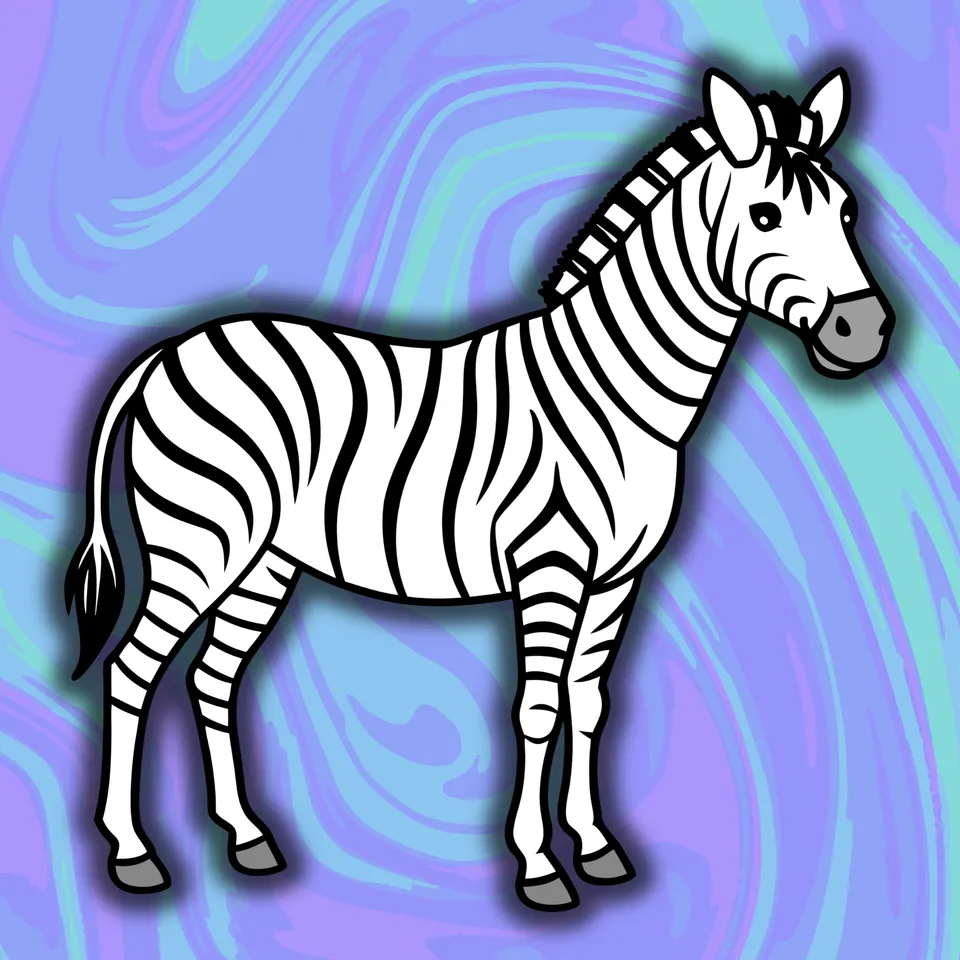
Zebras
Ages 5–10 · 10 minutes · Science
Stripe-tacular!
No two zebras have the same stripe pattern, making each one special and unique. Learn about how zebras have adapted to their environments, how they protect themselves from predators and how they communicate.
Part of
Standards alignment
Common Core State Standards
- All organisms have external parts. Different animals use their body parts in different ways to see, hear, grasp objects, protect themselves, move from place to place, and seek, find, and take in food, water and air. Plants also have different parts (roots, stems, leaves, flowers, fruits) that help them survive and grow.
- All animals need food in order to live and grow. They obtain their food from plants or from other animals. Plants need water and light to live and grow.
- Individuals of the same kind of plant or animal are recognizable as similar but can also vary in many ways.
- K-ESS3-1 — Use a model to represent the relationship between the needs of different plants and animals (including humans) and the places they live.
- Animals have body parts that capture and convey different kinds of information needed for growth and survival. Animals respond to these inputs with behaviors that help them survive. Plants also respond to some external inputs.
- Being part of a group helps animals obtain food, defend themselves, and cope with changes. Groups may serve different functions and vary dramatically in size.
Alabama
- SC23.1.5 — Use information from observations to explain how various external features help living things survive, grow, and meet their needs.
- SC23.3.10 — Make a claim from evidence that an organism's likelihood of survival depends upon access to sufficient resources in its habitat, including sunlight, air, water, food, and shelter.
- SC23.3.11 — Construct explanations of how forming groups helps some organisms survive.
- SC23.4.9 — Carry out investigations to support a claim that different animals receive information through their senses, process that information, and respond in various ways.
Alaska
- K-ESS3-1 — Use a model to represent the relationship between the needs of different plants and animals (including humans) and the places they live.
- K-LS1-1 — Use observations to describe patterns of what plants and animals (including humans) need to survive.
- All organisms have external parts. Different animals use their body parts in different ways to see, hear, grasp objects, protect themselves, move from place to place, and seek, find, and take in food, water and air. Plants also have different parts (roots, stems, leaves, flowers, fruits) that help them survive and grow.
- Individuals of the same kind of plant or animal are recognizable as similar but can also vary in many ways.
- 3-LS2-1 — Construct an argument that some animals form groups that help members survive.
Arizona
- 1.L4U1.10 — Develop a model to describe how animals and plants are classified into groups and subgroups according to their similarities.
- K.L1U1.6 — Obtain, evaluate, and communicate information about how organisms use different body parts for survival.
- 1.L2U1.8 — Construct an explanation describing how organisms obtain resources from the environment including materials that are used again by other organisms.
- 1.L2U2.7 — Develop and use models about how living things use resources to grow and survive; design and evaluate habitats for organisms using earth materials.
- K.L1U1.7 — Observe, ask questions and explain how specialized structures found on a variety of plants and animals (including humans) help them sense and respond to their environment.
Arkansas
- 3-LS2-1 — Construct an argument that some animals form groups that help members survive.
- K-ESS3-1 — Use a model to represent the relationship between the needs of different plants or animals (including humans) and the places they live.
- 3-LS4-2 — Use evidence to construct an explanation for how the variations in characteristics among individuals of the same species may provide advantages in surviving, finding mates, and reproducing.
- 4-LS1-1 — Construct an argument that plants and animals have internal and external structures that function to support survival, growth, behavior, and reproduction.
- K-LS1-1 — Use observations to describe patterns of what plants and animals (including humans) need to survive.
California
- K-ESS3-1 — Use a model to represent the relationship between the needs of different plants and animals (including humans) and the places they live.
- All organisms have external parts. Different animals use their body parts in different ways to see, hear, grasp objects, protect themselves, move from place to place, and seek, find, and take in food, water and air. Plants also have different parts (roots, stems, leaves, flowers, fruits) that help them survive and grow.
- Individuals of the same kind of plant or animal are recognizable as similar but can also vary in many ways.
- 3-LS2-1 — Construct an argument that some animals form groups that help members survive.
- All animals need food in order to live and grow. They obtain their food from plants or from other animals. Plants need water and light to live and grow.
Colorado
- SC.3.2.2 — Being part of a group helps animals obtain food, defend themselves and cope with changes.
- SC.3.2.2.a — Construct an argument that some animals form groups that help members survive.
- SC.K.3.2.a — Use a model to represent the relationship between the needs of different plants and animals (including humans) and the places they live.
- LS1.A — Structure and Function: All organisms have external parts. Different animals use their body parts in different ways to see, hear, grasp objects, protect themselves, move from place to place and seek, find and take in food, water and air. Plants also have different parts (roots, stems, leaves, flowers, fruits) that help them survive, grow and produce more plants.
- SC.3.2.4.b — Use evidence to construct an explanation for how the variations in characteristics among individuals of the same species may provide advantages in surviving, finding mates, and reproducing.
- SC.K.2.1.a — Use observations to describe patterns of what plants and animals (including humans) need to survive.
Connecticut
- Individuals of the same kind of plant or animal are recognizable as similar but can also vary in many ways.
- 3-LS2-1 — Construct an argument that some animals form groups that help members survive.
- 3-LS4-2 — Use evidence to construct an explanation for how the variations in characteristics among individuals of the same species may provide advantages in surviving, finding mates, and reproducing.
- K-ESS3-1 — Use a model to represent the relationship between the needs of different plants and animals (including humans) and the places they live.
- K-LS1-1 — Use observations to describe patterns of what plants and animals (including humans) need to survive.
- All organisms have external parts. Different animals use their body parts in different ways to see, hear, grasp objects, protect themselves, move from place to place, and seek, find, and take in food, water and air. Plants also have different parts (roots, stems, leaves, flowers, fruits) that help them survive and grow.
Delaware
- 3-LS2-1 — Construct an argument that some animals form groups that help members survive.
- Individuals of the same kind of plant or animal are recognizable as similar but can also vary in many ways.
- All organisms have external parts. Different animals use their body parts in different ways to see, hear, grasp objects, protect themselves, move from place to place, and seek, find, and take in food, water and air. Plants also have different parts (roots, stems, leaves, flowers, fruits) that help them survive and grow.
- 3-LS4-2 — Use evidence to construct an explanation for how the variations in characteristics among individuals of the same species may provide advantages in surviving, finding mates, and reproducing.
- K-ESS3-1 — Use a model to represent the relationship between the needs of different plants and animals (including humans) and the places they live.
Florida
- SC.2.L.17.2 — Recognize and explain that living things are found all over Earth, but each is only able to live in habitats that meet its basic needs.
- SC.3.L.15.1 — Classify animals into major groups (mammals, birds, reptiles, amphibians, fish, arthropods, vertebrates and invertebrates, those having live births and those which lay eggs) according to their physical characteristics and behaviors.
- SC.1.L.17.1 — Through observation, recognize that all plants and animals, including humans, need the basic necessities of air, water, food, and space.
- SC.5.L.17.1 — Compare and contrast adaptations displayed by animals and plants that enable them to survive in different environments such as life cycles variations, animal behaviors and physical characteristics.
- SC.1.L.16.1 — Make observations that plants and animals closely resemble their parents, but variations exist among individuals within a population.
Georgia
- S3L1.b — Construct an explanation of how external features and adaptations (camouflage, hibernation, migration, mimicry) of animals allow them to survive in their habitat.
- S3L1.c — Use evidence to construct an explanation of why some organisms can thrive in one habitat and not in another.
- SKL2.a — Construct an argument supported by evidence for how animals can be grouped according to their features.
- S1L1.b — Ask questions to compare and contrast the basic needs of plants (air, water, light, and nutrients) and animals (air, water, food, and shelter).
Hawaii
- 3-LS2-1 — Construct an argument that some animals form groups that help members survive.
- K-ESS3-1 — Use a model to represent the relationship between the needs of different plants and animals (including humans) and the places they live.
- Individuals of the same kind of plant or animal are recognizable as similar but can also vary in many ways.
- Animals have body parts that capture and convey different kinds of information needed for growth and survival. Animals respond to these inputs with behaviors that help them survive. Plants also respond to some external inputs.
- 3-LS4-2 — Use evidence to construct an explanation for how the variations in characteristics among individuals of the same species may provide advantages in surviving, finding mates, and reproducing.
- All organisms have external parts. Different animals use their body parts in different ways to see, hear, grasp objects, protect themselves, move from place to place, and seek, find, and take in food, water and air. Plants also have different parts (roots, stems, leaves, flowers, fruits) that help them survive and grow.
Idaho
- K-ESS-2.1 — Students who demonstrate understanding can: Use a model to represent the relationship between the needs of different plants and animals and the places they live.
- All organisms have external parts. Different animals use their body parts in different ways to see; hear; grasp objects; protect themselves; move from place to place; and seek, find, and take in food, water, and air. Plants also have different parts (roots, stems, leaves, flowers, fruits) that help them survive and grow. (1-LS-1.1)
- Individuals of the same kind of plant or animal are recognizable as similar but can also vary in many ways. (1-LS-2.1)
- 3-LS-2.1 — Students who demonstrate understanding can: Construct an argument that some animals form groups that help members survive.
- All animals need food in order to live and grow. They obtain their food from plants or from other animals. Plants need water and light to live and grow. (K-LS-1.1)
Illinois
- K-ESS3-1 — Use a model to represent the relationship between the needs of different plants and animals (including humans) and the places they live.
- K-LS1-1 — Use observations to describe patterns of what plants and animals (including humans) need to survive.
- LS1.A-P1 — All organisms have external parts. Different animals use their body parts in different ways to see, hear, grasp objects, protect themselves, move from place to place, and seek, find, and take in food, water and air. Plants also have different parts (roots, stems, leaves, flowers, fruits) that help them survive and grow.
- LS3.B-P1 — Individuals of the same kind of plant or animal are recognizable as similar but can also vary in many ways.
- 3-LS2-1 — Construct an argument that some animals form groups that help members survive.
Indiana
- 2.LS.3 — Classify living organisms according to variations in specific physical features (i.e., body coverings, appendages) and describe how those features may provide an advantage for survival in different environments.
- 1.LS.4 — Use a model to represent the relationship between the needs of different plants and animals (including humans) and the places they live.
- 3.LS.4 — Construct an argument that some animals form groups that help members survive.
- K.LS.3 — Use observations to describe patterns of what plants and animals (including humans) need to survive.
Iowa
- Individuals of the same kind of plant or animal are recognizable as similar but can also vary in many ways.
- K-ESS3-1 — Use a model to represent the relationship between the needs of different plants and animals (including humans) and the places they live.
- All animals need food in order to live and grow. They obtain their food from plants or from other animals. Plants need water and light to live and grow.
- All organisms have external parts. Different animals use their body parts in different ways to see, hear, grasp objects, protect themselves, move from place to place, and seek, find, and take in food, water and air. Plants also have different parts (roots, stems, leaves, flowers, fruits) that help them survive and grow.
- 3-LS2-1 — Construct an argument that some animals form groups that help members survive.
- K-LS1-1 — Use observations to describe patterns of what plants and animals (including humans) need to survive.
Kansas
- 3-LS2-1 — Construct an argument that some animals form groups that help members survive.
- K-ESS3-1 — Use a model to represent the relationship between the needs of different plants and animals (including humans) and the places they live.
- 3-LS4-2 — Use evidence to construct an explanation for how the variations in characteristics among individuals of the same species may provide advantages in surviving, finding mates, and reproducing.
- K-LS1-1 — Use observations to describe patterns of what plants and animals (including humans) need to survive.
Kentucky
- K-ESS3-1 — Use a model to represent the relationship between the needs of different plants and animals (including humans) and the places they live.
- All organisms have external parts. Different animals use their body parts in different ways to see, hear, grasp objects, protect themselves, move from place to place, and seek, find, and take in food, water and air. Plants also have different parts (roots, stems, leaves, flowers, fruits) that help them survive and grow.
- 3-LS2-1 — Construct an argument that some animals form groups that help members survive.
- 3-LS4-2 — Use evidence to construct an explanation for how the variations in characteristics among individuals of the same species may provide advantages in surviving, finding mates, and reproducing.
- K-LS1-1 — Use observations to describe patterns of what plants and animals (including humans) need to survive.
Louisiana
- 3-LS2-1 — Construct an argument that some animals form groups that help members survive.
- K-ESS3-1 — Use a model to represent the relationship between the needs of different plants and animals (including humans) and the places they live.
- 3-LS4-2 — Use evidence to construct an explanation for how the variations in characteristics among individuals of the same species may provide advantages in surviving, finding mates, and reproducing.
- K-LS1-1 — Use observations to describe patterns of what plants and animals (including humans) need to survive.
Maine
- 3-LS2-1 — Construct an argument that some animals form groups that help members survive.
- 3-LS4-2 — Use evidence to construct an explanation for how the variations in characteristics among individuals of the same species may provide advantages in surviving, finding mates, and reproducing.
- K-ESS3-1 — Use a model to represent the relationship between the needs of different plants and animals (including humans) and the places they live.
- 4-LS1-1 — Construct an argument that plants and animals have internal and external structures that function to support survival, growth, behavior, and reproduction.
Maryland
- DCI.LS3.B.K-2.1 — Individuals of the same kind of plant or animal are recognizable as similar but can also vary in many ways.
- K-ESS3-1 — Use a model to represent the relationship between the needs of different plants and animals (including humans) and the places they live.
- 3-LS2-1 — Construct an argument that some animals form groups that help members survive.
- DCI.LS1.A.K-2.1 — All organisms have external parts. Different animals use their body parts in different ways to see, hear, grasp objects, protect themselves, move from place to place, and seek, find, and take in food, water and air. Plants also have different parts (roots, stems, leaves, flowers, fruits) that help them survive and grow.
- K-LS1-1 — Use observations to describe patterns of what plants and animals (including humans) need to survive.
Massachusetts
- 1-LS1-1 — Use evidence to explain that (a) different animals use their body parts and senses in different ways to see, hear, grasp objects, protect themselves, move from place to place, and seek, find, and take in food, water, and air, and (b) plants have roots, stems, leaves, flowers, and fruits that are used to take in water, air, and other nutrients, and produce food for the plant.
- 1-LS3-1 — Use information from observations (first-hand and from media) to identify similarities and differences among individual plants or animals of the same kind.
- 2-LS2-3(MA) — Develop and use models to compare how plants and animals depend on their surroundings and other living things to meet their needs in the places they live.
- K-LS1-1 — Observe and communicate that animals (including humans) and plants need food, water, and air to survive. Animals get food from plants or other animals. Plants make their own food and need light to live and grow.
- 2-LS4-1 — Use texts, media, or local environments to observe and compare (a) different kinds of living things in an area, and (b) differences in the kinds of living things living in different types of areas.
Michigan
- 3-LS2-1 — Construct an argument that some animals form groups that help members survive.
- K-ESS3-1 — Use a model to represent the relationship between the needs of different plants or animals (including humans) and the places they live.
- K-LS1-1 — Use observations to describe patterns of what plants and animals (including humans) need to survive.
- 1-LS1-2 — Read texts and use media to determine patterns in behavior of parents and offspring that help offspring survive.
- 3-LS4-2 — Use evidence to construct an explanation for how the variations in characteristics among individuals of the same species may provide advantages in surviving, finding mates, and reproducing.
Minnesota
- 0L.2.1.1.3 — Record and use observations to describe patterns of what plants and animals (including humans) need to survive. (P: 4, CC: 1, CI: LS1)
- 0L.3.1.1.1 — Develop a simple model to represent the relationship between the needs of different plants and animals (including humans) and the places they live. (P: 2, CC: 4, CI: LS2)
- 1L.3.1.1.1 — Develop a simple model based on evidence to represent how plants or animals use their external parts to help them survive, grow, and meet their needs. (P: 2, CC: 6, CI: LS1)
- 0L.1.2.1.2 — Make observations of plants and animals to compare the diversity of life in different habitats. (P: 3, CC: 1, CI: LS4)
- 3L.3.2.1.1 — Construct an explanation using evidence from various sources for how the variations in characteristics among individuals of the same species may provide advantages in surviving, finding mates, and reproducing. (P: 6, CC: 2. CI: LS4)
Mississippi
- L.2.1.2 — Classify vertebrates (mammals, fish, birds, amphibians, and reptiles) based on their physical characteristics.
- L.2.4.1 — Evaluate and communicate findings from informational text or other media to describe how plants and animals use adaptations to survive (e.g., ducks use webbed feet to swim in lakes and ponds, cacti have waxy coatings and spines to grow in the desert) in distinct environments (e.g., polar lands, saltwater and freshwater, desert, rainforest, woodlands).
- L.2.3B.1 — Evaluate and communicate findings from informational text or other media to describe and to compare how animals interact with other animals and plants in the environment (i.e., predatorprey relationships, herbivore, carnivore, omnivore).
- L.3.1.3 — Obtain and communicate examples of physical features or behaviors of vertebrates and invertebrates and how these characteristics help them survive in particular environments, (e.g., animals hibernate, migrate, or estivate to stay alive when food is scarce or temperatures are not favorable).
Missouri
- All organisms have external parts. Different animals use their body parts in different ways to see, hear, grasp objects, protect themselves, move from place to place, and seek, find, and take in food, water and air. Plants also have different parts (roots, stems, leaves, flowers, fruits) that help them survive and grow.
- Individuals of the same kind of plant or animal are recognizable as similar but can also vary in many ways.
- Being part of a group helps animals obtain food, defend themselves, and cope with changes. Groups may serve different functions and vary dramatically in size.
- 3.LS3.B.1 — Use evidence to construct an explanation for how the variations in characteristics among individuals of the same species may provide advantages in surviving and finding mates.
- K.ESS3.A.1 — Use a model to represent the relationship between the needs of different plants or animals (including humans) and the places they live.
Montana
- 3-LS2-1 — construct a cause and effect argument communicating some animals, including humans, form groups and communities that help members survive;
- 3-LS4-2 — use evidence to construct an explanation for how the variations in characteristics among individuals of the same species may provide advantages in surviving, finding mates, and reproducing.
- K-ESS3-1 — use a model to represent the relationship between the needs of different plants or animals, including humans, and the places they live;
- K-LS1-1 — use observations to describe patterns of what plants and animals, including humans, need to survive.
- 4-LS1-1 — construct an argument that plants and animals have internal and external structures that function to support survival, growth, behavior, and reproduction; and
Nebraska
- SC.3.7.2.A — Construct an argument that some animals form groups that help members survive..
- SC.3.9.3.D — Use evidence to construct an explanation for how the variations in characteristics among individuals of the same species may provide advantages in surviving, finding mates, and reproducing..
- All organisms have external parts. Different animals use their body parts in different ways to see, hear, grasp objects, protect themselves, move from place to place, and seek, find, and take in food, water and air. Plants also have different parts (roots, stems, leaves, flowers, fruits) that help them survive and grow.
- Individuals of the same kind of plant or animal are recognizable as similar but can also vary in many ways.
- SC.K.7.2.C — Use a model to represent the relationship between the needs of different plants or animals (including humans) and the places they live..
Nevada
- Individuals of the same kind of plant or animal are recognizable as similar but can also vary in many ways.
- K-ESS3-1 — Use a model to represent the relationship between the needs of different plants and animals (including humans) and the places they live.
- 3-LS2-1 — Construct an argument that some animals form groups that help members survive.
- 3-LS4-2 — Use evidence to construct an explanation for how the variations in characteristics among individuals of the same species may provide advantages in surviving, finding mates, and reproducing.
- K-LS1-1 — Use observations to describe patterns of what plants and animals (including humans) need to survive.
New Hampshire
- K-ESS3-1 — Use a model to represent the relationship between the needs of different plants and animals (including humans) and the places they live.
- All animals need food in order to live and grow. They obtain their food from plants or from other animals. Plants need water and light to live and grow.
- Being part of a group helps animals obtain food, defend themselves, and cope with changes. Groups may serve different functions and vary dramatically in size.
- Individuals of the same kind of plant or animal are recognizable as similar but can also vary in many ways.
- 3-LS4-2 — Use evidence to construct an explanation for how the variations in characteristics among individuals of the same species may provide advantages in surviving, finding mates, and reproducing.
New Jersey
- K-ESS3-1 — Use a model to represent the relationship between the needs of different plants and animals (including humans) and the places they live.
- Living things need water, air, and resources from the land, and they live in places that have the things they need. Humans use natural resources for everything they do.
- Individuals of the same kind of plant or animal are recognizable as similar but can also vary in many ways.
- Being part of a group helps animals obtain food, defend themselves, and cope with changes. Groups may serve different functions and vary dramatically in size.
- 3-LS2-1 — Construct an argument that some animals form groups that help members survive.
- All organisms have external parts. Different animals use their body parts in different ways to see, hear, grasp objects, protect themselves, move from place to place, and seek, find, and take in food, water and air. Plants also have different parts (roots, stems, leaves, flowers, fruits) that help them survive and grow.
New Mexico
- K-ESS3-1 — Use a model to represent the relationship between the needs of different plants and animals (including humans) and the places they live.
- Being part of a group helps animals obtain food, defend themselves, and cope with changes. Groups may serve different functions and vary dramatically in size.
New York
- All organisms have external parts. Different animals use their body parts in different ways to see, hear, grasp objects, protect themselves, move from place to place, and seek, find, and take in food, water and air. Plants also have different parts (roots, stems, leaves, flowers, fruits) that help them survive and grow.
- Individuals of the same kind of plant or animal are recognizable as similar but can also vary in many ways.
- K-ESS3-1 — Use a model to represent the relationship between the needs of different plants and animals (including humans) and the places they live.
- Being part of a group helps animals obtain food, defend themselves, and cope with changes. Groups may serve different functions and vary dramatically in size.
- All animals need food in order to live and grow. They obtain their food from plants or from other animals. Plants need water and light to live and grow.
- Animals have body parts that capture and convey different kinds of information needed for growth and survival. Animals respond to these inputs with behaviors that help them survive. Plants also respond to some external inputs.
North Carolina
- LS.K.1.2 — Use models to exemplify how animals use their body parts to obtain food and other resources, protect themselves, and move from place to place.
- LS.4.1.1 — Use models to explain that plants and animals have external structures that function to support survival.
- LS.K.1.2 — Use models to exemplify how animals use their body parts to obtain food and other resources, protect themselves, and move from place to place.
- LS.K.2.1 — Analyze and interpret data to compare the characteristics of different types of the same animal to determine individual similarities and differences.
- LS.4.1 — Understand the effects of environmental changes, adaptations, and behaviors that enable organisms to survive in changing habitats.
North Dakota
- 3-LS2-1 — Construct an argument that some animals form groups that help members survive.
- K-ESS3-1 — Represent the relationship between the needs of different plants and animals (including humans) and the places they live using a model.
- K-LS1-1 — Describe patterns, through observation, of what plants and animals (including humans) need to survive.
- Individuals of the same kind of plant or animal are recognizable as similar but can also vary in many ways.
- 4-LS1-2 — Form an explanation to describe that animals receive different types of information through their senses, process the information in their brain, and respond to the information in different ways.
Ohio
- K.LS.2 — Living things have physical traits and behaviors, which influence their survival.
- 1.LS.1 — Living things have basic needs, which are met by obtaining materials from the physical environment.
- 1.LS.2 — Living things survive only in environments that meet their needs.
- 3.LS.2 — Individuals of the same kind of organism differ in their inherited traits. These differences give some individuals an advantage in surviving and/or reproducing.
Oklahoma
- 3.LS2.1 — Construct an argument that some animals form groups that help members survive.
- Different animals use their body parts in different ways to see, hear, grasp objects, protect themselves, move from place to place, and seek, find, and take in food, water, and air. (1.LS1.1)
- 3.LS4.2 — Use evidence to construct an explanation for how the variations in characteristics among individuals of the same species may provide advantages in surviving and reproducing.
- K.ESS3.1 — Use a model to represent the relationship between the needs of different plants or animals (including humans) and the places they live.
- Animals have body parts that capture and convey different kinds of information needed for growth and survival. (1.LS1.1)
Oregon
- 3.LS2.1 — Construct an argument that some animals form groups that help members survive. [Clarification Statement: Emphasis is on how being part of a group helps animals obtain food, defend themselves, and cope with changes, and does not cover how group behavior evolved as a result of a survival advantage.][assessment boundary: assessment does not include evolution of group behavior, altruism, and signaling behaviors.]
- K.ESS3.1 — Use a model to represent the relationship between the needs of different plants or animals (including humans) and the places they live. [Clarification Statement: Examples of relationships could include that deer eat buds and leaves, therefore, they usually live in forested areas; and, grasses need sunlight so they often grow in meadows. Plants, animals, and their surroundings make up a system.][assessment boundary: modeling is limited to describing the relationship and does not include patterns of structure and function to show how needs are met. impact on the environment is beyond the standard.]
- 3.LS4.2 — Use evidence to construct an explanation for how the variations in characteristics among individuals of the same species may provide advantages in surviving, finding mates, and reproducing. [Clarification Statement: Examples of cause and effect relationships could be plants that have larger thorns than other plants may be less likely to be eaten by predators; and, animals that have better camouflage coloration than other animals may be more likely to survive and therefore more likely to leave offspring.][assessment boundary: assessment does not include patterns of genetic inheritance.]
- K.LS1.1 — Use observations to describe patterns of what plants and animals (including humans) need to survive. [Clarification Statement: Examples of patterns could include that animals need to take in food but plants do not; the different kinds of food needed by different types of animals; the requirement of plants to have light; and, that all living things need water.][assessment boundary: assessment is limited to patterns of light, food, or water as sources of matter and energy needed for growth. the process of photosynthesis is beyond the standard at this grade level.]
Pennsylvania
- 3.1.3.B — Construct an argument that some animals form groups that help members survive.
- 3.3.K.C — Use a model to represent the relationship between the needs of different plants or animals (including humans) and the places they live.
- All organisms have external parts. Different animals use their body parts in different ways to see, hear, grasp objects, protect themselves, move from place to place, and seek, find, and take in food, water and air. Plants also have different parts (roots, stems, leaves, flowers, fruits) that help them survive and grow.
- 3.1.K.A — Use observations to describe patterns of what plants and animals (including humans) need to survive.
Rhode Island
- K-ESS3-1 — Use a model to represent the relationship between the needs of different plants and animals (including humans) and the places they live.
- Individuals of the same kind of plant or animal are recognizable as similar but can also vary in many ways.
- All organisms have external parts. Different animals use their body parts in different ways to see, hear, grasp objects, protect themselves, move from place to place, and seek, find, and take in food, water and air. Plants also have different parts (roots, stems, leaves, flowers, fruits) that help them survive and grow.
- 3-LS2-1 — Construct an argument that some animals form groups that help members survive.
- K-LS1-1 — Use observations to describe patterns of what plants and animals (including humans) need to survive.
South Carolina
- 3-LS2-1. — Construct an argument that some animals form groups that help members survive.
- 3-LS4-2. — Use evidence to construct an explanation for how the variations in traits among individuals of the same speciesmay provide advantages in surviving and producing offspring. Clarification Statement: Examples could include plants that have larger thorns than other plants may be less likely to be eaten, or animals that have better camouflage may be more likely to survive and produce offspring.
- 1-LS3-1.DCI.B: — Variation of Traits Individuals of the same kind of plant or animal are recognizable as similar but can also vary in many ways. NRC Framework Link
- 3-LS4-2.DCI.B: — Natural Selection Sometimes the differences in characteristics between individuals of the same species provide advantages in surviving, finding mates, and reproducing. NRC Framework Link
- K-ESS3-1. — Use a model to represent the relationship between the needs of different plants or animals (including humans)and the places they live. Clarification Statement: Examples of relationships could include that deer eat buds and leaves; therefore, they usually live in forested areas, humans use soil and water to grow food, and grasses need sunlight so they often grow in meadows. Plants, animals, and their surroundings make up a system. State Assessment Boundary: Assessment does not include specific habitats or biomes.
- K-LS1-1. — Use observations to describe patterns of what plants and animals (including humans) need to survive. Clarification Statement: Examples of patterns could include that animals need to take in food, but plants make food; the different kinds of food needed by different types of animals; the requirement of plants to have light; and that all living things need water. Patterns could be described using multiple modes of representation.
South Dakota
- What is the relationship between animals and what they eat, and how does that determine where they live?
- K-ESS3-1 — Use a model to represent the relationship between the needs of different plants or animals (including humans) and the places they live.
- 3-LS2-1 — Construct an argument that some animals form groups that help members survive.
- 3-LS4-2 — Use evidence and reasoning to construct an explanation for how the variations in characteristics among individuals of the same species may provide advantages in surviving, finding mates, and reproducing.
- K-LS1-1 — Describe patterns of what plants and animals (including humans) need to survive.
Tennessee
- 2.LS1.1 — Use evidence and observations to explain that many animals use their body parts and senses in different ways to see, hear, grasp objects, protect themselves, move from place to place, and seek, find, and take in food, water, and air.
- 2.LS1.2 — Obtain and communicate information to classify animals (vertebrates-mammals, birds, amphibians, reptiles, fish, invertebrates-insects) based on their physical characteristics.
- 2.LS2.1 — Develop and use models to compare how animals depend on their surroundings and other living things to meet their needs in the places they live.
- 3.LS2.1 — Construct an argument to explain why some animals benefit from forming groups.
- 3.LS4.2 — Infer that plant and animal adaptations help them survive in land and aquatic biomes.
Texas
- 1.10A — investigate how the external characteristics of an animal are related to where it lives, how it moves, and what it eats;
- 2.13C — record and compare how being part of a group helps animals obtain food, defend themselves, and cope with changes; and
- 1.13A — identify the external structures of different animals and compare how those structures help different animals live, move, and meet basic needs for survival;
- 2.10A — observe, record, and compare how the physical characteristics and behaviors of animals help them meet their basic needs;
- 3.13A — explore and explain how external structures and functions of animals such as the neck of a giraffe or webbed feet on a duck enable them to survive in their environment; and
- K.3B — make predictions based on observable patterns in nature; and
Utah
- 2.2.1 — Obtain, evaluate, and communicate information about patterns of living things (plants and animals, including humans) in different habitats. Emphasize the diversity of living things in land and water habitats. Examples of *patterns*in habitats could include descriptions of temperature or precipitation and the types of plants and animals found in land habitats. (LS2.C, LS4.C, LS4.D)
- 3.2.4 — Construct an explanation showing how variations in traits and behaviors can affect the ability of an individual to survive and reproduce. Examples of traits could include large thorns protecting a plant from being eaten or strong smelling flowers to attracting certain pollinators. Examples of behaviors could include animals living in groups for protection or migrating to find more food. (LS2.D, LS4.B)
- K.2.2 — Obtain, evaluate, and communicate information about patterns in the relationships between the needs of different living things (plants and animals, including humans) and the places they live. Emphasize that living things need water, air, and resources and that they live in places that have the things they need. Examples could include investigating plants grown in various locations and comparing the results or comparing animals with the places they live. (LS2.A, LS2.B, ESS3.A)
- 1.2.2 — Construct an explanation by observing patterns of external features of living things that survive in different locations. Emphasize how plants and nonhuman animals, found in specific surroundings, share similar physical characteristics. Examples could include that plants living in dry areas are more likely to have thick outer coatings that hold in water, animals living in cold locations have longer and thicker fur, or most desert animals are awake at night. (LS1.A, LS1.D)
- 2.2.2 — Plan and carry out an investigation of the structure and function of plant and animal parts in different habitats. Emphasize how different plants and animals have different structures to survive in their habitat. Examples could include the shallow roots of a cactus in the desert or the seasonal changes in the fur coat of a wolf. (LS1.A, LS4.A, LS4.D)
Vermont
- Individuals of the same kind of plant or animal are recognizable as similar but can also vary in many ways.
- K-ESS3-1 — Use a model to represent the relationship between the needs of different plants and animals (including humans) and the places they live.
- All organisms have external parts. Different animals use their body parts in different ways to see, hear, grasp objects, protect themselves, move from place to place, and seek, find, and take in food, water and air. Plants also have different parts (roots, stems, leaves, flowers, fruits) that help them survive and grow.
- Animals have body parts that capture and convey different kinds of information needed for growth and survival. Animals respond to these inputs with behaviors that help them survive. Plants also respond to some external inputs.
- K-LS1-1 — Use observations to describe patterns of what plants and animals (including humans) need to survive.
Virginia
- 1.5.a — Animals need air, food, water, shelter, and space (habitat).
- 1.5.b — Animals have different physical characteristics that perform specific functions.
- 1.5.c — Animals can be classified based on a variety of characteristics.
- 1.1.a.i — Ask questions and make predictions based on observations.
- 2.5.b — An animal’s habitat provides all of its basic needs.
- 3.4.b — Adaptations may be behavioral or physical.
Washington
- K-ESS3-1 — Use a model to represent the relationship between the needs of different plants and animals (including humans) and the places they live.
- Individuals of the same kind of plant or animal are recognizable as similar but can also vary in many ways.
- All organisms have external parts. Different animals use their body parts in different ways to see, hear, grasp objects, protect themselves, move from place to place, and seek, find, and take in food, water and air. Plants also have different parts (roots, stems, leaves, flowers, fruits) that help them survive and grow.
- 3-LS2-1 — Construct an argument that some animals form groups that help members survive.
- 3-LS4-2 — Use evidence to construct an explanation for how the variations in characteristics among individuals of the same species may provide advantages in surviving, finding mates, and reproducing.
Washington, D.C.
- 3-LS2-1 — Construct an argument that some animals form groups that help members survive.
- K-ESS3-1 — Use a model to represent the relationship between the needs of different plants and animals (including humans) and the places they live.
- 3-LS4-2 — Use evidence to construct an explanation for how the variations in characteristics among individuals of the same species may provide advantages in surviving, finding mates, and reproducing.
- 4-LS1-1 — Construct an argument that plants and animals have internal and external structures that function to support survival, growth, behavior, and reproduction.
- K-LS1-1 — Use observations to describe patterns of what plants and animals (including humans) need to survive.
West Virginia
- S.3.6 — Construct an argument that some animals form groups that help members survive. 5.3.7 Construct an argument with evidence that in a particular habitat some organisms can survive well. some survive less well. and some cannot survive at all. 5.3.8 Make a claim about the merit of a solution to a problem caused when the environment changes and the types of plants and animals that live there may change.*
- S.K.3 — Use observations to describe patterns of what plants and animals (including humans) need to survive.
- S.3.11 — Use evidence to support the explanation that traits can be influenced by the environment. 5.3.12 Use evidence to construct an explanation for how the variations in characteristics among individuals of the same species may provide advantages in surviving, finding mates, and reproducing.
- S.4.8 — Construct an argument that plants and animals have internal and external structures that function to support survival, growth, behavior, and reproduction.
- S.K.5 — Use a model to represent the relationship between the needs of different plants or animals (including humans) and the places they live.
Wisconsin
- Animals sense and communicate information and respond to inputs with behaviors that help them grow and survive.
- Being part of a group helps animals obtain food, defend themselves, and cope with changes.
- Individuals of the same kind of plant or animal are recognizable as similar, but can also vary in many ways.
- Animals obtain food they need from plants or other animals. Plants need water and light.
- There are many different kinds of living things in any area, and they exist in different places on land and in water.
Wyoming
- Animals sense and communicate information and respond to inputs with behaviors that help them grow and survive.
- K-ESS3-1 — Use a model to represent the relationship between the needs of different plants and animals (including humans) and the places they live.
- 3-LS2-1 — Construct an argument that some animals form groups that help members survive.
- 3-LS4-2 — Use evidence to construct an explanation for how the variations in characteristics among individuals of the same species may provide advantages in surviving, finding mates, and reproducing.
- K-LS1-1 — Use observations to describe patterns of what plants and animals (including humans) need to survive.