3D Shapes
Ages 7–9 · 4 minutes
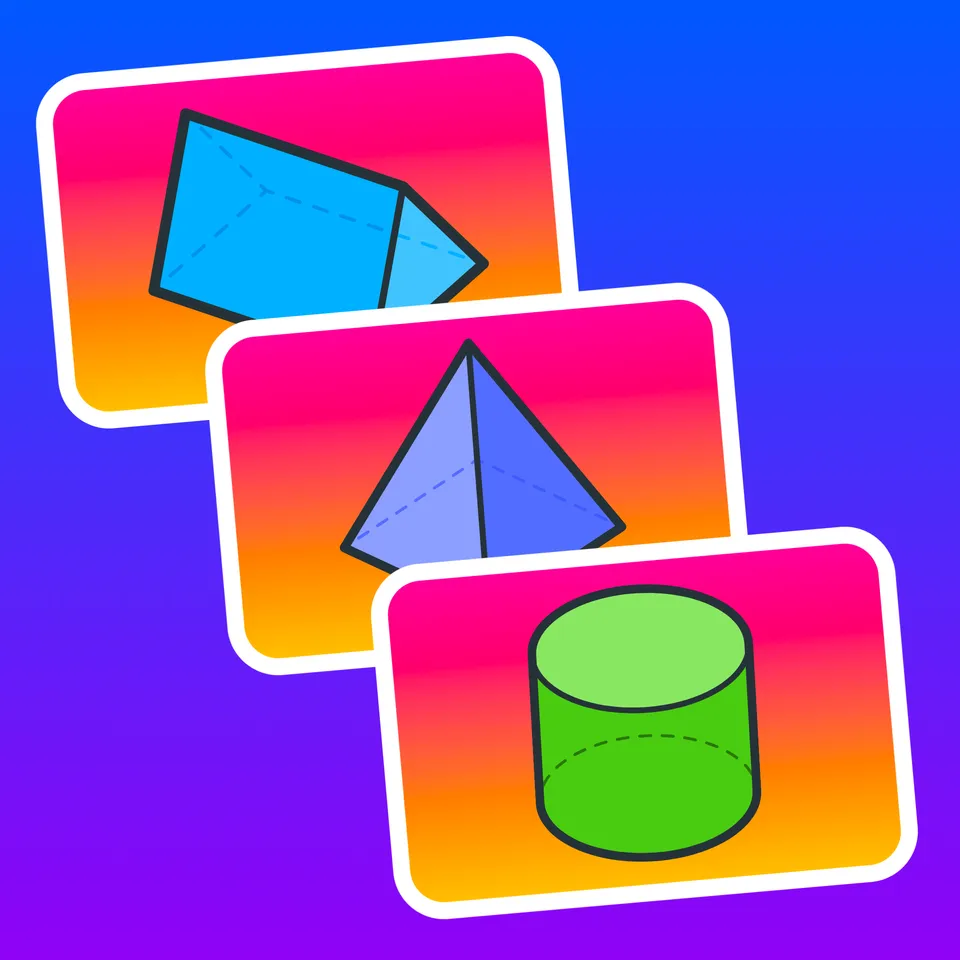
Use flashcards to practice with 3D shapes!
Use flashcards to practice identifying 3D shapes! Help Tootie the Toucan reach the finish line! Practice makes perfect, so keep trying until you can get all the questions correct before the countdown runs out.
Part of
Standards alignment
Common Core State Standards
- K.G.A.2 — Correctly name shapes regardless of their orientations or overall size.
- 2.G.A.1 — Recognize and draw shapes having specified attributes, such as a given number of angles or a given number of equal faces. Identify triangles, quadrilaterals, pentagons, hexagons, and cubes.
- K.G.A.3 — Identify shapes as two-dimensional (lying in a plane, "flat") or three-dimensional ("solid").
Alabama
- MA19.K.19 — Correctly name shapes regardless of their orientations or overall sizes.
- MA19.2.25 — Identify triangles, quadrilaterals, pentagons, hexagons, and cubes.
- MA19.K.20 — Identify shapes as two-dimensional (lying in a plane, "flat") or three-dimensional ("solid").
Alaska
- K.G.2 — Name shapes (squares, circles, triangles, rectangles, hexagons, cubes, cones, cylinders, and spheres) regardless of their orientation or overall size.
Arizona
- K.G.A.2 — Correctly name shapes regardless of their orientation or overall size (e.g., circle, triangle, square, rectangle, rhombus, trapezoid, hexagon, cube, cone, cylinder, sphere).
- 2.G.A.1 — Identify and describe specified attributes of two-dimensional and three-dimensional shapes, according to the number and shape of faces, number of angles, and the number of sides and/or vertices. Draw two-dimensional shapes based on the specified attributes (e.g. triangles, quadrilaterals, pentagons, and hexagons).
Arkansas
- 2.GM.2 — Identify and describe three-dimensional shapes based on the shape, number of faces, number of edges, and number of vertices. • Shapes include: rectangular prisms, cubes, and square-based pyramids
- K.GM.2 — Name shapes correctly regardless of their orientation or overall size. • Shapes include: squares, circles, triangles, rectangles, hexagons, cubes, cones, cylinders, and spheres
California
- K.G.A.2 — Correctly name shapes regardless of their orientations or overall size.
- 2.G.A.1 — Recognize and draw shapes having specified attributes, such as a given number of angles or a given number of equal faces. Identify triangles, quadrilaterals, pentagons, hexagons, and cubes.
Colorado
- K.G.A.2 — Correctly name shapes regardless of their orientations or overall size.
- 2.G.A.1 — Recognize and draw shapes having specified attributes, such as a given number of angles or a given number of equal faces. (Sizes are compared directly or visually, not compared by measuring.) Identify triangles, quadrilaterals, pentagons, hexagons, and cubes.
Connecticut
- K.G.A.2 — Correctly name shapes regardless of their orientations or overall size.
- 2.G.A.1 — Recognize and draw shapes having specified attributes, such as a given number of angles or a given number of equal faces. Identify triangles, quadrilaterals, pentagons, hexagons, and cubes.
Delaware
- K.G.A.2 — Correctly name shapes regardless of their orientations or overall size.
- 2.G.A.1 — Recognize and draw shapes having specified attributes, such as a given number of angles or a given number of equal faces. Identify triangles, quadrilaterals, pentagons, hexagons, and cubes.
Florida
- MA.1.GR.1.1 — Identify, compare and sort two- and three-dimensional figures based on their defining attributes. Figures are limited to circles, semi-circles, triangles, rectangles, squares, trapezoids, hexagons, spheres, cubes, rectangular prisms, cones and cylinders.
- MA.5.GR.1.2 — Identify and classify three-dimensional figures into categories based on their defining attributes. Figures are limited to right pyramids, right prisms, right circular cylinders, right circular cones and spheres.
Georgia
- 1.GSR.4.1 — Identify common two-dimensional shapes and three-dimensional figures, sort and classify them by their attributes and build and draw shapes that possess defining attributes.
- 2.GSR.7.1 — Describe, compare and sort 2-D shapes including polygons, triangles, quadrilaterals, pentagons, hexagons, and 3-D shapes including rectangular prisms and cones, given a set of attributes.
Hawaii
- K.G.A.2 — Correctly name shapes regardless of their orientations or overall size.
- 2.G.A.1 — Recognize and draw shapes having specified attributes, such as a given number of angles or a given number of equal faces. Identify triangles, quadrilaterals, pentagons, hexagons, and cubes.
Illinois
- K.G.A.2 — Correctly name shapes regardless of their orientations or overall size.
- 2.G.A.1 — Recognize and draw shapes having specified attributes, such as a given number of angles or a given number of equal faces. Identify triangles, quadrilaterals, pentagons, hexagons, and cubes.
Indiana
- 2.G.1 — Identify, describe, and classify two- and three-dimensional shapes (i.e., triangle, square, rectangle, cube, right rectangular prism) according to the number and shape of faces and the number of sides and/or vertices. Draw two-dimensional shapes.
Iowa
- 2.G.A.1 — Recognize and draw shapes having specified attributes, such as a given number of angles or a given number of equal faces. Identify twodimensional shapes: triangles, quadrilaterals, rectangles, squares, trapezoids, pentagons, hexagons, circles, half-circles and quarter-circles, and three-dimensional figures: cubes, right rectangular prisms, right circular cones, and right circular cylinders. (Sizes are compared directly or visually, not compared by measuring.)
Kansas
- K.G.2 — Correctly gives most precise name of shapes regardless of their orientations (position and direction in space) or overall size.
- 2.G.1 — Recognize and draw shapes having specified attributes, such as a given number of angles or a given number of equal faces. Identify triangles, quadrilaterals, pentagons, hexagons, and cubes.
Kentucky
- KY.K.G.2 — Correctly name shapes regardless of orientations or overall size.
- KY.K.G.1 — Name and describe shapes in the environment.
Louisiana
- K.G.A.2 — Correctly name shapes regardless of their orientations or overall size.
- 2.G.A.1 — Recognize and draw shapes having specified attributes, such as a given number of angles or a given number of equal faces. Identify triangles, quadrilaterals, pentagons, hexagons, and cubes.
Maine
- 2.G.A.1 — Recognize and draw shapes having specified attributes, such as a given number of angles or a given number of equal faces. Identify triangles, quadrilaterals (including squares, rectangles, rhombuses, and trapezoids) pentagons, hexagons, and cubes. Sizes are compared directly or visually, not compared by measuring.
- K.G.A.2 — Correctly name shapes regardless of their orientations or overall size.
Maryland
- 2.G.A.1 — Recognize and draw shapes having specified attributes, such as a given number of angles or a given number of equal faces. Identify triangles, quadrilaterals, pentagons, hexagons, and cubes.
- K.G.A.2 — Correctly name shapes regardless of their orientations or overall size.
Massachusetts
- K.G.A.2 — Correctly name shapes regardless of their orientation or overall size.
- 2.G.A.1 — Recognize and draw shapes having specified attributes, such as a given number of angles or a given number of equal faces. Identify triangles, squares, rectangles, rhombuses, trapezoids, pentagons, hexagons, and cubes.
Michigan
- 2.G.A.1 — Recognize and draw shapes having specified attributes, such as a given number of angles or a given number of equal faces. Identify triangles, quadrilaterals, pentagons, hexagons, and cubes.
- K.G.A.2 — Correctly name shapes regardless of their orientations or overall size.
Minnesota
- 2.3.1.2 — Identify and name basic two- and three-dimensional shapes, such as squares, circles, triangles, rectangles, trapezoids, hexagons, cubes, rectangular prisms, cones, cylinders and spheres. For example: Use a drawing program to show several ways that a rectangle can be decomposed into exactly three triangles.
Missouri
- 1.GM.A.3 — Recognize two- and three-dimensional shapes from different perspectives and orientations.
- 2.GM.A.1.a — Identify triangles, quadrilaterals, pentagons, hexagons, circles and cubes.
Montana
- K.G.A.2 — Correctly name shapes regardless of their orientations or overall size.
Nebraska
- K.G.1.b — Identify and name three-dimensional shapes including spheres, cubes, cylinders, and cones regardless of orientation or size.
- K.G.1 — Shapes and Their Attributes: Students will identify and represent the attributes of two-dimensional shapes and three- dimensional solids.
- 1.G.1.b — Determine geometric attributes of three-dimensional shapes including cones, cylinders, cubes, and rectangular prisms regardless of orientation or size.
Nevada
- 2.G.A.1 — Recognize and draw shapes having specified attributes, such as a given number of angles or a given number of equal faces. Identify triangles, quadrilaterals, pentagons, hexagons, and cubes.
- K.G.A.2 — Correctly name shapes regardless of their orientations or overall size.
New Hampshire
- 2.G.A.1 — Recognize and draw shapes having specified attributes, such as a given number of angles or a given number of equal faces. Identify triangles, quadrilaterals, pentagons, hexagons, and cubes.
- K.G.A.2 — Correctly name shapes regardless of their orientations or overall size.
New Jersey
- K.G.A.2 — Correctly name shapes regardless of their orientations or overall size.
- 2.G.A.1 — Recognize and draw shapes having specified attributes, such as a given number of angles or a given number of equal faces. Identify triangles, quadrilaterals, pentagons, hexagons, and cubes
- K.G.A.3 — Identify shapes as two-dimensional (lying in a plane, “flat”) or three-dimensional (“solid”).
New Mexico
- K.G.A.2 — Correctly name shapes regardless of their orientations or overall size.
- 2.G.A.1 — Recognize and draw shapes having specified attributes, such as a given number of angles or a given number of equal faces. Identify triangles, quadrilaterals, pentagons, hexagons, and cubes.
New York
- NY-K.G.2 — Name shapes regardless of their orientation or overall size.
North Carolina
- NC.K.G.2 — Correctly name squares, circles, triangles, rectangles, hexagons, cubes, cones, cylinders, and spheres regardless of their orientations or overall size.
- NC.K.G.3 — Identify squares, circles, triangles, rectangles, hexagons, cubes, cones, cylinders, and spheres as two-dimensional or three-dimensional.
- NC.2.G.1 — Recognize and draw triangles, quadrilaterals, pentagons, and hexagons, having specified attributes; recognize and describe attributes of rectangular prisms and cubes.
North Dakota
- 1.GM.G.2 — Name and identify solids as three-dimensional (cylinders, cones, triangular prisms, and rectangular prisms).
Ohio
- 2.G.1 — Recognize and identify triangles, quadrilaterals, pentagons, and hexagons based on the number of sides or vertices. Recognize and identify cubes, rectangular prisms, cones, and cylinders.
- K.G.2 — Correctly name shapes regardless of their orientations or overall size.
Oklahoma
- 1.GM.1.4 — Recognize three-dimensional shapes such as cubes, cones, cylinders, pyramids, and spheres.
- 1.GM.1 — Recognize and compose two- and three-dimensional shapes.
Oregon
- K.GM.A.2 — Correctly name common two-dimensional and three-dimensional geometric shapes regardless of their orientations or overall size.
Pennsylvania
- CC.2.3.K.A.1 — Identify and describe two- and three- dimensional shapes.
- CC.2.3.3.A.1 — Identify, compare, and classify shapes and their attributes.
South Carolina
- K.G.2 — Identify and describe a given shape and shapes of objects in everyday situations to include two-dimensional shapes (i.e., triangle, square, rectangle, hexagon, and circle) and three-dimensional shapes (i.e., cone, cube, cylinder, and sphere).
- 2.G.1 — Identify triangles, quadrilaterals, hexagons, and cubes. Recognize and draw shapes having specified attributes, such as a given number of angles or a given number of equal faces.
South Dakota
- K.G.A.2 — Correctly name shapes regardless of their orientations or overall size.
- 2.G.A.1 — Recognize, identify, and draw shapes having specified attributes, such as a given number of angles or a given number of equal faces; to include triangles, quadrilaterals, pentagons, hexagons, and cubes. (Sizes are compared directly or visually, not compared by measuring.)
Tennessee
- K.G.A.2 — Correctly name shapes and solids (squares, circles, triangles, rectangles, hexagons, cubes, cones, cylinders, and spheres) regardless of their orientations or overall size.
- K.G.A.3 — Identify shapes (squares, circles, triangles, rectangles, and hexagons) as two-dimensional and solids (cubes, cones, cylinders, and spheres) as three-dimensional.
Texas
- 1.6E — identify three-dimensional solids, including spheres, cones, cylinders, rectangular prisms (including cubes), and triangular prisms, and describe their attributes using formal geometric language;
- 3.6A — classify and sort two- and three-dimensional figures, including cones, cylinders, spheres, triangular and rectangular prisms, and cubes, based on attributes using formal geometric language;
Utah
- K.G.2 — Correctly name shapes regardless of their orientations or overall sizes.
- 2.G.1 — Recognize and draw shapes having specified attributes, such as a given number of angles or a given number of equal faces. Sizes are compared directly or visually, not compared by measuring. Identify triangles, quadrilaterals, pentagons, hexagons, and cubes.
Vermont
- K.G.A.2 — Correctly name shapes regardless of their orientations or overall size.
- 2.G.A.1 — Recognize and draw shapes having specified attributes, such as a given number of angles or a given number of equal faces. Identify triangles, quadrilaterals, pentagons, hexagons, and cubes.
Virginia
- 4.MG.6a — Identify concrete models and pictorial representations of solid figures (cube, rectangular prism, square pyramid, sphere, cone, and cylinder).
- 4.MG.6 — The student will identify, describe, compare, and contrast plane and solid figures according to their characteristics (number of angles, vertices, edges, and the number and shape of faces), with and without models. Students will demonstrate the following Knowledge and Skills:
Washington
- K.G.A.2 — Correctly name shapes regardless of their orientations or overall size.
- 2.G.A.1 — Recognize and draw shapes having specified attributes, such as a given number of angles or a given number of equal faces. Identify triangles, quadrilaterals, pentagons, hexagons, and cubes.
Washington, D.C.
- K.G.A.2 — Correctly name shapes regardless of their orientations or overall size.
- 2.G.A.1 — Recognize and draw shapes having specified attributes, such as a given number of angles or a given number of equal faces. Identify triangles, quadrilaterals, pentagons, hexagons, and cubes.
West Virginia
- M.K.21 — Correctly name shapes regardless of their orientations or overall size.
- M.2.25 — Recognize and draw shapes having specified attributes, such as a given number of angles or a given number of equal faces (sizes are compared directly or visually, not compared by measuring). Identify triangles, quadrilaterals, pentagons, hexagons, and cubes.
Wisconsin
- M.K.G.A.2 — Correctly name shapes regardless of their orientations or overall size.
- M.2.G.A.1 — Recognize and draw shapes having specified attributes, such as a given number of angles or a given number of equal faces. Identify triangles, quadrilaterals, pentagons, hexagons, and cubes. Sizes are compared directly or visually, not compared by measuring.
Wyoming
- K.G.H — Identify and describe shapes (squares, circles, triangles, rectangles, hexagons, cubes, cones, cylinders, and spheres).
- 2.G.J.1 — Identify triangles, quadrilaterals, pentagons, hexagons, and cubes. Recognize and draw shapes having specified attributes, such as a given number of angles or a given number of equal faces. (Sizes are compared directly or visually, not compared by measuring.)
- K.G.H.2 — Correctly name shapes regardless of their orientations or overall size.