Tens Place Value
Ages 5–7 · 3 minutes
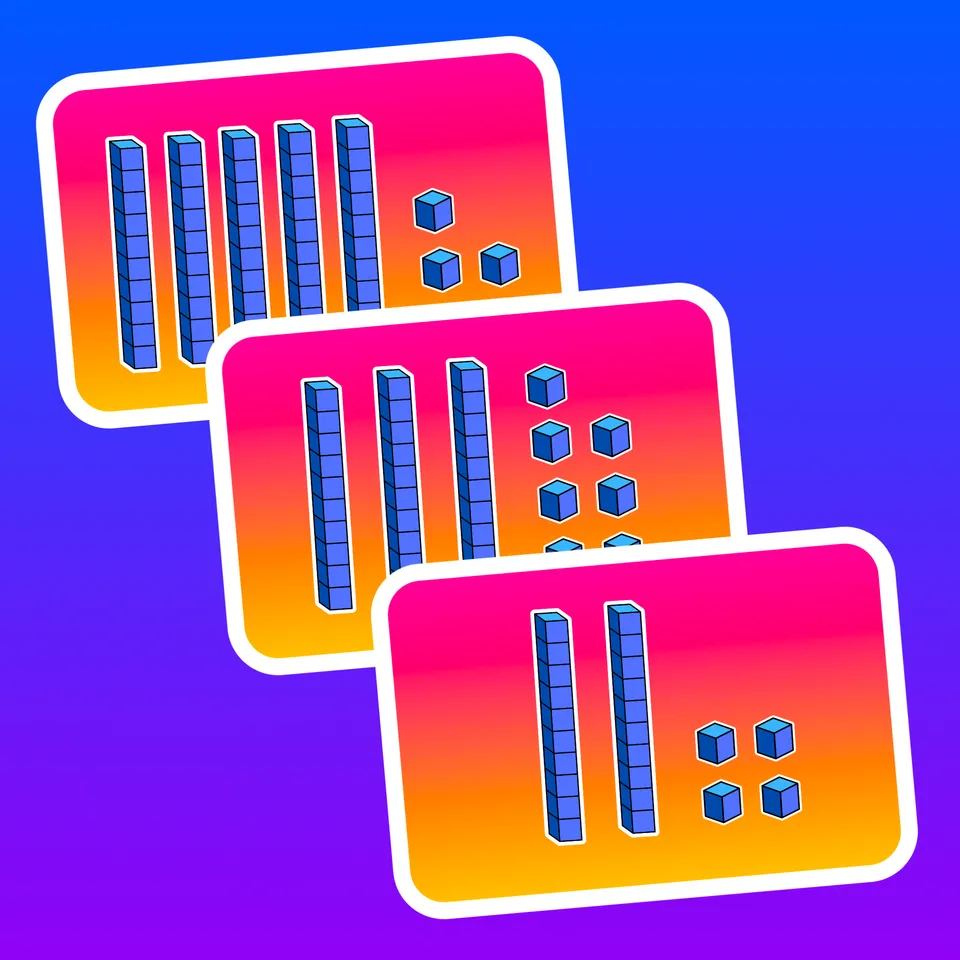
Use flashcards to practice place value with tens!
Use flashcards to practice place value with tens! Help Al the Alien reach the finish line! Practice makes perfect, so keep trying until you can get all the questions correct before the countdown runs out.
Part of
Standards alignment
Common Core State Standards
- 1.NBT.B.2 — Understand that the two digits of a two-digit number represent amounts of tens and ones. Understand the following as special cases:
- 1.NBT.A.1 — Count to 120, starting at any number less than 120. In this range, read and write numerals and represent a number of objects with a written numeral.
- 1.NBT.B.2.b — Understand that the two digits of a two-digit number represent amounts of tens and ones. Understand the following as special cases: the numbers from 11 to 19 are composed of a ten and one, two, three, four, five, six, seven, eight, or nine ones.
Alabama
- MA19.1.10b — Read numerals from 0 to 120.
- MA19.1.11 — Explain that the two digits of a two-digit number represent amounts of tens and ones.
Alaska
- 1.NBT.2 — Model and identify place value positions of two digit numbers. Include:
- 1.NBT.1 — Count to 120. In this range, read, write and order numerals and represent a number of objects with a written numeral.
- 1.CC.4 — Count a large quantity of objects by grouping into 10s and counting by 10s and 1s to find the quantity.
Arizona
- 1.NBT.B.2 — Understand that the two digits of a two-digit number represent amounts of tens and ones. Understand the following as special cases:
- 1.NBT.A.1 — Count to 120 by 1's, 2's, and 10's starting at any number less than 100. In this range, read and write numerals and represent a number of objects with a written numeral.
- 1.NBT.B.2.b — The numbers from 11 to 19 are composed of a ten and one, two, three, four, five, six, seven, eight, or nine ones.
Arkansas
- 1.NPV.4 — Read, write, and represent whole numbers up to 120, using concrete models or drawings, word form, base ten numerals, and expanded form.
- 1.NPV.3 — Explain the place value of ones and tens in two-digit numbers, using concrete models, diagrams, numbers, or words.
California
- 1.NBT.A.1 — Count to 120, starting at any number less than 120. In this range, read and write numerals and represent a number of objects with a written numeral.
- 1.NBT.B.2 — Understand that the two digits of a two-digit number represent amounts of tens and ones. Understand the following as special cases:
- 1.NBT.B.2.b — The numbers from 11 to 19 are composed of a ten and one, two, three, four, five, six, seven, eight, or nine ones.
Colorado
- 1.NBT.A.1 — Count to 120, starting at any number less than 120. In this range, read and write numerals and represent a number of objects with a written numeral.
- 1.NBT.B.2 — Understand that the two digits of a two-digit number represent amounts of tens and ones. Understand the following as special cases:
Connecticut
- 1.NBT.B.2 — Understand that the two digits of a two-digit number represent amounts of tens and ones. Understand the following as special cases:
- 1.NBT.A.1 — Count to 120, starting at any number less than 120. In this range, read and write numerals and represent a number of objects with a written numeral.
- 1.NBT.B.2.b — The numbers from 11 to 19 are composed of a ten and one, two, three, four, five, six, seven, eight, or nine ones.
Delaware
- 1.NBT.A.1 — Count to 120, starting at any number less than 120. In this range, read and write numerals and represent a number of objects with a written numeral.
- 1.NBT.B.2 — Understand that the two digits of a two-digit number represent amounts of tens and ones. Understand the following as special cases:
Florida
- MA.1.NSO.1.2 — Read numbers from 0 to 100 written in standard form, expanded form and word form. Write numbers from 0 to 100 using standard form and expanded form.
- MA.1.NSO.1.3 — Compose and decompose two-digit numbers in multiple ways using tens and ones. Demonstrate each composition or decomposition with objects, drawings and expressions or equations.
Georgia
- 1.NR.1.1 — Count within 120, forward and backward, starting at any number. In this range, read and write numerals and represent a number of objects with a written numeral.
- 1.NR.1 — Extend the count sequence to 120. Read, write, and represent numerical values to 120 and compare numerical values to 100.
- 1.NR.1.2 — Explain that the two digits of a 2-digit number represent the amounts of tens and ones.
Hawaii
- 1.NBT.A.1 — Count to 120, starting at any number less than 120. In this range, read and write numerals and represent a number of objects with a written numeral.
- 1.NBT.B.2 — Understand that the two digits of a two-digit number represent amounts of tens and ones. Understand the following as special cases:
Idaho
- 1.NBT.B.2 — Understand that the two digits of a two-digit number represent amounts of tens and ones.
- 1.NBT.A.1 — Starting at a given number, count forward and backwards within 120 by ones. Skip count by twos to 20, by fives to 100, and by tens to 120. In this range, read and write numerals and represent a number of objects with a written numeral.
- 1.NBT.B.2.b — The numbers from 11 to 19 are composed of a ten and one, two, three, four, five, six, seven, eight, or nine ones.
Illinois
- 1.NBT.A.1 — Count to 120, starting at any number less than 120. In this range, read and write numerals and represent a number of objects with a written numeral.
- 1.NBT.B.2 — Understand that the two digits of a two-digit number represent amounts of tens and ones. Understand the following as special cases:
Indiana
- 1.NS.1 — Count to at least 120 by ones, fives, and tens from any given number. In this range, read and write numerals and represent a number of objects with a written numeral. (E)
- 1.NS.2 — Model place value concepts of two-digit numbers, multiples of 10, and equivalent forms of whole numbers using objects and drawings. (E)
Iowa
- 1.NBT.A.1 — Count forward and backward starting with any given number within the range of 0–120, In this range, read and write numerals and represent a number of objects with a written numeral.
- 1.NBT.B.2 — Understand that the two digits of a two-digit number represent amounts of tens and ones. Understand the following as special cases.
Kansas
- 1.NBT.1 — Count to 120 (recognizing growth and repeating patterns), starting at any number less than 120. In this range, read and write numerals and represent a number of objects with a written numeral.
- 1.NBT.2 — Understand that the two digits of a two-digit number represent amounts of tens and ones. Understand the following as special cases:
Kentucky
- KY.1.NBT.2 — Understand the two-digits of a two-digit number represent amounts of tens and ones. Understand the following as special cases:
- KY.1.NBT.1.b — In this range, read and write numerals and represent a number of objects with a written numeral.
- KY.1.NBT.2.b — The numbers from 11 to 19 are composed of a ten and one, two, three, four, five, six, seven, eight or nine ones.
Louisiana
- 1.NBT.B.2 — Understand that the two digits of a two-digit number represent amounts of tens and ones. Understand the following as special cases:
- 1.NBT.A.1 — Count to 120, starting at any number less than 120. In this range, read and write numerals and represent a number of objects with a written numeral.
- 1.NBT.B.2.b — The numbers from 11 to 19 are composed of a ten and one, two, three, four, five, six, seven, eight, or nine ones.
Maine
- 1.NBT.B.2 — Understand that the two digits of a two-digit number represent amounts of tens and ones. Understand the following as special cases:
- 1.NBT.A.1 — Count to 120, starting at any number less than 120. In this range, read and write numerals and represent a number of objects with a written numeral.
- 1.NBT.B.2b — The numbers from 11 to 19 are composed of a ten and one, two, three, four, five, six, seven, eight, or nine ones.
Maryland
- 1.NBT.B.2 — Understand that the two digits of a two-digit number represent amounts of tens and ones. Understand the following as special cases:
- 1.NBT.A.1 — Count to 120, starting at any number less than 120. In this range, read and write numerals and represent a number of objects with a written numeral.
- 1.NBT.B.2.b — The numbers from 11 to 19 are composed of a ten and one, two, three, four, five, six, seven, eight, or nine ones.
Massachusetts
- 1.NBT.A.1 — Count to 120, starting at any number less than 120. In this range, read and write numerals and represent a number of objects with a written numeral.
- 1.NBT.B.2 — Understand that the two digits of a two-digit number represent amounts of tens and ones. Understand the following as special cases:
Michigan
- 1.NBT.A.1 — Count to 120, starting at any number less than 120. In this range, read and write numerals and represent a number of objects with a written numeral.
- 1.NBT.B.2 — Understand that the two digits of a two-digit number represent amounts of tens and ones. Understand the following as special cases:
Minnesota
- 1.1.1.1 — Use place value to describe whole numbers between 10 and 100 in terms of tens and ones. For example: Recognize the numbers 21 to 29 as 2 tens and a particular number of ones.
- 1.1.1.2 — Read, write and represent whole numbers up to 120. Representations may include numerals, addition and subtraction, pictures, tally marks, number lines and manipulatives, such as bundles of sticks and base 10 blocks.
Mississippi
- 1.NBT.2 — Understand that the two digits of a two-digit number represent amounts of tens and ones. Understand the following as special cases:
- 1.NBT.1 — Count to 120, starting at any number less than 120. In this range, read and write numerals and represent a number of objects with a written numeral.
- 1.NBT.2.b — The numbers from 11 to 19 are composed of a ten and one, two, three, four, five, six, seven, eight, or nine ones.
Missouri
- 1.NBT.A.2 — Understand two-digit numbers are composed of ten(s) and one(s).
- 1.NS.A.2 — Read and write numerals and represent a number of objects with a written numeral.
Montana
- 1.NBT.B.2 — Understand that the two digits of a two-digit number represent amounts of tens and ones. Understand the following as special cases:
- 1.NBT.A.1 — Count to 120, starting at any number less than 120. In this range, read and write numerals and represent a number of objects with a written numeral.
- 1.NBT.B.2.b — The numbers from 11 to 19 are composed of a ten and one, two, three, four, five, six, seven, eight, or nine ones.
Nebraska
- 1.N.3 — Base Ten: Students will represent and compare two-digit numbers to gain foundations for place value.
- 1.N.3.a — Understand 10 as a bundle, collection, or (more abstractly) composition of ten ones and that the two digits of a two-digit number represent a composition of some tens and some ones.
Nevada
- 1.NBT.A.1 — Count to 120, starting at any number less than 120. In this range, read and write numerals and represent a number of objects with a written numeral.
- 1.NBT.B.2 — Understand that the two digits of a two-digit number represent amounts of tens and ones. Understand the following as special cases:
- 1.NBT.B.2.b — The numbers from 11 to 19 are composed of a ten and one, two, three, four, five, six, seven, eight, or nine ones.
New Hampshire
- 1.NBT.B.2 — Understand that the two digits of a two-digit number represent amounts of tens and ones. Understand the following as special cases:
- 1.NBT.A.1 — Count to 120, starting at any number less than 120. In this range, read and write numerals and represent a number of objects with a written numeral.
- 1.NBT.B.2.b — The numbers from 11 to 19 are composed of a ten and one, two, three, four, five, six, seven, eight, or nine ones.
New Jersey
- 1.NBT.A.1 — Count to 120, starting at any number less than 120. In this range, read and write numerals and represent a number of objects with a written numeral.
- 1.NBT.B.2 — Understand that the two digits of a two-digit number represent amounts of tens and ones. Understand the following as special cases: a. 10 can be thought of as a bundle of ten ones — called a “ten.” b. The numbers from 11 to 19 are composed of a ten and one, two, three, four, five, six, seven, eight, or nine ones. c. The numbers 10, 20, 30, 40, 50, 60, 70, 80, 90 refer to one, two, three, four, five, six, seven, eight, or nine tens (and 0 ones).
New Mexico
- 1.NBT.A.1 — Count to 120, starting at any number less than 120. In this range, read and write numerals and represent a number of objects with a written numeral.
- 1.NBT.B.2 — Understand that the two digits of a two-digit number represent amounts of tens and ones. Understand the following as special cases:
New York
- NY-1.NBT.2 — Understand that the two digits of a two-digit number represent amounts of tens and ones.
- NY-1.NBT.1 — Count to 120, starting at any number less than 120. In this range, read and write numerals and represent a number of objects with a written numeral.
North Carolina
- NC.1.NBT.7 — Read and write numerals, and represent a number of objects with a written numeral, to 100.
- NC.1.NBT.2 — Understand that the two digits of a two-digit number represent amounts of tens and ones. • Unitize by making a ten from a collection of ten ones. • Model the numbers from 11 to 19 as composed of a ten and one, two, three, four, five, six, seven, eight, or nine ones. • Demonstrate that the numbers 10, 20, 30, 40, 50, 60, 70, 80, 90 refer to one, two, three, four, five, six, seven, eight, or nine tens, with 0 ones.
North Dakota
- 1.NO.NBT.1 — Demonstrate that the two digits of a two-digit number represent a composition of some tens and some ones.
- 1.NO.CC.3 — Represent several objects with a written numeral up to 120.
Ohio
- 1.NBT.2 — Understand that the two digits of a two-digit number represent amounts of tens and ones. Understand the following as special cases: 10 can be thought of as a bundle of ten ones — called a “ten;” the numbers from 11 to 19 are composed of a ten and one, two, three, four, five, six, seven, eight, or nine ones; and the numbers 10, 20, 30, 40, 50, 60, 70, 80, 90 refer to one, two, three, four, five, six, seven, eight, or nine tens (and 0 ones).
- 1.NBT.1 — Count to 120, starting at any number less than 120. In this range, read and write numerals and represent a number of objects with a written numeral.
Oklahoma
- 1.N.1.3 — Read, write, discuss, and represent whole numbers up to 100. Representations may include numerals, words, addition and subtraction, pictures, tally marks, number lines, and manipulatives.
- 1.N.1 — Count, compare, and represent whole numbers up to 100, with an emphasis on grouping in terms of tens and ones.
Oregon
- 1.NBT.B.2 — Understand 10 as a bundle of ten ones and that the two digits of a two-digit number represent amounts of tens and ones.
- 1.NBT.A.1 — Count to 120, starting at any number less than 120. In this range, read and write numerals and represent a number of objects with a written numeral.
Pennsylvania
- CC.2.1.1.B.1 — Extend the counting sequence to read and write numerals to represent objects.
- CC.2.1.1.B.2 — Use place-value concepts to represent amounts of tens and ones and to compare two digit numbers.
Rhode Island
- 1.NBT.B.2 — Understand that the two digits of a two-digit number represent amounts of tens and ones. Understand the following as special cases:
- 1.NBT.A.1 — Count to 120, starting at any number less than 120. In this range, read and write numerals and represent a number of objects with a written numeral.
- 1.NBT.B.2.b — The numbers from 11 to 19 are composed of a ten and one, two, three, four, five, six, seven, eight, or nine ones.
South Carolina
- 1.NSBT.1c — Extend the number sequence to read, write and represent numbers to 100 using concrete models, standard form, and equations in expanded form.
- 1.NSBT.2b — Understand place value through 99 by demonstrating that the tens digit in a two-digit number represents the number of tens and the ones digit represents the number of ones.
South Dakota
- 1.NBT.B.2 — Understand that the two digits of a two-digit number represent amounts of tens and ones. Understand the following as special cases:
- 1.NBT.A.1.b — Read and write numerals.
- 1.NBT.A.1 — In the range of 0 - 120
Tennessee
- 1.NBT.A.1 — Count to 120, by ones, twos, and fives starting at any multiple of that number. Count backward from 20. Read and write numbers to 120 and represent a quantity of objects with a written number.
- 1.NBT.B.3 — Know that the digits of a two-digit number represent groups of tens and ones (e.g., 39 can be represented as 39 ones, 2 tens and 19 ones, or 3 tens and 9 ones).
Texas
- 1.2C — use objects, pictures, and expanded and standard forms to represent numbers up to 120;
- 1.2B — use concrete and pictorial models to compose and decompose numbers up to 120 in more than one way as so many hundreds, so many tens, and so many ones;
Utah
- 1.NBT.2 — Understand that the two digits of a two-digit number represent amounts of tens and ones. Understand the following as special cases:
- 1.NBT.1 — Count to 120, starting at any number less than 120. In this range, read and write numerals and represent a number of objects with a written numeral.
- 1.MP.7 — Look for and make use of structure.
Vermont
- 1.NBT.B.2 — Understand that the two digits of a two-digit number represent amounts of tens and ones. Understand the following as special cases:
- 1.NBT.A.1 — Count to 120, starting at any number less than 120. In this range, read and write numerals and represent a number of objects with a written numeral.
- 1.NBT.B.2.b — The numbers from 11 to 19 are composed of a ten and one, two, three, four, five, six, seven, eight, or nine ones.
Virginia
- 1.NS.2a — Read and write numerals 0-120 in sequence and out of sequence.
- 1.NS.2d — Describe the number of groups of tens and ones when given a two-digit number and justify reasoning.
- 1.NS.1e — Group a collection of up to 120 objects into tens and ones, and count to determine the total (e.g., 5 groups of ten and 6 ones is equal to 56 total objects).
Washington
- 1.NBT.B.2 — Understand that the two digits of a two-digit number represent amounts of tens and ones. Understand the following as special cases:
- 1.NBT.A.1 — Count to 120, starting at any number less than 120. In this range, read and write numerals and represent a number of objects with a written numeral.
- 1.NBT.B.2.b — The numbers from 11 to 19 are composed of a ten and one, two, three, four, five, six, seven, eight, or nine ones.
Washington, D.C.
- 1.NBT.B.2 — Understand that the two digits of a two-digit number represent amounts of tens and ones. Understand the following as special cases:
- 1.NBT.A.1 — Count to 120, starting at any number less than 120. In this range, read and write numerals and represent a number of objects with a written numeral.
West Virginia
- M.1.10 — Understand the two digits of a two-digit number represent amounts of tens and ones. Understand the following as special cases: a. 10 can be thought of as a bundle of ten ones - called a "ten." (e.g., A group of ten pennies is equivalent to a dime.) b. The numbers from 11 to 19 are composed of a ten and one, two, three, four, five, six, seven, eight or nine ones. c. The numbers 10, 20, 30, 40, SO, 60, 70, 80, 90 refer to one, two, three, four, five, six, seven, eight or nine tens (and 0 ones).
- M.1.9 — Count to 120, starting at any number less than 120. In this range, read and write numerals and represent a number of objects with a written numeral. Skip count to 120 by 2's. Skip count to 120 by S's and lO's.
Wisconsin
- M.1.NBT.B.2 — Understand that the two digits of a two-digit number represent amounts of tens and ones. Understand the following as special cases: a. 10 can be thought of as a bundle of ten ones-called a "ten." b. The numbers from 11 to 19 are composed of a ten and one, two, three, four, five, six, seven, eight, or nine ones. c. The numbers 10, 20, 30, 40, 50, 60, 70, 80, 90 refer to one, two, three, four, five, six, seven, eight, or nine tens (and 0 ones).
- M.1.NBT.A.1 — Count to 120, starting at any number less than 120. In this range, read and write numerals and represent a number of objects with a written numeral.
Wyoming
- 1.NBT.E.1.B — Read numerals.