Division Level 1
Ages 8–10 · 3 minutes · Math
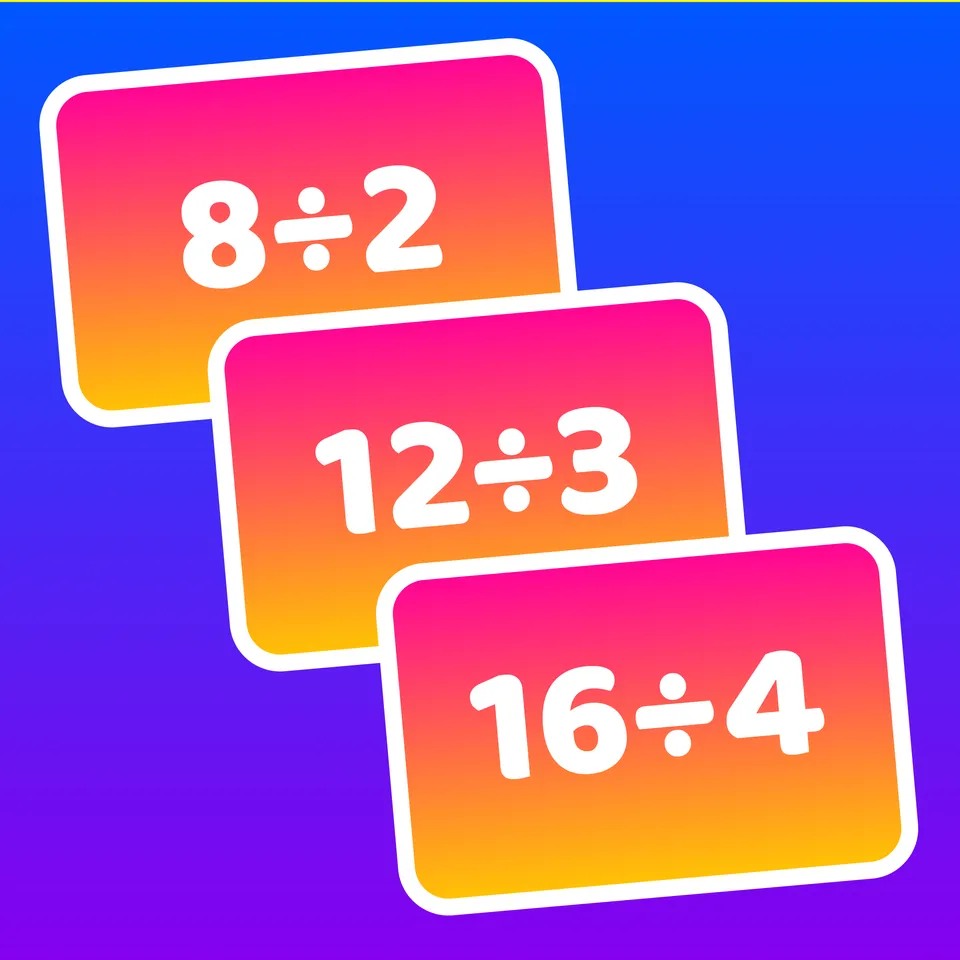
Use flashcards to practice division with small divisors!
Use flashcards to practice dividing small numbers by 2, 3, 4 and 5, and help Confetti the goldfish reach the finish line! Practice makes perfect, so keep trying until you can get all the questions correct before the countdown runs out.
Part of
Standards alignment
Common Core State Standards
- 3.OA.C.7 — Fluently multiply and divide within 100, using strategies such as the relationship between multiplication and division (e.g., knowing that 8 × 5 = 40, one knows 40 ÷ 5 = 8) or properties of operations. By the end of Grade 3, know from memory all products of two one-digit numbers.
Alabama
- MA19.3.7 — Use strategies based on properties and patterns of multiplication to demonstrate fluency with multiplication and division within 100.
Alaska
- 3.OA.7 — Fluently multiply and divide numbers up to 100, using strategies such as the relationship between multiplication and division (e.g., knowing that 8 ×5 = 40, one knows 40 ÷ 5 = 8) or properties of operations. By the end of Grade 3, know from memory all products of two one-digit numbers.
Arizona
- 3.OA.C.7 * — Fluently multiply and divide within 100. By the end of Grade 3, know from memory all multiplication products through 10 x 10 and division quotients when both the quotient and divisor are less than or equal to 10.
- 3.OA.B.6 — Understand division as an unknown-factor problem. For example, find 32 ÷ 8 by finding the number that makes 32 when multiplied by 8.
Arkansas
- 3.CAR.2 — Use basic fact fluency to multiply and divide whole numbers with mastery by the end of third grade. • Knowing all products with factors up to and including 12 and the corresponding division facts from the products with factors up to and including 12. • Using strategies such as the relationship between multiplication and division (e.g., Knowing that 8 ∙ 5 = 40, one knows 40 ÷ 5 = 8) or properties of operations.
California
- 3.OA.C.7 — Fluently multiply and divide within 100, using strategies such as the relationship between multiplication and division (e.g., knowing that 8 × 5 = 40, one knows 40 ÷ 5 = 8) or properties of operations. By the end of Grade 3, know from memory all products of two one-digit numbers.
- 3.OA.B.6 — Understand division as an unknown-factor problem. For example, find 32 ÷ 8 by finding the number that makes 32 when multiplied by 8.
Colorado
- 3.OA.C.7 — Fluently multiply and divide within 100, using strategies such as the relationship between multiplication and division (e.g., knowing that 8 × 5 = 40, one knows 40 ÷ 5 = 8) or properties of operations. By the end of Grade 3, know from memory all products of two one-digit numbers.
Connecticut
- 3.OA.C.7 — Fluently multiply and divide within 100, using strategies such as the relationship between multiplication and division (e.g., knowing that 8 × 5 = 40, one knows 40 ÷ 5 = 8) or properties of operations. By the end of Grade 3, know from memory all products of two one-digit numbers.
Delaware
- 3.OA.C.7 — Fluently multiply and divide within 100, using strategies such as the relationship between multiplication and division (e.g., knowing that 8 × 5 = 40, one knows 40 ÷ 5 = 8) or properties of operations. By the end of Grade 3, know from memory all products of two one-digit numbers.
Florida
- MA.3.NSO.2.4 — Multiply two whole numbers from 0 to 12 and divide using related facts with procedural reliability.
- MA.4.NSO.2.1 — Recall multiplication facts with factors up to 12 and related division facts with automaticity.
- MA.K12.MTR.3.1 — Complete tasks with mathematical fluency. Mathematicians who complete tasks with mathematical fluency: • Select efficient and appropriate methods for solving problems within the given context. • Maintain flexibility and accuracy while performing procedures and mental calculations. • Complete tasks accurately and with confidence. • Adapt procedures to apply them to a new context. • Use feedback to improve efficiency when performing calculations.
Georgia
- 3.PAR.3 — Use part-whole strategies to solve real-life, mathematical problems involving multiplication and division with whole numbers within 100.
- 3.PAR.3.2 — Represent single digit multiplication and division facts using a variety of strategies. Explain the relationship between multiplication and division.
Hawaii
- 3.OA.C.7 — Fluently multiply and divide within 100, using strategies such as the relationship between multiplication and division (e.g., knowing that 8 × 5 = 40, one knows 40 ÷ 5 = 8) or properties of operations. By the end of Grade 3, know from memory all products of two one-digit numbers.
- 3.OA.B.6 — Understand division as an unknown-factor problem.
Idaho
- 3.OA.C.7.b — Know from memory all products of two single-digit numbers and related division facts.
Illinois
- 3.OA.C.7 — Fluently multiply and divide within 100, using strategies such as the relationship between multiplication and division (e.g., knowing that 8 × 5 = 40, one knows 40 ÷ 5 = 8) or properties of operations. By the end of Grade 3, know from memory all products of two one-digit numbers.
Indiana
- 3.CA.6 — Demonstrate fluency with mastery of multiplication facts and corresponding division facts of 0 to 10.
- 3.CA.5 — Multiply and divide within 100 using strategies such as the relationship between multiplication and division (e.g., knowing that 8 x 5 = 40, one knows 40 ÷ 5 = 8) or properties of operations. (E)
Iowa
- 3.OA.C.7 — Fluently multiply and divide within 100, using strategies such as the relationship between multiplication and division or properties of operations. For example, knowing that 8 × 5 = 40, one knows 40 ÷ 5 = 8. By the end of Grade 3, flexibly, efficiently, and accurately find all products of two one-digit numbers. Note: Fluency of this standard is critical by the end of grade level.
Kansas
- 3.OA.7 — Fluently (efficiently, accurately, and flexibly) multiply and divide with single digit multiplications and related divisions using strategies (e.g. relationship between multiplication and division, doubles, double and double again, half and then double, etc.) or properties of operations.
Kentucky
- KY.3.OA.7 — Fluently multiply and divide within 100, using strategies such as the relationship between multiplication and division or properties of operations.
Louisiana
- 3.OA.C.7 — Fluently multiply and divide within 100, using strategies such as the relationship between multiplication and division (e.g., knowing that 8 × 5 = 40, one knows 40 ÷ 5 = 8) or properties of operations. By the end of Grade 3, know from memory all products of two one-digit numbers.
Maine
- 3.OA.C.7 — Fluently multiply and divide within 100, using strategies such as the relationship between multiplication and division (e.g., knowing that 8 × 5 = 40, one knows 40 ÷ 5 = 8) or properties of operations. By the end of Grade 3, know from memory all products of two one-digit numbers.
- 3.OA.B.6 — Understand division as an unknown-factor problem. For example, find 32 ÷ 8 by finding the number that makes 32 when multiplied by 8.
Maryland
- 3.OA.C.7 — Fluently multiply and divide within 100, using strategies such as the relationship between multiplication and division (e.g., knowing that 8 × 5 = 40, one knows 40 ÷ 5 = 8) or properties of operations. By the end of Grade 3, know from memory all products of two one-digit numbers.
Massachusetts
- 3.OA.C.7 — Fluently multiply and divide within 100, using strategies such as the relationship between multiplication and division (e.g., knowing that 8 × 5 = 40, one knows 40 × 5 = 8) or properties of operations. By the end of grade 3, know from memory all products of two single-digit numbers and related division facts. For example, the product 4 x 7 = 28 has related division facts 28 ÷ 7 = 4 and 28 ÷ 4 = 7.
- 4.OA.A.3.a — Know multiplication facts and related division facts through 12 × 12.
Michigan
- 3.OA.C.7 — Fluently multiply and divide within 100, using strategies such as the relationship between multiplication and division (e.g., knowing that 8 × 5 = 40, one knows 40 ÷ 5 = 8) or properties of operations. By the end of Grade 3, know from memory all products of two one-digit numbers.
Minnesota
- 4.1.1.1 — Demonstrate fluency with multiplication and division facts.
- 3.1.2.3 — Represent multiplication facts by using a variety of approaches, such as repeated addition, equal-sized groups, arrays, area models, equal jumps on a number line and skip counting. Represent division facts by using a variety of approaches, such as repeated subtraction, equal sharing and forming equal groups. Recognize the relationship between multiplication and division.
Mississippi
- 3.OA.7 — Fluently multiply and divide within 100, using strategies such as the relationship between multiplication and division (e.g., knowing that 8 × 5 = 40, one knows 40 ÷ 5 = 8) or properties of operations. Know from memory all products of two one-digit numbers; and fully understand the concept when a remainder does not exist under division.
Missouri
- 3.RA.C.7 — Multiply and divide with numbers and results within 100 using strategies such as the relationship between multiplication and division or properties of operations. Know all products of two one-digit numbers.
Montana
- 3.OA.C.7 — Fluently multiply and divide within 100, using strategies such as the relationship between multiplication and division (e.g., knowing that 8 × 5 = 40, one knows 40 ÷ 5 = 8) or properties of operations. By the end of Grade 3, know from memory all products of two one-digit numbers.
Nebraska
- 3.A.1.g — Fluently multiply and divide within 100 using strategies based on understanding and properties of operations.
Nevada
- 3.OA.C.7 — Fluently multiply and divide within 100, using strategies such as the relationship between multiplication and division (e.g., knowing that 8 × 5 = 40, one knows 40 ÷ 5 = 8) or properties of operations. By the end of Grade 3, know from memory all products of two one-digit numbers.
New Hampshire
- 3.OA.C.7 — Fluently multiply and divide within 100, using strategies such as the relationship between multiplication and division (e.g., knowing that 8 × 5 = 40, one knows 40 ÷ 5 = 8) or properties of operations. By the end of Grade 3, know from memory all products of two one-digit numbers.
- 3.OA.B.6 — Understand division as an unknown-factor problem. For example, find 32 ÷ 8 by finding the number that makes 32 when multiplied by 8.
New Jersey
- 3.OA.C.7 — Fluently multiply and divide within 100, using strategies such as the relationship between multiplication and division (e.g., knowing that 8 × 5 = 40, one knows 40 ÷ 5 = 8) or properties of operations. By the end of Grade 3, know from memory all products of two one-digit numbers.
New Mexico
- 3.OA.C.7 — Fluently multiply and divide within 100, using strategies such as the relationship between multiplication and division (e.g., knowing that 8 × 5 = 40, one knows 40 ÷ 5 = 8) or properties of operations. By the end of Grade 3, know from memory all products of two one-digit numbers.
New York
- NY-3.OA.7.a — Fluently solve single-digit multiplication and related divisions, using strategies such as the relationship between multiplication and division or properties of operations.
North Carolina
- NC.3.OA.7 — Demonstrate fluency with multiplication and division with factors, quotients and divisors up to and including 10. • Know from memory all products with factors up to and including 10. • Illustrate and explain using the relationship between multiplication and division. • Determine the unknown whole number in a multiplication or division equation relating three whole numbers.
North Dakota
- 3.AR.OA.1 — Using mental strategies, multiply and divide basic facts within 100. Automatically multiply and divide up to 5x5 and 10s facts.
- 4.AR.OA.1 — Automatically multiply and divide through 10x10.
Ohio
- 3.OA.7 — Fluently multiply and divide within 100, using strategies such as the relationship between multiplication and division, e.g., knowing that 8 × 5 = 40, one knows 40 ÷ 5 = 8, or properties of operations. Limit to division without remainders. By the end of Grade 3, know from memory all products of two one-digit numbers.
Oklahoma
- 4.N.2.1 — Demonstrate fluency with multiplication and division facts with factors up to 12.
Oregon
- 3.OA.C.7 — Fluently multiply and divide within 100 using accurate, efficient, and flexible strategies and algorithms based on place value and properties of operations.
Pennsylvania
- CC.2.2.3.A.3 — Demonstrate multiplication and division fluency.
Rhode Island
- 3.OA.C.7 — Fluently multiply and divide within 100, using strategies such as the relationship between multiplication and division (e.g., knowing that 8 x 5 = 40, one knows 40 ÷ 5 = 8) or properties of operations. By the end of grade 3, know from memory all products of two single- digit numbers and related division facts. For example, the product 4 x 7 = 28 has related division facts 28 ÷ 7 = 4 and 28 ÷ 4 = 7.
- 4.OA.A.3.a — Know multiplication facts and related division facts through 12 x 12.
South Carolina
- 3.ATO.7 — Demonstrate fluency with basic multiplication and related division facts of products and dividends through 100.
South Dakota
- 3.OA.C.7.a — Fluently multiply and divide within 100, using strategies such as the relationship between multiplication and division (e.g., knowing that 8 × 5 = 40, one knows 40 ÷ 5 = 8) or properties of operations.
- 3.OA.C.7 — Multiply and divide within 100.
Tennessee
- 3.OA.C.7 — Fluently multiply and divide within 100, using strategies such as the properties of operations or the relationship between multiplication and division (e.g., knowing that 8 x 5 = 40, one knows 40 ÷ 5 = 8). By the end of 3rd grade, know all products of two one-digit numbers and related division facts.
Texas
- 3.4F — recall facts to multiply up to 10 by 10 with automaticity and recall the corresponding division facts;
Utah
- 3.OA.7.a — Fluently multiply and divide within 100, using strategies such as the relationship between multiplication and division or properties of operations. (For example, knowing that 8 x 5 = 40, one knows 40 ÷ 5 = 8).
- 3.OA.7 — Fluently multiply and divide.
Vermont
- 3.OA.C.7 — Fluently multiply and divide within 100, using strategies such as the relationship between multiplication and division (e.g., knowing that 8 × 5 = 40, one knows 40 ÷ 5 = 8) or properties of operations. By the end of Grade 3, know from memory all products of two one-digit numbers.
Virginia
- 3.CE.2f — Recall with automaticity the multiplication facts through 10 × 10 and the corresponding division facts.
- 4.CE.2b — Recall with automaticity the multiplication facts through 12 × 12 and the corresponding division facts.*
Washington
- 3.OA.C.7 — Fluently multiply and divide within 100, using strategies such as the relationship between multiplication and division (e.g., knowing that 8 × 5 = 40, one knows 40 ÷ 5 = 8) or properties of operations. By the end of Grade 3, know from memory all products of two one-digit numbers.
Washington, D.C.
- 3.OA.C.7 — Fluently multiply and divide within 100, using strategies such as the relationship between multiplication and division (e.g., knowing that 8 × 5 = 40, one knows 40 ÷ 5 = 8) or properties of operations. By the end of Grade 3, know from memory all products of two one-digit numbers.
West Virginia
- M.3.7 — Fluently (efficiently, flexibly, and accurately) multiply and divide within 100 using strategies such as the relationship between multiplication and division and the properties of operations. By the end of Grade 3, know the multiplication table (facts) within 100 (Os10s) efficiently.
Wisconsin
- M.3.OA.C.6 — Use multiplicative thinking to multiply and divide within 100. a. Use the meanings of multiplication and division, the relationship between the operations (e.g., knowing that 8 x 5 = 40, one could reason that 40 ÷ 5 = 8), and properties of operations (e.g., the distributive property) to develop and understand strategies to multiply and divide within 100. b. Flexibly and efficiently use strategies, the relationship between the operations, and properties of operations to find products and quotients with multiples of 0, 1, 2, 5, & 10 within 100.
- M.4.OA.D.6 — Flexibly and efficiently multiply and divide within 100, using strategies such as the relationship between multiplication and division (e.g., knowing that 8 x 5 = 40, one knows 40 ÷ 5 = 8) or properties of operations [e.g., knowing that 7 x 6 can be thought of as 7 groups of 6 so one could think 5 groups of 6 is 30 and 2 more groups of 6 is 12 and 30 + 12 = 42 (informal use of the distributive property)].
Wyoming
- 3.OA.C.7 — Fluently multiply and divide with factors 1 - 10 using mental strategies. By end of Grade 3, know automatically all products of one-digit factors based on strategies.
- 3.OA.C — Multiply and divide within 100.