Analog Clocks: Medium Practice
Ages 6–8 · 8 minutes · Math
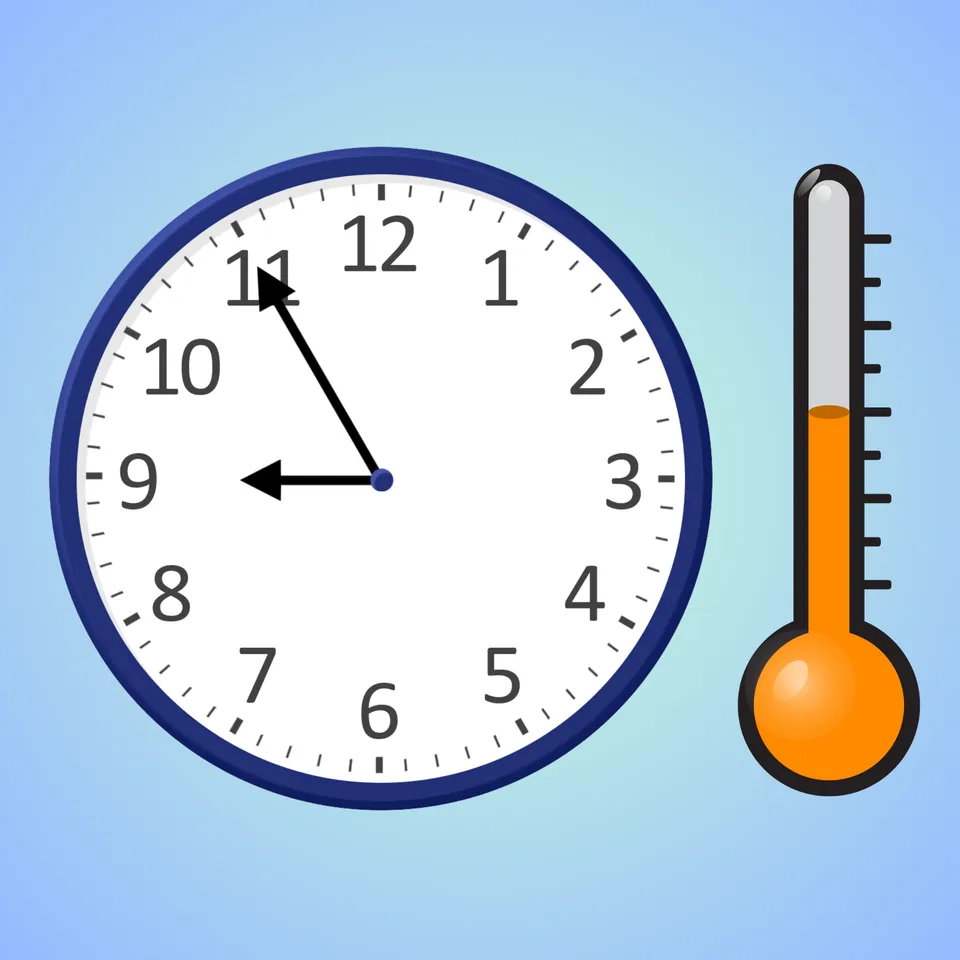
Practice reading times that are multiples of 5 in Medium Mode, with some support
This is one of three lessons that gives students practice reading analog clocks where the minutes are multiples of 5. This lesson is considered Medium Mode because the multiples of 15 are written around the clock. If a student has completed Easy Practice, they are ready for this lesson.
Part of
Standards alignment
Common Core State Standards
- 2.MD.C.7 — Tell and write time from analog and digital clocks to the nearest five minutes, using a.m. and p.m.
- 2.MP8 — Look for and express regularity in repeated reasoning.
- 2.NBT.A.2 — Count within 1000; skip-count by 5s, 10s, and 100s.
Alabama
- MA19.2.23 — Tell and write time from analog and digital clocks to the nearest five minutes, using a.m. and p.m.
Alaska
- 2.MD.7 — Tell and write time to the nearest five minutes using a.m. and p.m. from analog and digital clocks.
Arizona
- 2.MD.C.7 — Tell and write time from analog and digital clocks to the nearest five minutes, using a.m. and p.m.
- MP7 — Look for and make use of structure.
Arkansas
- 2.GM.9 — Using an analog clock, tell and write time to the nearest five minutes using colon notation and indicate a.m. or p.m.
California
- 2.MD.C.7 — Tell and write time from analog and digital clocks to the nearest five minutes, using a.m. and p.m. Know relationships of time (e.g., minutes in an hour, days in a month, weeks in a year).
- MP7 — Look for and make use of structure.
Colorado
- 2.MD.C.7 — Tell and write time from analog and digital clocks to the nearest five minutes, using a.m. and p.m.
- 2.NBT.A.2 — Count within 1000; skip-count by 5s, 10s, and 100s.
Connecticut
- 2.MD.C.7 — Tell and write time from analog and digital clocks to the nearest five minutes, using a.m. and p.m.
- 2.NBT.A.2 — Count within 1000; skip-count by 5s, 10s, and 100s.
Delaware
- 2.MD.C.7 — Tell and write time from analog and digital clocks to the nearest five minutes, using a.m. and p.m.
- MP7 — Look for and make use of structure.
Florida
- MA.2.M.2.1 — Using analog and digital clocks, tell and write time to the nearest five minutes using a.m. and p.m. appropriately. Express portions of an hour using the fractional terms half an hour, half past, quarter of an hour, quarter after and quarter til.
- MA.1.NSO.1.1 — Starting at a given number, count forward and backwards within 120 by ones. Skip count by 2s to 20 and by 5s to 100.
Georgia
- 2.MDR.6.1 — Tell and write time from analog and digital clocks to the nearest five minutes, and estimate and measure elapsed time using a timeline, to the hour or half hour on the hour or half hour.
- 2.MDR.6 — Solve real-life problems involving time and money.
Hawaii
- 2.MD.C.7 — Tell and write time from analog and digital clocks to the nearest five minutes, using a.m. and p.m.
- 2.NBT.A.2 — Count within 1000; skip-count by 5s, 10s, and 100s.
- MP7 — Look for and make use of structure.
Idaho
- 2.MD.C.7 — Tell and write time from analog and digital clocks to the nearest five minutes, using a.m. and p.m.
- 2.NBT.A.2 — Count within 1,000; skip-count by fives, tens, and 100s. Identify patterns in skip counting starting at any number
Illinois
- 2.MD.C.7 — Tell and write time from analog and digital clocks to the nearest five minutes, using a.m. and p.m.
- MP.7 — Look for and make use of structure.
Indiana
- 2.M.4 — Tell and write time to the nearest five minutes from analog clocks, using a.m. and p.m. Solve real-world problems involving addition and subtraction of time intervals on the hour or half hour. (E)
- PS.8 — Look for and express regularity in repeated reasoning.
Iowa
- 2.MD.C.7 — Tell and write time from analog and digital clocks to the nearest five minutes, using a.m. and p.m.
- SMP7 — Look for and make use of structure.
- 2.NBT.A.2 — Count forward and backward within 1,000; skip-count forward and backward by 5s, 10s, and 100s.
Kansas
- 2.MD.7 — Tell and write time from analog and digital clocks to the nearest five minutes.
- MP.7 — Look for and make use of structure.
Kentucky
- KY.2.MD.7 — Tell and write time from analog and digital clocks to the nearest five minutes, using a.m. and p.m.
- MP8 — Look for and express regularity in repeated reasoning.
Louisiana
- 2.MD.C.7 — Tell and write time from analog and digital clocks to the nearest five minutes, using a.m. and p.m.
- MP7 — Look for and make use of structure.
Maine
- 2.MD.C.7 — Tell and write time from analog and digital clocks to the nearest five minutes, using a.m. and p.m.
- 2.NBT.A.2 — Count within 1000; skip-count by 5s, 10s, and 100s. Identify patterns in skip counting at any number. (For example, 37, 47, 57 or 328, 428, 528, etc.)
Maryland
- 2.MD.C.7 — Tell and write time from analog and digital clocks to the nearest five minutes, using a.m. and p.m.
- MP7 — Look for and make use of structure.
Massachusetts
- 2.MD.C.7 — Tell and write time from analog and digital clocks to the nearest five minutes, using a.m. and p.m.
Michigan
- 2.MD.C.7 — Tell and write time from analog and digital clocks to the nearest five minutes, using a.m. and p.m.
Minnesota
- 2.3.3.1 — Tell time to the quarter-hour and distinguish between a.m. and p.m.
- 3.3.3.1 — Tell time to the minute, using digital and analog clocks. Determine elapsed time to the minute. For example: Your trip began at 9:50 a.m. and ended at 3:10 p.m. How long were you traveling?
Mississippi
- 2.MD.7 — Tell and write time from analog and digital clocks to the nearest five minutes, using a.m. and p.m.
- 2.NBT.2 — Count within 1000; skip-count by 5s starting at any number ending in 5 or 0. Skip-count by 10s and 100s starting at any number.
Missouri
- 2.GM.D.10 — Tell and write time from analog and digital clocks to the nearest five minutes, using a.m. and p.m.
- 1.NS.A.4 — Count by 5s to 100 starting at any multiple of five.
Montana
- 2.MD.C.7 — Tell and write time from analog and digital clocks to the nearest five minutes, using a.m. and p.m.
- MP8 — Look for and express regularity in repeated reasoning.
Nebraska
- 2.G.5 — Time and Money: Students will solve problems with dollar bills and coins and tell time to the nearest five-minute interval.
- 2.G.5.b — Identify and write time to five-minute intervals using analog and digital clocks and both a.m. and p.m.
- 2.N.2.a — Count within 1,000, including skip counting by 5s, 10s, and 100s starting at a variety of multiples of 5, 10, or 100.
Nevada
- 2.MD.C.7 — Tell and write time from analog and digital clocks to the nearest five minutes, using a.m. and p.m.
- MP7 — Look for and make use of structure.
New Hampshire
- 2.MD.C.7 — Tell and write time from analog and digital clocks to the nearest five minutes, using a.m. and p.m.
- 2.NBT.A.2 — Count within 1000; skip-count by 5s, 10s, and 100s.
- MP7 — Look for and make use of structure.
New Jersey
- 2.MD.C.7 — Tell and write time from analog and digital clocks to the nearest five minutes, using a.m. and p.m.
- 7 — Look for and make use of structure.
- 2.NBT.A.2 — Count within 1000; skip-count by 5s, 10s, and 100s.
New Mexico
- 2.MD.C.7 — Tell and write time from analog and digital clocks to the nearest five minutes, using a.m. and p.m.
- MP7 — Look for and make use of structure.
New York
- NY-2.MD.7 — Tell and write time from analog and digital clocks in five minute increments, using a.m. and p.m. Develop an understanding of common terms, such as, but not limited to, quarter past, half past, and quarter to.
- NY-2.NBT.2 — Count within 1000; skip-count by 5s, 10s, and 100s.
North Carolina
- NC.2.MD.7 — Tell and write time from analog and digital clocks to the nearest five minutes, using a.m. and p.m.
- MP.8 — Look for and express regularity in repeated reasoning.
North Dakota
- 2.GM.M.3 — Tell and write time to the nearest five minutes (including quarter after and quarter to) with a.m. and p.m. using analog and digital clocks.
- 1.NO.CC.5 — Skip count forward and backward by 5s and 10s from multiples and recognize the patterns of up to 10 skip counts.
Ohio
- 2.MD.7 — Tell and write time from analog and digital clocks to the nearest five minutes, using a.m. and p.m.
- 2.NBT.2 — Count forward and backward within 1,000 by ones, tens, and hundreds starting at any number; skip-count by 5s starting at any multiple of 5.
Oklahoma
- 3.GM.3.1 — Read and write time to the nearest five-minute interval (analog and digital).
- 3.GM.3 — Solve problems by telling time to the nearest five-minute interval.
Oregon
- 2.GM.D.10 — Tell and write time from analog and digital clocks to the nearest five minutes, using a.m. and p.m.
- MP8 — Look for and express regularity in repeated reasoning
Pennsylvania
- CC.2.4.2.A.2 — Tell and write time to the nearest five minutes using both analog and digital clocks.
Rhode Island
- 2.MD.C.7 — Tell and write time from analog and digital clocks to the nearest five minutes, using a.m. and p.m.
- 2.NBT.A.2 — Count within 1000; skip-count by 5s, 10s, and 100s. Identify patterns in skip counting starting at any number.
South Carolina
- 2.MDA.6 — Use analog and digital clocks to tell and record time to the nearest five-minute interval using a.m. and p.m.
- 1.NSBT.1b — Extend the number sequence to count by fives and tens to 100, starting at any number.
South Dakota
- 2.MD.C.7 — Tell and write time from analog and digital clocks to the nearest five minutes, using a.m. and p.m.
- MP7 — Look for and make use of structure.
Tennessee
- 2.MD.C.7 — Tell and write time in quarter hours and to the nearest five minutes (in a.m. and p.m.) using analog and digital clocks.
Texas
- 2.9G — read and write time to the nearest one-minute increment using analog and digital clocks and distinguish between a.m. and p.m.
Utah
- 2.MD.7 — Tell and write time from analog and digital clocks to the nearest five minutes, using a.m. and p.m.
Vermont
- 2.MD.C.7 — Tell and write time from analog and digital clocks to the nearest five minutes, using a.m. and p.m.
- 2.NBT.A.2 — Count within 1000; skip-count by 5s, 10s, and 100s.
- MP7 — Look for and make use of structure.
Virginia
- 2.MG.2 — The student will demonstrate an understanding of the concept of time to the nearest five minutes, using analog and digital clocks. Students will demonstrate the following Knowledge and Skills:
- 2.MG.2c — Show, tell, and write time to the nearest five minutes, using analog and digital clocks.
- 2.MG.2d — Match a written time (e.g., 1:35, 6:20, 9:05) to the time shown on an analog clock to the nearest five minutes.
Washington
- 2.MD.C.7 — Tell and write time from analog and digital clocks to the nearest five minutes, using a.m. and p.m.
- 2.NBT.A.2 — Count within 1000; skip-count by 5s, 10s, and 100s.
- MP7 — Look for and make use of structure.
Washington, D.C.
- 2.MD.C.7 — Tell and write time from analog and digital clocks to the nearest five minutes, using a.m. and p.m.
- MP7 — Look for and make use of structure.
- 2.NBT.A.2 — Count within 1000; skip-count by 5s, 10s, and 100s.
West Virginia
- M.2.21 — Tell and write time from analog and digital clocks to the nearest five minutes, using a.m. and p.m.
Wisconsin
- M.2.MD.C.7 — Tell and write time from analog and digital clocks to the nearest five minutes, using a.m. and p.m.
- M.2.NBT.A.2 — Count within 1,000; skip-count by fives, tens, and hundreds.
Wyoming
- 2.MD.H.7 — Tell and write time from analog and digital clocks in five minute increments using a.m. and p.m.
- 2.MD.H — Work with time and money.
- 2.MP8 — Look for and express regularity in repeated reasoning.