Rounding Tails
Ages 6–8 · 7 minutes · Math
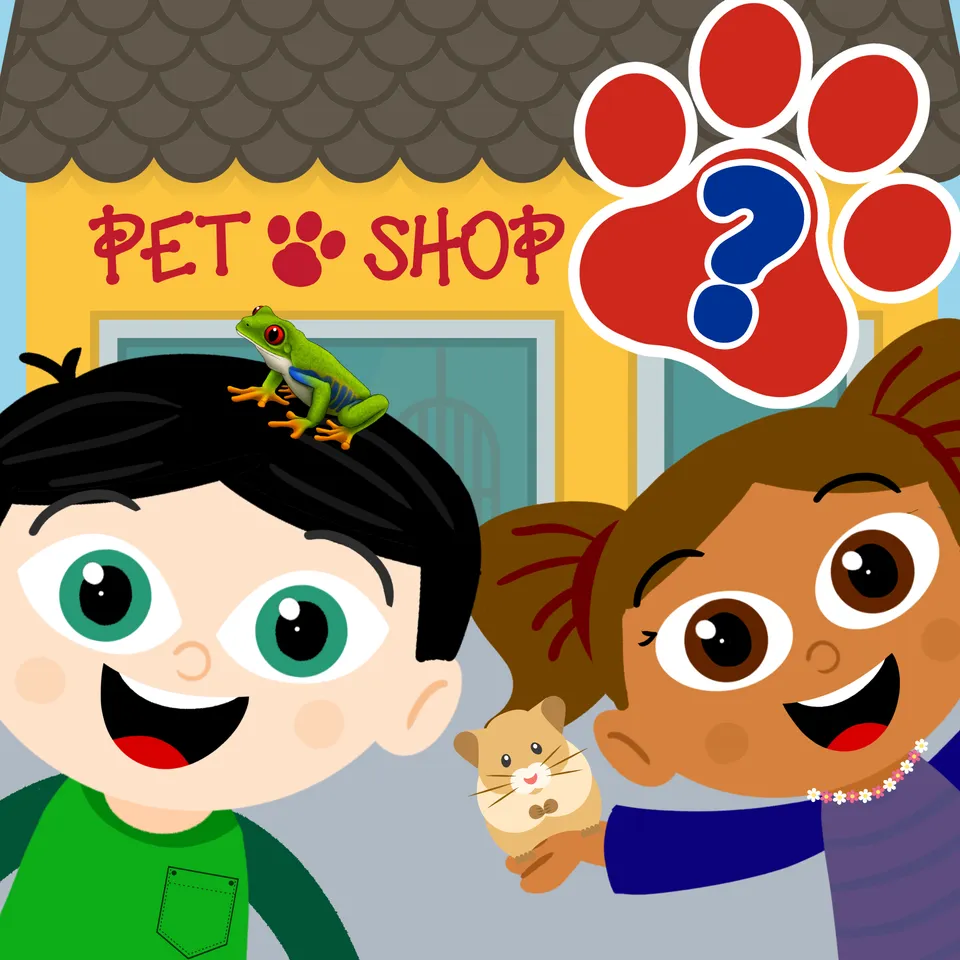
Tag along to the pet store with Tofu the gerbil and Jellybean the frog!
In this rounding and estimation lesson, students will learn and practice:
- Rounding two-digit numbers to the nearest ten
- Estimating two- and three-digit numbers
- Rounding three-digit numbers to the nearest hundred
- Using number lines and rounding tables
Part of
Standards alignment
Common Core State Standards
- 3.NBT.A.1 — Use place value understanding to round whole numbers to the nearest 10 or 100.
Alabama
- MA19.3.10 — Identify the nearest 10 or 100 when rounding whole numbers, using place value understanding.
Alaska
- 3.NBT.1 — Use place value understanding to round whole numbers to the nearest 10 or 100.
Arizona
- 3.NBT.A.1 — Use place value understanding to round whole numbers to the nearest 10 or 100.
- 3.OA.D.10 — When solving problems, assess the reasonableness of answers using mental computation and estimation strategies including rounding.
Arkansas
- 3.NPV.1 — Round four-digit whole numbers to the nearest 10 or 100, using place value understanding.
- 2.NPV.2 — Identify the value of hundreds, tens, and ones place in a three-digit number.
California
- 3.NBT.A.1 — Use place value understanding to round whole numbers to the nearest 10 or 100.
- 2.NBT.7.1 — Use estimation strategies to make reasonable estimates in problem solving.
Colorado
- 3.NBT.A.1 — Use place value understanding to round whole numbers to the nearest 10 or 100.
Connecticut
- 3.NBT.A.1 — Use place value understanding to round whole numbers to the nearest 10 or 100.
- MP8 — Look for and express regularity in repeated reasoning.
Delaware
- 3.NBT.A.1 — Use place value understanding to round whole numbers to the nearest 10 or 100.
- MP8 — Look for and express regularity in repeated reasoning.
Florida
- MA.2.NSO.1.4 — Round whole numbers from 0 to 100 to the nearest 10.
- MA.3.NSO.1.4 — Round whole numbers from 0 to 1,000 to the nearest 10 or 100.
Georgia
- 3.NR.1.3 — Use place value understanding to round whole numbers within up to 1000 to the nearest 10 or 100.
- 3.NR.1 — Use place value reasoning to represent, read, write, and compare numerical values up to 10,000 and round whole numbers up to 1,000.
Hawaii
- 3.NBT.A.1 — Use place value understanding to round whole numbers to the nearest 10 or 100.
- MP8 — Look for and express regularity in repeated reasoning.
Idaho
- 3.NBT.A.1 — Round a whole number to the tens or hundreds place, using place value understanding or a visual representation.
- 2.MP.5 — Use appropriate tools strategically.
- 3.OA.D.8.b — Assess the reasonableness of answers using mental computation and estimation strategies, including rounding.
Illinois
- 3.NBT.A.1 — Use place value understanding to round whole numbers to the nearest 10 or 100.
- MP.8 — Look for and express regularity in repeated reasoning.
Indiana
- 3.NS.6 — Use place value understanding to round two- and three-digit whole numbers to the nearest 10 or 100.
Iowa
- 3.NBT.A.1 — Round whole numbers to the nearest 10 or 100 within the range of 0–1,000. For example, rounding 643 to the nearest 10 would be 640; to the nearest 100 would be 600.
- SMP2 — Reason abstractly and quantitatively.
- SMP7 — Look for and make use of structure.
Kansas
- 3.NBT.1 — Use place value understanding to round whole numbers to the nearest 10 or 100.
Kentucky
- KY.3.NBT.1 — Use place value understanding to round whole numbers to the nearest 10 or 100.
Louisiana
- 3.NBT.A.1 — Use place value understanding to round whole numbers to the nearest 10 or 100.
Maine
- 3.NBT.A.1 — Use place value understanding to round whole numbers to the nearest 10 or 100.
Maryland
- 3.NBT.A.1 — Use place value understanding to round whole numbers to the nearest 10 or 100.
Massachusetts
- 3.NBT.A.1 — Use place value understanding to round whole numbers to the nearest 10 or 100.
Michigan
- 3.NBT.A.1 — Use place value understanding to round whole numbers to the nearest 10 or 100.
Minnesota
- 2.1.1.4 — Round numbers up to the nearest 10 and 100 and round numbers down to the nearest 10 and 100. For example: If there are 17 students in the class and granola bars come 10 to a box, you need to buy 20 bars (2 boxes) in order to have enough bars for everyone.
- 1.1.1.6 — Use words to describe the relative size of numbers. For example: Use the words equal to, not equal to, more than, less than, fewer than, is about, and is nearly to describe numbers.
Mississippi
- 3.NBT.1 — Use place value understanding to round whole numbers to the nearest 10 or 100.
Missouri
- 3.NBT.A.1 — Round whole numbers to the nearest 10 or 100.
- 3.RA.D.10 — Interpret the reasonableness of answers using mental computation and estimation strategies including rounding.
Montana
- 3.NBT.A.1 — Use place value understanding to round whole numbers to the nearest 10 or 100.
- MP8 — Look for and express regularity in repeated reasoning.
Nebraska
- 3.N.1 — Numeric Relationships: Students will demonstrate and represent multi-digit numbers using place value understanding.
- 3.N.1.b — Represent and justify comparisons of whole numbers up to 10,000 using number lines and reasoning strategies.
Nevada
- 3.NBT.A.1 — Use place value understanding to round whole numbers to the nearest 10 or 100.
- MP8 — Look for and express regularity in repeated reasoning.
New Hampshire
- 3.NBT.A.1 — Use place value understanding to round whole numbers to the nearest 10 or 100.
- MP8 — Look for and express regularity in repeated reasoning.
New Jersey
- 3.NBT.A.1 — Use place value understanding to round whole numbers to the nearest 10 or 100.
New Mexico
- 3.NBT.A.1 — Use place value understanding to round whole numbers to the nearest 10 or 100.
New York
- NY-3.NBT.1 — Use place value understanding to round whole numbers to the nearest 10 or 100.
- NY-3.OA.8.b — Assess the reasonableness of answers using mental computation and estimation strategies including rounding.
North Carolina
- NC.2.MD.6 — Represent whole numbers as lengths from 0 on a number line diagram with equally spaced points and represent whole-number sums and differences, within 100, on a number line.
North Dakota
- 3.NO.NBT.2 — Apply place value understanding to round whole numbers to the nearest 10 or 100.
Ohio
- 3.NBT.1 — Use place value understanding to round whole numbers to the nearest 10 or 100.
Oklahoma
- 2.N.1.6 — Use place value understanding to round numbers to the nearest ten and nearest hundred (up to 1,000). Recognize when to round in real-world situations.
- 2.N.1.2 — Use knowledge of number relationships to locate the position of a given whole number, up to 100, on an open number line.
Oregon
- 3.NBT.A.1 — Use place value understanding to round whole numbers within 1000 to the nearest 10 or 100.
Pennsylvania
- CC.2.1.3.B.1 — Apply place-value understanding and properties of operations to perform multi-digit arithmetic.
- CC.2.1.1.B.2 — Use place-value concepts to represent amounts of tens and ones and to compare two digit numbers.
Rhode Island
- 3.NBT.A.1 — Use place value understanding to round whole numbers to the nearest 10 or 100.
South Carolina
- 3.NSBT.1 — Use place value understanding to round whole numbers to the nearest 10 or 100.
- 3.PS.6a — Express numerical answers with the degree of precision appropriate for the context of a situation.
South Dakota
- 3.NBT.A.1 — Use place value understanding to round whole numbers to the nearest 10 or 100.
Tennessee
- 3.NBT.A.1 — Round whole numbers to the nearest 10 or 100 using understanding of place value and use a number line to explain how the number was rounded.
Texas
- 3.2C — represent a number on a number line as being between two consecutive multiples of 10; 100; 1,000; or 10,000 and use words to describe relative size of numbers in order to round whole numbers; and
- 3.4B — round to the nearest 10 or 100 or use compatible numbers to estimate solutions to addition and subtraction problems;
- 3.1C — select tools, including real objects, manipulatives, paper and pencil, and technology as appropriate, and techniques, including mental math, estimation, and number sense as appropriate, to solve problems;
Utah
- 3.NBT.1 — Use place value understanding to round whole numbers to the nearest 10 or 100.
- 3.OA.8.c — Assess the reasonableness of answers using mental computation and estimation strategies, including rounding.
Vermont
- 3.NBT.A.1 — Use place value understanding to round whole numbers to the nearest 10 or 100.
- MP8 — Look for and express regularity in repeated reasoning.
Virginia
- 2.NS.1g — Choose a reasonable estimate up to 1,000 when given a contextual problem (e.g., What would be the best estimate for the number of students in our school – 5, 50, or 500?).
- 1.NS.2b — Estimate the number of objects (up to 120) in a given collection and justify the reasonableness of an answer.
- 2.NS.2f — Plot and justify the position of a given number up to 100 on a number line with pre-marked benchmarks of 1s, 2s, 5s, 10s, or 25s.
Washington
- 3.NBT.A.1 — Use place value understanding to round whole numbers to the nearest 10 or 100.
- MP8 — Look for and express regularity in repeated reasoning.
Washington, D.C.
- 3.NBT.A.1 — Use place value understanding to round whole numbers to the nearest 10 or 100.
- MP8 — Look for and express regularity in repeated reasoning.
West Virginia
- M.3.12 — Use place value understanding to round whole numbers to the nearest 10 or 100.
Wisconsin
- M.3.NBT.A.1 — Use place value understanding to generate estimates for problems in real-world situations, with whole numbers within 1,000, using strategies such as mental math, benchmark numbers, compatible numbers, and rounding. Assess the reasonableness of their estimates (e.g., Is my estimate too low or too high? What degree of precision do I need for this situation?).
Wyoming
- 3.NBT.E.1 — Use place value understanding to round whole numbers to the nearest 10 or 100.
- 2.MD.G.6.B — Locate the multiple of 10 before and after a given number within 100.
- 2.MP5 — Use appropriate tools strategically.