Estimation Expedition
Ages 6–8 · 7 minutes · Math
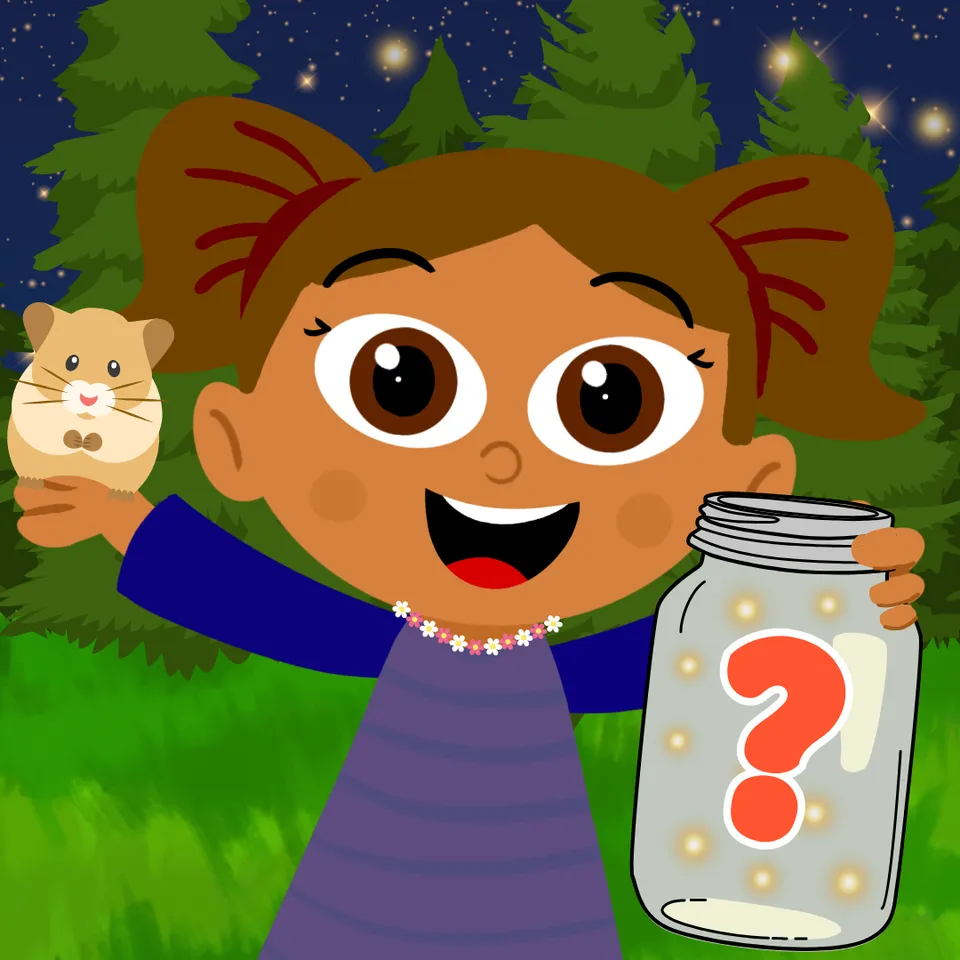
Come on a camping adventure with two-digit estimation!
In this estimation lesson, students will learn and practice:
- Estimating quantities of unknown items from 10-99
- Introduction to estimation in the hundreds
- Efficiency of using estimates for large groups of items
Part of
Standards alignment
Common Core State Standards
- 1.NBT.B.2.c — Understand that the two digits of a two-digit number represent amounts of tens and ones. Understand the following as special cases: the numbers 10, 20, 30, 40, 50, 60, 70, 80, 90 refer to one, two, three, four, five, six, seven, eight, or nine tens (and 0 ones).
- 2.NBT.A.2 — Count within 1000; skip-count by 5s, 10s, and 100s.
- 3.OA.A.3 — Use multiplication and division within 100 to solve word problems in situations involving equal groups, arrays, and measurement quantities, e.g., by using drawings and equations with a symbol for the unknown number to represent the problem.
Alabama
- MA19.1.11a — Identify a bundle of ten ones as a "ten."
- MA19.1.11c — Identify the numbers 10, 20, 30, 40, 50, 60, 70, 80, 90 as one, two, three, four, five, six, seven, eight, or nine tens (and 0 ones).
- MA19.3.3 — Solve word situations using multiplication and division within 100 involving equal groups, arrays, and measurement quantities; represent the situation using models, drawings, and equations with a symbol for the unknown number.
Alaska
- 1.CC.4 — Count a large quantity of objects by grouping into 10s and counting by 10s and 1s to find the quantity.
- 1.CC.6 — Estimate how many and how much in a given set to 20 and then verify estimate by counting.
- 2.NBT.2 — Count up to 1000, skip-count by 5s, 10s and 100s.
- 1.NBT.2.c — The numbers 10, 20, 30, 40, 50, 60, 70, 80, 90, refer to one, two, three, four, five, six, seven, eight or nine tens (and 0 ones).
Arizona
- 1.NBT.B.2.c — The numbers 10, 20, 30, 40, 50, 60, 70, 80, 90 refer to one, two, three, four, five, six, seven, eight, or nine tens (and 0 ones).
- 2.NBT.A.2 — Count within 1000; skip-count by 5s, 10s, and 100s.
- 1.NBT.B.2.a — 10 can be thought of as a bundle of ten ones — called a "ten."
- 2.NBT.B.6 — Add up to three two-digit numbers using strategies based on place value and properties of operations.
Arkansas
- 1.CAR.7 — Solve real-world problems involving addition of three whole numbers whose sum is less than or equal to 20.
- 2.NPV.1 — Count within 1,000 forwards and backwards by ones, tens, and hundreds from any given number.
- 2.CAR.3 — Add up to four two-digit numbers with sums not exceeding 100 using strategies based on place value and properties of operations.
California
- 2.NBT.7.1 — Use estimation strategies to make reasonable estimates in problem solving.
- 2.NBT.A.2 — Count within 1000; skip-count by 2s, 5s, 10s, and 100s.
- 1.NBT.B.2.c — The numbers 10, 20, 30, 40, 50, 60, 70, 80, 90 refer to one, two, three, four, five, six, seven, eight, or nine tens (and 0 ones).
Colorado
- 1.NBT.B.2.c — The numbers 10, 20, 30, 40, 50, 60, 70, 80, 90 refer to one, two, three, four, five, six, seven, eight, or nine tens (and 0 ones).
- 2.NBT.A.2 — Count within 1000; skip-count by 5s, 10s, and 100s.
- 2.NBT.A.1.a — 100 can be thought of as a bundle of ten tens — called a “hundred.”
Connecticut
- 1.NBT.B.2.c — The numbers 10, 20, 30, 40, 50, 60, 70, 80, 90 refer to one, two, three, four, five, six, seven, eight, or nine tens (and 0 ones).
- 1.OA.A.2 — Solve word problems that call for addition of three whole numbers whose sum is less than or equal to 20, e.g., by using objects, drawings, and equations with a symbol for the unknown number to represent the problem.
- 2.NBT.A.2 — Count within 1000; skip-count by 5s, 10s, and 100s.
- 2.NBT.B.6 — Add up to four two-digit numbers using strategies based on place value and properties of operations.
Delaware
- 1.NBT.B.2.c — The numbers 10, 20, 30, 40, 50, 60, 70, 80, 90 refer to one, two, three, four, five, six, seven, eight, or nine tens (and 0 ones).
- 2.NBT.A.2 — Count within 1000; skip-count by 5s, 10s, and 100s.
- 2.NBT.B.6 — Add up to four two-digit numbers using strategies based on place value and properties of operations.
Florida
- MA.K12.MTR.6.1 — Assess the reasonableness of solutions. Mathematicians who assess the reasonableness of solutions: • Estimate to discover possible solutions. • Use benchmark quantities to determine if a solution makes sense. • Check calculations when solving problems. • Verify possible solutions by explaining the methods used. • Evaluate results based on the given context.
- MA.1.NSO.1.1 — Starting at a given number, count forward and backwards within 120 by ones. Skip count by 2s to 20 and by 5s to 100.
- MA.2.AR.3.2 — Use repeated addition to find the total number of objects in a collection of equal groups. Represent the total number of objects using rectangular arrays and equations.
- MA.1.NSO.1.3 — Compose and decompose two-digit numbers in multiple ways using tens and ones. Demonstrate each composition or decomposition with objects, drawings and expressions or equations.
Georgia
- 2.NR.1.2 — Count forward and backward by ones from any number within 1000. Count forward by fives from multiples of 5 within 1000. Count forward and backward by 10s and 100s from any number within 1000. Count forward by 25s from 0.
- 2.NR.3 — Work with equal groups to gain foundations for multiplication through real-life, mathematical problems.
- 2.MP.2 — Reason abstractly and quantitatively.
Hawaii
- 1.NBT.B.2c — The numbers 10, 20, 30, 40, 50, 60, 70, 80, 90 refer to one, two, three, four, five, six, seven, eight, or nine tens (and 0 ones).
- 2.NBT.A.2 — Count within 1000; skip-count by 5s, 10s, and 100s.
- 1.OA.A.2 — Solve word problems that call for addition of three whole numbers whose sum is less than or equal to 20, e.g., by using objects, drawings, and equations with a symbol for the unknown number to represent the problem.
- 2.NBT.B.6 — Add up to four two-digit numbers using strategies based on place value and properties of operations.
Idaho
- 2.MP.5 — Use appropriate tools strategically.
- 1.MP.5 — Use appropriate tools strategically.
- 1.NBT.B.2.c — The numbers 10, 20, 30, 40, 50, 60, 70, 80, 90 refer to one, two, three, four, five, six, seven, eight, or nine tens (and zero ones).
- 2.NBT.A.2 — Count within 1,000; skip-count by fives, tens, and 100s. Identify patterns in skip counting starting at any number
Illinois
- 1.NBT.B.2.c — The numbers 10, 20, 30, 40, 50, 60, 70, 80, 90 refer to one, two, three, four, five, six, seven, eight, or nine tens (and 0 ones).
- 2.NBT.A.2 — Count within 1000; skip-count by 5s, 10s, and 100s.
- 2.NBT.B.6 — Add up to four two-digit numbers using strategies based on place value and properties of operations.
Indiana
- 1.NS.2 — Model place value concepts of two-digit numbers, multiples of 10, and equivalent forms of whole numbers using objects and drawings. (E)
- 2.NS.1 — Count by ones, twos, fives, tens, and hundreds up to at least 1,000 from any given number. (E)
- 2.CA.1 — Solve real-world problems involving addition and subtraction within 100 in situations of adding to, taking from, putting together, taking apart, and comparing, with unknowns in all parts of the addition or subtraction problem (e.g., by using drawings and equations with a symbol for the unknown number to represent the problem). Use estimation to decide whether answers are reasonable in addition problems. (E)
Iowa
- 2.OA.C.4 — Use repeated addition to find the total number of objects arranged in equal groups and rectangular arrays; write an equation to express the total as a sum of equal addends.
- SMP2 — Reason abstractly and quantitatively.
- SMP7 — Look for and make use of structure.
Kansas
- 3.OA.3 — Use multiplication and division within 100 to solve word problems in situations involving equal groups, arrays, and measurement quantities, (e.g. by using drawings and equations with a symbol for the unknown number to represent the problem.)
- 2.NBT.6 — Add up to four two-digit numbers using strategies based on place value and properties of operations.
- 3.NBT.3 — Multiply one-digit whole numbers by multiples of 10 in the range 10 to 90 (e.g. 9 ⋅ 80, 5 ⋅ 60) using strategies based on place value and properties of operations.
Kentucky
- KY.1.NBT.2.c — The numbers 10, 20, 30, 40, 50, 60, 70, 80, 90 refer to one, two, three, four, five, six, seven, eight or nine tens (and 0 ones).
- KY.2.NBT.2 — Count forwards and backwards within 1000; skip-count by 5s, 10s and 100s.
- KY.3.OA.3 — Use multiplication and division within 100 to solve word problems in situations involving equal groups, arrays and measurement quantities, by using drawings and equations with a symbol for the unknown number to represent the problem.
Louisiana
- 1.NBT.B.2.c — The numbers 10, 20, 30, 40, 50, 60, 70, 80, 90 refer to one, two, three, four, five, six, seven, eight, or nine tens (and 0 ones).
- 1.NBT.B.2.a — 10 can be thought of as a bundle of ten ones — called a "ten."
- 2.NBT.B.6 — Add up to four two-digit numbers using strategies based on place value and properties of operations.
Maine
- 1.NBT.B.2c — The numbers 10, 20, 30, 40, 50, 60, 70, 80, 90 refer to one, two, three, four, five, six, seven, eight, or nine tens (and 0 ones).
- 2.NBT.A.2 — Count within 1000; skip-count by 5s, 10s, and 100s. Identify patterns in skip counting at any number. (For example, 37, 47, 57 or 328, 428, 528, etc.)
- 1.NBT.B.2a — 10 can be thought of as a bundle of ten ones - called a “ten.”
Maryland
- 1.NBT.B.2.c — The numbers 10, 20, 30, 40, 50, 60, 70, 80, 90 refer to one, two, three, four, five, six, seven, eight, or nine tens (and 0 ones).
- 2.NBT.A.2 — Count within 1000; skip-count by 5s, 10s, and 100s.
- 1.NBT.B.2.a — 10 can be thought of as a bundle of ten ones — called a "ten."
Massachusetts
- 1.NBT.B.2.c — The numbers 10, 20, 30, 40, 50, 60, 70, 80, 90 refer to one, two, three, four, five, six, seven, eight, or nine tens (and 0 ones).
- 2.NBT.A.2 — Count within 1,000; skip-count by 5s, 10s, and 100s. Identify patterns in skip counting starting at any number.
- 2.NBT.B.6 — Add up to four two-digit numbers using strategies based on place value and properties of operations.
Michigan
- 1.NBT.B.2.c — The numbers 10, 20, 30, 40, 50, 60, 70, 80, 90 refer to one, two, three, four, five, six, seven, eight, or nine tens (and 0 ones).
- 2.NBT.A.2 — Count within 1000; skip-count by 5s, 10s, and 100s.
- 2.NBT.B.6 — Add up to four two-digit numbers using strategies based on place value and properties of operations.
- 3.OA.A.3 — Use multiplication and division within 100 to solve word problems in situations involving equal groups, arrays, and measurement quantities, e.g., by using drawings and equations with a symbol for the unknown number to represent the problem.
Minnesota
- 1.1.1.6 — Use words to describe the relative size of numbers. For example: Use the words equal to, not equal to, more than, less than, fewer than, is about, and is nearly to describe numbers.
- 1.1.1.1 — Use place value to describe whole numbers between 10 and 100 in terms of tens and ones. For example: Recognize the numbers 21 to 29 as 2 tens and a particular number of ones.
- 1.1.2.3 — Recognize the relationship between counting and addition and subtraction. Skip count by 2s, 5s, and 10s.
Mississippi
- 1.NBT.2.c — The numbers 10, 20, 30, 40, 50, 60, 70, 80, 90 refer to one, two, three, four, five, six, seven, eight, or nine tens (and 0 ones).
- 2.NBT.2 — Count within 1000; skip-count by 5s starting at any number ending in 5 or 0. Skip-count by 10s and 100s starting at any number.
- 1.NBT.2.a — 10 can be thought of as a bundle of ten ones — called a “ten.”
- 1.OA.2 — Solve word problems that call for addition of three whole numbers whose sum is less than or equal to 20, e.g., by using objects, drawings, and equations with a symbol for the unknown number to represent the problem.
Missouri
- 1.NS.A.4 — Count by 5s to 100 starting at any multiple of five.
- 1.NBT.A.2 — Understand two-digit numbers are composed of ten(s) and one(s).
- 1.NBT.A.4 — Count by 10s to 120 starting at any number.
Montana
- 1.NBT.B.2.c — The numbers 10, 20, 30, 40, 50, 60, 70, 80, 90 refer to one, two, three, four, five, six, seven, eight, or nine tens (and 0 ones).
- 2.NBT.A.2 — Count within 1000; skip-count by 5s, 10s, and 100s.
- 2.NBT.B.6 — Add up to four two-digit numbers using strategies based on place value and properties of operations.
Nebraska
- 2.N.1.a — Without counting, recognize and verbally label structured arrangements for briefly shown collections using groups, multiplicative thinking, and place value (e.g.,” I saw 48.” “How did you know?” “I saw 4 groups of 10 and 2 groups of 4 is 8...4 tens and 8 ones...48”).
- 1.N.3.a — Understand 10 as a bundle, collection, or (more abstractly) composition of ten ones and that the two digits of a two-digit number represent a composition of some tens and some ones.
- 2.N.2.a — Count within 1,000, including skip counting by 5s, 10s, and 100s starting at a variety of multiples of 5, 10, or 100.
Nevada
- 1.NBT.B.2.c — The numbers 10, 20, 30, 40, 50, 60, 70, 80, 90 refer to one, two, three, four, five, six, seven, eight, or nine tens (and 0 ones).
- 2.NBT.A.2 — Count within 1000; skip-count by 5s, 10s, and 100s.
- 3.OA.A.3 — Use multiplication and division within 100 to solve word problems in situations involving equal groups, arrays, and measurement quantities, e.g., by using drawings and equations with a symbol for the unknown number to represent the problem.
New Hampshire
- 1.NBT.B.2.c — The numbers 10, 20, 30, 40, 50, 60, 70, 80, 90 refer to one, two, three, four, five, six, seven, eight, or nine tens (and 0 ones).
- 2.NBT.A.2 — Count within 1000; skip-count by 5s, 10s, and 100s.
- 2.NBT.A.1.a — 100 can be thought of as a bundle of ten tens — called a "hundred."
New Jersey
- 1.NBT.B.2 — Understand that the two digits of a two-digit number represent amounts of tens and ones. Understand the following as special cases: a. 10 can be thought of as a bundle of ten ones — called a “ten.” b. The numbers from 11 to 19 are composed of a ten and one, two, three, four, five, six, seven, eight, or nine ones. c. The numbers 10, 20, 30, 40, 50, 60, 70, 80, 90 refer to one, two, three, four, five, six, seven, eight, or nine tens (and 0 ones).
- 2.NBT.A.2 — Count within 1000; skip-count by 5s, 10s, and 100s.
- 3.OA.A.3 — Use multiplication and division within 100 to solve word problems in situations involving equal groups, arrays, and measurement quantities, e.g., by using drawings and equations with a symbol for the unknown number to represent the problem.
New Mexico
- 1.NBT.B.2.c — The numbers 10, 20, 30, 40, 50, 60, 70, 80, 90 refer to one, two, three, four, five, six, seven, eight, or nine tens (and 0 ones).
- 2.NBT.A.2 — Count within 1000; skip-count by 5s, 10s, and 100s.
- 1.NBT.B.2.a — 10 can be thought of as a bundle of ten ones — called a "ten."
New York
- NY-1.NBT.2.c — Understand the numbers 10, 20, 30, 40, 50, 60, 70, 80, 90 refer to one, two, three, four, five, six, seven, eight, or nine tens (and 0 ones).
- NY-2.NBT.2 — Count within 1000; skip-count by 5s, 10s, and 100s.
- NY-1.OA.2 — Solve word problems that call for addition of three whole numbers whose sum is less than or equal to 20.
North Carolina
- NC.1.NBT.2 — Understand that the two digits of a two-digit number represent amounts of tens and ones. • Unitize by making a ten from a collection of ten ones. • Model the numbers from 11 to 19 as composed of a ten and one, two, three, four, five, six, seven, eight, or nine ones. • Demonstrate that the numbers 10, 20, 30, 40, 50, 60, 70, 80, 90 refer to one, two, three, four, five, six, seven, eight, or nine tens, with 0 ones.
- NC.2.NBT.2 — Count within 1,000; skip-count by 5s, 10s, and 100s.
- NC.2.NBT.6 — Add up to three two-digit numbers using strategies based on place value and properties of operations.
North Dakota
- 1.NO.CC.5 — Skip count forward and backward by 5s and 10s from multiples and recognize the patterns of up to 10 skip counts.
- 1.NO.NBT.1 — Demonstrate that the two digits of a two-digit number represent a composition of some tens and some ones.
- 3.AR.OA.4 — Use strategies and visual models to solve authentic word problems with multiplication within 100, including unknowns, using grouping models and equations.
Ohio
- 1.NBT.2 — Understand that the two digits of a two-digit number represent amounts of tens and ones. Understand the following as special cases: 10 can be thought of as a bundle of ten ones — called a “ten;” the numbers from 11 to 19 are composed of a ten and one, two, three, four, five, six, seven, eight, or nine ones; and the numbers 10, 20, 30, 40, 50, 60, 70, 80, 90 refer to one, two, three, four, five, six, seven, eight, or nine tens (and 0 ones).
- 2.NBT.2 — Count forward and backward within 1,000 by ones, tens, and hundreds starting at any number; skip-count by 5s starting at any multiple of 5.
- 2.NBT.6 — Add up to four two-digit numbers using strategies based on place value and properties of operations.
Oklahoma
- 2.N.2.3 — Estimate sums and differences up to 100.
- 2.N.2.6 — Use concrete models and structured arrangements, such as repeated addition, arrays, and ten frames to develop an understanding of multiplication.
- 2.A.1.1 — Represent, create, describe, complete, and extend increasing and decreasing patterns with quantity and numbers in a variety of contexts.
Oregon
- 1.NBT.B.2 — Understand 10 as a bundle of ten ones and that the two digits of a two-digit number represent amounts of tens and ones.
- 3.OA.A.3 — Use multiplication and division within 100 to solve problems in authentic contexts involving equal groups, arrays, and/or measurement quantities.
- 3.NBT.A.3 — Find the product of one-digit whole numbers by multiples of 10 in the range 10-90, such as 9 x 80. Students use a range of strategies and algorithms based on place value and properties of operations.
Pennsylvania
- CC.2.2.2.A.3 — Work with equal groups of objects to gain foundations for multiplication.
- CC.2.1.1.B.2 — Use place-value concepts to represent amounts of tens and ones and to compare two digit numbers.
- CC.2.1.2.B.2 — Use place-value concepts to read, write, and skip count to 1000.
- Reason abstractly and quantitatively.
Rhode Island
- 1.NBT.B.2.c — The numbers 10, 20, 30, 40, 50, 60, 70, 80, 90 refer to one, two, three, four, five, six, seven, eight, or nine tens (and 0 ones).
- 2.NBT.A.2 — Count within 1000; skip-count by 5s, 10s, and 100s. Identify patterns in skip counting starting at any number.
- 3.OA.A.3 — Use multiplication and division within 100 to solve word problems in situations involving equal groups, arrays, and measurement quantities, e.g., by using drawings and equations with a symbol for the unknown number to represent the problem.
South Carolina
- 1.PS.4c — Make assumptions and estimates to simplify complicated situations.
- 1.NSBT.1b — Extend the number sequence to count by fives and tens to 100, starting at any number.
- 1.PS.6a — Express numerical answers with the degree of precision appropriate for the context of a situation.
- 2.PS.4c — Make assumptions and estimates to simplify complicated situations.
- 1.NSBT.2a — Understand place value through 99 by demonstrating that ten ones can be thought of as a bundle (group) called a “ten”.
South Dakota
- 1.NBT.B.2.c — The numbers 10, 20, 30, 40, 50, 60, 70, 80, 90 refer to one, two, three, four, five, six, seven, eight, or nine tens (and 0 ones).
- 2.NBT.A.2 — Count within 1000; skip-count by 5s, 10s, and 100s, starting from any number in its skip counting sequence.
- 1.NBT.B.2.a — 10 can be thought of as a bundle of ten ones — called a "ten."
- 2.NBT.B.6 — Add up to four two-digit numbers using strategies based on place value and properties of operations.
Tennessee
- 2.NBT.A.2 — Recognize, describe, extend, and create patterns when counting by ones, twos, fives, tens, and hundreds and use those patterns to predict the next number in the counting sequence up to 1000 through counting. For example: 111, 113, 115, ...; 82, 84, 86, ...; 370, 380, 390. ; 100, 200, 300,…; etc.
- 1.NBT.B.3 — Know that the digits of a two-digit number represent groups of tens and ones (e.g., 39 can be represented as 39 ones, 2 tens and 19 ones, or 3 tens and 9 ones).
- 2.NBT.B.6 — Add up to four two-digit numbers using properties of operations and strategies based on place value.
Texas
- 2.1C — select tools, including real objects, manipulatives, paper and pencil, and technology as appropriate, and techniques, including mental math, estimation, and number sense as appropriate, to solve problems;
- 1.1C — select tools, including real objects, manipulatives, paper and pencil, and technology as appropriate, and techniques, including mental math, estimation, and number sense as appropriate, to solve problems;
- 1.5B — skip count by twos, fives, and tens to determine the total number of objects up to 120 in a set;
- 2.6A — model, create, and describe contextual multiplication situations in which equivalent sets of concrete objects are joined; and
Utah
- 1.NBT.2.c — The numbers 10, 20, 30, 40, 50, 60, 70, 80, 90 refer to one, two, three, four, five, six, seven, eight, or nine tens (and 0 ones).
- 2.MP.7 — Look for and make use of structure.
- 2.NBT.2 — Count within 1,000; skip-count by fives, tens, and hundreds.
- 2.NBT.6 — Add up to four two-digit numbers using strategies based on place value and properties of operations.
Vermont
- 1.NBT.B.2.c — The numbers 10, 20, 30, 40, 50, 60, 70, 80, 90 refer to one, two, three, four, five, six, seven, eight, or nine tens (and 0 ones).
- 2.NBT.A.2 — Count within 1000; skip-count by 5s, 10s, and 100s.
- 1.OA.A.2 — Solve word problems that call for addition of three whole numbers whose sum is less than or equal to 20, e.g., by using objects, drawings, and equations with a symbol for the unknown number to represent the problem.
- 3.OA.A.3 — Use multiplication and division within 100 to solve word problems in situations involving equal groups, arrays, and measurement quantities, e.g., by using drawings and equations with a symbol for the unknown number to represent the problem.
Virginia
- 1.NS.2b — Estimate the number of objects (up to 120) in a given collection and justify the reasonableness of an answer.
- 2.NS.1g — Choose a reasonable estimate up to 1,000 when given a contextual problem (e.g., What would be the best estimate for the number of students in our school – 5, 50, or 500?).
- 2.NS.1 — The student will utilize flexible counting strategies to determine and describe quantities up to 200. Students will demonstrate the following Knowledge and Skills:
Washington
- 2.NBT.A.2 — Count within 1000; skip-count by 5s, 10s, and 100s.
- 1.NBT.B.2.c — The numbers 10, 20, 30, 40, 50, 60, 70, 80, 90 refer to one, two, three, four, five, six, seven, eight, or nine tens (and 0 ones).
- 2.NBT.B.6 — Add up to four two-digit numbers using strategies based on place value and properties of operations.
- 3.OA.A.3 — Use multiplication and division within 100 to solve word problems in situations involving equal groups, arrays, and measurement quantities, e.g., by using drawings and equations with a symbol for the unknown number to represent the problem.
Washington, D.C.
- 1.NBT.B.2.c — The numbers 10, 20, 30, 40, 50, 60, 70, 80, 90 refer to one, two, three, four, five, six, seven, eight, or nine tens (and 0 ones).
- 2.NBT.A.2 — Count within 1000; skip-count by 5s, 10s, and 100s.
- 1.OA.A.2 — Solve word problems that call for addition of three whole numbers whose sum is less than or equal to 20, e.g., by using objects, drawings, and equations with a symbol for the unknown number to represent the problem.
West Virginia
- M.1.10 — Understand the two digits of a two-digit number represent amounts of tens and ones. Understand the following as special cases: a. 10 can be thought of as a bundle of ten ones - called a "ten." (e.g., A group of ten pennies is equivalent to a dime.) b. The numbers from 11 to 19 are composed of a ten and one, two, three, four, five, six, seven, eight or nine ones. c. The numbers 10, 20, 30, 40, SO, 60, 70, 80, 90 refer to one, two, three, four, five, six, seven, eight or nine tens (and 0 ones).
- M.2.7 — Count within 1000 and skip-count by 5s, 10s and 100s.
Wisconsin
- M.1.NBT.B.2 — Understand that the two digits of a two-digit number represent amounts of tens and ones. Understand the following as special cases: a. 10 can be thought of as a bundle of ten ones-called a "ten." b. The numbers from 11 to 19 are composed of a ten and one, two, three, four, five, six, seven, eight, or nine ones. c. The numbers 10, 20, 30, 40, 50, 60, 70, 80, 90 refer to one, two, three, four, five, six, seven, eight, or nine tens (and 0 ones).
- M.3.NBT.A.1 — Use place value understanding to generate estimates for problems in real-world situations, with whole numbers within 1,000, using strategies such as mental math, benchmark numbers, compatible numbers, and rounding. Assess the reasonableness of their estimates (e.g., Is my estimate too low or too high? What degree of precision do I need for this situation?).
Wyoming
- 2.OA.C — Work with equal groups of objects to gain foundations for multiplication.
- 1.NBT.F.2.A — 10 can be thought of as a bundle of ten ones — called a “ten”.
- 1.NBT.F.2.C — The numbers 10, 20, 30, 40, 50, 60, 70, 80, 90 refer to one, two, three, four, five, six, seven, eight, or nine tens (and 0 ones).