Week 10 Trivia
Ages 5–9 · 4 minutes · Science, Geography
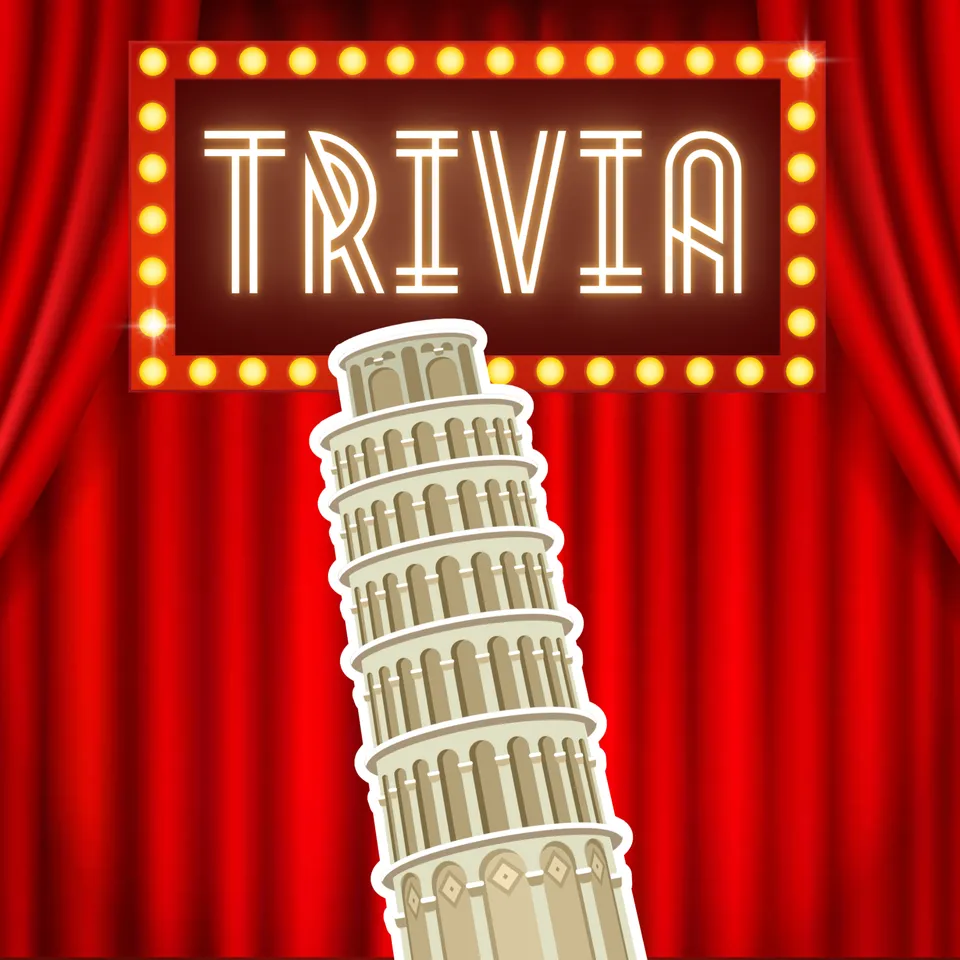
Where is this tower that can't stay upright? Grab a postcard and find out!
Where is this tower that can't stay upright? Grab a postcard and find out!
Check back each week for new questions, new facts to share, and new fun!
Part of
Standards alignment
Alaska
- SL.1.2 — Ask and answer questions about key details in a text read aloud or information presented orally or through other media.
- 5 — describe and demonstrate how places and regions serve as cultural symbols, such as the Statue of Liberty;
Arizona
- 1.SL.2 — Ask and answer questions about key details in a text read aloud or information presented orally or through other media.
- 2.SP3.1 — Identify facts and concepts associated with compelling and supporting questions.
Arkansas
- G.1.1.2 — Describe the physical and human characteristics of a place including roads, buildings, and borders using maps, globes, and photographs.
- H.1.K.4 — Recognize historic figures and other people who have made an impact on history.
California
- SL.1.2 — Ask and answer questions about key details in a text read aloud or information presented orally or through other media.
Connecticut
- GEO 2.3 — Use geographic representations to identify cultural and environmental characteristics of place.
- GEO 2.6 — Identify cultural and environmental characteristics of a place/region.
- INQ.K–2.3 — Identify facts and concepts associated with a supporting question.
Delaware
- SL.1.2 — Ask and answer questions about key details in a text read aloud or information presented orally or through other media.
Florida
- ELA.K.C.4.1 — Recall information to answer a question about a single topic.
Hawaii
- SS.1.3.17.1 — Investigate historically significant events, people, and observances in history
- SS.K-2.2.3 — Gather facts from teacher and/or adult-curated sources to answer questions
Idaho
- 1.RS.DR.2 — Read or listen to a series of texts organized around a variety of conceptually related topics to build knowledge about the world.
- 2.RS.DR.2 — Read or listen to a series of texts organized around a variety of conceptually related topics to build knowledge about the world. (These texts should be at a range of complexity levels so students can read the texts independently, with peers, or with modest support.)
- K.RS.DR.2 — Listen to a series of texts organized around a variety of conceptually related topics to build knowledge about the world.
Illinois
- SF-P1 — The shape and stability of structures of natural and designed objects are related to their function(s).
Iowa
- SL.1.2 — Ask and answer questions about the main topic and key details in a text read aloud or information presented orally or through other media.
Kansas
- RI.1.1 — Ask and answer questions about key details in a text.
Louisiana
- SL.1.2 — Ask and answer questions about key details in a text read aloud or information presented orally or through other media.
Maine
- SL.2.1.a — Ask and answer questions about key details in a text read aloud or information presented orally or through other media.
- SL.2.3.b — Ask and answer questions about information from a speaker, offering appropriate elaboration and detail.
Massachusetts
- PreK-PS2-2(MA) — Through experience, develop awareness of factors that influence whether things stand or fall.
Minnesota
- 0.3.2.3.1 — Identify the physical and human characteristics of places, including real and imagined places. For example: Physical characteristics—landforms (Rocky Mountains, Mount Everest), ecosystems (forest), bodies of water (Hudson Bay, Indian Ocean, Amazon River), soil, vegetation, weather and climate. Human characteristics—structures (Great Wall of China, Eiffel Tower), bridges (Golden Gate Bridge), canals (Erie Canal), cities, political boundaries, population distribution, settlement patterns, language, ethnicity, nationality, religious beliefs.
- 2.3.1.1.4 — Use maps, photos, or other geographic tools to answer basic questions about where people are located. For example: Where are we? What is this location like? What are the characteristics of this location? How has this place been affected by the movement of people, goods and ideas? How do people modify the environment to fit their needs? How do people organize locations into regions? How is this place similar to or different from other places?
Mississippi
- E.2.8.4 — With teacher support, gain an understanding that scientists are humans who use observations and experiments to learn about space. Obtain information from informational text or other media about scientists who have made important discoveries about objects in space (e.g., Galileo Galilei, Johannes Kepler, George Ellery Hale, Jill Tarter) or the development of technologies (e.g., various telescopes and detection devices, computer modeling, and space exploration).
Missouri
- 1.TS.7.E.a — Ask supporting questions and find answers about social studies’ topics, with assistance.
Montana
- SL.1.2 — Ask and answer questions about key details in a text read aloud or information presented orally or through other media.
- SS.G.1.1 — identify and describe human and physical local landmarks; and
Nebraska
- SS K.4.3.a — Recognize historical people from a variety of cultures.
Nevada
- SL.1.2 — Ask and answer questions about key details in a text read aloud or information presented orally or through other media.
New Hampshire
- SS.GE.2.1.3 — Identify major physical and human features in the United States and on Earth, e.g., cities, oceans, or continents. (Themes: C: People, Places and Environment, G: Science, Technology, and Society)
New Jersey
- SL.1.2 — Ask and answer questions about key details in a text read aloud or information presented orally or through other media.
North Carolina
- RI.2.1 — Ask and answer such questions as who, what, where, when, why, and how to demonstrate understanding of key details in a text.
- RI.2.7 — Explain how specific images contribute to and clarify a text.
Ohio
- 1.5 — Places are distinctive because of their physical characteristics (land forms and bodies of water) and human characteristics (structures built by people).
- SL.1.2 — Ask and answer questions about key details in a text read aloud or information presented in various media and other formats (e.g., orally).
Oregon
- 2.RI.1 — Ask and answer such questions as who, what, where, when, why, and how to demonstrate understanding of key details in a text.
Pennsylvania
- 8.3.3.A. — Identify contributions of individuals and groups to United States history.
- 8.4.3.B. — Identify historic sites and material artifacts important to world history.
- CC.1.5.K.B — Ask and answer questions about key details in a text read aloud or information presented orally or through other media.
South Carolina
- ELA.1.C.9.1 — Listen to others to ask and answer questions on a topic.
- K.G.2 — Utilize sources of geographic information (e.g., digital sources, maps, or photographs/images) to define and identify cultural and/or natural features.This indicator was developed to encourage inquiry into natural features, such as mountains, oceans, and rivers and cultural features, such as buildings, restaurants, roads, and stores.
South Dakota
- 1.SL.2 — Ask and answer questions about key details in a text read aloud, information presented orally, or through other media.
Tennessee
- 2.29 — Examine the significant contributions made by people of the U.S., including: • Neil Armstrong • Martin Luther King, Jr. • Wilma Rudolph • David Crockett • Rosa Parks • Sequoyah • Benjamin Franklin • Jackie Robinson • George Washington
Texas
- 2.1B — identify and explain the significance of various community, state, and national landmarks such as monuments and government buildings.
- 5.22A — identify the accomplishments of notable individuals in the fields of science and technology such as Benjamin Franklin, Eli Whitney, John Deere, Thomas Edison, Alexander Graham Bell, George Washington Carver, the Wright Brothers, and Neil Armstrong;
Utah
- 2.SL.2 — Speak clearly and audibly while asking and answering questions about a topic and key details.
- 2.W.4.a — Recall and gather information from provided sources to answer a question about the topic.
Virginia
- 2.10.b — The student will describe the contributions and roles of changemakers in United States history including, but not limited to Explorers and Adventurers: Meriwether Lewis, William Clark, Sacagawea, Neil Armstrong, and Amelia Earhart.
Washington
- G2.1.3 — Identify human events and human-made features.
- G2.2.1 — Identify some common and unique cultural and environmental characteristics of specific places.
Washington, D.C.
- SL.1.2 — Ask and answer questions about key details in a text read aloud or information presented orally or through other media.
West Virginia
- ELA.1.4 — Ask and answer questions about key details in an informational text.
Wisconsin
- ELA.1.SL.2 — Ask and answer questions about key details in a text read aloud or information presented orally or through other media.