Week 7 Trivia
Ages 5–9 · 4 minutes · Science, Geography
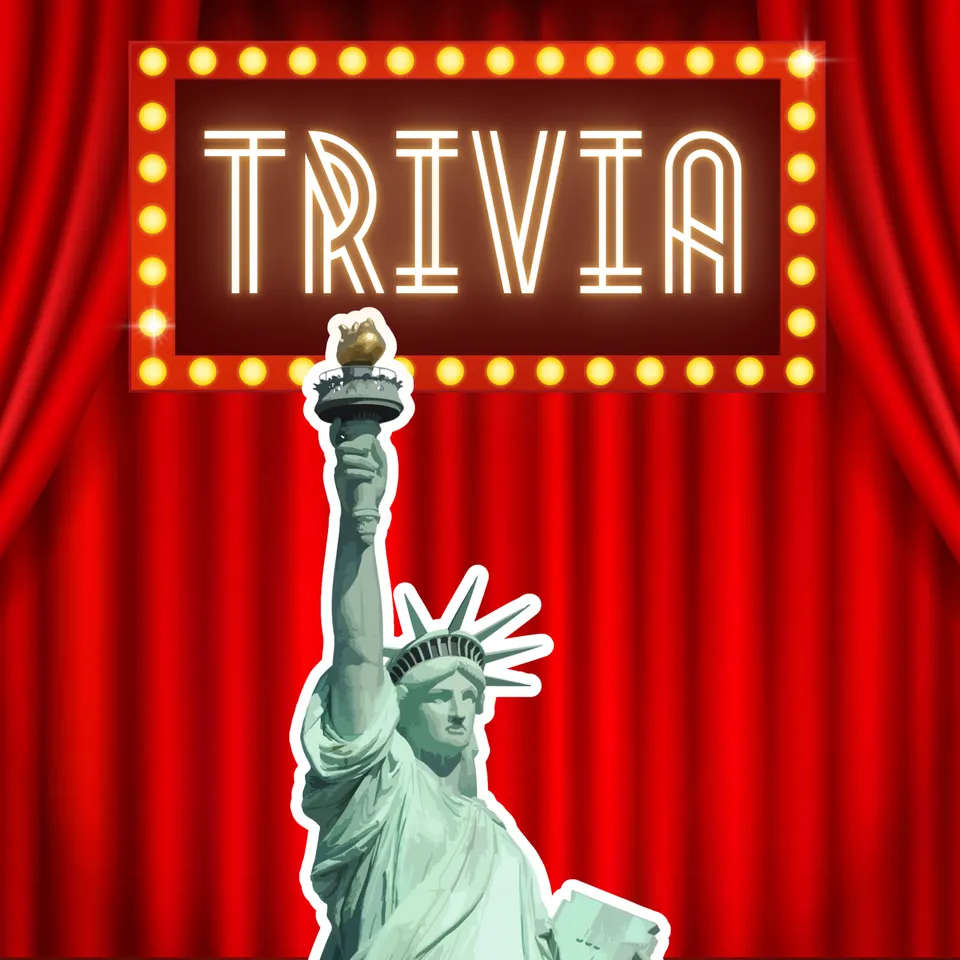
Which statue was a gift from France to the United States? What a monumental present!
Which statue was a gift from France to the United States? What a monumental present!
Check back each week for new questions, new facts to share, and new fun!
Part of
Standards alignment
Common Core State Standards
- D2.Geo.6.K-2 — Individually and with others, students… Identify some cultural and environmental characteristics of specific places.
- SL.1.2 — Ask and answer questions about key details in a text read aloud or information presented orally or through other media.
- L.1.5.b — Define words by category and by one or more key attributes (e.g., a duck is a bird that swims; a tiger is a large cat with stripes).
Alabama
- SS10.2.2.4 — Describing the history of American symbols and monuments
- SS10.K.11 — Identify symbols, customs, famous individuals, and celebrations representative of our state and nation. (Alabama)
Alaska
- 5 — describe and demonstrate how places and regions serve as cultural symbols, such as the Statue of Liberty;
- SL.1.2 — Ask and answer questions about key details in a text read aloud or information presented orally or through other media.
- L.1.5.b — Define words by category and by one or more key attributes (e.g., a duck is a bird that swims; a tiger is a large cat with stripes).
Arizona
- K.H4.1 — Explain and explore origins of key American symbols, traditions and holidays. • Key American symbols include but are not limited to American flag, bald eagle, Statue of Liberty, and Mount Rushmore. • Key traditions include but are not limited to the Pledge of Allegiance and National Anthem. • Key holidays include but are not limited to Columbus Day, Thanksgiving, Presidents Day, Martin Luther King Jr. Day, Fourth of July, and Constitution Day.
- 1.H4.1 — Explain and explore origins of key American symbols, documents, landmarks, holidays, and leaders as well as their importance from the past to the present in our country. • Symbols include but are not limited to American flag, bald eagle, Statue of Liberty, White House, Washington Monument, Mount Rushmore, Liberty Bell, United States Capitol, and Arizona state symbols • Holidays include but are not limited to Columbus Day, Thanksgiving, Veterans Day, Memorial Day, Labor Day, Presidents Day, Martin Luther King Jr. Day, Independence Day, Constitution Day, and Arizona Statehood Day • Leaders include but are not limited to local and/or Tribal leaders, state leaders, and national leaders
- 1.L.5.b — Define words by category and by one or more key attributes (e.g., a duck is a bird that swims; a tiger is a large cat with stripes).
Arkansas
- 3.RC.4.RF — Build general and academic vocabulary and background knowledge of age and grade-appropriate topics through discussion, reading, and writing.
- H.1.2.5 — Explain state and national historical symbols and landmarks and the people and events associated with them.
California
- 1.3.3 — Identify American symbols, landmarks, and essential documents, such as the flag, bald eagle, Statue of Liberty, U.S. Constitution, and Declaration of Independence, and know the people and events associated with them.
- L.1.5.b — Define words by category and by one or more key attributes (e.g., a duck is a bird that swims; a tiger is a large cat with stripes).
Colorado
- RWC20-GR.1-S.2-GLE.3-EO.f.ii — Define words by category and by one or more key attributes (for example: a duck is a bird that swims; a tiger is a large cat with stripes).
- SS.1.4.2 — Identify and explain how the significance of notable people, places, holidays, and civic symbols reflect the origins and values of the government and its citizens.
- RWC20-GR.1-S.2-GLE.3-EO.f.iii — Identify real-life connections between words and their use (for example: note places at home that are cozy).
Connecticut
- GEO.K.2 — Use maps, graphs, photographs and other representations to describe places and the relationships and interactions that shape them.
- There are many different kinds of living things in any area, and they exist in different places on land and in water.
- GEO 2.6 — Identify cultural and environmental characteristics of a place/region.
- L.1.5.b — Define words by category and by one or more key attributes (e.g., a duck is a bird that swims; a tiger is a large cat with stripes).
Delaware
- L.1.5.b — Define words by category and by one or more key attributes (e.g., a duck is a bird that swims; a tiger is a large cat with stripes).
- SL.1.2 — Ask and answer questions about key details in a text read aloud or information presented orally or through other media.
- K-3a — Students will use the concepts of place and region to explain simple patterns of connections between and among places across the country and the world. Grade 3
- L.1.5.c — Identify real-life connections between words and their use (e.g., note places at home that are cozy).
Florida
- SC.3.L.17.1 — Describe how animals and plants respond to changing seasons.
- SS.1.CG.2.4 — Recognize symbols and individuals that represent the United States.
- SS.3.G.2.5 — Identify natural and man-made landmarks in the United States, Canada, Mexico, and the Caribbean.
- SS.2.A.2.6 — Discuss the importance of Ellis Island and the Statue of Liberty to immigration from 1892 - 1954.
Georgia
- SSKH2.e — The Statue of Liberty
- S3L1.b — Construct an explanation of how external features and adaptations (camouflage, hibernation, migration, mimicry) of animals allow them to survive in their habitat.
Hawaii
- 1.L.5b — Define words by category and by one or more key attributes (e.g., a duck is a bird that swims; a tiger is a large cat with stripes).
- 1.SL.2 — Ask and answer questions about key details in a text read aloud or information presented orally or through other media.
- SS.K-2.2.3 — Gather facts from teacher and/or adult-curated sources to answer questions
Idaho
- K.SS.4.2.1 — Identify symbols of the United States such as the flag, Pledge of Allegiance, Bald Eagle, red, white, and blue, Statue of Liberty, and the President.
- 1.SS.4.2.1 — Identify the significance of symbols in the United States.
- 1.RC.V.2 — Regularly engage in reading and listening to a series of texts related to the topics and themes being studied to build knowledge and vocabulary.
- 1.RS.DR.2 — Read or listen to a series of texts organized around a variety of conceptually related topics to build knowledge about the world.
Illinois
- L.1.5.b — Define words by category and by one or more key attributes (e.g., a duck is a bird that swims; a tiger is a large cat with stripes).
- SL.1.2 — Ask and answer questions about key details in a text read aloud or information presented orally or through other media.
- LS4.D-P1 — There are many different kinds of living things in any area, and they exist in different places on land and in water.
Indiana
- 1.H.2 — Identify American songs and symbols, and discuss their origins.
Iowa
- L.1.5.b — Define words by category and by one or more key attributes (e.g., a duck is a bird that swims; a tiger is a large cat with stripes).
Kentucky
- L.1.5.b — Define words by category and by one or more key attributes (e.g., a duck is a bird that swims; a tiger is a large cat with stripes).
- L.1.4.d — Use words and phrases acquired through conversations, reading and being read to, and responding to texts, including using frequently occurring conjunctions to signal simple relationships.
- L.1.5.a — Sort words into categories to classify relationships and to gain a sense of the concepts the categories represent.
Louisiana
- 2.7 — Identify and describe national historical figures, celebrations, symbols, and places. a. Identify and describe the Founding Fathers, including George Washington, Thomas Jefferson, Benjamin Franklin, Patrick Henry, John Adams, John Hancock, and James Madison. b. Identify and describe historical female figures, including Abigail Adams, Anne Hutchinson, Dolley Madison, Betsy Ross, and Phillis Wheatley. c. Describe the significance of state and nationally designated holidays, including New Year’s Day, the birthday of Martin Luther King, Jr., Inauguration Day, Washington’s Birthday, Mardi Gras, Memorial Day, Juneteenth, Independence Day, Labor Day, Columbus Day, Veterans Day, Thanksgiving Day, and Christmas Day. d. Describe the history of American symbols, including the Liberty Bell, United States flag (etiquette, customs pertaining to the display and use of the flag), bald eagle, national anthem, Uncle Sam, Statue of Liberty, The Pledge of Allegiance, and the national motto “In God We Trust.” e. Identify and describe man-made American monuments and landmarks including the Gateway Arch, the Golden Gate Bridge, Jefferson Memorial, Dr. Martin Luther King Jr. Memorial in Washington D.C, Lincoln Memorial, Mount Rushmore, Pearl Harbor Museum, September 11 Memorial and Museum, Statue of Liberty, the Tomb of the Unknown Soldier, U.S. Capitol, Washington Monument, and the White House. f. Identify and describe natural American landmarks, including the Grand Canyon, Mississippi River, Monument Valley, Niagara Falls, Rocky Mountains, Smoky Mountains, and Yellowstone National Park.
- L.1.5.b — Define words by category and by one or more key attributes (e.g., a duck is a bird that swims; a tiger is a large cat with stripes).
Maine
- SL.2.1.a — Ask and answer questions about key details in a text read aloud or information presented orally or through other media.
- L.5.1.b — Define words by category and by one or more key attributes (e.g., a duck is a bird that swims; a tiger is a large cat with stripes).
- R.7.1.b — Ask and answer questions to help determine or clarify the meaning of words and phrases in a text.
- L.5.1.c — Identify real-life connections between words and their use (e.g., note places at home that are cozy).
Maryland
- L.1.5.b — Define words by category and by one or more key attributes (e.g., a duck is a bird that swims; a tiger is a large cat with stripes).
Massachusetts
- 1.T3.2 — Demonstrate understanding of the ways people show pride in belonging to the United States by recognizing and explaining the meaning of unifying symbols, phrases, and songs: a. national symbols (e.g., the United States flag, the bald eagle, the White House, and the Statue of Liberty) b. words, mottoes, phrases, and sentences associated with the United States (e.g., “U.S.” or “America” standing for United States of America, the Latin motto, “E pluribus unum,” on coins, currency, and the seal of the United States, translated as “Out of Many, One,” and the” Pledge of Allegiance”) c. the melodies and lyrics of patriotic songs (e.g., “America the Beautiful,” “My Country, ‘Tis of Thee,” “God Bless America,” and “The Star-Spangled Banner”)
- L.1.5.b — Define words by category and by one or more key attributes (e.g., a duck is a bird that swims; a tiger is a large cat with stripes).
Michigan
- 1–C2.0.2 — Identify important symbols of the United States of America and what they represent.
- L.1.5.b — Define words by category and by one or more key attributes (e.g., a duck is a bird that swims; a tiger is a large cat with stripes).
Minnesota
- 0.1.2.2.1 — Describe symbols, songs and traditions that identify our nation and state. For example: American Flag, bald eagle, White House, Statue of Liberty, Pledge of Allegiance, Minnesota state flag.
- 0.3.2.3.1 — Identify the physical and human characteristics of places, including real and imagined places. For example: Physical characteristics—landforms (Rocky Mountains, Mount Everest), ecosystems (forest), bodies of water (Hudson Bay, Indian Ocean, Amazon River), soil, vegetation, weather and climate. Human characteristics—structures (Great Wall of China, Eiffel Tower), bridges (Golden Gate Bridge), canals (Erie Canal), cities, political boundaries, population distribution, settlement patterns, language, ethnicity, nationality, religious beliefs.
- 1.1.8.2 — Ask and answer questions to help determine or clarify the meaning of unfamiliar vocabulary and phrases in informational text.
- 2.3.1.1.3 — Use maps, photos or other geographic tools to identify and locate major landmarks or major physical features of the United States. For example: Physical features—the Atlantic Coast, Rocky Mountains, Mississippi River, Lake Superior. Landmarks—Statue of Liberty, Angel Island, Gateway Arch in St. Louis, Mount Rushmore, Crazy Horse Memorial.
Mississippi
- K.H.1.2 — Identify school, community, state, and national symbols.
- L.3.1.3 — Obtain and communicate examples of physical features or behaviors of vertebrates and invertebrates and how these characteristics help them survive in particular environments, (e.g., animals hibernate, migrate, or estivate to stay alive when food is scarce or temperatures are not favorable).
Missouri
- 1.PC.1.F.a — Recognize and explain the significance of the Statue of Liberty, U.S. Capitol, Bald Eagle and the Liberty Bell.
- 1.R.1.B.i — using words and phrases acquired through conversations, reading and being read to, and responding to texts
- 2.PC.1.F.b — Recognize and explain the significance of national symbols including national landmarks, national parks, and important memorials.
Montana
- SL.1.2 — Ask and answer questions about key details in a text read aloud or information presented orally or through other media.
- SS.CG.3.3 — identify key symbols of nations.
- 2-LS4-1 — make observations of plants and animals to compare and contrast the diversity of life in different habitats.
- L.1.5.b — Define words by category and by one or more key attributes (e.g., a duck is a bird that swims; a tiger is a large cat with stripes).
Nebraska
- SS K.4.3.b — Identify symbols of the United States.
- SS K.4.3 — Identify historical people, events, and symbols.
Nevada
- SS.2.21 — Identify major national landmarks associated with historical events.
- L.1.5.b — Define words by category and by one or more key attributes (e.g., a duck is a bird that swims; a tiger is a large cat with stripes).
New Hampshire
- SS.HI.2.1.1 — Identify national and New Hampshire celebrations, monuments, symbols and documents, e.g., flags, Fourth of July, Lincoln Memorial, Constitution. (Themes: A: Conflict and Cooperation, B: Civic Ideals, Practices, and Engagement, E: Cultural Development, Interaction, and Change)
- SS.GE.2.1.3 — Identify major physical and human features in the United States and on Earth, e.g., cities, oceans, or continents. (Themes: C: People, Places and Environment, G: Science, Technology, and Society)
- SS.HI.4.1.3 — Describe the significance of national and New Hampshire celebrations, monuments, symbols and documents, e.g., Veteran's Day, the Statue of Liberty, Old Man of the Mountain, and the preamble to the New Hampshire Constitution. (Themes: B: Civic Ideals, Practices, and Engagement, C: People, Places and Environment)
- SS.GE.2.3.2 — Explore the components and distribution of ecosystems, e.g., desert or rain forest. (Themes: C: People, Places and Environment)
New Jersey
- 6.1.2.CivicsDP.3 — Explain how historical symbols, monuments and holidays reflect the shared values, principles, and beliefs of the American identity.
- L.1.5.b — Define words by category and by one or more key attributes (e.g., a duck is a bird that swims; a tiger is a large cat with stripes).
New Mexico
- K.10 — Identify the local, state, and national symbols (e.g., flag, bird, song).
- L.1.5.b — Define words by category and by one or more key attributes (e.g., a duck is a bird that swims; a tiger is a large cat with stripes).
New York
- 2.3d — Symbols of American democracy serve to unite community members.
- 1L5b — Define words by category and by one or more key attributes (e.g., a duck is a bird that swims; a tiger is a large cat with stripes).
- K.3b — The study of American symbols, holidays, and celebrations helps to develop a shared sense of history, community, and culture.
- KL5 — Explore and discuss word relationships and word meanings.
North Carolina
- RI.1.4 — Ask and answer questions to help determine or clarify the meaning of words and phrases in a text.
- RI.2.4 — Determine the meaning of words and phrases in a text relevant to a grade 2 topic or subject area.
Ohio
- SL.1.2 — Ask and answer questions about key details in a text read aloud or information presented in various media and other formats (e.g., orally).
- L.1.5.b — Define words by category and by one or more key attributes (e.g., a duck is a bird that swims; a tiger is a large cat with stripes).
- SL.2.3 — Ask and answer questions about what a speaker says in order to clarify comprehension, gather additional information, or deepen understanding of a topic or issue.
- K.4 — Symbols and practices of the United States include the flag, Pledge of Allegiance and the National Anthem. Other nations are represented by symbols and practices too.
Oklahoma
- K.1.5 — Identify other important United States symbols including the Statue of Liberty located in New York Harbor.
Oregon
- 1.RI.4 — Ask and answer questions to help determine or clarify the meaning of words and phrases in a text.
Pennsylvania
- 8.3.3.B. — Identify and describe primary documents, material artifacts and historic sites important in United States history.
- 8.4.3.B. — Identify historic sites and material artifacts important to world history.
- 7.1.3.B — Identify and locate places and regions.
- CC.1.5.3.C — Ask and answer questions about information from a speaker, offering appropriate detail.
Rhode Island
- L.1.5.b — Define words by category and by one or more key attributes (e.g., a duck is a bird that swims; a tiger is a large cat with stripes).
- SS3.2.4 — The Northeastern region today Argue how the geography and environment of the Northeastern region contributed to its social, cultural, and economic development
South Carolina
- 2.H.1 — Identify and compare significant historical events, moments, and symbols in U.S. history. This indicator was developed to encourage inquiry into historical events, including figures, symbols, and observances, that have been important to the U.S. over time as well as how they impact us.
- ELA.1.AOR.8.1 — Determine the effectiveness of an author’s use of words and phrases in literary, informational, and multimedia texts: a. ask and answer questions about words and phrases to determine their meaning; b. sort words and phrases into categories (e.g., apple, fruit and carrot, vegetable) to develop an understanding of word relationships; and c. define words by their category and simple attributes (e.g., an owl is a bird that flies).
- ELA.1.C.9.1 — Listen to others to ask and answer questions on a topic.
South Dakota
- 1.C.1.1 — Identify primary symbols of the United States
- 1.SL.2 — Ask and answer questions about key details in a text read aloud, information presented orally, or through other media.
- 2.C.1.1 — Explain, in written form, through speech, or through the use of technology, the meaning behind our national symbols
Tennessee
- 2.20 — Identify and examine the significance of well-known national symbols and landmarks, including: Mt. Rushmore, the White House, the Statue of Liberty, and the bald eagle.
Texas
- 1.13A — explain state and national patriotic symbols, including the United States and Texas flags, the Liberty Bell, the Statue of Liberty, and the Alamo;
- 2.1B — identify and explain the significance of various community, state, and national landmarks such as monuments and government buildings.
- 2.9B — identify factors in the environment, including temperature and precipitation, that affect growth and behavior such as migration, hibernation, and dormancy of living things; and
Utah
- 1.2.3.d — Identify national symbols, documents, and landmarks (e.g., Declaration of Independence, U.S. Constitution, Liberty Bell, Washington Monument).
- K.2.3.b — Recognize state and national symbols (e.g., state and national flags, bald eagle, seagull, Statue of Liberty).
- 2.2.3.c — Identify and explain the significance of various national symbols, documents, and landmarks (e.g., Declaration of Independence, Constitution, flag, Pledge of Allegiance, national monuments, national capitol building).
- 2.SL.2 — Speak clearly and audibly while asking and answering questions about a topic and key details.
Vermont
- D2.Geo.6.K-2 — Individually and with others, students… Identify some cultural and environmental characteristics of specific places.
- SL.1.2 — Ask and answer questions about key details in a text read aloud or information presented orally or through other media.
- L.1.5.b — Define words by category and by one or more key attributes (e.g., a duck is a bird that swims; a tiger is a large cat with stripes).
- L.1.5.c — Identify real-life connections between words and their use (e.g., note places at home that are cozy).
Virginia
- 2.4.b — The student will apply history and social science skills to recognize state and national symbols including, but not limited to explaining the meaning behind symbols including, but not limited to the American flag, bald eagle, Washington Monument, Liberty Bell, and Statue of Liberty.
- 2.7.a — Weather and seasonal changes affect the growth and behavior of living things.
- 2.RV.1.A — Discuss meanings of new words or phrases acquired through conversations and literature.
- 1.RV.1.A — Discuss meanings of words in context from a variety of texts.
Washington
- G2.2.1 — Identify some common and unique cultural and environmental characteristics of specific places.
- L.1.5.b — Define words by category and by one or more key attributes (e.g., a duck is a bird that swims; a tiger is a large cat with stripes).
- L.1.5.c — Identify real-life connections between words and their use (e.g., note places at home that are cozy).
- SL.1.2 — Ask and answer questions about key details in a text read aloud or information presented orally or through other media.
Washington, D.C.
- L.1.5.b — Define words by category and by one or more key attributes (e.g., a duck is a bird that swims; a tiger is a large cat with stripes).
West Virginia
- SS.1.3 — Investigate the symbols, icons and traditions ofthe United States that provide a sense of community across time (e.g., Labor Day, Veterans Day, Memorial Day, Pledge of Allegiance, patriotic songs, landmarks, art and literature that demonstrate community traditions, etc.).
- Building and appropriately using science domain vocabulary and phrases
Wisconsin
- ELA.1.SL.2 — Ask and answer questions about key details in a text read aloud or information presented orally or through other media.
- SS.PS1.a.K-1 — Describe symbols, songs, and traditions that identify our state and country. Assess the importance of rules and laws at home, in school, and in the community.
- There are many different kinds of living things in any area, and they exist in different places on land and in water.
- ELA.K.L.3.a — Ask and answer questions about unknown words.
Wyoming
- SS2.1.2 — Identify the symbols and traditional practices, including those of Indigenous Tribes of Wyoming (e.g. Arapaho and Shoshone flags, songs, and pledges), that honor patriotism in the United States.
- A range of different organisms lives in different places.
- L.1.5.b — Define words by category and by one or more key attributes (e.g., a duck is a bird that swims; a tiger is a large cat with stripes).