Silver Blaze (Or The Dog Who Didn't Bark!)
Ages 5–8 · 16 minutes · English, Stories
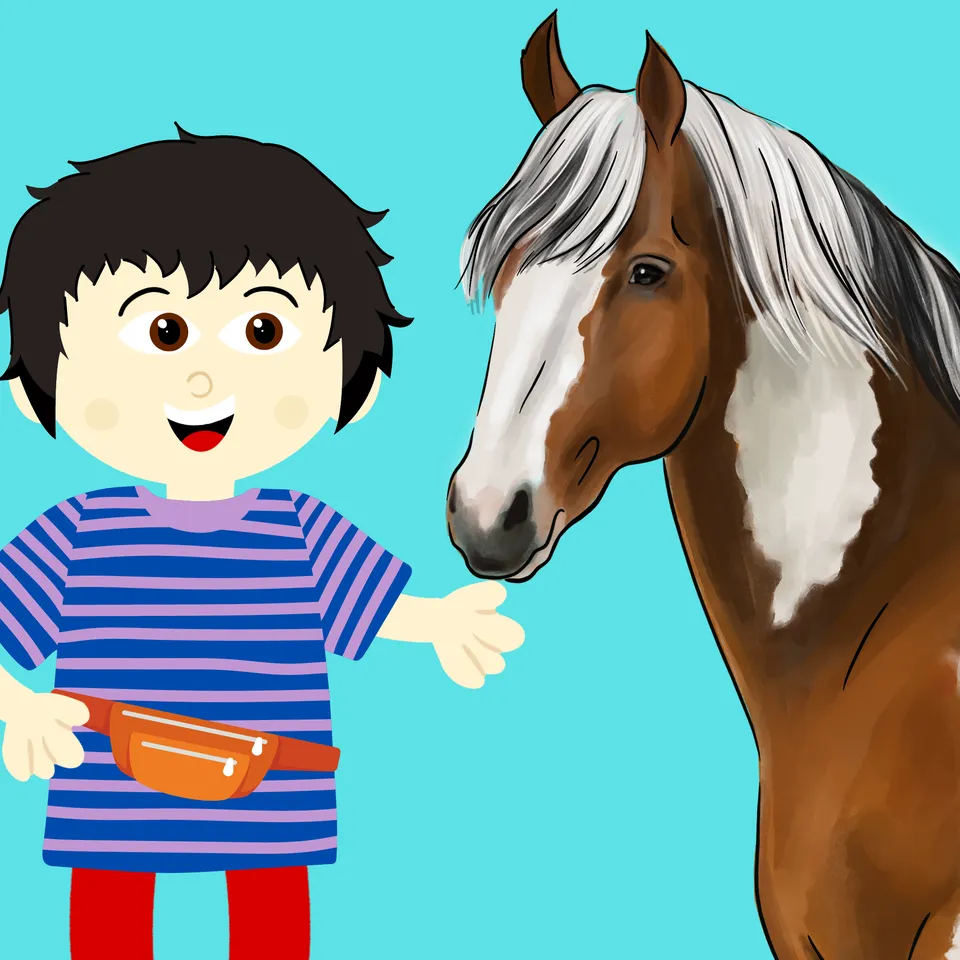
Giddy up! This mystery is a real barn burner! Champion racehorse Silver Blaze is missing, and Sherlock needs your help to crack the case!
Giddy up! This mystery is a real barn burner! Champion racehorse Silver Blaze is missing, and Sherlock needs your help to crack the case! No horsin' around!
Part of
Standards alignment
Common Core State Standards
- SL.1.2 — Ask and answer questions about key details in a text read aloud or information presented orally or through other media.
- D4.1.K-2 — Individually and with others, students use writing, visualizing, and speaking to… Construct an argument with reasons.
- RL.1.1 — Ask and answer questions about key details in a text.
- RL.1.3 — Describe characters, settings, and major events in a story, using key details.
- Asking questions, making observations, and gathering information are helpful in thinking about problems.
Alabama
- ELA21.2.30a — State and confirm predictions about a text.
- ELA21.2.30c — Draw conclusions based on the text.
- ELA21.1.27 — Make predictions using information found within a literary text.
- ELA21.1.23a — Describe the characters and settings, using illustrations and textual evidence from a story.
Alaska
- RL.1.1 — Ask and answer questions about a literary text using key details from the text.
- SL.1.2 — Ask and answer questions about key details in a text read aloud or information presented orally or through other media.
- RL.1.3 — Describe characters, settings, major events, and problem-solution in a story, play, or poem, using key details.
- RL.1.7 — Use illustrations and details in a story read or read aloud to describe its characters, events, setting, or problem-solution.
- Distinguish between explanations that account for all gathered evidence and those that do not.
Arizona
- 1.RL.1 — Ask and answer questions such as who, what, where, why, when, and how about key details in a text.
- 1.RL.3 — Describe characters, settings, and major events in a story, using key details.
- 1.SL.2 — Ask and answer questions about key details in a text read aloud or information presented orally or through other media.
- 2.SP4.2 — Select which reasons might be more likely than others to explain an event or development.
Arkansas
- 1.RC.2.RF — Answer questions about key details in a text.
- 1.RC.5.RF — Use background knowledge and details, including illustrations, charts, and graphs, to make predictions and inferences about what happens in a text.
- 1.RC.10.RL — Explain how visual images support a text by clarifying story elements (settings, characters, and events).
- 1.RC.6.RF — Demonstrate comprehension of age and grade-appropriate texts by speaking or writing.
- 1.RC.3.RF — Retell (orally or in writing) a text read aloud, including main idea and key details to demonstrate understanding of the central message or topic.
California
- Asking questions, making observations, and gathering information are helpful in thinking about problems.
- RL.1.1 — Ask and answer questions about key details in a text.
- RL.1.10.b — Confirm predictions about what will happen next in a text.
- Distinguish between explanations that account for all gathered evidence and those that do not.
Colorado
- RWC20-GR.1-S.2-GLE.1-EO.a.iv — Make predictions about what will happen in the text and explain whether they were confirmed or not and why, providing evidence from the text.
- RWC20-GR.2-S.2-GLE.1-EO.a.iv — Describe how characters in a story respond to major events and challenges.
Connecticut
- Distinguish between explanations that account for all gathered evidence and those that do not.
- Asking questions, making observations, and gathering information are helpful in thinking about problems.
- RL.1.1 — Ask and answer questions about key details in a text.
- INQ.K–2.11 — Construct explanations using correct sequence and relevant information.
Delaware
- RL.1.1 — Ask and answer questions about key details in a text.
- Asking questions, making observations, and gathering information are helpful in thinking about problems.
- Distinguish between explanations that account for all gathered evidence and those that do not.
- RL.1.3 — Describe characters, settings, and major events in a story, using key details.
Florida
- ELA.1.R.1.1 — Identify and describe the main story elements in a story.
- ELA.1.R.3.2 — Retell a text in oral or written form to enhance comprehension. • Use main story elements at the beginning, middle, and end for a literary text. • Use topic and important details for an informational text.
- SC.K2.CS-CS.2.2 (Discontinued after 2024-2025) — Solve age-appropriate problems (e.g., puzzles and logical thinking programs) with or without technology (i.e., computational thinking).
Hawaii
- Distinguish between explanations that account for all gathered evidence and those that do not.
- Asking questions, making observations, and gathering information are helpful in thinking about problems.
- Ask and/or identify questions that can be answered by an investigation.
- SS.3-5.3.2 — Identify specific evidence that supports the claims
Idaho
- 1.ODC.OC.2 — Ask and answer questions about key details in a text read aloud or information presented orally or through other media.
- 1.RC.TE.3 — Ask and answer questions about key details in texts heard or read.
- 3.RC.TE.3 — Ask and answer questions to demonstrate understanding of grade-level texts, referring explicitly to textual evidence as the basis for the answers.
- Engaging in Argument from Evidence
- 1.RC.L.5b — Describe the connection between characters, settings, and major events in stories heard, using key details.
Illinois
- RL.1.1 — Ask and answer questions about key details in a text.
- RL.1.3 — Describe characters, settings, and major events in a story, using key details.
- SS.K-2.IS.7 — Using various viewpoints, students will engage in reflective conversations to draw conclusions on inquiry findings and create action steps.
- ARG-P2 — Distinguish between explanations that account for all gathered evidence and those that do not.
Indiana
- 1.RC.4 — Make and confirm predictions about what will happen next in a story.
- 1.RC.1 — Ask and answer questions about the main idea and key details to clarify and confirm understanding of a text. (E)
- 2.RC.3 — Describe how characters in a story respond to major events and how characters affect the plot.
Iowa
- RL.2.1 — Ask and answer such questions as who, what, where, when, why, and how to demonstrate understanding of key details using evidence from the text.
- Distinguish between explanations that account for all gathered evidence and those that do not.
- SS.2.4 — Construct responses to compelling questions using reasoning, examples, and relevant details
Kansas
- RL.1.1 — Ask and answer questions about key details in a text.
- RL.1.3 — Describe characters, settings, and major events in a story, using key details.
- Distinguish between explanations that account for all gathered evidence and those that do not.
- RL.2.3 — Describe how characters in a story respond to major events and challenges.
Kentucky
- Asking questions, making observations, and gathering information are helpful in thinking about problems.
- RL.1.7 — Use a story’s illustrations and details to describe its characters, setting and events.
- Distinguish between explanations that account for all gathered evidence and those that do not.
Louisiana
- SL.1.2 — Ask and answer questions about key details in a text read aloud or information presented orally or through other media.
- CCRA.R.1 — Read closely to determine what the text says explicitly and to make logical inferences from it; cite specific textual evidence when writing or speaking to support conclusions drawn from the text.
- RL.1.3 — Describe characters, settings, and major events in a story, using key details.
- RL.2.1 — Ask and answer such questions as who, what, where, when, why, and how to demonstrate understanding of key details in a text.
Maine
- SL.2.1.a — Ask and answer questions about key details in a text read aloud or information presented orally or through other media.
- Distinguish between explanations that account for all gathered evidence and those that do not.
- R.4.2.a — Ask and answer questions about who, what, when, where, how and why.
- R.6.1.a — Describe characters, settings, and major events in a story, including details about who, what, when, where, and how.
Maryland
- RL.1.1 — Ask and answer questions about key details in a text.
- RL.1.3 — Describe characters, settings, and major events in a story, using key details.
Massachusetts
- RL.1.1 — Ask and answer questions about key details in a text.
- RL.K.1 — With prompting and support, ask and answer questions about key details in a text.
- CCR.R.8 — Delineate and evaluate the argument and specific claims in a text, including the validity of the reasoning as well as the relevance and sufficiency of the evidence.
Michigan
- Individually and collaboratively, students use evidence to develop claims in response to compelling questions.
- P3.3 — Construct an argument and justify a decision supported with evidence.
- P2.4 — Know how to find relevant evidence from a variety of sources.
Minnesota
- 2.1.4.1 — Ask and answer questions including who, what, where, when, why and how to demonstrate understanding of key details in a text; recount the
- 1.1.4.1 — Ask and answer questions including who, what and where to demonstrate understanding of key details in a text; retell key details.
- 2.1.4.3 — Identify characters, setting, conflict, resolution and events in literary text.
Mississippi
- RL.2.1 — Ask and answer such questions as who, what, where, when, why, and how to demonstrate understanding of key details in a text.
- SL.1.2 — Ask and answer questions about key details in a text read aloud or information presented orally or through other media.
- CCRA.R.1 — Read closely to determine what the text says explicitly and to make logical inferences from it; cite specific textual evidence when writing or speaking to support conclusions drawn from the text.
- SL.2.2 — Recount or describe key ideas or details from a text read aloud or information presented orally or through other media.
- SL.2.1 — Participate in collaborative conversations with diverse partners about grade 2 topics and texts with peers and adults in small and larger groups.
Missouri
- 1.R.2.B — Read, infer, and draw conclusions to:
- 2.R.2.B — Read, infer, and draw conclusions to:
- Asking questions, making observations, and gathering information are helpful in thinking about problems.
- Distinguish between explanations that account for all gathered evidence and those that do not.
- 2.R.2.A.a — describe the setting, problems, solutions, sequence of events (plot), and big idea or moral lesson
Montana
- RL.2.1 — Ask and answer such questions as who, what, where, when, why, and how to demonstrate understanding of key details in a text.
- SL.1.2 — Ask and answer questions about key details in a text read aloud or information presented orally or through other media.
- CCRA.R.1 — Read closely to determine what the text says explicitly and to make logical inferences from it; cite specific textual evidence when writing or speaking to support conclusions drawn from the text.
- SL.2.2 — Recount or describe key ideas or details from a text read aloud or information presented orally or through other media.
Nebraska
- LA.1.RP.6 — Ask and answer questions about key details in a literary text.
- Asking questions, making observations, and gathering information are helpful in thinking about problems.
- Distinguish between explanations that account for all gathered evidence and those that do not.
- Ask and/or identify questions that can be answered by an investigation.
Nevada
- RL.1.1 — Ask and answer questions about key details in a text.
- Distinguish between explanations that account for all gathered evidence and those that do not.
- Asking questions, making observations, and gathering information are helpful in thinking about problems.
- RL.1.3 — Describe characters, settings, and major events in a story, using key details.
- SS.1.6 — With prompting and support, participate in a structured academic discussion using evidence and reasoning.
New Hampshire
- SL.1.2 — Ask and answer questions about key details in a text read aloud or information presented orally or through other media.
- Asking questions, making observations, and gathering information are helpful in thinking about problems.
- RL.1.1 — Ask and answer questions about key details in a text.
- Distinguish between explanations that account for all gathered evidence and those that do not.
New Jersey
- SL.1.2 — Ask and answer questions about key details in a text read aloud or information presented orally or through other media.
- Asking questions, making observations, and gathering information are helpful in thinking about problems.
- RL.1.1 — Ask and answer questions about key details in a text.
- Distinguish between explanations that account for all gathered evidence and those that do not.
New Mexico
- RL.1.1 — Ask and answer questions about key details in a text.
- Distinguish between explanations that account for all gathered evidence and those that do not.
- Asking questions, making observations, and gathering information are helpful in thinking about problems.
- RL.1.3 — Describe characters, settings, and major events in a story, using key details.
New York
- Asking questions, making observations, and gathering information are helpful in thinking about problems.
- Distinguish between explanations that account for all gathered evidence and those that do not.
- Analyze why some evidence is relevant to a scientific question and some is not.
North Carolina
- RL.1.1 — Ask and answer questions about key details in a text.
- SL.1.2 — Ask and answer questions about key details in a text read aloud or information presented orally or through other media.
- RL.1.3 — Describe characters, settings, and major events in a story, using key details.
- RL.2.1 — Ask and answer such questions as who, what, where, when, why, and how to demonstrate understanding of key details in a text.
- RL.2.3 — Describe how characters in a story respond to major events and challenges.
North Dakota
- Asking questions, making observations, and gathering information are helpful in thinking about problems.
- 2.R.8a — Describe characters' feelings or traits during or after listening to a story.
- 1.R.8a — Identify characters' feelings or traits in a story, poem,or nursery rhyme during or after a shared reading or other text-listening experience.
Ohio
- RL.1.1 — Ask and answer questions about key details in a text.
- SL.1.2 — Ask and answer questions about key details in a text read aloud or information presented in various media and other formats (e.g., orally).
- CCRA.R.1 — Read closely to determine what the text says explicitly and to make logical inferences from it; cite specific textual evidence when writing or speaking to support conclusions drawn from the text.
- SL.1.1 — Participate in collaborative conversations about grade 1 topics and texts with diverse partners in small and larger groups.
- RL.1.3 — Describe characters, settings, and major events in a story, using key details.
Oklahoma
- 1.3.R.5 — Students will begin to use details from a text to draw conclusions and make predictions.
- Distinguish between explanations that account for all gathered evidence and those that do not.
- Asking questions, making observations, and gathering information are helpful in thinking about problems.
Oregon
- 1.RL.1 — Ask and answer questions about key details in a text.
- 1.SL.2 — Ask and answer questions about key details in a text read aloud or information presented orally or through other media.
- 1.RL.3 — Describe characters, settings, and major events in a story, using key details.
- 2.RL.1 — Ask and answer such questions as who, what, where, when, why, and how to demonstrate understanding of key details in a text.
- 2.RL.3 — Describe how characters in a story respond to major events and challenges, including identifying the characters' feelings, the plot or problem, and how it is resolved.
Pennsylvania
- CC.1.5.K.B — Ask and answer questions about key details in a text read aloud or information presented orally or through other media.
- CC.1.3.1.B — Ask and answer questions about key details in a text.
- CC.1.3.1.C — Describe characters, settings, and major events in a story, using key details.
- Asking questions, making observations, and gathering information are helpful in thinking about problems.
Rhode Island
- Distinguish between explanations that account for all gathered evidence and those that do not.
- Asking questions, making observations, and gathering information are helpful in thinking about problems.
- RL.1.1 — Ask and answer questions about key details in a text.
- RL.K.1 — With prompting and support, ask and answer questions about key details in a text.
- RL.1.3 — Describe characters, settings, and major events in a story, using key details.
South Carolina
- ELA.1.AOR.2.1 — Retell a story using main story elements and identify a lesson in a literary text.
- ELA.2.AOR.1.1 — Describe the main story elements and sequence the important events.
South Dakota
- Distinguish between explanations that account for all gathered evidence and those that do not.
- 1.RL.1 — Ask and answer questions about key details in a text.
- 2.RL.3 — Describe how characters in a story respond to major events and challenges.
Tennessee
- 1.SL.CC.2 — Ask and answer questions about key details in a text read aloud or information presented orally or through other media.
- 1.RL.KID.1 — Ask and answer questions about key details in a text.
- 2.RL.KID.1 — Ask and answer such questions as who, what, where, when, why, and how to demonstrate understanding of key details in a text.
- Engaging in argument from evidence to identify strengths and weaknesses in a line of reasoning, to identify best explanations, to resolve problems, and to identify best solutions.
Texas
- 2.6F — make inferences and use evidence to support understanding;
- 1.8B — describe the main character(s) and the reason(s) for their actions;
Utah
- 2.SL.2 — Speak clearly and audibly while asking and answering questions about a topic and key details.
- K.2.1.c — Identify examples of individual honesty and responsibility.
Vermont
- SL.1.2 — Ask and answer questions about key details in a text read aloud or information presented orally or through other media.
- D4.1.K-2 — Individually and with others, students use writing, visualizing, and speaking to… Construct an argument with reasons.
- RL.1.1 — Ask and answer questions about key details in a text.
- Distinguish between explanations that account for all gathered evidence and those that do not.
Virginia
- 1.RL.1.C — Ask and answer literal (who, what, when, where) or inferential (how, why) questions about what is read.
- 1.RL.1.D — Generate predictions about story characters and events using the text.
- 2.RL.1.B — Identify a story’s central conflict using events from the plot as evidence.
- 2.RL.1.D — Generate predictions about story characters and events using the text.
Washington
- RL.1.1 — Ask and answer questions about key details in a text.
- Asking questions, making observations, and gathering information are helpful in thinking about problems.
- Distinguish between explanations that account for all gathered evidence and those that do not.
Washington, D.C.
- SL.1.2 — Ask and answer questions about key details in a text read aloud or information presented orally or through other media.
- CCRA.R.1 — Read closely to determine what the text says explicitly and to make logical inferences from it; cite specific textual evidence when writing or speaking to support conclusions drawn from the text.
- RL.1.1 — Ask and answer questions about key details in a text.
- RL.1.3 — Describe characters, settings, and major events in a story, using key details.
West Virginia
- ELA.2.1 — Ask and answer key ideas such questions as who, what, where, when, why, and how to demonstrate understanding of key details in literary text
Wisconsin
- ELA.1.SL.2 — Ask and answer questions about key details in a text read aloud or information presented orally or through other media.
- SS.Inq3.a.e — With prompting and support, state a claim to answer a question that the class is considering.
- SS.Inq3.c.e — Explain how evidence supports a claim for a class inquiry.
- SS.Inq4.a.e — Communicate conclusions.
Wyoming
- Asking questions, making observations, and gathering information are helpful in thinking about problems
- RL.1.1 — Ask and answer questions about key details in a text.
- Distinguish between explanations that account for all gathered evidence and those that do not.