Digital Clock Games: Hours Later
Ages 5–7 · 5 minutes · Math
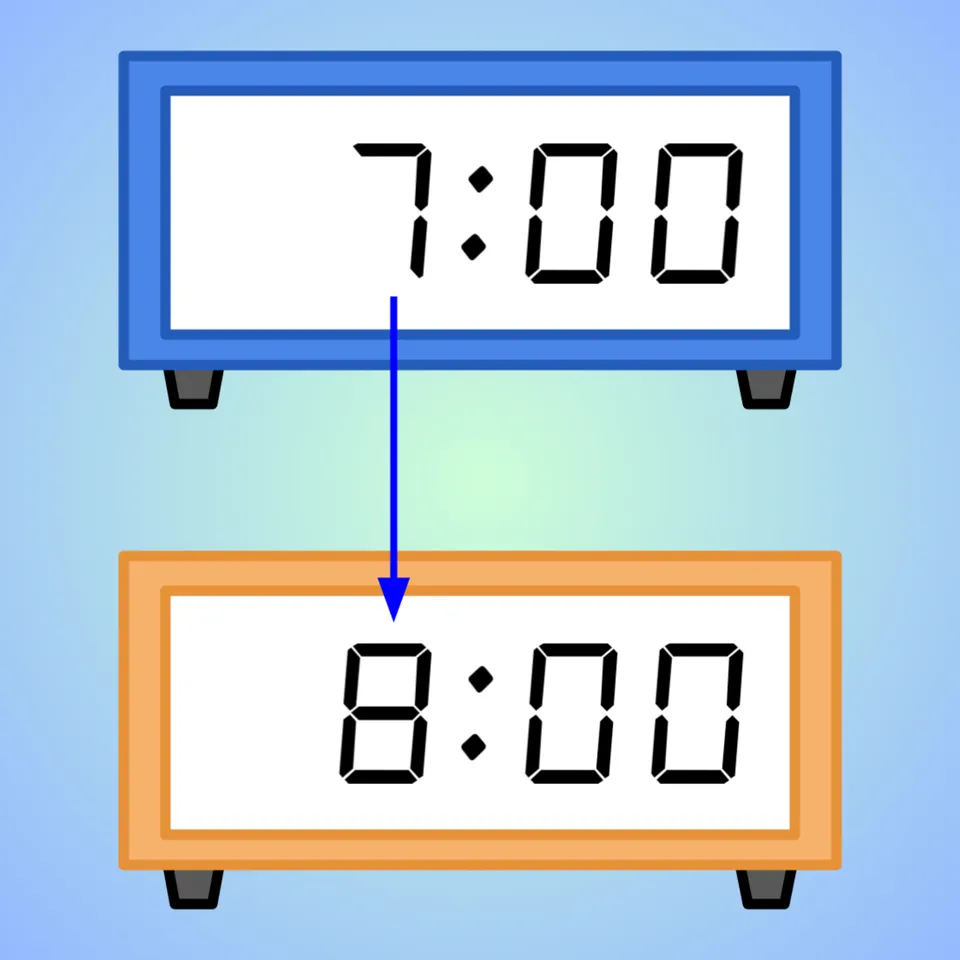
Play games that involve moving the time forward using hours
This lesson is a game, where each round gives a time and asks what time it will be some number of hours later. If a student can read all the times on a digital clock and do basic addition, they are ready for this lesson.
Part of
Standards alignment
Common Core State Standards
- 1.OA.C.6 — Add and subtract within 20, demonstrating fluency for addition and subtraction within 10. Use strategies such as counting on; making ten (e.g., 8 + 6 = 8 + 2 + 4 = 10 + 4 = 14); decomposing a number leading to a ten (e.g., 13 - 4 = 13 - 3 - 1 = 10 - 1 = 9); using the relationship between addition and subtraction (e.g., knowing that 8 + 4 = 12, one knows 12 - 8 = 4); and creating equivalent but easier or known sums (e.g., adding 6 + 7 by creating the known equivalent 6 + 6 + 1 = 12 + 1 = 13).
- 2.MD.C.7 — Tell and write time from analog and digital clocks to the nearest five minutes, using a.m. and p.m.
- MP7 — Look for and make use of structure.
Alabama
- MA19.1.1 — Use addition and subtraction to solve word problems within 20 by using concrete objects, drawings, and equations with a symbol for the unknown number to represent the problem.
- MA19.1.19 — Tell and write time to the hours and half hours using analog and digital clocks.
- MA19.1.5 — Relate counting to addition and subtraction.
- MA19.2.23 — Tell and write time from analog and digital clocks to the nearest five minutes, using a.m. and p.m.
Alaska
- 2.MD.7 — Tell and write time to the nearest five minutes using a.m. and p.m. from analog and digital clocks.
- 1.OA.5 — Relate counting to addition and subtraction (e.g., by counting on 2 to add 2).
- 3.MD.1 — Tell and write time to the nearest minute and measure time intervals in minutes. Solve word problems involving addition and subtraction of time intervals in minutes or hours (e.g., by representing the problem on a number line diagram or clock).
- K.MD.5 — Tell time to the hour using both analog and digital clocks.
Arizona
- 2.MD.C.7 — Tell and write time from analog and digital clocks to the nearest five minutes, using a.m. and p.m.
- 1.MD.B.3a — Tell and write time in hours and half-hours using analog and digital clocks.
- 1.OA.C.5 — Relate counting to addition and subtraction (e.g., by counting on 2 to add 2).
- 1.OA.A.1 — Use addition and subtraction within 20 to solve word problems with unknowns in all positions (e.g., by using objects, drawings, and/or equations with a symbol for the unknown number to represent the problem). See Table 1.
Arkansas
- 2.GM.11 — Solve real-world problems involving addition and subtraction of time intervals in half hours or hours.
- 2.GM.10 — Describe relationships of time. • Times include: seconds in a minute; minutes in an hour; hours in a day; days in a week; and days, weeks, and months in a year
California
- 2.MD.C.7 — Tell and write time from analog and digital clocks to the nearest five minutes, using a.m. and p.m. Know relationships of time (e.g., minutes in an hour, days in a month, weeks in a year).
- 1.MD.B.3 — Tell and write time in hours and half-hours using analog and digital clocks.
- 1.OA.C.6 — Add and subtract within 20, demonstrating fluency for addition and subtraction within 10. Use strategies such as counting on; making ten (e.g., 8 + 6 = 8 + 2 + 4 = 10 + 4 = 14); decomposing a number leading to a ten (e.g., 13 - 4 = 13 - 3 - 1 = 10 - 1 = 9); using the relationship between addition and subtraction (e.g., knowing that 8 + 4 = 12, one knows 12 - 8 = 4); and creating equivalent but easier or known sums (e.g., adding 6 + 7 by creating the known equivalent 6 + 6 + 1 = 12 + 1 = 13).
- MP7 — Look for and make use of structure.
Colorado
- 1.MD.B.3 — Tell and write time in hours and half-hours using analog and digital clocks.
- 1.OA.A.1 — Use addition and subtraction within 20 to solve word problems involving situations of adding to, taking from, putting together, taking apart, and comparing, with unknowns in all positions, e.g., by using objects, drawings, and equations with a symbol for the unknown number to represent the problem.
- 1.OA.C.6 — Add and subtract within 20, demonstrating fluency for addition and subtraction within 10. Use strategies such as counting on; making ten (e.g., 8 + 6 = 8 + 2 + 4 = 10 + 4 = 14); decomposing a number leading to a ten (e.g., 13 − 4 = 13 − 3 − 1 = 10 − 1 = 9); using the relationship between addition and subtraction (e.g., knowing that 8 + 4 = 12, one knows 12 − 8 = 4); and creating equivalent but easier or known sums (e.g., adding 6 + 7 by creating the known equivalent 6 + 6 + 1 = 12 + 1 = 13).
- 2.MD.C.7 — Tell and write time from analog and digital clocks to the nearest five minutes, using a.m. and p.m.
Connecticut
- 2.MD.C.7 — Tell and write time from analog and digital clocks to the nearest five minutes, using a.m. and p.m.
- 1.MD.B.3 — Tell and write time in hours and half-hours using analog and digital clocks.
- MP7 — Look for and make use of structure.
Delaware
- 1.MD.B.3 — Tell and write time in hours and half-hours using analog and digital clocks.
- 2.MD.C.7 — Tell and write time from analog and digital clocks to the nearest five minutes, using a.m. and p.m.
- 1.OA.C.6 — Add and subtract within 20, demonstrating fluency for addition and subtraction within 10. Use strategies such as counting on; making ten (e.g., 8 + 6 = 8 + 2 + 4 = 10 + 4 = 14); decomposing a number leading to a ten (e.g., 13 - 4 = 13 - 3 - 1 = 10 - 1 = 9); using the relationship between addition and subtraction (e.g., knowing that 8 + 4 = 12, one knows 12 - 8 = 4); and creating equivalent but easier or known sums (e.g., adding 6 + 7 by creating the known equivalent 6 + 6 + 1 = 12 + 1 = 13).
Florida
- MA.2.M.2.1 — Using analog and digital clocks, tell and write time to the nearest five minutes using a.m. and p.m. appropriately. Express portions of an hour using the fractional terms half an hour, half past, quarter of an hour, quarter after and quarter til.
- MA.3.M.2.2 — Solve one- and two-step real-world problems involving elapsed time.
- MA.1.M.2.1 — Using analog and digital clocks, tell and write time in hours and half-hours.
Georgia
- 1.MDR.6.2 — Tell and write time in hours and half-hours using analog and digital clocks, and measure elapsed time to the hour on the hour using a predetermined number line.
- 2.MDR.6 — Solve real-life problems involving time and money.
- 2.MDR.6.1 — Tell and write time from analog and digital clocks to the nearest five minutes, and estimate and measure elapsed time using a timeline, to the hour or half hour on the hour or half hour.
- 1.MDR.6 — Use appropriate tools to measure, order, and compare intervals of length and time, as well as denominations of money to solve real-life, mathematical problems and analyze graphical displays of data to answer relevant questions.
Hawaii
- 1.MD.B.3 — Tell and write time in hours and half-hours using analog and digital clocks.
- 1.OA.C.6 — Add and subtract within 20, demonstrating fluency for addition and subtraction within 10. Use strategies such as counting on; making ten (e.g., 8 + 6 = 8 + 2 + 4 = 10 + 4 = 14); decomposing a number leading to a ten (e.g., 13 - 4 = 13 - 3 - 1 = 10 - 1 = 9); using the relationship between addition and subtraction (e.g., knowing that 8 + 4 = 12, one knows 12 - 8 = 4); and creating equivalent but easier or known sums (e.g., adding 6 + 7 by creating the known equivalent 6 + 6 + 1 = 12 + 1 = 13).
- 2.MD.C.7 — Tell and write time from analog and digital clocks to the nearest five minutes, using a.m. and p.m.
- MP7 — Look for and make use of structure.
Idaho
- 1.MD.B.3 — Tell and write time in hours and half-hours using analog and digital clocks.
- 2.MD.C.7 — Tell and write time from analog and digital clocks to the nearest five minutes, using a.m. and p.m.
- K.CC.A.2 — Starting at a given number, count forward within 100 and backward within 20.
Illinois
- 1.MD.B.3 — Tell and write time in hours and half-hours using analog and digital clocks.
- 2.MD.C.7 — Tell and write time from analog and digital clocks to the nearest five minutes, using a.m. and p.m.
- 1.OA.C.6 — Add and subtract within 20, demonstrating fluency for addition and subtraction within 10. Use strategies such as counting on; making ten (e.g., 8 + 6 = 8 + 2 + 4 = 10 + 4 = 14); decomposing a number leading to a ten (e.g., 13 - 4 = 13 - 3 - 1 = 10 - 1 = 9); using the relationship between addition and subtraction (e.g., knowing that 8 + 4 = 12, one knows 12 - 8 = 4); and creating equivalent but easier or known sums (e.g., adding 6 + 7 by creating the known equivalent 6 + 6 + 1 = 12 + 1 = 13).
Indiana
- 2.M.4 — Tell and write time to the nearest five minutes from analog clocks, using a.m. and p.m. Solve real-world problems involving addition and subtraction of time intervals on the hour or half hour. (E)
- 2.M.5 — Describe relationships of time, including seconds in a minute; minutes in an hour; hours in a day; days in a week; and days, weeks, and months in a year.
- 1.M.2 — Tell and write time to the nearest half-hour and relate time to events (before/after, shorter/longer) using analog clocks. Explain how to read hours and minutes using digital clocks. (E)
Iowa
- 1.MD.B.3 — Tell and write time in hours and half-hours using analog and digital clocks.
- 2.MD.C.7 — Tell and write time from analog and digital clocks to the nearest five minutes, using a.m. and p.m.
- 1.OA.C.5 — Relate counting forward and backward to addition and subtraction, add or subtract 1 or 2.
Kansas
- 1.MD.3 — Tell and write time in hours and half-hours using analog and digital clocks.
- 1.OA.5 — Relate counting to addition and subtraction (e.g. by counting on 2 to add 2, counting back 1 to subtract 1).
- 1.OA.6 — Add and subtract within 20, demonstrating fluency (efficiently, accurately, and flexibly) for addition and subtraction within 10. Use mental strategies such as counting on; making ten (e.g. 8 + 6 = 8 + 2 + 4 = 10 + 4 = 14); decomposing a number leading to a ten (e.g. 13 − 4 = 13 − 3 − 1 = 10 − 1 = 9); using the relationship between addition and subtraction (e.g. knowing that 8 + 4 = 12, one knows 12 − 8 = 4); and creating equivalent but easier or known sums (e.g. adding 6 + 7 by creating the known equivalent 6 + 6 + 1 = 12 + 1 = 13).
- 3.MD.1 — Tell and write time to the nearest minute using a.m. and p.m. and measure time intervals in minutes. Solve word problems involving addition and subtraction of time intervals in minutes, (e.g. by representing the problem on a number line diagram.)
Kentucky
- KY.2.MD.7 — Tell and write time from analog and digital clocks to the nearest five minutes, using a.m. and p.m.
- KY.1.MD.3.a — Tell and write time in hours and half-hours using analog and digital clocks.
- KY.1.OA.6 — Add and subtract within 20.
Louisiana
- 1.MD.B.3 — Tell and write time in hours and half-hours using analog and digital clocks.
- 2.MD.C.7 — Tell and write time from analog and digital clocks to the nearest five minutes, using a.m. and p.m.
- 1.OA.C.6 — Add and subtract within 20, demonstrating fluency for addition and subtraction within 10. Use mental strategies such as counting on; making ten (e.g., 8 + 6 = 8 + 2 + 4 = 10 + 4 = 14); decomposing a number leading to a ten (e.g., 13 - 4 = 13 - 3 - 1 = 10 - 1 = 9); using the relationship between addition and subtraction (e.g., knowing that 8 + 4 = 12, one knows 12 - 8 = 4); and creating equivalent but easier or known sums (e.g., adding 6 + 7 by creating the known equivalent 6 + 6 + 1 = 12 + 1 = 13).
Maine
- 1.MD.B.3 — Tell and write time in hours and half-hours using analog and digital clocks.
- 2.MD.C.7 — Tell and write time from analog and digital clocks to the nearest five minutes, using a.m. and p.m.
- 1.OA.C.6 — Add and subtract within 20, demonstrating fluency for addition and subtraction within 10. Use strategies such as counting on; making ten (e.g., 8 + 6 = 8 + 2 + 4 = 10 + 4 = 14); decomposing a number leading to a ten (e.g., 13 - 4 = 13 - 3 - 1 = 10 - 1 = 9); using the relationship between addition and subtraction (e.g., knowing that 8 + 4 = 12, one knows 12 - 8 = 4); and creating equivalent but easier or known sums (e.g., adding 6 + 7 by creating the known equivalent 6 + 6 + 1 = 12 + 1 = 13).
Maryland
- 1.MD.B.3 — Tell and write time in hours and half-hours using analog and digital clocks.
- 2.MD.C.7 — Tell and write time from analog and digital clocks to the nearest five minutes, using a.m. and p.m.
- MP7 — Look for and make use of structure.
Massachusetts
- 2.MD.C.7 — Tell and write time from analog and digital clocks to the nearest five minutes, using a.m. and p.m.
- 1.MD.B.3 — Tell and write time in hours and half-hours using analog and digital clocks.
- 2.MD.C.7.a — Know the relationships of time, including seconds in a minute, minutes in an hour, hours in a day, days in a week; days in a month and a year and approximate number of weeks in a month and weeks in a year.
Michigan
- 1.MD.B.3 — Tell and write time in hours and half-hours using analog and digital clocks.
- 2.MD.C.7 — Tell and write time from analog and digital clocks to the nearest five minutes, using a.m. and p.m.
Minnesota
- 2.3.3.1 — Tell time to the quarter-hour and distinguish between a.m. and p.m.
- 1.3.2.2 — Tell time to the hour and half-hour.
- 3.3.3.1 — Tell time to the minute, using digital and analog clocks. Determine elapsed time to the minute. For example: Your trip began at 9:50 a.m. and ended at 3:10 p.m. How long were you traveling?
Mississippi
- 1.MD.3.a — Tell and write time in hours and half-hours using analog and digital clocks.
- 1.OA.5 — Relate counting to addition and subtraction (e.g., by counting on 2 to add 2).
- 2.MD.7 — Tell and write time from analog and digital clocks to the nearest five minutes, using a.m. and p.m.
- 1.OA.6 — Add and subtract within 20, demonstrating fluency for addition and subtraction within 10. Use strategies such as counting on; making ten (e.g., 8 + 6 = 8 + 2 + 4 = 10 + 4 = 14); decomposing a number leading to a ten (e.g., 13 – 4 = 13 – 3 – 1 = 10 – 1 = 9); using the relationship between addition and subtraction (e.g., knowing that 8 + 4 = 12, one knows 12 – 8 = 4); and creating equivalent but easier or known sums (e.g., adding 6 + 7 by creating the known equivalent 6 + 6 + 1 = 12 + 1 = 13).
- MP7 — Look for and make use of structure.
Missouri
- 2.GM.D.10 — Tell and write time from analog and digital clocks to the nearest five minutes, using a.m. and p.m.
- K.GM.B.3 — Demonstrate an understanding of concepts of time and devices that measure time.
- 1.GM.C.8 — Tell and write time in hours and half-hours using analog and digital clocks.
Montana
- 2.MD.C.7 — Tell and write time from analog and digital clocks to the nearest five minutes, using a.m. and p.m.
- 1.MD.B.3 — Tell and write time in hours and half-hours using analog and digital clocks.
- 1.OA.C.5 — Relate counting to addition and subtraction (e.g., by counting on 2 to add 2).
- 1.OA.A.1 — Use addition and subtraction within 20 to solve word problems within a cultural context, including those of Montana American Indians, involving situations of adding to, taking from, putting together, taking apart, and comparing, with unknowns in all positions, e.g., by using objects, drawings, and equations with a symbol for the unknown number to represent the problem.
- MP7 — Look for and make use of structure.
Nebraska
- 3.G.4.b — Solve authentic problems involving addition and subtraction of time intervals and find elapsed time.
- K.G.3.b — Identify the parts of digital and analog clocks. Tell and write time to the hour using digital clocks and analog clocks using only the hour hand.
Nevada
- 1.OA.C.6 — Add and subtract within 20, demonstrating fluency for addition and subtraction within 10. Use strategies such as counting on; making ten (e.g., 8 + 6 = 8 + 2 + 4 = 10 + 4 = 14); decomposing a number leading to a ten (e.g., 13 - 4 = 13 - 3 - 1 = 10 - 1 = 9); using the relationship between addition and subtraction (e.g., knowing that 8 + 4 = 12, one knows 12 - 8 = 4); and creating equivalent but easier or known sums (e.g., adding 6 + 7 by creating the known equivalent 6 + 6 + 1 = 12 + 1 = 13).
- 2.MD.C.7 — Tell and write time from analog and digital clocks to the nearest five minutes, using a.m. and p.m.
- 2.OA.A.1 — Use addition and subtraction within 100 to solve one- and two-step word problems involving situations of adding to, taking from, putting together, taking apart, and comparing, with unknowns in all positions, e.g., by using drawings and equations with a symbol for the unknown number to represent the problem.
- 1.MD.B.3 — Tell and write time in hours and half-hours using analog and digital clocks.
- MP7 — Look for and make use of structure.
New Hampshire
- 2.MD.C.7 — Tell and write time from analog and digital clocks to the nearest five minutes, using a.m. and p.m.
- 1.MD.B.3 — Tell and write time in hours and half-hours using analog and digital clocks.
- 1.OA.C.6 — Add and subtract within 20, demonstrating fluency for addition and subtraction within 10. Use strategies such as counting on; making ten (e.g., 8 + 6 = 8 + 2 + 4 = 10 + 4 = 14); decomposing a number leading to a ten (e.g., 13 - 4 = 13 - 3 - 1 = 10 - 1 = 9); using the relationship between addition and subtraction (e.g., knowing that 8 + 4 = 12, one knows 12 - 8 = 4); and creating equivalent but easier or known sums (e.g., adding 6 + 7 by creating the known equivalent 6 + 6 + 1 = 12 + 1 = 13).
- 2.OA.A.1 — Use addition and subtraction within 100 to solve one- and two-step word problems involving situations of adding to, taking from, putting together, taking apart, and comparing, with unknowns in all positions, e.g., by using drawings and equations with a symbol for the unknown number to represent the problem.
New Jersey
- 2.MD.C.7 — Tell and write time from analog and digital clocks to the nearest five minutes, using a.m. and p.m.
- 1.MD.B.3 — Tell and write time in hours and half-hours using analog and digital clocks.
- 1.OA.A.1 — Use addition and subtraction within 20 to solve word problems involving situations of adding to, taking from, putting together, taking apart, and comparing, with unknowns in all positions, e.g., by using objects, drawings, and equations with a symbol for the unknown number to represent the problem.
- 1.OA.C.6 — Add and subtract within 20, demonstrating fluency for addition and subtraction within 10. Use strategies such as counting on; making ten (e.g., 8 + 6 = 8 + 2 + 4 = 10 + 4 = 14); decomposing a number leading to a ten (e.g., 13 – 4 = 13 – 3 – 1 = 10 – 1 = 9); using the relationship between addition and subtraction (e.g., knowing that 8 + 4 = 12, one knows $12 – 8 = 4); and creating equivalent but easier or known sums (e.g., adding 6 + 7 by creating the known equivalent 6 + 6 + 1 = 12 + 1 = 13$).
New Mexico
- 1.MD.B.3 — Tell and write time in hours and half-hours using analog and digital clocks.
- 2.MD.C.7 — Tell and write time from analog and digital clocks to the nearest five minutes, using a.m. and p.m.
- 1.OA.C.6 — Add and subtract within 20, demonstrating fluency for addition and subtraction within 10. Use strategies such as counting on; making ten (e.g., 8 + 6 = 8 + 2 + 4 = 10 + 4 = 14); decomposing a number leading to a ten (e.g., 13 - 4 = 13 - 3 - 1 = 10 - 1 = 9); using the relationship between addition and subtraction (e.g., knowing that 8 + 4 = 12, one knows 12 - 8 = 4); and creating equivalent but easier or known sums (e.g., adding 6 + 7 by creating the known equivalent 6 + 6 + 1 = 12 + 1 = 13).
New York
- NY-1.MD.3.a — Tell and write time in hours and half-hours using analog and digital clocks. Develop an understanding of common terms, such as, but not limited to, o’clock and half past.
- NY-2.MD.7 — Tell and write time from analog and digital clocks in five minute increments, using a.m. and p.m. Develop an understanding of common terms, such as, but not limited to, quarter past, half past, and quarter to.
- MP.7 — Look for and make use of structure.
North Carolina
- NC.1.MD.3 — Tell and write time in hours and half-hours using analog and digital clocks.
- NC.1.OA.6 — Add and subtract, within 20, using strategies such as: • Counting on • Making ten • Decomposing a number leading to a ten • Using the relationship between addition and subtraction • Using a number line • Creating equivalent but simpler or known sums
- NC.2.MD.7 — Tell and write time from analog and digital clocks to the nearest five minutes, using a.m. and p.m.
North Dakota
- 3.GM.M.4 — Solve elapsed time authentic word problems on the hour and the half-hour, using a variety of strategies.
- 1.GM.M.3 — Tell and write time to the hour and half-hour (including o-clock and half past) using analog and digital clocks.
- K.GM.M.2 — Tell time related to daily life (today, yesterday, tomorrow, morning, afternoon, night).
- 1.AR.OA.4 — Solve authentic word problems with addition, including three numbers and unknowns, within 20.
Ohio
- 2.MD.7 — Tell and write time from analog and digital clocks to the nearest five minutes, using a.m. and p.m.
- 1.MD.3.a — Tell and write time in hours and half-hours using analog and digital clocks.
- 1.OA.5 — Relate counting to addition and subtraction, e.g., by counting on 2 to add 2.
- MP.7 — Look for and make use of structure.
Oklahoma
- 2.GM.3.1 — Distinguish between a.m. and p.m.
- 1.GM.3 — Describe and measure concepts of time.
- 1.GM.3.1 — Tell time to the hour and half-hour (analog and digital).
Oregon
- 1.GM.C.6 — Tell and write time in hours and half-hours using analog and digital clocks.
- 1.OA.C.5 — Relate counting to addition and subtraction.
- 2.GM.D.10 — Tell and write time from analog and digital clocks to the nearest five minutes, using a.m. and p.m.
Pennsylvania
- CC.2.4.3.A.2 — Tell and write time to the nearest minute and solve problems by calculating time intervals.
- CC.2.4.1.A.2 — Tell and write time to the nearest half hour using both analog and digital clocks.
Rhode Island
- 2.MD.C.7 — Tell and write time from analog and digital clocks to the nearest five minutes, using a.m. and p.m.
- 1.MD.B.3 — Tell and write time in hours and half-hours using analog and digital clocks.
- 2.MD.C.7.a — Know the relationships of time, including seconds in a minute, minutes in an hour, hours in a day, days in a week; days in a month and a year and approximate number of weeks in a month and weeks in a year.
- 1.OA.C.6 — Add and subtract within 20, demonstrating fluency for addition and subtraction within 10. Use mental strategies such as counting on; making 10 (e.g., 8 + 6 = 8 + 2 + 4 = 10 + 4 = 14); decomposing a number leading to a 10 (e.g., 13 – 4 = 13 – 3 – 1 = 10 – 1 = 9); using the relationship between addition and subtraction (e.g., knowing that 8 + 4 = 12, one knows 12 – 8 = 4); and creating equivalent but easier or known sums (e.g., adding 6 + 7 by creating the known equivalent 6 + 6 + 1 = 12 + 1 = 13).
South Carolina
- 1.MDA.3 — Use analog and digital clocks to tell and record time to the hour and half hour.
- 2.MDA.6 — Use analog and digital clocks to tell and record time to the nearest five-minute interval using a.m. and p.m.
- 1.ATO.6a — Demonstrate addition and subtraction through 20.
South Dakota
- 1.MD.B.3 — Tell and write time in hours and half-hours using analog and digital clocks.
- 1.OA.C.5 — Understand counting on as addition and counting back as subtraction e.g. 5, (6,7,8) means 5 + 3 and 5, (4,3,2) means 5-3.
- 2.MD.C.7 — Tell and write time from analog and digital clocks to the nearest five minutes, using a.m. and p.m.
- MP7 — Look for and make use of structure.
Tennessee
- 1.MD.B.3 — Recognize a clock as a measurement tool. Tell and write time in hours and half-hours using analog and digital clocks.
- 1.OA.A.1 — Add and subtract within 20 to solve contextual problems, with unknowns in all positions, involving situations of add to, take from, put together/take apart, and compare. Use objects, drawings, and equations with a symbol for the unknown number to represent the problem. NOTE: While start unknown situations may be introduced in first grade, they are not expected to be mastered until second grade.
- 1.OA.C.5 — Add and subtract within 20 using strategies such as counting on, counting back, making 10, related known facts, and composing/decomposing numbers with an emphasis on making ten (e.g., 13 – 4 = 13 – 3 – 1 = 10 – 1 = 9 or adding 6 + 7 by creating the known equivalent 6 + 4 + 3 = 10 + 3 = 13 OR 6 + 6 + 1 = 12 + 1).
- 2.MD.C.7 — Tell and write time in quarter hours and to the nearest five minutes (in a.m. and p.m.) using analog and digital clocks.
Texas
- 1.7E — tell time to the hour and half hour using analog and digital clocks.
- 2.9G — read and write time to the nearest one-minute increment using analog and digital clocks and distinguish between a.m. and p.m.
- 3.7C — determine the solutions to problems involving addition and subtraction of time intervals in minutes using pictorial models or tools such as a 15-minute event plus a 30-minute event equals 45 minutes;
Utah
- 2.MD.7 — Tell and write time from analog and digital clocks to the nearest five minutes, using a.m. and p.m.
- 1.MD.3 — Tell and write time in hours and half-hours using analog and digital clocks.
- 1.OA.1 — Use addition and subtraction within 20 to solve word problems involving situations of adding to, taking from, putting together, taking apart, and comparing, with unknowns in all positions. For example, use objects, drawings, and equations with a symbol for the unknown number to represent the problem.
- 1.OA.5 — Relate counting to addition and subtraction. For example, by counting on 2 to add 2.
Vermont
- 1.MD.B.3 — Tell and write time in hours and half-hours using analog and digital clocks.
- 2.MD.C.7 — Tell and write time from analog and digital clocks to the nearest five minutes, using a.m. and p.m.
- 1.OA.C.6 — Add and subtract within 20, demonstrating fluency for addition and subtraction within 10. Use strategies such as counting on; making ten (e.g., 8 + 6 = 8 + 2 + 4 = 10 + 4 = 14); decomposing a number leading to a ten (e.g., 13 - 4 = 13 - 3 - 1 = 10 - 1 = 9); using the relationship between addition and subtraction (e.g., knowing that 8 + 4 = 12, one knows 12 - 8 = 4); and creating equivalent but easier or known sums (e.g., adding 6 + 7 by creating the known equivalent 6 + 6 + 1 = 12 + 1 = 13).
- MP7 — Look for and make use of structure.
Virginia
- 3.MG.3c — Solve single-step contextual problems involving elapsed time in one-hour increments, within a 12-hour period (within a.m. or within p.m.) when given:
- 3.MG.3 — The student will demonstrate an understanding of the concept of time to the nearest minute and solve single-step contextual problems involving elapsed time in one-hour increments within a 12-hour period. Students will demonstrate the following Knowledge and Skills:
Washington
- 1.MD.B.3 — Tell and write time in hours and half-hours using analog and digital clocks.
- 2.MD.C.7 — Tell and write time from analog and digital clocks to the nearest five minutes, using a.m. and p.m.
- 1.OA.C.6 — Add and subtract within 20, demonstrating fluency for addition and subtraction within 10. Use strategies such as counting on; making ten (e.g., 8 + 6 = 8 + 2 + 4 = 10 + 4 = 14); decomposing a number leading to a ten (e.g., 13 - 4 = 13 - 3 - 1 = 10 - 1 = 9); using the relationship between addition and subtraction (e.g., knowing that 8 + 4 = 12, one knows 12 - 8 = 4); and creating equivalent but easier or known sums (e.g., adding 6 + 7 by creating the known equivalent 6 + 6 + 1 = 12 + 1 = 13).
Washington, D.C.
- 1.MD.B.3 — Tell and write time in hours and half-hours using analog and digital clocks.
- 2.MD.C.7 — Tell and write time from analog and digital clocks to the nearest five minutes, using a.m. and p.m.
- 1.OA.C.6 — Add and subtract within 20, demonstrating fluency for addition and subtraction within 10. Use strategies such as counting on; making ten (e.g., 8 + 6 = 8 + 2 + 4 = 10 + 4 = 14); decomposing a number leading to a ten (e.g., 13 - 4 = 13 - 3 - 1 = 10 - 1 = 9); using the relationship between addition and subtraction (e.g., knowing that 8 + 4 = 12, one knows 12 - 8 = 4); and creating equivalent but easier or known sums (e.g., adding 6 + 7 by creating the known equivalent 6 + 6 + 1 = 12 + 1 = 13).
West Virginia
- M.1.17 — Tell and write time in hours and half-hours using analog and digital clocks.
- M.2.21 — Tell and write time from analog and digital clocks to the nearest five minutes, using a.m. and p.m.
Wisconsin
- M.2.MD.C.7 — Tell and write time from analog and digital clocks to the nearest five minutes, using a.m. and p.m.
- M.1.MD.B.3 — Tell and write time in hours and half-hours using analog and digital clocks.
- M.1.OA.A.1 — Use addition and subtraction within 20 to solve word problems involving situations of adding to, taking from, putting together, taking apart, and comparing, with unknowns in all positions, e.g., by using objects, drawings, and equations with a symbol for the unknown number to represent the problem.
- M.1.OA.C.5 — Use counting and subitizing strategies to explain addition and subtraction. a. Relate counting to addition and subtraction (e.g., by counting on 2 to add 2). b. Use conceptual subitizing in unstructured arrangements with totals up to 10 and structured arrangements anchored to 5 or 10 (e.g., ten frames, double ten frames, math rack/rekenrek) with totals up to 20 to relate the compositions and decompositions to addition and subtraction.
Wyoming
- 1.MD.I.3.A — Tell and write time in hours and half-hours using analog and digital clocks.
- 1.OA.C.5 — Relate counting to addition and subtraction using strategies, such as, by counting on and back.
- 2.MD.H.7 — Tell and write time from analog and digital clocks in five minute increments using a.m. and p.m.