Digital Clocks: On the Hour
Ages 3–5 · 7 minutes · Math
Learn to read times on the hour
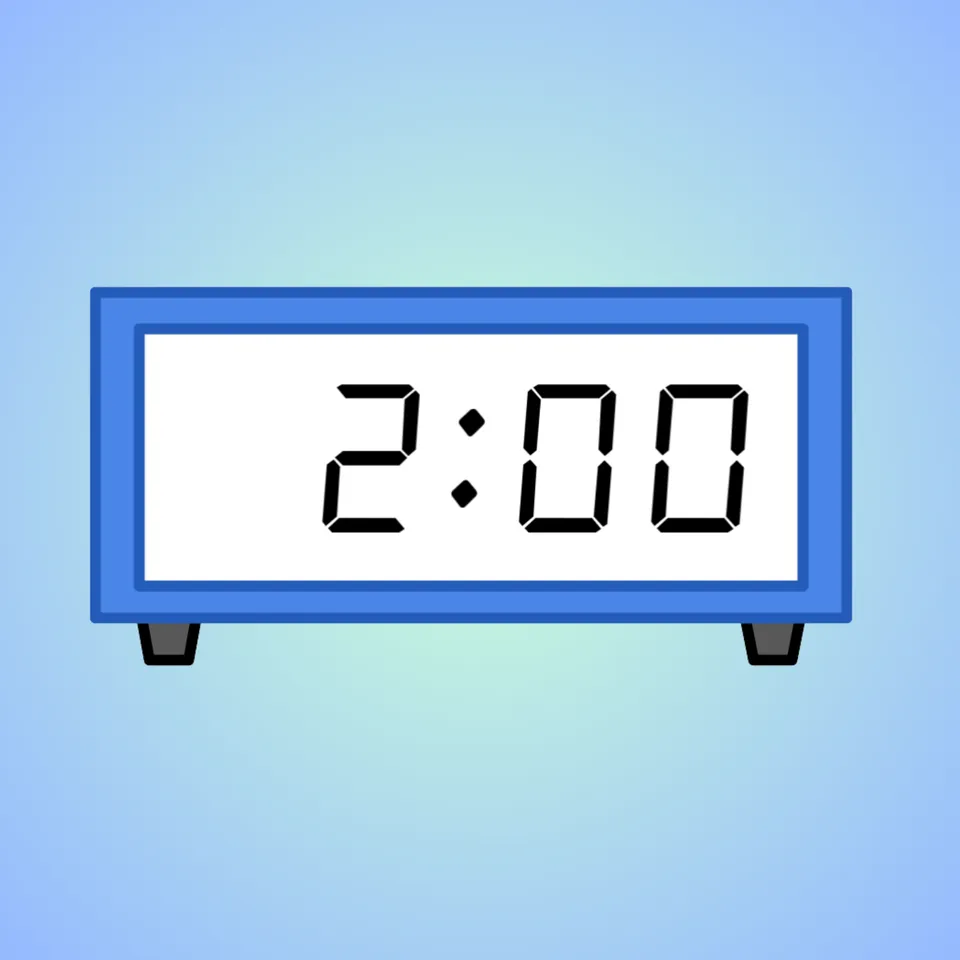
An introduction to digital clocks, looking at minutes and hours, with a focus on reading times on the hour. If a student knows their numbers up to 12, they are ready for this introduction to digital clocks.
Part of
Standards alignment
Common Core State Standards
- 1.MD.B.3 — Tell and write time in hours and half-hours using analog and digital clocks.
- K.CC.A.2 — Count forward beginning from a given number within the known sequence (instead of having to begin at 1).
- MP7 — Look for and make use of structure.
Alabama
- MA19.1.19 — Tell and write time to the hours and half hours using analog and digital clocks.
Alaska
- K.MD.5 — Tell time to the hour using both analog and digital clocks.
- K.CC.2 — Count forward beginning from a given number within the known sequence.
Arizona
- 1.MD.B.3a — Tell and write time in hours and half-hours using analog and digital clocks.
- K.CC.A.2 — Count forward from a given number other than one, within the known sequence (e.g., "Starting at the number 5, count up to 11.").
- MP7 — Look for and make use of structure.
Arkansas
- 1.GM.5 — Tell and write time to the nearest hour and half hour using analog clocks; understand how to read hours and minutes using digital clocks.
- K.GM.7 — Understand concepts of time, recognizing that clocks and calendars are tools that measure time. • Concepts of time include: morning, afternoon, evening, today, yesterday, tomorrow, day, week, month, and year
California
- 1.MD.B.3 — Tell and write time in hours and half-hours using analog and digital clocks.
- K.CC.A.2 — Count forward beginning from a given number within the known sequence (instead of having to begin at 1).
- MP7 — Look for and make use of structure.
Colorado
- 1.MD.B.3 — Tell and write time in hours and half-hours using analog and digital clocks.
- K.CC.A.2 — Count forward beginning from a given number within the known sequence (instead of having to begin at 1).
Connecticut
- 1.MD.B.3 — Tell and write time in hours and half-hours using analog and digital clocks.
- K.CC.A.2 — Count forward beginning from a given number within the known sequence (instead of having to begin at 1).
- MP7 — Look for and make use of structure.
Delaware
- 1.MD.B.3 — Tell and write time in hours and half-hours using analog and digital clocks.
- H.1.K-3a — Students will use clocks, calendars, schedules, and written records to record or locate events in time. Grade 1
- K.CC.A.2 — Count forward beginning from a given number within the known sequence (instead of having to begin at 1).
Florida
- MA.1.M.2.1 — Using analog and digital clocks, tell and write time in hours and half-hours.
- MA.K12.MTR.5.1 — Use patterns and structure to help understand and connect mathematical concepts. Mathematicians who use patterns and structure to help understand and connect mathematical concepts: • Focus on relevant details within a problem. • Create plans and procedures to logically order events, steps or ideas to solve problems. • Decompose a complex problem into manageable parts. • Relate previously learned concepts to new concepts. • Look for similarities among problems. • Connect solutions of problems to more complicated large-scale situations.
Georgia
- 1.MDR.6.2 — Tell and write time in hours and half-hours using analog and digital clocks, and measure elapsed time to the hour on the hour using a predetermined number line.
- K.PAR.6.2 — Describe patterns involving the passage of time using words and phrases related to actual events.
Hawaii
- 1.MD.B.3 — Tell and write time in hours and half-hours using analog and digital clocks.
- K.CC.A.2 — Count forward beginning from a given number within the known sequence (instead of having to begin at 1).
Idaho
- 1.MD.B.3 — Tell and write time in hours and half-hours using analog and digital clocks.
- K.CC.A.2 — Starting at a given number, count forward within 100 and backward within 20.
Illinois
- 1.MD.B.3 — Tell and write time in hours and half-hours using analog and digital clocks.
- K.CC.A.2 — Count forward beginning from a given number within the known sequence (instead of having to begin at 1).
Indiana
- 1.M.2 — Tell and write time to the nearest half-hour and relate time to events (before/after, shorter/longer) using analog clocks. Explain how to read hours and minutes using digital clocks. (E)
- K.M.2 — Identify and use appropriate terms to describe intervals of time including: morning, afternoon, evening, today, yesterday, tomorrow, day, week, month, and year; describe how calendars and clocks are tools to measure time.
- K.NS.1 — Count to at least 100 by ones and tens. Count by one from any given number. (E)
Iowa
- 1.MD.B.3 — Tell and write time in hours and half-hours using analog and digital clocks.
- K.CC.A.2 — Count forward beginning from any given number within the range of 0–100.
Kansas
- 1.MD.3 — Tell and write time in hours and half-hours using analog and digital clocks.
- K.CC.2 — Count forward beginning from a given number within the known sequence (instead of having to begin at 1).
- MP.7 — Look for and make use of structure.
Kentucky
- KY.1.MD.3.a — Tell and write time in hours and half-hours using analog and digital clocks.
- KY.1.MD.3 — Assign values to time and money.
- KY.K.CC.2 — Count forward beginning from a given number within the known sequence within 100 (instead of having to begin at 1).
Louisiana
- 1.MD.B.3 — Tell and write time in hours and half-hours using analog and digital clocks.
- K.CC.A.2 — Count forward beginning from a given number within the known sequence (instead of having to begin at 1).
Maine
- 1.MD.B.3 — Tell and write time in hours and half-hours using analog and digital clocks.
- K.CC.A.2 — Count forward beginning from a given number within the known sequence (instead of having to begin at 1)
Maryland
- 1.MD.B.3 — Tell and write time in hours and half-hours using analog and digital clocks.
- K.CC.A.2 — Count forward beginning from a given number within the known sequence (instead of having to begin at 1).
- PK.CC.A.3 — Identify written numerals 0-10.
Massachusetts
- 1.MD.B.3 — Tell and write time in hours and half-hours using analog and digital clocks.
- K.CC.A.2 — Count forward beginning from a given number within the known sequence (instead of having to begin at one).
- PK.CC.A.1 — Listen to and say the names of numbers in meaningful contexts.
- MP.8 — Look for and express regularity in repeated reasoning.
Michigan
- 1.MD.B.3 — Tell and write time in hours and half-hours using analog and digital clocks.
- K.CC.A.2 — Count forward beginning from a given number within the known sequence (instead of having to begin at 1).
- MP7 — Look for and make use of structure.
Minnesota
- 1.3.2.2 — Tell time to the hour and half-hour.
- K.1.1.4 — Find a number that is 1 more or 1 less than a given number.
Mississippi
- 1.MD.3.a — Tell and write time in hours and half-hours using analog and digital clocks.
- K.CC.2 — Count forward beginning from a given number within the known sequence (instead of having to begin at 1).
Missouri
- K.GM.B.3 — Demonstrate an understanding of concepts of time and devices that measure time.
- 1.GM.C.8 — Tell and write time in hours and half-hours using analog and digital clocks.
- K.NS.A.2 — Count forward beginning from a given number between 1 and 20.
Montana
- 1.MD.B.3 — Tell and write time in hours and half-hours using analog and digital clocks.
- K.CC.A.2 — Count forward beginning from a given number within the known sequence (instead of having to begin at 1).
- MP7 — Look for and make use of structure.
Nebraska
- K.G.3.b — Identify the parts of digital and analog clocks. Tell and write time to the hour using digital clocks and analog clocks using only the hour hand.
Nevada
- 1.MD.B.3 — Tell and write time in hours and half-hours using analog and digital clocks.
- K.CC.A.2 — Count forward beginning from a given number within the known sequence (instead of having to begin at 1).
- MP7 — Look for and make use of structure.
New Hampshire
- 1.MD.B.3 — Tell and write time in hours and half-hours using analog and digital clocks.
- K.CC.A.2 — Count forward beginning from a given number within the known sequence (instead of having to begin at 1).
New Jersey
- 1.MD.B.3 — Tell and write time in hours and half-hours using analog and digital clocks.
- K.CC.A.2 — Count forward beginning from a given number within the known sequence (instead of having to begin at 1).
New Mexico
- 1.MD.B.3 — Tell and write time in hours and half-hours using analog and digital clocks.
- K.CC.A.2 — Count forward beginning from a given number within the known sequence (instead of having to begin at 1).
New York
- NY-1.MD.3.a — Tell and write time in hours and half-hours using analog and digital clocks. Develop an understanding of common terms, such as, but not limited to, o’clock and half past.
- NY-K.CC.2 — Count to 100 by ones beginning from any given number (instead of beginning at 1).
North Carolina
- NC.1.MD.3 — Tell and write time in hours and half-hours using analog and digital clocks.
- NC.K.CC.2 — Count forward beginning from a given number within the known sequence, instead of having to begin at 1.
North Dakota
- 1.GM.M.3 — Tell and write time to the hour and half-hour (including o-clock and half past) using analog and digital clocks.
Ohio
- 1.MD.3.a — Tell and write time in hours and half-hours using analog and digital clocks.
- K.1 — Time can be measured.
- MP.7 — Look for and make use of structure.
Oklahoma
- 1.GM.3.1 — Tell time to the hour and half-hour (analog and digital).
- 1.GM.3 — Describe and measure concepts of time.
- K.GM.3 — Tell time as it relates to daily life.
- K.N.1.5 — Count forward, with and without objects, from any given number up to 20.
Oregon
- 1.GM.C.6 — Tell and write time in hours and half-hours using analog and digital clocks.
- K.NCC.A.2 — Count forward beginning from a given number within 100 of a known sequence.
Pennsylvania
- CC.2.4.1.A.2 — Tell and write time to the nearest half hour using both analog and digital clocks.
- CC.2.1.PreK.A.1 — Know number names and the count sequence.
Rhode Island
- 1.MD.B.3 — Tell and write time in hours and half-hours using analog and digital clocks.
- K.CC.A.2 — Count forward beginning from a given number within the known sequence (instead of having to begin at one).
- MP7 — Look for and make use of structure.
South Carolina
- 1.MDA.3 — Use analog and digital clocks to tell and record time to the hour and half hour.
South Dakota
- 1.MD.B.3 — Tell and write time in hours and half-hours using analog and digital clocks.
- K.CC.A.2 — Count forward beginning from any given number within 100 (instead of having to begin at 1). Count backwards beginning from any given number within 20.
- MP7 — Look for and make use of structure.
Tennessee
- 1.MD.B.3 — Recognize a clock as a measurement tool. Tell and write time in hours and half-hours using analog and digital clocks.
- K.CC.A.2 — Count forward by ones beginning from any given number within the known sequence (instead of having to begin at 1).
Texas
- 1.7E — tell time to the hour and half hour using analog and digital clocks.
- K.2A — count forward and backward to at least 20 with and without objects;
Utah
- 1.MD.3 — Tell and write time in hours and half-hours using analog and digital clocks.
- K.CC.2 — Count forward beginning from a given number within the known sequence (instead of having to begin at 1).
- K.MP.7 — Look for and make use of structure.
Vermont
- 1.MD.B.3 — Tell and write time in hours and half-hours using analog and digital clocks.
- K.CC.A.2 — Count forward beginning from a given number within the known sequence (instead of having to begin at 1).
- MP7 — Look for and make use of structure.
Virginia
- 1.MG.3b — Describe the units of time represented on a clock as minutes and hours.
- 1.MG.3c — Tell time to the hour and half-hour, using analog and digital clocks.
- 1.MG.3 — The student will demonstrate an understanding of the concept of passage of time (to the nearest hour and half-hour) and the calendar. Students will demonstrate the following Knowledge and Skills:
- 1.MG.3a — Identify different tools to measure time including clocks (analog and digital) and calendar.
Washington
- 1.MD.B.3 — Tell and write time in hours and half-hours using analog and digital clocks.
- K.CC.A.2 — Count forward beginning from a given number within the known sequence (instead of having to begin at 1).
- MP7 — Look for and make use of structure.
Washington, D.C.
- 1.MD.B.3 — Tell and write time in hours and half-hours using analog and digital clocks.
- K.CC.A.2 — Count forward beginning from a given number within the known sequence (instead of having to begin at 1).
West Virginia
- M.1.17 — Tell and write time in hours and half-hours using analog and digital clocks.
- M.K.2 — Count forward beginning from a given number within the known sequence (instead of having to begin at 1).
- MHM7 — Look for and make use of structure.
Wisconsin
- M.1.MD.B.3 — Tell and write time in hours and half-hours using analog and digital clocks.
- M.K.CC.A.2 — Count forward beginning from a given number within the known sequence (instead of having to begin at 1).
Wyoming
- 1.MD.I.3.A — Tell and write time in hours and half-hours using analog and digital clocks.
- 1.MD.I — Work with time and money.
- K.CC.A — Know number names and the count sequence.