Antarctica
Ages 4–6 · 13 minutes · Geography
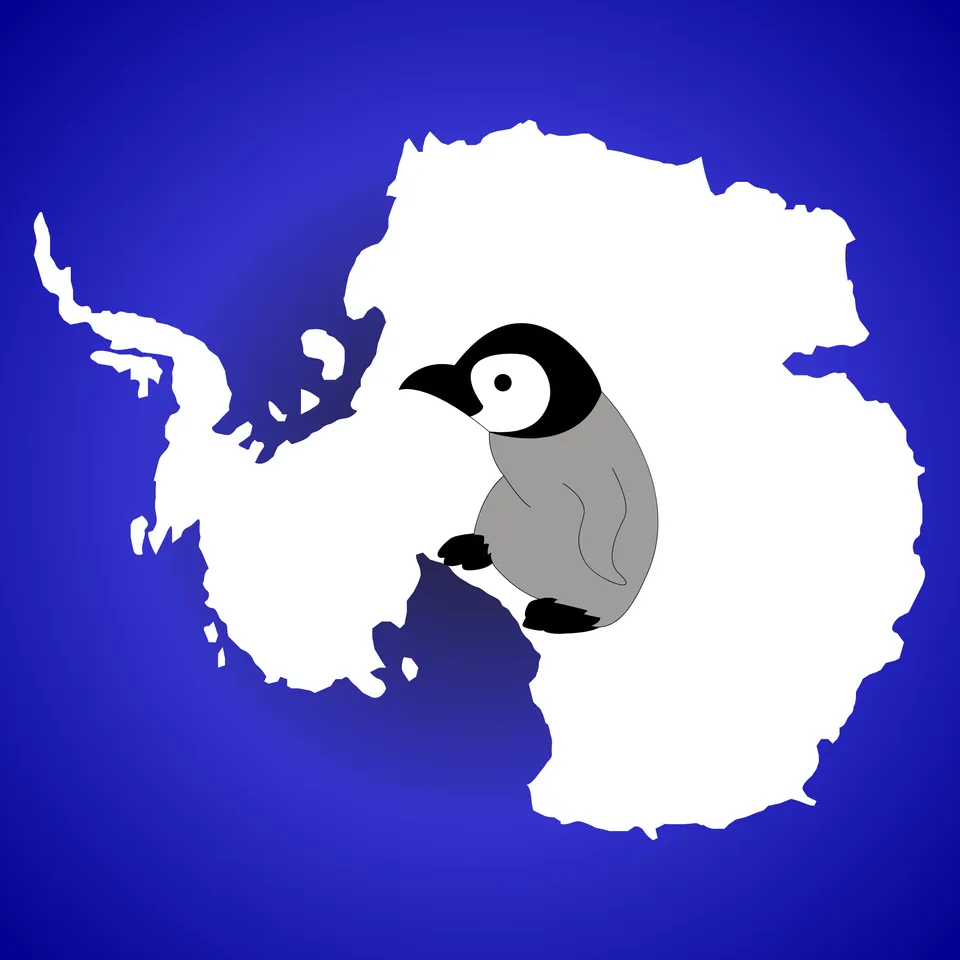
This is a short introduction to the continent of Antarctica
In this lesson, students will learn about the continent of Antarctica. They will learn about the animals that live there, including different types of penguins and whales
Part of
Standards alignment
Common Core State Standards
- D2.Geo.6.K-2 — Individually and with others, students… Identify some cultural and environmental characteristics of specific places.
- There are many different kinds of living things in any area, and they exist in different places on land and in water.
- D2.Geo.2.K-2 — Individually and with others, students… Use maps, graphs, photographs, and other representations to describe places and the relationships and interactions that shape them.
- D2.Geo.4.K-2 — Individually and with others, students… Explain how weather, climate, and other environmental characteristics affect people’s lives in a place or region.
Alabama
- SC23.2.7 — Obtain information to explain that there are many different kinds of living things that exist in habitats on land and in water.
- SS10.1.8 — Identify land masses, bodies of water, and other physical features on maps and globes.
- SS10.2.6 — Identify states, continents, oceans, and the equator using maps, globes, and technology.
- SS10.K.9 — Differentiate between land forms and bodies of water on maps and globes.
- SS10.1.8.2 — Measuring distance using nonstandard units
Alaska
- 1 — know that places have distinctive geographic characteristics;
- There are many different kinds of living things in any area, and they exist in different places on land and in water.
- K.MD.2 — Make comparisons between two objects with a measurable attribute in common, to see which object has “more of”/“less of” the attribute, and describe the difference. For example, directly compare the heights of two children and describe one child as taller/shorter.
- RI.K.9 — With prompting and support, identify basic similarities in and differences between information presented in two texts on the same topic (e.g., compare two photos or diagrams, compare two animal babies).
- K-ESS3-1 — Use a model to represent the relationship between the needs of different plants and animals (including humans) and the places they live.
Arizona
- 2.G1.1 — Use and construct maps, graphs, and other geographic representations of familiar and unfamiliar places in the world; and locate physical and human features. • Key physical features include but are not limited to seven continents, oceans, lakes, rivers, mountain ranges, coasts, seas, and deserts • Key human features include but are not limited to equator, hemispheres, North and South Pole, cities, states, countries, regions, and landmarks
- Relative scales allow objects and events to be compared and described (e.g., bigger and smaller; hotter and colder; faster and slower).
- 1.L4U1.10 — Develop a model to describe how animals and plants are classified into groups and subgroups according to their similarities.
- 2.G2.1 — Explain how weather, climate, and other environmental characteristics affect people’s lives in a place or region being studied.
Arkansas
- G.1.K.2 — Identify and describe the physical characteristics of a place such as rivers, mountains, and forests using maps, globes, and photographs.
- G.1.K.6 — Identify the influence of weather and climate on people’s daily lives.
- K.GM.6 — Make direct comparisons of the length, capacity, weight, and temperature of objects, recognizing which object is shorter/longer, lighter/heavier, warmer/cooler, or holds more.
- G.1.K.8 — Identify people, goods, and ideas that move from place to place.
California
- 2 — Students identify the human and physical characteristics of the places they are studying and explain how those features form the unique character of those places.
- 1.2.1 — Locate on maps and globes their local community, California, the United States, the seven continents, and the four oceans.
- 1.2.4 — Describe how location, weather, and physical environment affect the way people live, including the effects on their food, clothing, shelter, transportation, and recreation.
- K.MD.A.2 — Directly compare two objects with a measurable attribute in common, to see which object has "more of"/"less of" the attribute, and describe the difference. For example, directly compare the heights of two children and describe one child as taller/shorter.
- K-ESS3-1 — Use a model to represent the relationship between the needs of different plants and animals (including humans) and the places they live.
Colorado
- SS.1.2.1 — Use geographic terms and tools to describe places and spaces.
- LS4.D — Biodiversity and Humans: There are many different kinds of living things in any area, and they exist in different places on land and in water.
- SC.K.2.1.a — Use observations to describe patterns of what plants and animals (including humans) need to survive.
- RWC20-GR.1-S.2-GLE.3-EO.f.ii — Define words by category and by one or more key attributes (for example: a duck is a bird that swims; a tiger is a large cat with stripes).
Connecticut
- GEO.K.4 — Explain how weather, climate, and other environmental characteristics affect people’s lives in places or regions.
- K.MD.A.2 — Directly compare two objects with a measurable attribute in common, to see which object has "more of"/"less of" the attribute, and describe the difference. For example, directly compare the heights of two children and describe one child as taller/shorter.
- GEO.K.2 — Use maps, graphs, photographs and other representations to describe places and the relationships and interactions that shape them.
- K-LS1-1 — Use observations to describe patterns of what plants and animals (including humans) need to survive.
- GEO.K.3 — Use maps, globes, and other simple geographic models to identify cultural and environmental characteristics of places.
Delaware
- K.MD.A.2 — Directly compare two objects with a measurable attribute in common, to see which object has "more of"/"less of" the attribute, and describe the difference. For example, directly compare the heights of two children and describe one child as taller/shorter.
- There are many different kinds of living things in any area, and they exist in different places on land and in water.
- G.2.K-3a — Students will distinguish different types of climate and landforms and explain why they occur. Grade 2
- K-LS1-1 — Use observations to describe patterns of what plants and animals (including humans) need to survive.
- L.1.5.b — Define words by category and by one or more key attributes (e.g., a duck is a bird that swims; a tiger is a large cat with stripes).
Florida
- SC.K.L.14.3 — Observe plants and animals, describe how they are alike and how they are different in the way they look and in the things they do.
- SS.2.G.1.3 — Label on a map or globe the continents, oceans, Equator, Prime Meridian, North and South Pole.
- SS.K.G.1.4 — Differentiate land and water features on simple maps and globes.
- SC.2.L.17.2 — Recognize and explain that living things are found all over Earth, but each is only able to live in habitats that meet its basic needs.
Georgia
- SS1G3.a — Locate all of the continents: North America, South America, Africa, Europe, Asia, Antarctica, and Australia.
- SKL2.a — Construct an argument supported by evidence for how animals can be grouped according to their features.
Hawaii
- SS.1.2.13.2 — Describe some physical features of continents and oceans in the world
- There are many different kinds of living things in any area, and they exist in different places on land and in water.
- All animals need food in order to live and grow. They obtain their food from plants or from other animals. Plants need water and light to live and grow.
- K.MD.A.2 — Directly compare two objects with a measurable attribute in common, to see which object has "more of"/"less of" the attribute, and describe the difference.
Idaho
- 1.SS.2.1.4 — Identify continents and large bodies of water on a globe or a map.
- All animals need food in order to live and grow. They obtain their food from plants or from other animals. Plants need water and light to live and grow. (K-LS-1.1)
- There are many different kinds of living things in any area, and they exist in different places on land and in water. (2-LS-2.1)
- K.SS.2.1.2 — Distinguish between land masses and water on a globe or map.
- K-ESS-2.1 — Students who demonstrate understanding can: Use a model to represent the relationship between the needs of different plants and animals and the places they live.
Illinois
- LS4.D-P1 — There are many different kinds of living things in any area, and they exist in different places on land and in water.
- INV-P4 — Make observations (firsthand or from media) to collect data that can be used to make comparisons.
- LS1.C-P1 — All animals need food in order to live and grow. They obtain their food from plants or from other animals. Plants need water and light to live and grow.
- SS.K.G.1 — With guidance and support, explain how weather, climate and other environmental factors affect people's lives and cultural identities in our region.
- L.1.5.b — Define words by category and by one or more key attributes (e.g., a duck is a bird that swims; a tiger is a large cat with stripes).
Indiana
- 1.G.2 — Identify and describe continents, hemispheres, oceans, cities, and roads on maps and globes. (E)
- K.LS.2 — Describe and compare the physical features of common living plants and animals.
- K.G.2 — Identify maps and globes as ways of representing Earth and understand the basic difference between a map and globe, including the difference in water/oceans and land/continents.
- K.M.1 — Make direct comparisons of the length, capacity, weight, and temperature of objects, and identify which object is shorter, longer, taller, lighter, heavier, warmer, cooler, or holds more. (E)
- 1.LS.3 — Make observations of plants and animals to compare the diversity of life in different habitats.
Iowa
- K.MD.A.2 — Directly compare two objects with a measurable attribute in common, to see which object has "more of"/"less of" the attribute and describe the difference. For example, directly compare the heights of two children and describe one child as taller/shorter.
- There are many different kinds of living things in any area, and they exist in different places on land and in water.
- K-ESS3-1 — Use a model to represent the relationship between the needs of different plants and animals (including humans) and the places they live.
- K.MD.A.1 — Describe several measurable attributes (for example, length, width, weight) of objects by using words such as short, long, small, big, heavy, light.
- SS.K.14. — Compare environmental characteristics in Iowa with other places.
Kansas
- There are many different kinds of living things in any area, and they exist in different places on land and in water.
- Individuals of the same kind of plant or animal are recognizable as similar but can also vary in many ways.
- Use observations (firsthand or from media) to describe patterns and/or relationships in the natural and designed world(s) in order to answer scientific questions and solve problems.
- SL.K.2 — Confirm understanding of a text read aloud or information presented orally or through other media by asking and answering questions about key details and requesting clarification if something is not understood.
- All animals need food in order to live and grow. They obtain their food from plants or from other animals. Plants need water and light to live and grow.
- K.MD.2 — Directly compare two objects, with a measurable attribute in common, to see which object has “more of”/”less of” the attribute, and describe the difference. For example, directly compare the heights of two children and describe one child as taller/shorter.
Kentucky
- There are many different kinds of living things in any area, and they exist in different places on land and in water.
- All animals need food in order to live and grow. They obtain their food from plants or from other animals. Plants need water and light to live and grow.
- K-ESS3-1 — Use a model to represent the relationship between the needs of different plants and animals (including humans) and the places they live.
- K.G.HE.1 — Identify ways humans interact with their environment.
Louisiana
- Relative scales allow objects and events to be compared and described (e.g., bigger and smaller; hotter and colder; faster and slower).
- K-ESS3-1 — Use a model to represent the relationship between the needs of different plants and animals (including humans) and the places they live.
- K-LS1-1 — Use observations to describe patterns of what plants and animals (including humans) need to survive.
- K.19 — Identify basic landforms and bodies of water in a variety of visual representations, including mountains, hills, coasts, islands, lakes, and rivers.
- K.22 — Explain how weather impacts daily life and choices.
Maine
- K.MD.A.2 — Directly compare two objects with a measurable attribute in common, to see which object has "more of"/"less of" the attribute and describe the difference. For example, directly compare the heights of two children and describe one child as taller/shorter.
- Make observations (firsthand or from media) to collect data that can be used to make comparisons.
- Relative scales allow objects and events to be compared and described (e.g., bigger and smaller; hotter and colder; faster and slower).
- K-ESS3-1 — Use a model to represent the relationship between the needs of different plants and animals (including humans) and the places they live.
- K-LS1-1 — Use observations to describe patterns of what plants and animals (including humans) need to survive.
- SL.2.K.a — Confirm understanding of a text read aloud or information presented orally or through other media by asking and answering questions about key details to seek help if something is not understood.
Maryland
- identifying continents and oceans near and far from Maryland on maps and on a globe.
- DCI.LS4.D.K-2.1 — There are many different kinds of living things in any area, and they exist in different places on land and in water.
- identifying continents and oceans near and far from Maryland on maps and globe.
- K-LS1-1 — Use observations to describe patterns of what plants and animals (including humans) need to survive.
Massachusetts
- 1-LS3-1 — Use information from observations (first-hand and from media) to identify similarities and differences among individual plants or animals of the same kind.
- 2.T2.1 — On a map of the world and on a globe, locate all the continents and some major physical characteristics on each continent (e.g., lakes, seas, bays, rivers and tributaries, mountains and mountain ranges, and peninsulas, deserts, plains).
- K-LS1-1 — Observe and communicate that animals (including humans) and plants need food, water, and air to survive. Animals get food from plants or other animals. Plants make their own food and need light to live and grow.
- PreK-ESS2-1(MA) — Raise questions and engage in discussions about how different types of local environments (including water) provide homes for different kinds of living things.
- 1-LS1-1 — Use evidence to explain that (a) different animals use their body parts and senses in different ways to see, hear, grasp objects, protect themselves, move from place to place, and seek, find, and take in food, water, and air, and (b) plants have roots, stems, leaves, flowers, and fruits that are used to take in water, air, and other nutrients, and produce food for the plant.
Michigan
- 1–G1.0.3 — Distinguish between landmasses and bodies of water using maps and globes.
- 1–G5.0.2 — Describe ways in which the physical environment in a place or region affects people’s lives.
- 2-LS4-1 — Make observations of plants and animals to compare the diversity of life in different habitats.
Minnesota
- 0.3.2.3.1 — Identify the physical and human characteristics of places, including real and imagined places. For example: Physical characteristics—landforms (Rocky Mountains, Mount Everest), ecosystems (forest), bodies of water (Hudson Bay, Indian Ocean, Amazon River), soil, vegetation, weather and climate. Human characteristics—structures (Great Wall of China, Eiffel Tower), bridges (Golden Gate Bridge), canals (Erie Canal), cities, political boundaries, population distribution, settlement patterns, language, ethnicity, nationality, religious beliefs.
- 0L.1.2.1.2 — Make observations of plants and animals to compare the diversity of life in different habitats. (P: 3, CC: 1, CI: LS4)
- 1.3.2.3.1 — Compare physical and human characteristics of a local place and a place far away on a globe or map (such as a place in an equatorial or polar region). For example: Physical characteristics—landforms (Rocky Mountains, Mount Everest), ecosystems (forest), bodies of water (Hudson Bay, Indian Ocean, Amazon River), vegetation, weather, climate. Human characteristics— structures (Great Wall of China, Eiffel Tower), bridges (Golden Gate Bridge), canals (Erie Canal), cities, political boundaries, population distribution, settlement patterns, language, ethnicity, nationality, religious beliefs.
Mississippi
- 1.G.1.1 — Identify the seven continents and five major oceans.
Missouri
- 2.EG.5.B.b — Name and locate regions of the world.
- 2.EG.5.C.a — Identify and describe physical characteristics of the world.
- There are many different kinds of living things in any area, and they exist in different places on land and in water.
- All animals need food in order to live and grow. They obtain their food from plants or from other animals. Plants need water and light to live and grow.
Montana
- SL.1.2 — Ask and answer questions about key details in a text read aloud or information presented orally or through other media.
- SS.G.K — The geography content standard for kindergarten is that each student will use maps, and other representations, to describe place characteristics.
- K-LS1-1 — use observations to describe patterns of what plants and animals, including humans, need to survive.
Nebraska
- SS 1.3.1.d — Distinguish between continents and oceans.
- There are many different kinds of living things in any area, and they exist in different places on land and in water.
- SS K.3.1.d — Identify the difference between land and water on a globe.
- SS K.3.2.a — Identify physical characteristics of place.
Nevada
- There are many different kinds of living things in any area, and they exist in different places on land and in water.
- K.MD.A.2 — Directly compare two objects with a measurable attribute in common, to see which object has "more of"/"less of" the attribute, and describe the difference. For example, directly compare the heights of two children and describe one child as taller/shorter.
- SL.K.2 — Confirm understanding of a text read aloud or information presented orally or through other media by asking and answering questions about key details and requesting clarification if something is not understood.
- All animals need food in order to live and grow. They obtain their food from plants or from other animals. Plants need water and light to live and grow.
- Use observations (firsthand or from media) to describe patterns and/or relationships in the natural and designed world(s) in order to answer scientific questions and solve problems.
New Hampshire
- SS.GE.2.1.3 — Identify major physical and human features in the United States and on Earth, e.g., cities, oceans, or continents. (Themes: C: People, Places and Environment, G: Science, Technology, and Society)
- K.MD.A.2 — Directly compare two objects with a measurable attribute in common, to see which object has "more of"/"less of" the attribute, and describe the difference. For example, directly compare the heights of two children and describe one child as taller/shorter.
- SS.GE.2.2.2 — Recognize that areas of the Earth's surface share unifying geographic characteristics, e.g., towns, deserts or woodlands. (Themes: C: People, Places and Environment)
- There are many different kinds of living things in any area, and they exist in different places on land and in water.
- SS.GE.2.3.2 — Explore the components and distribution of ecosystems, e.g., desert or rain forest. (Themes: C: People, Places and Environment)
New Jersey
- 6.1.2.Geo.SV.1 — Use maps to identify physical features (e.g., continents, oceans, rivers, lakes, mountains).
- K.MD.A.2 — Directly compare two objects with a measurable attribute in common, to see which object has “more of”/“less of” the attribute, and describe the difference. For example, directly compare the heights of two children and describe one child as taller/shorter.
- 6.1.2.Geo.HE.1 — Explain how seasonal weather changes, climate, and other environmental characteristics affect people's lives in a place or region.
- 6.1.2.GeoPP.1 — Explain the different physical and human characteristics that might make a location a good place to live (e.g., landforms, climate and weather, resource availability).
- K-ESS3-1 — Use a model to represent the relationship between the needs of different plants and animals (including humans) and the places they live.
New Mexico
- K.MD.A.2 — Directly compare two objects with a measurable attribute in common, to see which object has "more of"/"less of" the attribute, and describe the difference. For example, directly compare the heights of two children and describe one child as taller/shorter.
- There are many different kinds of living things in any area, and they exist in different places on land and in water.
- All animals need food in order to live and grow. They obtain their food from plants or from other animals. Plants need water and light to live and grow.
- K-ESS3-1 — Use a model to represent the relationship between the needs of different plants and animals (including humans) and the places they live.
New York
- E.3.1 — Geography can be divided into six essential elements which can be used to analyze important historic, geographic, economic, and environmental questions and issues. These six elements include: the world in spatial terms, places and regions, physical settings (including natural resources), human systems, environment and society, and the use of geography. (Adapted from The National Geography Standards, 1994: Geography for Life)
- There are many different kinds of living things in any area, and they exist in different places on land and in water.
- Relative scales allow objects and events to be compared and described (e.g., bigger and smaller; hotter and colder; faster and slower).
- K-LS1-1 — Use observations to describe patterns of what plants and animals (including humans) need to survive.
- K.7a — Climate, seasonal weather changes, and the physical features associated with the community and region all affect how people live.
North Carolina
- LS.K.2.1 — Analyze and interpret data to compare the characteristics of different types of the same animal to determine individual similarities and differences.
- K.G.1.1 — Use maps, globes, and/or digital representations to locate places in the classroom, school, community, and around the world.
- K.G.1.2 — Identify physical features of places using maps, globes, and/or digital representations.
- LS.K.1.2 — Use models to exemplify how animals use their body parts to obtain food and other resources, protect themselves, and move from place to place.
- 1.G.2.1 — Explain the various ways the physical environment impacts people in different regions around the world.
North Dakota
- 1.R.2 — Ask and answer questions about a variety of texts, genres, photographs, or illustrations before, during, and after shared reading or other text-listening experiences to compare, contrast, predict, or infer.
- 1.F.11 — Use new academic, content-specific, grade-level vocabulary, make connections to previously learned words, and relate new words to background knowledge.
- 1.R.5 — Determine the meaning of unknown and multiple-meaning words and phrases through read-alouds or other text-listening experiences.
- 2-LS4-1 — Make observations of plants and animals to compare the diversity of life in different habitats.
- K-LS1-1 — Describe patterns, through observation, of what plants and animals (including humans) need to survive.
Ohio
- K.MD.2 — Directly compare two objects with a measurable attribute in common to see which object has “more of” or “less of” the attribute, and describe the difference. For example, directly compare the heights of two children, and describe one child as taller/shorter.
- 1.5 — Places are distinctive because of their physical characteristics (land forms and bodies of water) and human characteristics (structures built by people).
- K.LS.2 — Living things have physical traits and behaviors, which influence their survival.
- K.MD.1 — Identify and describe measurable attributes (length, weight, and height) of a single object using vocabulary terms such as long/short, heavy/light, or tall/short.
- SL.1.2 — Ask and answer questions about key details in a text read aloud or information presented in various media and other formats (e.g., orally).
Oklahoma
- K.3.R.2 — Students will ask and answer basic questions (e.g., who, what, where, and when) about texts, photographs, or illustrations during shared reading or other text experiences with prompting.
- K.4.R.3 — Students will begin to acquire new vocabulary and relate new words to prior knowledge.
- 2.2.4 — Identify and locate basic landforms, bodies of water, continents, and oceans on a map.
- PK.4.R.1 — Students will name and sort familiar objects into categories based on similarities and differences with prompting.
Oregon
- K.ESS3.1 — Use a model to represent the relationship between the needs of different plants or animals (including humans) and the places they live. [Clarification Statement: Examples of relationships could include that deer eat buds and leaves, therefore, they usually live in forested areas; and, grasses need sunlight so they often grow in meadows. Plants, animals, and their surroundings make up a system.][assessment boundary: modeling is limited to describing the relationship and does not include patterns of structure and function to show how needs are met. impact on the environment is beyond the standard.]
- K.LS1.1 — Use observations to describe patterns of what plants and animals (including humans) need to survive. [Clarification Statement: Examples of patterns could include that animals need to take in food but plants do not; the different kinds of food needed by different types of animals; the requirement of plants to have light; and, that all living things need water.][assessment boundary: assessment is limited to patterns of light, food, or water as sources of matter and energy needed for growth. the process of photosynthesis is beyond the standard at this grade level.]
- 2.LS4.1 — Make observations of plants and animals to compare the diversity of life in different habitats. [Clarification Statement: Emphasis is on the diversity of living things in each of a variety of different habitats.] [Assessment Boundary: Assessment does not include specific animal and plant names in specific habitats.]
- K.9 — Identify, compare, and contrast pictures, maps, and globes.
Pennsylvania
- There are many different kinds of living things in any area, and they exist in different places on land and in water.
- All animals need food in order to live and grow. They obtain their food from plants or from other animals. Plants need water and light to live and grow.
- 3.4.K-2.C — Explain ways that places differ in their physical characteristics, their meaning, and their value and/or importance.
- 3.1.2.C — Make observations of plants and animals to compare the diversity of life in different habitats.
- 3.5.K-2.CC — Discuss the roles of scientists, engineers, technologists, and others who work with technology.
Rhode Island
- SS2.1.2 — Physical features of the globe Explain global physical and geographical features
- There are many different kinds of living things in any area, and they exist in different places on land and in water.
- K-LS1-1 — Use observations to describe patterns of what plants and animals (including humans) need to survive.
- K-ESS3-1 — Use a model to represent the relationship between the needs of different plants and animals (including humans) and the places they live.
South Carolina
- K-LS1-1. — Use observations to describe patterns of what plants and animals (including humans) need to survive. Clarification Statement: Examples of patterns could include that animals need to take in food, but plants make food; the different kinds of food needed by different types of animals; the requirement of plants to have light; and that all living things need water. Patterns could be described using multiple modes of representation.
- K.MDA.2 — Compare objects using words such as shorter/longer, shorter/taller, and lighter/heavier.
- 2-LS4-1.DCI.D: — Biodiversity and Humans There are many different kinds of living things in any area, and they exist in different places on land and in water. NRC Framework Link
- K-ESS3-1. — Use a model to represent the relationship between the needs of different plants or animals (including humans)and the places they live. Clarification Statement: Examples of relationships could include that deer eat buds and leaves; therefore, they usually live in forested areas, humans use soil and water to grow food, and grasses need sunlight so they often grow in meadows. Plants, animals, and their surroundings make up a system. State Assessment Boundary: Assessment does not include specific habitats or biomes.
South Dakota
- Describing similarities and differences in different organisms of the same species and different species.
- What is the relationship between animals and what they eat, and how does that determine where they live?
- 1.G.1.3 — Distinguish between landmasses and bodies of water using maps and globes
- K.MD.A.2 — Directly compare two objects with a measurable attribute in common, to see which object has "more of"/"less of" the attribute, and describe the difference. For example, directly compare the heights of two children and describe one child as taller/shorter.
Tennessee
- 2.12 — Identify and locate the four hemispheres (i.e., Northern, Southern, Eastern, and Western), equator, prime meridian, North and South Poles, and the seven continents.
- SSP.06 — Develop geographic awareness by: • Identifying geographic symbols on maps and globes • Understanding relationships between people, places, and resources
- 2.LS1.2 — Obtain and communicate information to classify animals (vertebrates-mammals, birds, amphibians, reptiles, fish, invertebrates-insects) based on their physical characteristics.
- SSP.04 — Communicate ideas supported by evidence to: • Demonstrate an understanding of ideas • Compare and contrast viewpoints • Predict outcomes • Illustrate cause and effect
Texas
- 1.10A — investigate how the external characteristics of an animal are related to where it lives, how it moves, and what it eats;
- 1.13A — identify the external structures of different animals and compare how those structures help different animals live, move, and meet basic needs for survival;
- 1.4B — measure and compare organisms and objects using non-standard units.
- 2.4A — identify major landforms and bodies of water, including each of the seven continents and each of the oceans, on maps and globes; and
- K.4A — identify the physical characteristics of place such as landforms, bodies of water, Earth's resources, and weather; and
Utah
- 1.3.2.b — Locate physical features (i.e. continents, oceans, rivers, lakes), and man-made features (equator, North and South poles, countries) on a map and on a globe.
- 2.2.1 — Obtain, evaluate, and communicate information about patterns of living things (plants and animals, including humans) in different habitats. Emphasize the diversity of living things in land and water habitats. Examples of *patterns*in habitats could include descriptions of temperature or precipitation and the types of plants and animals found in land habitats. (LS2.C, LS4.C, LS4.D)
- 1.2.2 — Construct an explanation by observing patterns of external features of living things that survive in different locations. Emphasize how plants and nonhuman animals, found in specific surroundings, share similar physical characteristics. Examples could include that plants living in dry areas are more likely to have thick outer coatings that hold in water, animals living in cold locations have longer and thicker fur, or most desert animals are awake at night. (LS1.A, LS1.D)
Vermont
- D2.Geo.6.K-2 — Individually and with others, students… Identify some cultural and environmental characteristics of specific places.
- There are many different kinds of living things in any area, and they exist in different places on land and in water.
- D2.Geo.4.K-2 — Individually and with others, students… Explain how weather, climate, and other environmental characteristics affect people’s lives in a place or region.
- K-ESS3-1 — Use a model to represent the relationship between the needs of different plants and animals (including humans) and the places they live.
Virginia
- 1.5.c — Animals can be classified based on a variety of characteristics.
- K.1.f.i — Communicate comparative measures (e.g., heavier, lighter, longer, shorter, more, less, hotter, colder).
- K.3.a — The student will investigate and understand that physical properties of an object can be described. Properties include colors.
- K.3.d — The student will investigate and understand that physical properties of an object can be described. Properties include relative sizes and weights of objects.
- 1.5.b — Animals have different physical characteristics that perform specific functions.
Washington
- G1.1.2 — Be able to identify large continental land masses on a map or globe.
- G2.K.1 — Explain how weather, climate, and other environmental characteristics affect people’s lives in a place or region.
- K.MD.A.2 — Directly compare two objects with a measurable attribute in common, to see which object has "more of"/"less of" the attribute, and describe the difference. For example, directly compare the heights of two children and describe one child as taller/shorter.
- There are many different kinds of living things in any area, and they exist in different places on land and in water.
- All animals need food in order to live and grow. They obtain their food from plants or from other animals. Plants need water and light to live and grow.
Washington, D.C.
- 2.4 — Identify and locate the seven continents and five oceans using maps, and describe major geographic features around the world.
- K-LS1-1 — Use observations to describe patterns of what plants and animals (including humans) need to survive.
- K.MD.A.2 — Directly compare two objects with a measurable attribute in common, to see which object has "more of"/"less of" the attribute, and describe the difference. For example, directly compare the heights of two children and describe one child as taller/shorter.
- Relative scales allow objects and events to be compared and described (e.g., bigger and smaller; hotter and colder; faster and slower).
West Virginia
- Comparing and contrasting sets of data
- SS.1.11 — Describe how climate and location affect the way people live, work and play.
- SS.2.10 — Identify the continents and oceans on a map and globe.
- SS.K.10 — Identify the difference between bodies of water and land masses on maps and globes, and demonstrate directions (e.g., left/right, up/down, near/far and above/under).
- Recognizing scale, proportion, and quantity
Wisconsin
- M.K.MD.A.2 — Directly compare two objects with a measurable attribute in common, to see which object has "more of" / "less of" the attribute, and describe the difference.
- Students use relative scales (e.g., bigger and smaller; hotter and colder; faster and slower) to describe objects. They use standard units to measure length.
- There are many different kinds of living things in any area, and they exist in different places on land and in water.
- ELA.K.SL.2 — With guidance and support, ask and answer questions about key details in a text read aloud or information presented orally or through other media.
- SS.Geog1 — Wisconsin students will use geographic tools and ways of thinking to analyze the world
Wyoming
- K.MD.F.2 — Make direct comparisons of the length, capacity, weight, and temperature of objects, and recognize which object is shorter/longer, taller, lighter/ heavier, warmer/cooler, and which holds more/less.
- A range of different organisms lives in different places.
- SL.1.2 — Ask and answer questions about key details in a text read aloud or information presented orally or through other media.
- SS2.5.1 — Spatial Use a map, globe, and mental mapping to identify familiar areas and simple patterns and create maps using various media. 2-ESS2-2