Insect Guessing Game
Ages 4–6 · 5 minutes · Science, Geography
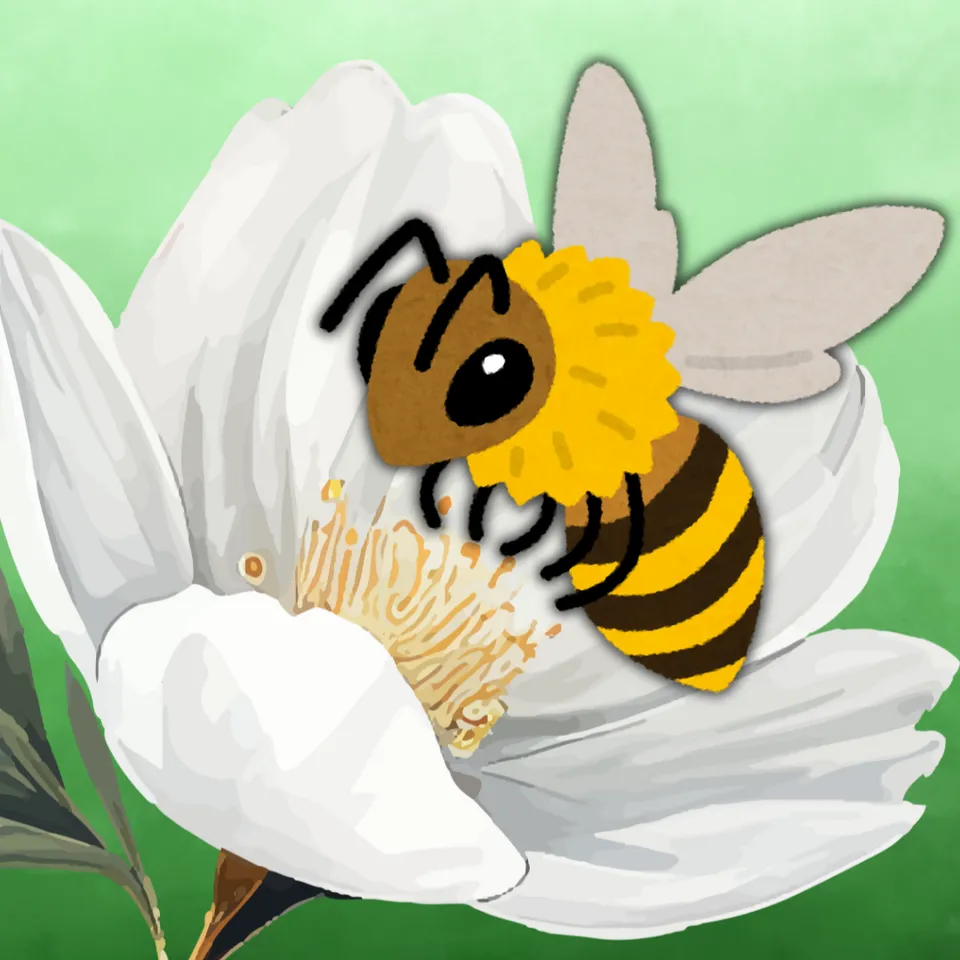
Do you like creepy crawlies? Test your insect knowledge with close-up pictures!
Insects are all around us, but how often do you take a careful look? For each insect, guess the name based on a close up picture! And even if you're an insect pro, there will be lots of fun facts to learn and share. Some familiarity with common insects is a plus, but not required.
Part of
Standards alignment
Common Core State Standards
- Make observations (firsthand or from media) to collect data that can be used to make comparisons.
- All organisms have external parts. Different animals use their body parts in different ways to see, hear, grasp objects, protect themselves, move from place to place, and seek, find, and take in food, water and air. Plants also have different parts (roots, stems, leaves, flowers, fruits) that help them survive and grow.
- There are many different kinds of living things in any area, and they exist in different places on land and in water.
Alabama
- SC23.1.5 — Use information from observations to explain how various external features help living things survive, grow, and meet their needs.
- ELA21.K.20 — Name and sort pictures of objects into categories based on common attributes while relating vocabulary to prior knowledge and building background knowledge.
Alaska
- All organisms have external parts. Different animals use their body parts in different ways to see, hear, grasp objects, protect themselves, move from place to place, and seek, find, and take in food, water and air. Plants also have different parts (roots, stems, leaves, flowers, fruits) that help them survive and grow.
- There are many different kinds of living things in any area, and they exist in different places on land and in water.
- Make observations (firsthand or from media) to collect data that can be used to make comparisons.
- L.K.6 — Use words and phrases acquired through conversations, reading and being read to, and responding to texts.
Arizona
- Objects and organisms can be described in terms of their parts.
- K.L.6 — Use words and phrases acquired through conversations, reading and being read to, and responding to texts.
- K.L1U1.6 — Obtain, evaluate, and communicate information about how organisms use different body parts for survival.
- Identify questions and make predictions based on prior experiences.
- K.L1U1.7 — Observe, ask questions and explain how specialized structures found on a variety of plants and animals (including humans) help them sense and respond to their environment.
Arkansas
- All organisms have external parts. Different animals use their body parts in different ways to see, hear, grasp objects, protect themselves, move from place to place, and seek, find, and take in food, water and air. Plants also have different parts (roots, stems, leaves, flowers, fruits) that help them survive and grow.
- Animals have body parts that capture and convey different kinds of information needed for growth and survival. Animals respond to these inputs with behaviors that help them survive. Plants also respond to some external inputs.
California
- All organisms have external parts. Different animals use their body parts in different ways to see, hear, grasp objects, protect themselves, move from place to place, and seek, find, and take in food, water and air. Plants also have different parts (roots, stems, leaves, flowers, fruits) that help them survive and grow.
- L.K.6 — Use words and phrases acquired through conversations, reading and being read to, and responding to texts.
- Make observations (firsthand or from media) to collect data that can be used to make comparisons.
Colorado
- RWC20-GR.PS-S.2-GLE.1-EO.g — Make predictions based on illustrations.
- SC.P.2.1.a — Observe, describe and discuss living things.
- SC.P.1.1.d — Observe, describe, and discuss living things and natural processes.
- SC.P.3.1.d — Observe and discuss common properties, differences and comparisons among objects.
Connecticut
- L.K.6 — Use words and phrases acquired through conversations, reading and being read to, and responding to texts.
- Make observations (firsthand or from media) to collect data that can be used to make comparisons.
- All organisms have external parts. Different animals use their body parts in different ways to see, hear, grasp objects, protect themselves, move from place to place, and seek, find, and take in food, water and air. Plants also have different parts (roots, stems, leaves, flowers, fruits) that help them survive and grow.
- L.1.5.b — Define words by category and by one or more key attributes (e.g., a duck is a bird that swims; a tiger is a large cat with stripes).
Delaware
- All organisms have external parts. Different animals use their body parts in different ways to see, hear, grasp objects, protect themselves, move from place to place, and seek, find, and take in food, water and air. Plants also have different parts (roots, stems, leaves, flowers, fruits) that help them survive and grow.
- L.K.6 — Use words and phrases acquired through conversations, reading and being read to, and responding to texts.
- There are many different kinds of living things in any area, and they exist in different places on land and in water.
- L.1.5.b — Define words by category and by one or more key attributes (e.g., a duck is a bird that swims; a tiger is a large cat with stripes).
Florida
- SC.K.L.14.3 — Observe plants and animals, describe how they are alike and how they are different in the way they look and in the things they do.
Georgia
- SKL2.a — Construct an argument supported by evidence for how animals can be grouped according to their features.
- ELAGSE1L6 — Use words and phrases acquired through conversations, reading and being read to, and responding to texts. Include frequently occurring conjunctions to signal simple relationships (e.g., I named my hamster Nibblet because she nibbles too much because she likes that).
Hawaii
- All organisms have external parts. Different animals use their body parts in different ways to see, hear, grasp objects, protect themselves, move from place to place, and seek, find, and take in food, water and air. Plants also have different parts (roots, stems, leaves, flowers, fruits) that help them survive and grow.
- Make observations (firsthand or from media) to collect data that can be used to make comparisons.
- Individuals of the same kind of plant or animal are recognizable as similar but can also vary in many ways.
- There are many different kinds of living things in any area, and they exist in different places on land and in water.
Idaho
- All organisms have external parts. Different animals use their body parts in different ways to see; hear; grasp objects; protect themselves; move from place to place; and seek, find, and take in food, water, and air. Plants also have different parts (roots, stems, leaves, flowers, fruits) that help them survive and grow. (1-LS-1.1)
Illinois
- LS1.A-P1 — All organisms have external parts. Different animals use their body parts in different ways to see, hear, grasp objects, protect themselves, move from place to place, and seek, find, and take in food, water and air. Plants also have different parts (roots, stems, leaves, flowers, fruits) that help them survive and grow.
- LS4.D-P1 — There are many different kinds of living things in any area, and they exist in different places on land and in water.
- INV-P4 — Make observations (firsthand or from media) to collect data that can be used to make comparisons.
Indiana
- K.LS.2 — Describe and compare the physical features of common living plants and animals.
- K.CC.3 — Ask and answer questions about key details in a text read aloud or information presented orally or through other media. (E)
Iowa
- There are many different kinds of living things in any area, and they exist in different places on land and in water.
- All organisms have external parts. Different animals use their body parts in different ways to see, hear, grasp objects, protect themselves, move from place to place, and seek, find, and take in food, water and air. Plants also have different parts (roots, stems, leaves, flowers, fruits) that help them survive and grow.
- Make observations (firsthand or from media) to collect data that can be used to make comparisons.
Kansas
- Make observations (firsthand or from media) to collect data that can be used to make comparisons.
- All organisms have external parts. Different animals use their body parts in different ways to see, hear, grasp objects, protect themselves, move from place to place, and seek, find, and take in food, water and air. Plants also have different parts (roots, stems, leaves, flowers, fruits) that help them survive and grow.
- SL.K.8 — Use words and phrases acquired through conversations, reading, and through being read to.
- There are many different kinds of living things in any area, and they exist in different places on land and in water.
- Individuals of the same kind of plant or animal are recognizable as similar but can also vary in many ways.
Kentucky
- L.1.5.b — Define words by category and by one or more key attributes (e.g., a duck is a bird that swims; a tiger is a large cat with stripes).
- L.K.4.c — Use words and phrases acquired through conversations, reading and being read to, and responding to texts.
- All organisms have external parts. Different animals use their body parts in different ways to see, hear, grasp objects, protect themselves, move from place to place, and seek, find, and take in food, water and air. Plants also have different parts (roots, stems, leaves, flowers, fruits) that help them survive and grow.
Louisiana
- L.1.5.b — Define words by category and by one or more key attributes (e.g., a duck is a bird that swims; a tiger is a large cat with stripes).
- L.K.6 — Use words and phrases acquired through conversations, reading and being read to, and responding to texts.
- Make observations (firsthand or from media) to collect data that can be used to make comparisons.
Maine
- L.5.1.b — Define words by category and by one or more key attributes (e.g., a duck is a bird that swims; a tiger is a large cat with stripes).
- L.6.K.a — Use words and phrases acquired through conversations, reading and being read to, and responding to texts.
- SL.2.K.b — Ask and answer questions in order to seek help, gather information, or clarify something that is not understood.
- Make observations (firsthand or from media) to collect data that can be used to make comparisons.
Maryland
- DCI.LS1.A.K-2.1 — All organisms have external parts. Different animals use their body parts in different ways to see, hear, grasp objects, protect themselves, move from place to place, and seek, find, and take in food, water and air. Plants also have different parts (roots, stems, leaves, flowers, fruits) that help them survive and grow.
- DCI.LS4.D.K-2.1 — There are many different kinds of living things in any area, and they exist in different places on land and in water.
- DCI.LS1.D.K-2.1 — Animals have body parts that capture and convey different kinds of information needed for growth and survival. Animals respond to these inputs with behaviors that help them survive. Plants also respond to some external inputs.
- DCI.LS3.B.K-2.1 — Individuals of the same kind of plant or animal are recognizable as similar but can also vary in many ways.
Massachusetts
- PreK-LS1-1(MA) — Compare, using descriptions and drawings, the external body parts of animals (including humans) and plants and explain functions of some of the observable body parts.
- RI.PK.6 — With prompting and support, “read” illustrations in an informational picture book by describing facts learned from the pictures (e.g., how a seed grows into a plant).
- 1-LS1-1 — Use evidence to explain that (a) different animals use their body parts and senses in different ways to see, hear, grasp objects, protect themselves, move from place to place, and seek, find, and take in food, water, and air, and (b) plants have roots, stems, leaves, flowers, and fruits that are used to take in water, air, and other nutrients, and produce food for the plant.
Michigan
- L.K.6 — Use words and phrases acquired through conversations, reading and being read to, and responding to texts.
- L.1.5.b — Define words by category and by one or more key attributes (e.g., a duck is a bird that swims; a tiger is a large cat with stripes).
- L.K.5.a — Sort common objects into categories (e.g., shapes, foods) to gain a sense of the concepts the categories represent.
Minnesota
- 0L.1.2.1.2 — Make observations of plants and animals to compare the diversity of life in different habitats. (P: 3, CC: 1, CI: LS4)
- 0.3.1.2 — Confirm understanding of a text read aloud or information presented orally or through other media (e.g., poems, rhymes, songs) by asking and answering questions about key details and requesting clarification if something is not understood.
Mississippi
- L.K.1B.1 — Develop and use models to exemplify how animals use their body parts to (a) obtain food and other resources, (b) protect themselves, and (c) move from place to place.
Missouri
- Make observations (firsthand or from media) to collect data that can be used to make comparisons.
- All organisms have external parts. Different animals use their body parts in different ways to see, hear, grasp objects, protect themselves, move from place to place, and seek, find, and take in food, water and air. Plants also have different parts (roots, stems, leaves, flowers, fruits) that help them survive and grow.
Montana
- L.K.6 — Use words and phrases acquired through conversations, reading and being read to, and responding to texts.
- L.1.5.b — Define words by category and by one or more key attributes (e.g., a duck is a bird that swims; a tiger is a large cat with stripes).
- SL.K.1 — Participate in collaborative conversations with diverse partners about kindergarten topics and texts with peers and adults in small and larger groups.
Nebraska
- Make observations (firsthand or from media) to collect data that can be used to make comparisons.
- There are many different kinds of living things in any area, and they exist in different places on land and in water.
- All organisms have external parts. Different animals use their body parts in different ways to see, hear, grasp objects, protect themselves, move from place to place, and seek, find, and take in food, water and air. Plants also have different parts (roots, stems, leaves, flowers, fruits) that help them survive and grow.
- Individuals of the same kind of plant or animal are recognizable as similar but can also vary in many ways.
Nevada
- All organisms have external parts. Different animals use their body parts in different ways to see, hear, grasp objects, protect themselves, move from place to place, and seek, find, and take in food, water and air. Plants also have different parts (roots, stems, leaves, flowers, fruits) that help them survive and grow.
- Make observations (firsthand or from media) to collect data that can be used to make comparisons.
- L.K.6 — Use words and phrases acquired through conversations, reading and being read to, and responding to texts.
New Hampshire
- Make observations (firsthand or from media) to collect data that can be used to make comparisons.
- All organisms have external parts. Different animals use their body parts in different ways to see, hear, grasp objects, protect themselves, move from place to place, and seek, find, and take in food, water and air. Plants also have different parts (roots, stems, leaves, flowers, fruits) that help them survive and grow.
- Make predictions based on prior experiences.
New Jersey
- Make observations (firsthand or from media) to collect data that can be used to make comparisons.
- SL.K.2 — Confirm understanding of a text read aloud or information presented orally or through other media by asking and answering questions about key details and requesting clarification if something is not understood.
- SL.K.3 — Ask and answer questions in order to seek help, get information, or clarify something that is not understood.
- All organisms have external parts. Different animals use their body parts in different ways to see, hear, grasp objects, protect themselves, move from place to place, and seek, find, and take in food, water and air. Plants also have different parts (roots, stems, leaves, flowers, fruits) that help them survive and grow.
New Mexico
- Make observations (firsthand or from media) to collect data that can be used to make comparisons.
- All organisms have external parts. Different animals use their body parts in different ways to see, hear, grasp objects, protect themselves, move from place to place, and seek, find, and take in food, water and air. Plants also have different parts (roots, stems, leaves, flowers, fruits) that help them survive and grow.
- There are many different kinds of living things in any area, and they exist in different places on land and in water.
New York
- All organisms have external parts. Different animals use their body parts in different ways to see, hear, grasp objects, protect themselves, move from place to place, and seek, find, and take in food, water and air. Plants also have different parts (roots, stems, leaves, flowers, fruits) that help them survive and grow.
- PKL4 — Explore and use new vocabulary in child-centered, authentic, play-based experiences.
- PKL6 — Use words and phrases acquired through language rich experiences, conversations, reading and being read to, responding to texts, and child-centered, play-based experiences.
- Make predictions based on prior experiences.
- KL6 — Use words and phrases acquired through conversations, reading and being read to, and responding to texts.
North Carolina
- LS.K.1.2 — Use models to exemplify how animals use their body parts to obtain food and other resources, protect themselves, and move from place to place.
- SL.K.1 — Participate in collaborative conversations with diverse partners about kindergarten topics and texts with peers and adults in small and larger groups.
- LS.K.2.1 — Analyze and interpret data to compare the characteristics of different types of the same animal to determine individual similarities and differences.
North Dakota
- All organisms have external parts. Different animals use their body parts in different ways to see, hear, grasp objects, protect themselves, move from place to place, and seek, find and take in food, water and air. Plants also have different parts (roots, stems, leaves, flowers, fruits) that help them survive and grow.
- 1.R.2 — Ask and answer questions about a variety of texts, genres, photographs, or illustrations before, during, and after shared reading or other text-listening experiences to compare, contrast, predict, or infer.
- K.R.6 — Identify photographs, illustrations, and labels during or after a shared reading or other text-listening experience.
- 1.C.6 — Participate in conversations by listening to others and taking turns speaking about topics, continuing through multiple exchanges.
Ohio
- K.LS.1 — Living things have specific characteristics and traits.
- K.LS.2 — Living things have physical traits and behaviors, which influence their survival.
- L.K.6 — Use words and phrases acquired through conversations, reading and being read to, and responding to texts.
- SL.K.1 — Participate in collaborative conversations about kindergarten topics and texts with diverse partners in small and larger groups.
- L.1.5.b — Define words by category and by one or more key attributes (e.g., a duck is a bird that swims; a tiger is a large cat with stripes).
Oklahoma
- All organisms have external parts. (1.LS1.1)
- Different animals use their body parts in different ways to see, hear, grasp objects, protect themselves, move from place to place, and seek, find, and take in food, water, and air. (1.LS1.1)
- PK.S.3 — Notice and describe similarities and differences among plants, animals, and objects. Clarification Statement: Similarities and differences might include grouping like plants, animals, or objects based on observations. Descriptions of groupings might be based on how plants, animals, or objects look, feel, or smell.
- PK.S.4 — Share noticings and wonderings about the physical and natural world. Clarification Statement: Sharing could include drawing, writing, building models, or other creative expressions, such as drama or creative movement. Sharing could include retelling, verbal descriptions, or talking with others. Wonderings might include “why,” “how,” and “what if” statements. Respect for the noticings and wondering of others should be emphasized, but explanations for noticings and wonderings are not emphasized or expected.
Oregon
- K.L.6 — Use words and phrases acquired through conversations, reading and being read to, and responding to texts.
- K.SL.3 — Ask and answer questions in order to seek help, get information, or clarify something that is not understood.
- K.SL.1 — Participate in collaborative conversations with diverse partners about kindergarten topics and texts with peers and adults in small and larger groups.
- K.SL.2 — Confirm understanding of a text read aloud or information presented orally or through other media by asking and answering questions about key details and requesting clarification if something is not understood.
- K.L.5a — Sort common objects into categories to gain a sense of the concepts the categories represent.
Pennsylvania
- All organisms have external parts. Different animals use their body parts in different ways to see, hear, grasp objects, protect themselves, move from place to place, and seek, find, and take in food, water and air. Plants also have different parts (roots, stems, leaves, flowers, fruits) that help them survive and grow.
- Make observations (firsthand or from media) to collect data that can be used to make comparisons.
- CC.1.2.PK.J — Use new vocabulary and phrases acquired in conversations and being read to.
Rhode Island
- All organisms have external parts. Different animals use their body parts in different ways to see, hear, grasp objects, protect themselves, move from place to place, and seek, find, and take in food, water and air. Plants also have different parts (roots, stems, leaves, flowers, fruits) that help them survive and grow.
- L.1.5.b — Define words by category and by one or more key attributes (e.g., a duck is a bird that swims; a tiger is a large cat with stripes).
- L.K.6 — Use words and phrases acquired through conversations, activities in the kindergarten curriculum, reading and being read to, and responding to texts.
- Make observations (firsthand or from media) to collect data that can be used to make comparisons.
South Carolina
- 1-LS1-1.DCI.A: — Structure and Function All organisms have external parts. Different animals use their body parts in different ways to see, hear, grasp objects, protect themselves, move from place to place, and seek, find, and take in food, water, and air. Plants also have different parts (roots, stems, leaves, flowers, fruits) that help them survive and grow. NRC Framework Link
- ELA.K.C.9.1 — Ask and answer questions in conversation on a topic.
- 1-LS3-1.DCI.B: — Variation of Traits Individuals of the same kind of plant or animal are recognizable as similar but can also vary in many ways. NRC Framework Link
- ELA.K.C.8.1 — Participate with peers and adults in structured discussions and routines about grade-appropriate topics and texts: a. enter a conversation by greeting, taking turns, and responding to others with statements, phrases, and/or questions; and b. consider the ideas of others while engaging in conversations.
South Dakota
- Make observations (firsthand or from media) to collect data that can be used to make comparisons.
- K.L.6 — Use vocabulary acquired through conversations, reading, and learning experiences, to ask questions and convey ideas.
- Describing similarities and differences in different organisms of the same species and different species.
Tennessee
- K.ETS1.1 — Ask and answer questions about the scientific world and gather information using the senses.
- K.FL.VA.7.c — Use words and phrases acquired through conversations, reading and being read to, and responding to texts.
- K.FL.VA.7.a — Determine or clarify the meaning of unknown and multiple-meaning words and phrases based on Kindergarten conversations, reading, and content.
Texas
- K.10B — identify basic parts of plants and animals;
- K.13B — identify the different structures that animals have that allow them to interact with their environment such as seeing, hearing, moving, and grasping objects;
- K.4B — use the senses as a tool of observation to identify properties and patterns of organisms, objects, and events in the environment.
- 1.10A — investigate how the external characteristics of an animal are related to where it lives, how it moves, and what it eats;
Utah
- 1.2.2 — Construct an explanation by observing patterns of external features of living things that survive in different locations. Emphasize how plants and nonhuman animals, found in specific surroundings, share similar physical characteristics. Examples could include that plants living in dry areas are more likely to have thick outer coatings that hold in water, animals living in cold locations have longer and thicker fur, or most desert animals are awake at night. (LS1.A, LS1.D)
Vermont
- All organisms have external parts. Different animals use their body parts in different ways to see, hear, grasp objects, protect themselves, move from place to place, and seek, find, and take in food, water and air. Plants also have different parts (roots, stems, leaves, flowers, fruits) that help them survive and grow.
- Make predictions based on prior experiences.
- There are many different kinds of living things in any area, and they exist in different places on land and in water.
Virginia
- K.1.b.ii — Identify characteristics and properties of objects through observations.
- 1.5.b — Animals have different physical characteristics that perform specific functions.
- K.1.a.iii — Make predictions based on observations.
- K.1.f.ii — Communicate observations using pictures, drawings, and/or speech.
Washington
- All organisms have external parts. Different animals use their body parts in different ways to see, hear, grasp objects, protect themselves, move from place to place, and seek, find, and take in food, water and air. Plants also have different parts (roots, stems, leaves, flowers, fruits) that help them survive and grow.
- L.K.6 — Use words and phrases acquired through conversations, reading and being read to, and responding to texts.
- L.1.5.b — Define words by category and by one or more key attributes (e.g., a duck is a bird that swims; a tiger is a large cat with stripes).
Washington, D.C.
- Make observations (firsthand or from media) to collect data that can be used to make comparisons.
- L.K.6 — Use words and phrases acquired through conversations, reading and being read to, and responding to texts.
- CCRA.SL.2 — Integrate and evaluate information presented in diverse media and formats, including visually, quantitatively, and orally.
- L.1.5.b — Define words by category and by one or more key attributes (e.g., a duck is a bird that swims; a tiger is a large cat with stripes).
West Virginia
- Building and appropriately using science domain vocabulary and phrases
- Interpreting and applying visually expressed information (e.g., flowchart, diagram, model, graph, or table,
- Determining the relationships between structure and function
Wisconsin
- Students understand objects and organisms can be described in terms of their parts and that systems in the natural and designed world have parts that work together.
- Students collect, record, and share observations. This includes the following: Record information (observations, thoughts, and ideas). Use and share pictures, drawings, or writings of observations. Use observations (firsthand or from media) to describe patterns or relationships in the natural and designed worlds in order to answer scientific questions and solve problems. Compare predictions (based on prior experiences) to what occurred (observable events). Analyze data from tests of an object or tool to determine if the object or tool works as intended.
- ELA.K.L.4 — Demonstrate an ability to collaboratively and independently build vocabulary knowledge when encountering unknown words including cultural, general academic, and discipline-specific terms and phrases; use vocabulary appropriate to the context and situation.
- All organisms have external parts that they use to perform daily functions.
Wyoming
- All organisms have external parts that they use to perform daily functions.
- L.1.5.b — Define words by category and by one or more key attributes (e.g., a duck is a bird that swims; a tiger is a large cat with stripes).
- L.K.6 — Use words and phrases acquired through conversations, reading and being read to, and responding to texts.
- Make observations (firsthand or from media) to collect data that can be used to make comparisons.