Persephone and Demeter
Ages 6–10 · 13 minutes · English, Stories
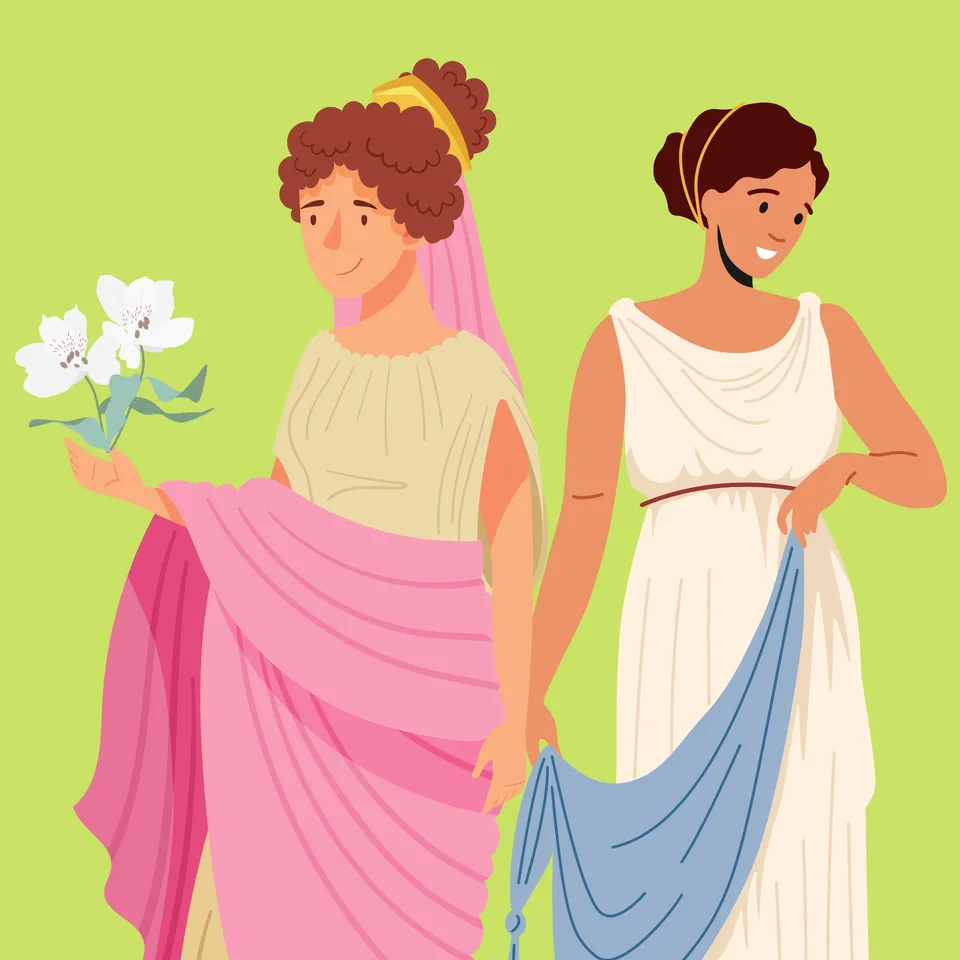
Persephone goes missing and her journey to the underworld changes the world around her!
When Persephone gets tricked into spending time with Hades in the underworld, Persephone’s mother, Demeter, stops growing all of the plants in the world. Students learn about the importance of honesty in this interactive story.
Part of
Standards alignment
Common Core State Standards
- RL.3.2 — Recount stories, including fables, folktales, and myths from diverse cultures; determine the central message, lesson, or moral and explain how it is conveyed through key details in the text.
- Plants depend on water and light to grow.
- RL.1.3 — Describe characters, settings, and major events in a story, using key details.
- RL.2.3 — Describe how characters in a story respond to major events and challenges.
Alabama
- ELA21.3.22 — Describe literary elements within a story, including setting, plot, characters, and themes.
- ELA21.3.22c — Identify the central message, theme, or moral in a story, including myths, fables, and folktales, and explain the meaning conveyed in the passage.
- ELA21.1.23a — Describe the characters and settings, using illustrations and textual evidence from a story.
- ELA21.2.30a — State and confirm predictions about a text.
Alaska
- RL.2.2 — Retell stories, including fables and folktales from diverse cultures, and determine the author's purpose (e.g., teach a lesson, make you laugh, tell a scary story, describe an imaginary place), lesson or moral.
- RL.2.3 — Describe how characters in a story, play or poem respond to major events, problems, and challenges.
- Plants depend on water and light to grow.
- RL.3.2 — Determine the author's purpose, message, lesson, or moral and explain how it is conveyed through key details in the text; summarize stories in correct sequence, including fables and folktales from diverse cultures.
Arizona
- 3.RL.2 * — Recount and paraphrase stories, including fables, folktales, and myths from diverse cultures; determine the central message, lesson, or moral and explain how it is conveyed through key details in text.
- 2.RL.2 — Recount stories, including fables and folktales from diverse cultures, and determine their central message, lesson, or moral.
- 2.RL.3 — Describe how characters in a story respond to major events and challenges.
- K.E1U1.4 — Observe, describe, ask questions, and predict seasonal weather patterns; and how those patterns impact plants and animals (including humans).
- 1.L2U2.7 — Develop and use models about how living things use resources to grow and survive; design and evaluate habitats for organisms using earth materials.
Arkansas
- 2.RC.8.RL — Identify the main story elements (characters, settings, events, problem, and solution) in a text.
- 3.RC.7.RL — Describe how characters respond to major events and challenges.
- Plants depend on water and light to grow.
- 1.RC.5.RF — Use background knowledge and details, including illustrations, charts, and graphs, to make predictions and inferences about what happens in a text.
- 2.RC.2.RF — Answer questions about key details in a text.
California
- RL.1.3 — Describe characters, settings, and major events in a story, using key details.
- RL.3.2 — Recount stories, including fables, folktales, and myths from diverse cultures; determine the central message, lesson, or moral and explain how it is conveyed through key details in the text.
- Plants depend on water and light to grow.
- K.1.2 — Learn examples of honesty, courage, determination, individual responsibility, and patriotism in American and world history from stories and folklore.
- RL.1.10.b — Confirm predictions about what will happen next in a text.
- RL.2.2 — Recount stories, including fables and folktales from diverse cultures, and determine their central message, lesson, or moral.
Colorado
- RWC20-GR.3-S.2-GLE.1-EO.a.iii — Recount stories, including fables, folktales, and myths from diverse cultures; determine the central message, lesson, or moral and explain how it is conveyed through key details in the text.
- RWC20-GR.2-S.2-GLE.1-EO.a.iii — Recount stories, including fables and folktales from diverse cultures, and determine their central message, lesson, or moral.
- RWC20-GR.2-S.2-GLE.1-EO.a.iv — Describe how characters in a story respond to major events and challenges.
- RWC20-GR.1-S.2-GLE.1-EO.a.iii — Describe characters, settings, and major events in a story, using key details.
- SC.2.2.1 — Plants depend on water and light to grow and on animals for pollination or to move their seeds around.
Connecticut
- RL.2.3 — Describe how characters in a story respond to major events and challenges.
- RL.3.2 — Recount stories, including fables, folktales, and myths from diverse cultures; determine the central message, lesson, or moral and explain how it is conveyed through key details in the text.
- Plants depend on water and light to grow.
- RL.1.3 — Describe characters, settings, and major events in a story, using key details.
Delaware
- RL.3.2 — Recount stories, including fables, folktales, and myths from diverse cultures; determine the central message, lesson, or moral and explain how it is conveyed through key details in the text.
- Plants depend on water and light to grow.
- RL.1.3 — Describe characters, settings, and major events in a story, using key details.
- RL.2.3 — Describe how characters in a story respond to major events and challenges.
Florida
- ELA.1.R.1.2 — Identify and explain the moral of a story.
- ELA.1.R.1.1 — Identify and describe the main story elements in a story.
- ELA.2.R.1.3 — Identify different characters’ perspectives in a literary text.
- SC.3.L.17.1 — Describe how animals and plants respond to changing seasons.
- SC.3.L.17.2 — Recognize that plants use energy from the Sun, air, and water to make their own food.
Georgia
- ELAGSE2RL3 — Describe how characters in a story respond to major events and challenges.
- ELAGSE3RL2 — Recount stories, including fables, folktales, and myths from diverse cultures; determine the central message, lesson, or moral and explain how it is conveyed through key details in the text.
- ELAGSE2SL2 — Recount or describe key ideas or details from written texts read aloud or information presented orally or through other media.
- S1L1.b — Ask questions to compare and contrast the basic needs of plants (air, water, light, and nutrients) and animals (air, water, food, and shelter).
- S1E1.d — Analyze data to identify seasonal patterns of change.
Hawaii
- 2.RL.3 — Describe how characters in a story respond to major events and challenges.
- 3.RL.2 — Recount stories, including fables, folktales, and myths from diverse cultures; determine the central message, lesson, or moral and explain how it is conveyed through key details in the text.
- Plants depend on water and light to grow.
- 1.RL.3 — Describe characters, settings, and major events in a story, using key details.
Idaho
- 2.RC.L.5a — Identify the central message, lesson, or moral of stories (including fables and folktales) from diverse cultures heard or read.
- 2.RC.L.5b — Describe how characters in stories heard or read respond to major events and challenges.
- Seasons are created by weather patterns for a particular region and time. Local patterns create four distinct seasons. (1-ESS-1.2)
- Plants depend on water and light to grow. (2-LS-1.1)
- 2.RC.TE.3 — Ask and answer such questions as who, what, where, when, why, and how to demonstrate understanding of key details in grade-level texts heard or read.
Illinois
- RL.2.3 — Describe how characters in a story respond to major events and challenges.
- RL.3.2 — Recount stories, including fables, folktales, and myths from diverse cultures; determine the central message, lesson, or moral and explain how it is conveyed through key details in the text.
- LS2.A-P1 — Plants depend on water and light to grow.
- RL.1.3 — Describe characters, settings, and major events in a story, using key details.
Indiana
- 2.RC.1 — Ask and answer questions about the main idea and key details in a text to demonstrate comprehension. (E)
- 2.RC.2 — Recount the beginning, middle, and ending of stories, including fables and folktales from diverse cultures, and determine their central message, lesson, or moral.
- 2.RC.3 — Describe how characters in a story respond to major events and how characters affect the plot.
- 1.RC.4 — Make and confirm predictions about what will happen next in a story.
- 3.RC.2 — Recount folktales, fables, and tall tales from diverse cultures; identify the themes in these works. (E)
Iowa
- RL.3.2 — Recount and determine the central message, lesson, or moral of fables, folktales, and myths from diverse cultures and explain how it is conveyed through key details in the text.
- Plants depend on water and light to grow.
- RL.2.2 — Recount and determine the central message, lesson or moral of stories, including but not limited to fables and folktales from diverse cultures.
- RL.2.7 — Use information gained from the illustrations and words in a story to demonstrate understanding of its characters, setting, or plot.
- SL.2.2 — Describe the main topic and recount key details from a text read aloud, information presented orally, or other media.
Kansas
- RL.2.3 — Describe how characters in a story respond to major events and challenges.
- RL.3.2 — Recount stories, including fables, folktales, and myths from diverse cultures; determine the central message, lesson, or moral and explain how it is conveyed through key details in the text.
- Plants depend on water and light to grow.
- RL.1.3 — Describe characters, settings, and major events in a story, using key details.
- RL.2.1 — Ask and answer such questions as who, what, where, when, why, and how to demonstrate understanding of key details in a text.
Kentucky
- RL.2.1 — Ask and answer such questions as who, what, where, when, why and how, and make and support logical inferences to construct meaning from the text.
- RL.2.2 — Identify implicit and explicit information from a summary to determine the author’s message, lesson learned and/or moral, including but not limited to fables and folktales from diverse cultures.
- RL.2.3 — Describe how characters in a story respond to major events and challenges in order to make meaning of the story development.
- Plants depend on water and light to grow.
- RL.3.2 — Identify and cite relevant implicit and explicit information from a summary to determine the theme, lesson learned and/or moral, including but not limited to fables, folktales and myths from diverse cultures.
Louisiana
- RL.3.2 — Recount stories, including fables, folktales, and myths from diverse cultures; determine the central message, lesson, or moral and explain how it is conveyed through key details in the text.
- RL.2.2 — Recount stories, including fables and folktales from diverse cultures, and determine their central message, lesson, or moral.
- RL.2.3 — Describe how characters in a story respond to major events and challenges.
- RL.1.3 — Describe characters, settings, and major events in a story, using key details.
Maine
- R.6.1.a — Describe characters, settings, and major events in a story, including details about who, what, when, where, and how.
- R.6.2.a — Describe how characters in a story respond to major events and challenges.
- R.4.2.a — Ask and answer questions about who, what, when, where, how and why.
- R.5.2.a — Retell texts, including details about who, what, when, where, how, and why; demonstrate understanding of the theme.
- R.6.2.b — Describe the relationship between a series of events, ideas or concepts, using language that pertains to time, sequence, and cause/effect.
Maryland
- DCI.LS2.A.K-2.1 — Plants depend on water and light to grow.
- RL.3.2 — Recount stories, including fables, folktales, and myths from diverse cultures; determine the central message, lesson, or moral and explain how it is conveyed through key details in the text.
- RL.2.2 — Recount stories, including fables and folktales from diverse cultures, and determine their central message, lesson, or moral.
- RL.2.3 — Describe how characters in a story respond to major events and challenges.
Massachusetts
- RL.3.2 — Retell stories, including fables, folktales, and myths from diverse cultures; determine the central message, lesson, or moral and explain how it is conveyed through key details in the text.
- K-LS1-1 — Observe and communicate that animals (including humans) and plants need food, water, and air to survive. Animals get food from plants or other animals. Plants make their own food and need light to live and grow.
- RL.1.3 — Describe characters, settings, and major events in a story, using key details.
- RL.2.2 — Retell stories, including fables and folktales from diverse cultures, and determine their central message, lesson, or moral.
- 1-ESS1-2 — Analyze provided data to identify relationships among seasonal patterns of change, including relative sunrise and sunset time changes, seasonal temperature and rainfall or snowfall patterns, and seasonal changes to the environment.
Michigan
- RL.3.2 — Recount stories, including fables, folktales, and myths from diverse cultures; determine the central message, lesson, or moral and explain how it is conveyed through key details in the text.
- RL.1.3 — Describe characters, settings, and major events in a story, using key details.
- RL.2.2 — Recount stories, including fables and folktales from diverse cultures, and determine their central message, lesson, or moral.
- RL.2.3 — Describe how characters in a story respond to major events and challenges.
- 2-LS2-1 — Plan and conduct an investigation to determine if plants need sunlight and water to grow.
Minnesota
- 2.1.4.2 — Identify the central idea, message, or moral of a text and one or two supporting details.
- 3.1.4.1 — Ask and answer questions to demonstrate understanding of both literal and non literal language in a text, referring explicitly to the texts as the basis for the answers; summarize the text.
- 3.1.4.2 — Identify the central idea or argument in fables, folktales, and myths, explain how it is supported by key details, and describe the connection between details.
- 1.1.4.1 — Ask and answer questions including who, what and where to demonstrate understanding of key details in a text; retell key details.
Mississippi
- RL.2.3 — Describe how characters in a story respond to major events and challenges.
- RL.3.2 — Recount stories, including fables, folktales, and myths from diverse cultures; determine the central message, lesson, or moral and explain how it is conveyed through key details in the text.
- E.K.8A.1 — Construct an explanation of the pattern of the Earth’s seasonal changes in the environment using evidence from observations.
- L.K.3B.1 — Observe and communicate that animals get food from plants or other animals. Plants make their own food and need light to live and grow.
- RL.1.3 — Describe characters, settings, and major events in a story, using key details.
Missouri
- 2.R.2.A.a — describe the setting, problems, solutions, sequence of events (plot), and big idea or moral lesson
- Plants depend on water and light to grow.
- 3.R.1.A.c — summarizing a story’s beginning, middle, and end determining its central message, lesson, or moral
- 5.R.2.A.f — introduce origin myths and culturally significant characters/events in mythology
Montana
- RL.2.3 — Describe how characters in a story respond to major events and challenges.
- RL.3.2 — Recount stories, including fables, folktales, and myths from diverse cultures, including those by and about American Indians; determine the central message, lesson, or moral; and explain how it is conveyed through key details in the text.
- K-LS1-1 — use observations to describe patterns of what plants and animals, including humans, need to survive.
- RL.1.3 — Describe characters, settings, and major events in a story, using key details.
Nebraska
- Plants depend on water and light to grow.
- LA.2.RP.1 — Recount narratives and determine their central message, lesson, or moral.
- SS K.3.3.b — Identify the four seasons.
- SS K.1.2.a — Model citizenship skills.
Nevada
- RL.3.2 — Recount stories, including fables, folktales, and myths from diverse cultures; determine the central message, lesson, or moral and explain how it is conveyed through key details in the text.
- SS.1.10 — Share stories that illustrate honesty, courage, friendship, respect, and responsibility; have students explain how the stories show these qualities.
- Plants depend on water and light to grow.
- RL.2.3 — Describe how characters in a story respond to major events and challenges.
New Hampshire
- RL.2.3 — Describe how characters in a story respond to major events and challenges.
- RL.3.2 — Recount stories, including fables, folktales, and myths from diverse cultures; determine the central message, lesson, or moral and explain how it is conveyed through key details in the text.
- Plants depend on water and light to grow.
- RL.1.3 — Describe characters, settings, and major events in a story, using key details.
- RL.2.2 — Recount stories, including fables and folktales from diverse cultures, and determine their central message, lesson, or moral.
New Jersey
- RL.2.3 — Describe how characters in a story respond to major events and challenges using key details.
- RL.3.2 — Recount stories, including fables, folktales, and myths from diverse cultures; determine the central message/theme, lesson, or moral and explain how it is revealed through key details in the text.
- Plants depend on water and light to grow.
- 6.1.2.Geo.HE.1 — Explain how seasonal weather changes, climate, and other environmental characteristics affect people's lives in a place or region.
- RL.2.2 — Recount stories, including fables and folktales from diverse cultures, and determine their central message/theme, lesson, or moral.
New Mexico
- RL.1.NM.2 — Identify characters and simple story lines from selected myths and stories from around the world.
- RL.3.2 — Recount stories, including fables, folktales, and myths from diverse cultures; determine the central message, lesson, or moral and explain how it is conveyed through key details in the text.
- Plants depend on water and light to grow.
- RL.1.3 — Describe characters, settings, and major events in a story, using key details.
- RL.2.3 — Describe how characters in a story respond to major events and challenges.
- RL.2.NM.1 — Identify the main topic, retell key details of a text, and make predictions;
New York
- Plants depend on water and light to grow.
- 1R3 — Describe characters, settings, and major events in a story, or pieces of information in a text. (RI&RL)
- K.7a — Climate, seasonal weather changes, and the physical features associated with the community and region all affect how people live.
- K.8b — People use folktales, legends, oral histories, and music to teach values, ideas, traditions, and important events from the past.
- 2R7 — Demonstrate understanding of story elements and/or topics by applying information gained from illustrations or text features. (RI&RL)
North Carolina
- RL.3.2 — Recount stories, including fables, folktales, and myths from diverse cultures; determine the central message, lesson, or moral and explain how it is conveyed through key details in the text.
- RL.2.2 — Recount stories, including fables and folktales from diverse cultures, and determine their central message, lesson, or moral.
- RL.3.1 — Ask and answer questions to demonstrate understanding of a text, referring explicitly to the text as the basis for the answers.
- RL.3.3 — Describe characters in a story and explain how their actions contribute to the sequence of events.
- LS.3.3 — Understand how environmental factors aid in the survival of plants.
- RL.2.3 — Describe how characters in a story respond to major events and challenges.
North Dakota
- 2.R.8a — Describe characters' feelings or traits during or after listening to a story.
- Plants depend on water and light to grow.
- 1.R.3.b — Identify characters, setting, and plot in a literary text during or after a shared reading or other text-listening experience.
- 3.R.8a — Describe characters' feelings, traits, motivations, and actions after reading a story.
Ohio
- RL.2.2.a — Determine the lesson or moral.
- RL.3.2.b — Retell stories, including fables, folktales, and myths from diverse cultures.
- K.ESS.1 — Weather changes are long-term and short-term.
- RL.1.3 — Describe characters, settings, and major events in a story, using key details.
- RL.2.3 — Describe how characters in a story respond to major events and challenges.
Oklahoma
- Plants need water and light to live and grow. (K.LS1.1)
- 2.3.R.3 — Students will find examples of literary elements: • setting (i.e., time and place) • plot (i.e., beginning, middle, end) • characters and their traits
Oregon
- 2.RL.3 — Describe how characters in a story respond to major events and challenges, including identifying the characters' feelings, the plot or problem, and how it is resolved.
- 2.RL.1 — Ask and answer such questions as who, what, where, when, why, and how to demonstrate understanding of key details in a text.
- 3.RL.2 — Recount and summarize stories, including fables, folktales, and myths from diverse cultures; determine the central message, lesson, or moral, and explain how it is conveyed through key details in the text.
- 2.LS2.1 — Plan and conduct an investigation to determine if plants need sunlight and water to grow. [Clarification Statement: Plants depend on air, water, light, and minerals (in the soil) to grow. Examples of an investigation could include plant growth with different amounts of sunlight or water.] [Assessment Boundary: Assessment is limited to testing one variable at a time. Assessment is limited to the effects of sunlight and water on plant growth.]
- 2.RL.7 — Use information gained from the illustrations and words in a print or digital text to demonstrate understanding of its characters, setting, or plot.
Pennsylvania
- CC.1.3.2.A — Recount stories and determine their central message, lesson, or moral.
- CC.1.3.2.C — Describe how characters in a story respond to major events and challenges.
- Plants depend on water and light to grow.
- CC.1.3.3.A — Determine the central message, lesson, or moral in literary text; explain how it is conveyed in text.
Rhode Island
- Plants depend on water and light to grow.
- RL.2.1 — Ask and answer such questions as who, what, where, when, why, and how to demonstrate understanding of key details in a text.
- RL.2.2 — Retell stories, including fables and folktales from diverse cultures, and determine their central message, lesson, or moral.
- RL.2.3 — Describe how characters in a story respond to major events and challenges.
- RL.3.2 — Retell stories, including fables, folktales, and myths from diverse cultures, determine the central message, lesson, or moral and explain how it is conveyed through key details in a text.
South Carolina
- 2-LS2-1.DCI.A: — Interdependent Relationships in Ecosystems Plants depend on air, water, minerals (in the soil), and light to grow. Different plants survive better in different settings because they have varied needs for water, minerals, and sunlight. NRC Framework Link
- ELA.1.AOR.2.1 — Retell a story using main story elements and identify a lesson in a literary text.
- ELA.2.AOR.2.1 — Identify and explain an explicit theme in a literary text.
South Dakota
- 2.RL.2 — Retell stories, those from diverse cultures, and determine their central message/theme, lesson, or moral
- 2.RL.3 — Describe how characters in a story respond to major events and challenges.
- K-LS1-1 — Describe patterns of what plants and animals (including humans) need to survive.
Tennessee
- 2.RL.KID.1 — Ask and answer such questions as who, what, where, when, why, and how to demonstrate understanding of key details in a text.
- 2.RL.KID.3 — Describe how characters in a story respond to major events and challenges.
- 3.RL.KID.2 — Recount stories, including fables, folktales, and myths from diverse cultures; determine the central message, lesson, or moral and explain how it is conveyed through key details in the text.
- 2.RL.IKI.7 — Use information gained from illustrations and words in a print or digital text to demonstrate understanding of its characters, setting, or plot.
- K.ESS2.2 — Develop and use models to predict weather and identify patterns in spring, summer, autumn, and winter.
- 1.LS2.3 — Recognize how plants depend on their surroundings and other living things to meet their needs in the places they live.
Texas
- 1.8C — identify characteristics of the seasons of the year and day and night; and
- 1.8D — describe the setting.
- 1.9 — Earth and space. The student knows that the natural world has recognizable patterns. The student is expected to describe and predict the patterns of seasons of the year such as order of occurrence and changes in nature.
- 2.8C — describe and understand plot elements, including the main events, the conflict, and the resolution, for texts read aloud and independently; and
- K.12A — observe and identify the dependence of plants on air, sunlight, water, nutrients in the soil, and space to grow; and
Utah
- 1.R.7 — Describe characters, settings, and important events in a story (RL) or pieces of information in a text. (RI)
- K.2.1.d — Identify examples of honesty, responsibility, patriotism, and courage from history, literature, and folklore, as well as from everyday life (e.g., heroes of diverse cultures).
- 2.R.12 — Demonstrate understanding of story elements and/or topics by applying information gained from illustrations or text features. (RL & RI)
Vermont
- RL.2.3 — Describe how characters in a story respond to major events and challenges.
- RL.3.2 — Recount stories, including fables, folktales, and myths from diverse cultures; determine the central message, lesson, or moral and explain how it is conveyed through key details in the text.
- Plants depend on water and light to grow.
- RL.1.3 — Describe characters, settings, and major events in a story, using key details.
- RL.2.2 — Recount stories, including fables and folktales from diverse cultures, and determine their central message, lesson, or moral.
Virginia
- 1.1.a — The student will apply history and social science skills to practice citizenship in the classroom by practicing honesty and showing kindness to oneself and others.
- 1.RL.1.B — Identify the elements of a familiar story, including the characters, setting, and important events (e.g., conflict and resolution).
- 1.4.a — Plants need nutrients, air, water, light, and a place to grow.
- 1.7.b — There are relationships between daily weather and the season.
- 1.7.c — Changes in temperature, light, and precipitation affect plants and animals, including humans.
- 1.RL.3.B — Make connections between characters, settings, and major events in stories heard, using key details.
Washington
- RL.2.3 — Describe how characters in a story respond to major events and challenges.
- RL.3.2 — Recount stories, including fables, folktales, and myths from diverse cultures; determine the central message, lesson, or moral and explain how it is conveyed through key details in the text.
- Plants depend on water and light to grow.
- RL.1.3 — Describe characters, settings, and major events in a story, using key details.
- RL.2.2 — Recount stories, including fables and folktales from diverse cultures, and determine their central message, lesson, or moral.
Washington, D.C.
- RL.2.3 — Describe how characters in a story respond to major events and challenges.
- RL.3.2 — Recount stories, including fables, folktales, and myths from diverse cultures; determine the central message, lesson, or moral and explain how it is conveyed through key details in the text.
- RL.1.3 — Describe characters, settings, and major events in a story, using key details.
- RL.2.2 — Recount stories, including fables and folktales from diverse cultures, and determine their central message, lesson, or moral.
West Virginia
- ELA.2.3 — Describe how characters in a story respond to major events and challenges in literary text.
- ELA.3.2 — Recount stories, including fables, folktales, and myths from diverse cultures; determine the central message, lesson, or moral and explain how it is conveyed through key details in the literary text.
- ELA.1.1 — Ask and answer questions about key details in a literary text.
- ELA.1.13 — Use illustrations and details in a story to describe its characters, setting, or events in literary texts.
- ELA.2.2 — Recount stories, including fables and folktales from diverse cultures and determine their central message, lesson, or moral in literary text.
- S.2.5 — Plan and conduct an investigation to determine if plants need sunlight and water to grow. 5.2.6 Develop a simple model that mimics the function of an animal in dispersing seeds or pollinating plants. *
Wisconsin
- ELA.1.R.3 — Describe characters, settings, and important events in a story or pieces of information in a text. (RI&RL)
- ELA.1.SL.2 — Ask and answer questions about key details in a text read aloud or information presented orally or through other media.
- ELA.2.R.3 — Describe how characters respond to major events and challenges. (RL) Describe the connections between ideas, concepts, or a series of events. (RI)
- Plants depend on water and light to grow. Plants depend on animals for pollination or to move their seeds around.
- ELA.1.R.7 — Use illustrations and details in literary and informational texts to discuss story elements and/or topics. (RI&RL)
Wyoming
- RL.3.2 — Recount stories, including fables, folktales, and myths from diverse cultures; determine the central message, lesson, or moral and explain how it is conveyed through key details in the text.
- Plants depend on water and light to grow, and also depend on animals for pollination or to move their seeds around.
- RL.2.3 — Describe how characters in a story respond to major events and challenges.
- RL.1.3 — Describe characters, settings, and major events in a story, using key details.