Jack and the Beanstalk
Ages 3–7 · 21 minutes · English, Stories
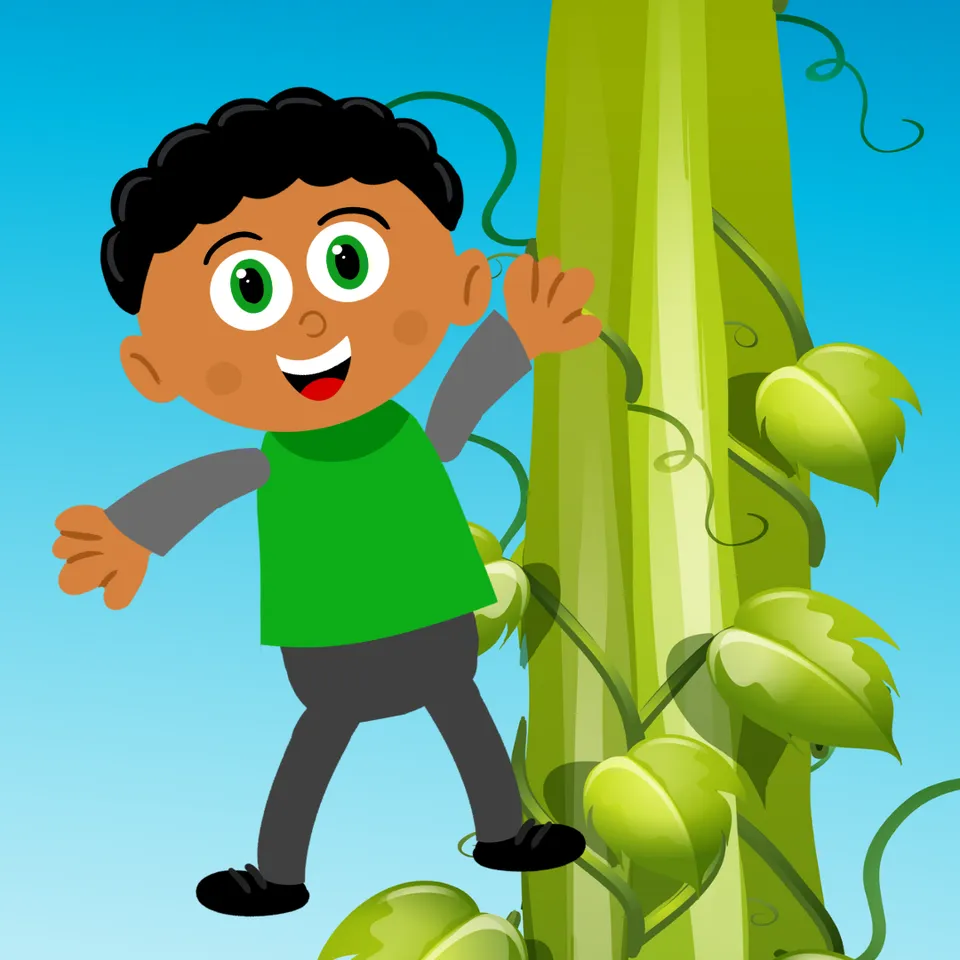
A boy named Jack climbs a magic beanstalk and finds another world above the clouds. A big one. You might even say...GIANT.
Staying true to the classic fairy tale, a boy named Jack trades his family cow for three magic beans, in what he learns might have been an unfair transaction. But the beans actually (magically!) turn out to be the real deal, and a giant beanstalk grows. Jack climbs up and finds a whole new world above the clouds. A big one. Almost as if a giant lives there...
Part of
Standards alignment
Common Core State Standards
- RL.K.1 — With prompting and support, ask and answer questions about key details in a text.
- RL.K.7 — With prompting and support, describe the relationship between illustrations and the story in which they appear (e.g., what moment in a story an illustration depicts).
- ELD-SI.K-3.Narrate — Multilingual learners will… • Share ideas about one's own and others' lived experiences and previous learning • Connect stories with images and representations to add meaning • Ask questions about what others have shared • Recount and restate ideas • Discuss how stories might end or next steps
- RL.K.3 — With prompting and support, identify characters, settings, and major events in a story.
- SL.1.2 — Ask and answer questions about key details in a text read aloud or information presented orally or through other media.
Alabama
- ELA21.K.30 — With prompting and support, ask and answer questions about key details in literary and informational texts.
- ELA21.K.26 — With prompting and support, describe the relationship between illustrations and the text in which they appear.
- ELA21.K.28 — With prompting and support, use text clues to determine main ideas and make predictions about an ending in a literary text.
- SS10.K.10 — Apply vocabulary related to giving and following directions.
Alaska
- RL.K.1 — With prompting and support, ask and answer questions about a literary text using key details from the text.
- RL.K.3 — With prompting and support, identify characters, settings, major events, and problem-solution in a story, song, or poem.
- RL.K.7 — With prompting and support, describe the relationship between illustrations and the story in which they appear (e.g., what moment in a story an illustration depicts) or use illustrations to tell or retell a story.
- SL.1.2 — Ask and answer questions about key details in a text read aloud or information presented orally or through other media.
Arizona
- K.RL.1 — With prompting and support, ask and answer questions about key details in a text.
- K.RL.3 — With prompting and support, identify characters, settings, and major events in a story.
- 1.SL.2 — Ask and answer questions about key details in a text read aloud or information presented orally or through other media.
- K.RL.4 — With prompting and support, ask and answer questions about unknown words in a text.
- K.RL.7 — With prompting and support, describe the relationship between illustrations and the story in which they appear (e.g., what moment in a story an illustration depicts).
Arkansas
- K.RC.2.RF — Answer questions about key details in a text.
- K.RC.6.RF — Use background knowledge and details, including illustrations, charts, and graphs, to make predictions and inferences about what happens in a text.
- K.RC.11.RL — Explain how visual images support understanding of a text.
- K.RC.4.RF — Build general and academic vocabulary and background knowledge of age and grade-appropriate topics through discussion, reading, and writing.
- K.RC.9.RL — Identify settings and events in a text.
California
- RL.K.1 — With prompting and support, ask and answer questions about key details in a text.
- RL.K.10.b — Use illustrations and context to make predictions about text.
- RL.K.3 — With prompting and support, identify characters, settings, and major events in a story.
- RL.K.7 — With prompting and support, describe the relationship between illustrations and the story in which they appear (e.g., what moment in a story an illustration depicts).
Colorado
- RWC20-GR.K-S.2-GLE.1-EO.a.i — With prompting and support, ask and answer questions about key details in a text.
- RWC20-GR.K-S.2-GLE.1-EO.c.i — With prompting and support, describe the relationship between illustrations and the story in which they appear (for example: what moment in a story an illustration depicts).
- RWC20-GR.PS-S.2-GLE.1-EO.g — Make predictions based on illustrations.
- RWC20-GR.PS-S.2-GLE.1-EO.h — Begin to identify key features of reality versus fantasy in stories, pictures, and events.
Connecticut
- RL.K.1 — With prompting and support, ask and answer questions about key details in a text.
- RL.K.3 — With prompting and support, identify characters, settings, and major events in a story.
- RL.K.7 — With prompting and support, describe the relationship between illustrations and the story in which they appear (e.g., what moment in a story an illustration depicts).
- RL.1.1 — Ask and answer questions about key details in a text.
Delaware
- RL.K.1 — With prompting and support, ask and answer questions about key details in a text.
- RL.K.3 — With prompting and support, identify characters, settings, and major events in a story.
- RL.K.7 — With prompting and support, describe the relationship between illustrations and the story in which they appear (e.g., what moment in a story an illustration depicts).
- RL.1.7 — Use illustrations and details in a story to describe its characters, setting, or events.
- SL.1.2 — Ask and answer questions about key details in a text read aloud or information presented orally or through other media.
Florida
- ELA.K.R.1.1 — Describe the main character(s), setting, and important events in a story.
- ELA.K.R.3.1 — Identify and explain descriptive words in text(s).
- SC.K.L.14.2 — Recognize that some books and other media portray animals and plants with characteristics and behaviors they do not have in real life.
Georgia
- ELAGSEKRL1 — With prompting and support, ask and answer questions about key details in a text.
- ELAGSEKRL3 — With prompting and support, identify characters, settings, and major events in a story.
- ELAGSEKRL7 — With prompting and support, describe the relationship between illustrations and the story (how illustrations support the text).
- ELAGSEKSL2 — Confirm understanding of written texts read aloud or information presented orally or through media by asking and answering questions about key details and requesting clarification if something is not understood.
- ELAGSEKRL4 — With prompting and support, ask and answer questions about unknown words in a text.
Hawaii
- K.RL.1 — With prompting and support, ask and answer questions about key details in a text.
- K.RL.3 — With prompting and support, identify characters, settings, and major events in a story.
- 1.SL.2 — Ask and answer questions about key details in a text read aloud or information presented orally or through other media.
- K.RL.7 — With prompting and support, describe the relationship between illustrations and the story in which they appear (e.g., what moment in a story an illustration depicts).
Idaho
- K.RC.TE.3 — Ask and answer questions about key details in texts heard.
- K.RC.L.5 — With support, use evidence from literature read aloud to demonstrate understanding of grade-level texts.
- K.RC.L.5b — Describe the connection between characters, settings, and major events in stories heard.
- K.RC.V.2 — Regularly engage in listening to a series of texts related to the topics and themes being studied to build knowledge and vocabulary.
Illinois
- RL.K.1 — With prompting and support, ask and answer questions about key details in a text.
- RL.K.3 — With prompting and support, identify characters, settings, and major events in a story.
- RL.K.7 — With prompting and support, describe the relationship between illustrations and the story in which they appear (e.g., what moment in a story an illustration depicts).
- SL.1.2 — Ask and answer questions about key details in a text read aloud or information presented orally or through other media.
Indiana
- K.CC.3 — Ask and answer questions about key details in a text read aloud or information presented orally or through other media. (E)
- K.RC.4 — With support, make predictions about what will happen in a text.
- K.RC.1 — With support, ask and answer questions about main topics and key details in a text heard or read. (E)
- K.RC.3 — Identify important elements within a text (e.g., characters, settings, or events). (E)
Iowa
- RL.K.1 — With prompting and support, ask and answer questions about key details in a text.
- RL.K.3 — With prompting and support, identify characters, settings, and major events in a story.
- RL.1.1 — Ask and answer questions about key details in a text.
- RL.2.7 — Use information gained from the illustrations and words in a story to demonstrate understanding of its characters, setting, or plot.
Kansas
- RL.K.1 — With prompting and support, ask and answer questions about key details in a text.
- RL.K.3 — With prompting and support, identify characters, settings, and major events in a story.
- RL.K.13 — Listen to high quality prose and poetry of appropriate complexity for Kindergarten.
- RL.K.7 — With prompting and support, describe the relationship between illustrations and the story in which they appear (e.g., what moment in a story an illustration depicts).
- RL.K.4 — Ask and answer questions about unknown words in a text.
Kentucky
- RL.K.1 — With prompting and support, ask and answer explicit questions about key ideas and details, and make logical inferences to construct meaning from the text.
- RL.K.3 — With prompting and support, identify characters, settings and major events in a story in order to make meaning of the story development.
- RL.K.10 — With prompting and support, flexibly use a variety of comprehension strategies (i.e., questioning, monitoring, visualizing, inferencing, summarizing, using prior knowledge, determining importance) to make sense of grade-level appropriate, complex literary texts.
- RL.K.7 — With prompting and support, describe the relationship between illustrations and the story in which they appear.
- L.K.4.c — Use words and phrases acquired through conversations, reading and being read to, and responding to texts.
Louisiana
- RL.K.1 — With prompting and support, ask and answer questions about key details in a text.
- RL.K.3 — With prompting and support, identify characters, settings, and major events in a story.
- RL.K.7 — With prompting and support, make connections between the illustrations in the story and the text.
- SL.1.2 — Ask and answer questions about key details in a text read aloud or information presented orally or through other media.
Maine
- R.4.K.a — Ask and answer questions with prompting and support about who, what, when, where, and how.
- R.6.K.a — With prompting and support, identify characters, settings, and major events in a story.
- R.11.K.a — With prompting and support, describe the relationship between illustrations and the text.
- R.6.1.a — Describe characters, settings, and major events in a story, including details about who, what, when, where, and how.
- R.7.K.a — With prompting and support, ask and answer questions about unknown words in a text.
Maryland
- RL.K.1 — With prompting and support, ask and answer questions about key details in a text.
- RL.K.7 — With prompting and support, describe the relationship between illustrations and the story in which they appear (e.g., what moment in a story an illustration depicts).
- RL.K.3 — With prompting and support, identify characters, settings, and major events in a story.
Massachusetts
- RL.PK.1 — With prompting and support, ask and answer questions about a story or poem read aloud.
- RL.PK.6 — With prompting and support, “read” the illustrations in a picture book by describing a character or place depicted, or by telling how a sequence of events unfolds.
- RL.PK.7 — With prompting and support, make predictions about what happens next in a picture book after examining and discussing the illustrations.
- PreK.T4.2 — Buying, Selling and Trading Goods and Services - With prompting and support, ask and answer questions about buying, selling or trading something and explain how people make choices about the things they need and want.
- RL.PK.9 — With prompting and support, make connections between a story or poem and their own experiences.
Michigan
- RL.K.1 — With prompting and support, ask and answer questions about key details in a text.
- RL.K.3 — With prompting and support, identify characters, settings, and major events in a story.
- RL.K.7 — With prompting and support, describe the relationship between illustrations and the story in which they appear (e.g., what moment in a story an illustration depicts).
- SL.1.2 — Ask and answer questions about key details in a text read aloud or information presented orally or through other media.
Minnesota
- 0.1.4.1 — Ask and answer questions about key details in a text, with prompting and support.
- 0.2.5.2 — Verbally or visually respond to a story, with support and guidance.
- 0.1.5.3 — Recognize the connection between illustrations and text.
- 0.1.8.1 — Recognize rhythm, alliteration and repeated lines in a story, poem or song read aloud.
Mississippi
- RL.K.1 — With prompting and support, ask and answer questions about key details in a text.
- CCRA.R.1 — Read closely to determine what the text says explicitly and to make logical inferences from it; cite specific textual evidence when writing or speaking to support conclusions drawn from the text.
- RL.1.3 — Describe characters, settings, and major events in a story, using key details.
Missouri
- K.R.1.A.b — asking and responding to questions about texts read aloud
- K.R.1.A.d — connecting the information and events of a text to experiences
- K.R.1.A.a — predicting what might happen next in a text based on the cover, title, and illustrations
- K.R.1.B.e — using words and phrases acquired through conversations, reading and being read to, and responding to texts
- K.R.2.A.a — identify elements of a story, including setting, character, and key events
Montana
- RL.K.1 — With prompting and support, ask and answer questions about key details in a text.
- RL.K.3 — With prompting and support, identify characters, settings, and major events in a story.
- RL.K.7 — With prompting and support, describe the relationship between illustrations and the story in which they appear (e.g., what moment in a story an illustration depicts).
- RL.1.7 — Use illustrations and details in a story to describe its characters, setting, or events.
- SL.1.2 — Ask and answer questions about key details in a text read aloud or information presented orally or through other media.
Nebraska
- LA.K.RP.6 — With prompting and support, ask and answer questions about key details in a literary text.
- LA.1.RP.6 — Ask and answer questions about key details in a literary text.
- LA.K.V.2.c — With prompting and support, ask and answer questions about key words and phrases to determine their meaning.
Nevada
- RL.K.1 — With prompting and support, ask and answer questions about key details in a text.
- RL.K.3 — With prompting and support, identify characters, settings, and major events in a story.
- RL.K.7 — With prompting and support, describe the relationship between illustrations and the story in which they appear (e.g., what moment in a story an illustration depicts).
- SL.1.2 — Ask and answer questions about key details in a text read aloud or information presented orally or through other media.
- SS.K.10. — Share and discuss stories that illustrate honesty, courage, friendship, respect, and responsibility.
New Hampshire
- RL.K.1 — With prompting and support, ask and answer questions about key details in a text.
- SL.K.2 — Confirm understanding of a text read aloud or information presented orally or through other media by asking and answering questions about key details and requesting clarification if something is not understood.
- RL.K.3 — With prompting and support, identify characters, settings, and major events in a story.
- RL.K.7 — With prompting and support, describe the relationship between illustrations and the story in which they appear (e.g., what moment in a story an illustration depicts).
- SL.K.1.b — Continue a conversation through multiple exchanges.
New Jersey
- RL.K.1 — With prompting and support, ask and answer questions about key details in a text (e.g., who, what, where, when, why, how).
- RL.K.3 — With prompting and support, identify characters, settings, and major events in a story.
- RL.K.10 — Actively engage in group reading activities with purpose and understanding.
- RL.K.4 — Ask and answer questions about unknown words in a text.
- RL.K.7 — With prompting and support, describe the relationship between illustrations and the story in which they appear (e.g., what moment in a story an illustration depicts).
New Mexico
- RL.K.1 — With prompting and support, ask and answer questions about key details in a text.
- RL.K.NM.1 — Identify the main topic, retell key details of a text, and make predictions.
- RL.K.3 — With prompting and support, identify characters, settings, and major events in a story.
- RL.K.7 — With prompting and support, describe the relationship between illustrations and the story in which they appear (e.g., what moment in a story an illustration depicts).
- SL.1.2 — Ask and answer questions about key details in a text read aloud or information presented orally or through other media.
New York
- KR1 — Develop and answer questions about a text. (RI&RL)
- KSL1 — Participate in collaborative conversations with diverse peers and adults in small and large groups and during play.
- KR3 — Identify characters, settings, major events in a story, or pieces of information in a text. (RI&RL)
- KSL6 — Express thoughts, feelings, and ideas.
- PKR1 — Participate in discussions about a text. (RI&RL)
North Carolina
- RL.K.1 — With prompting and support, ask and answer questions about key details in a text.
- RL.K.3 — With prompting and support, identify characters, settings, and major events in a story.
- RL.K.10 — Actively engage in group reading activities with purpose and understanding.
- RL.K.7 — With prompting and support, describe how the words and illustrations work together to tell a story.
- SL.1.2 — Ask and answer questions about key details in a text read aloud or information presented orally or through other media.
- K.B.1.3 — Summarize stories that illustrate how positive character traits such as empathy, resilience, and respect, help people contribute to their communities.
North Dakota
- K.R.2 — Respond to a variety of texts, photographs, or illustrations before, during, and after shared reading or other text-listening experiences to compare, contrast, predict, or infer.
- 1.R.2 — Ask and answer questions about a variety of texts, genres, photographs, or illustrations before, during, and after shared reading or other text-listening experiences to compare, contrast, predict, or infer.
- K.R.3.b — Tell about characters and setting in a literary text during or after a shared reading or other text-listening experience.
- K.R.5 — Determine the meaning of unknown and multiple-meaning words and phrases through read-alouds or other text-listening experiences.
- K.R.8a — Respond to or reenact characters' feelings in a story, poem,or nursery rhyme during or after a shared reading or other text-listening experience.
Ohio
- RL.K.1 — With prompting and support, ask and answer questions about key details in a text.
- RL.K.7 — With prompting and support, describe the relationship between illustrations and the story in which they appear (e.g., what moment in a story an illustration depicts).
- SL.K.2 — Confirm understanding of a text read aloud or information presented in various media and other formats (e.g., orally) by asking and answering questions about key details and requesting clarification if something is not understood.
- RL.K.3 — With prompting and support, identify characters, settings, and major events in a story.
- SL.K.1 — Participate in collaborative conversations about kindergarten topics and texts with diverse partners in small and larger groups.
Oklahoma
- K.3.R.2 — Students will ask and answer basic questions (e.g., who, what, where, and when) about texts, photographs, or illustrations during shared reading or other text experiences with prompting.
- K.8.R — Students will listen and respond to read-alouds, participate in shared reading, and interact independently with texts.
- K.1.S.3 — Students will ask and answer relevant questions with prompting.
- K.4.R.3 — Students will begin to acquire new vocabulary and relate new words to prior knowledge.
- PK.4.2 — Explain that people work to earn money to buy things they need and want.
Oregon
- K.RL.1 — With prompting and support, ask and answer questions about key details in a text.
- K.RL.10 — Actively engage in group reading activities with purpose and understanding.
- 1.SL.2 — Ask and answer questions about key details in a text read aloud or information presented orally or through other media.
- K.RL.4 — With prompting and support, ask and answer questions about unknown words in a text.
- K.RL.7 — With prompting and support, describe the relationship between illustrations and the story in which they appear.
Pennsylvania
- CC.1.3.PK.B — Answer questions about a particular story (who, what, how, when, and where).
- CC.1.5.PK.B — Answer questions about key details in a text read aloud or information presented orally or through other media.
- CC.1.3.K.B — Answer questions about key details in a text.
- CC.1.3.K.G — Make connections between the illustrations and the text in a story (read or read aloud).
- CC.1.3.PK.F — Answer questions about unfamiliar words read aloud from a story.
Rhode Island
- RL.K.1 — With prompting and support, ask and answer questions about key details in a text.
- RL.K.3 — With prompting and support, identify characters, settings, and major events in a story.
- RL.K.7 — With prompting and support, describe the relationship between illustrations and the story in which they appear (e.g., what moment in a story an illustration depicts).
- SL.1.2 — Ask and answer questions about key details in a text read aloud or information presented orally or through other media.
South Carolina
- ELA.K.AOR.1.1 — Identify and describe the main character(s), setting, and events that move the plot forward.
- ELA.K.C.8.1 — Participate with peers and adults in structured discussions and routines about grade-appropriate topics and texts: a. enter a conversation by greeting, taking turns, and responding to others with statements, phrases, and/or questions; and b. consider the ideas of others while engaging in conversations.
South Dakota
- K.RL.1 — With prompting and support, ask and answer questions about key details in a text.
- K.RL.3 — With prompting and support, describe characters, settings, and major events in a story.
- K.RL.4 — With prompting and support, ask and answer questions about unknown words in stories, poems, nursery rhymes, or songs.
- K.RL.7 — With prompting and support, explain the relationship between illustrations and the text.
- K.SL.2 — Confirm understanding from a source of information by asking and answering questions about key details and requesting clarification if something is not understood.
Tennessee
- K.RL.KID.1 — With prompting and support, ask and answer questions about key details in a text.
- K.RL.KID.3 — With prompting and support, orally identify characters, setting, and major events in a story.
- K.RL.CS.4 — With prompting and support, ask and answer questions about unknown words in text.
- K.RL.IKI.7 — With prompting and support, orally describe the relationship between illustrations and the story in which they appear.
Texas
- K.8A — demonstrate knowledge of distinguishing characteristics of well-known children's literature such as folktales, fables, fairy tales, and nursery rhymes;
- K.5I — monitor comprehension and make adjustments such as re-reading, using background knowledge, checking for visual cues, and asking questions when understanding breaks down with adult assistance.
- K.7C — describe the elements of plot development, including the main events, the problem, and the resolution for texts read aloud with adult assistance; and
- K.7B — identify and describe the main character(s);
Utah
- K.R.5 — With prompting and support, ask and answer questions about key details in a text. (RL & RI)
- P4.R.5 — With prompting and support, ask and answer questions and make connections about a text. (RL & RI)
- 1.2.1.d — Identify and express feelings in appropriate ways.
- 1.4.1.d — Explain the concept of exchanging money to purchase goods and services.
Vermont
- RL.K.1 — With prompting and support, ask and answer questions about key details in a text.
- RL.K.3 — With prompting and support, identify characters, settings, and major events in a story.
- RL.K.7 — With prompting and support, describe the relationship between illustrations and the story in which they appear (e.g., what moment in a story an illustration depicts).
- SL.1.2 — Ask and answer questions about key details in a text read aloud or information presented orally or through other media.
Virginia
- K.RL.1.A — With prompting and support, activate prior (experience) and background (content) knowledge and make connections to what is read.
- K.RL.1.D — With prompting and support, generate predictions about story characters and events using the text.
- K.RL.3.A — With prompting and support, describe the relationship between illustrations and the story in which they appear (e.g., what moment in a story an illustration depicts).
- K.RL.3.C — With prompting and support, monitor listening comprehension.
- K.1.b — The student will apply history and social science skills to practice citizenship in the classroom by practicing honesty and showing kindness to oneself and others.
Washington
- RL.K.1 — With prompting and support, ask and answer questions about key details in a text.
- RL.K.3 — With prompting and support, identify characters, settings, and major events in a story.
- RL.K.7 — With prompting and support, describe the relationship between illustrations and the story in which they appear (e.g., what moment in a story an illustration depicts).
- SL.1.2 — Ask and answer questions about key details in a text read aloud or information presented orally or through other media.
Washington, D.C.
- RL.K.1 — With prompting and support, ask and answer questions about key details in a text.
- RL.K.3 — With prompting and support, identify characters, settings, and major events in a story.
- RL.K.7 — With prompting and support, describe the relationship between illustrations and the story in which they appear (e.g., what moment in a story an illustration depicts).
- SL.1.2 — Ask and answer questions about key details in a text read aloud or information presented orally or through other media.
West Virginia
- ELA.K.1 — With prompting and support, ask and answer questions about key details in a literary text.
- ELA.K.13 — With prompting and support, describe the relationship between illustrations and the literary story in which they appear (e.g., what moment in a story an illustration depicts).
- ELA.K.18 — Actively engage in group reading activities of literary texts with purpose and understanding.
- ELA.K.3 — With prompting and support, identify characters, settings, and major events in a literary text.
- ELA.K.7 — With prompting and support, ask and answer questions about unknown words in a literary text.
Wisconsin
- ELA.K.R.1 — With prompting and support, develop and answer questions about a text. (RI&RL)
- ELA.K.R.3 — With prompting and support, identify characters, settings, and important events in a story or pieces of information in a text. (RI&RL)
- ELA.K.SL.2 — With guidance and support, ask and answer questions about key details in a text read aloud or information presented orally or through other media.
- ELA.K.R.7 — With prompting and support, describe the relationship between illustrations and the text. (RI&RL)
- ELA.K.L.3.a — Ask and answer questions about unknown words.
Wyoming
- RL.K.1 — With prompting and support, ask and answer questions about key details in a text.
- RL.K.3 — With prompting and support, identify characters, settings, and major events in a story.
- RL.K.7 — With prompting and support, describe the relationship between illustrations and the story in which they appear (e.g., what moment in a story an illustration depicts).
- SL.1.2 — Ask and answer questions about key details in a text read aloud or information presented orally or through other media.