Construction Vehicle Guessing Game
Ages 4–6 · 6 minutes · Science, Geography
Show off your knowledge of construction machines and learn new vehicle facts!
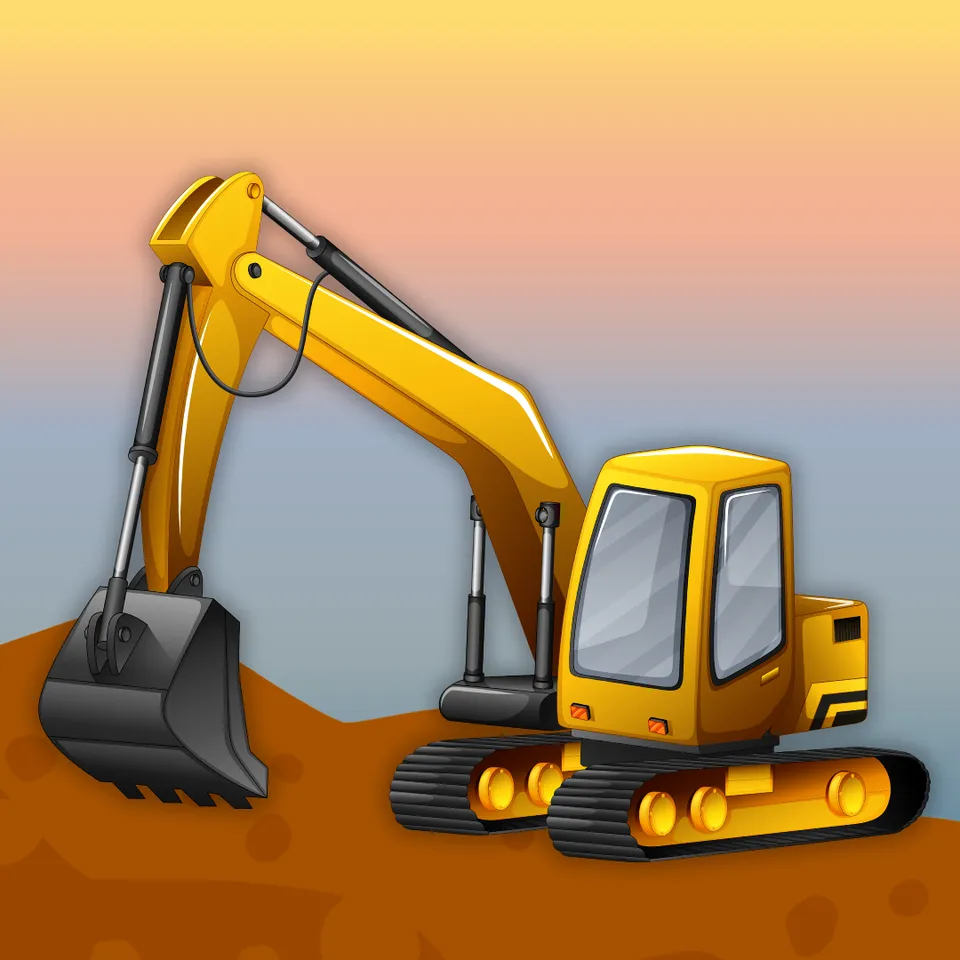
Practice using observational skills and learn about construction vehicles during this fun guessing game. For each machine, guess the vehicle based on a close-up picture! Hints included as needed.
Guessing games can be taken out of order.
Part of
Standards alignment
Common Core State Standards
- L.K.6 — Use words and phrases acquired through conversations, reading and being read to, and responding to texts.
- L.K.4.a — Identify new meanings for familiar words and apply them accurately (e.g., knowing duck is a bird and learning the verb to duck).
- Ask questions based on observations to find more information about the natural and/or designed world(s).
Alabama
- ELA21.K.17 — With guidance and support, orally utilize new academic, content-specific, grade-level vocabulary and relate new words to prior knowledge.
- ELA21.K.19 — Ask and answer questions about unfamiliar words in discussions and/or text.
- ELA21.K.19a — Describe the relationship between words, including relating them to synonyms and antonyms.
- ELA21.K.20 — Name and sort pictures of objects into categories based on common attributes while relating vocabulary to prior knowledge and building background knowledge.
Alaska
- L.VA.6 — Acquire and use accurately a range of general academic and domain-specific words and phrases sufficient for reading, writing, speaking, and listening at the college- and career-readiness level; demonstrate independence in gathering vocabulary knowledge when encountering an unknown term important to comprehension or expression.
- SL.1.3 — Ask and answer questions about what a speaker says in order to gather additional information or clarify something that is not understood.
- Ask questions based on observations to find more information about the natural and/or designed world(s).
Arizona
- The shape and stability of structures of natural and designed objects are related to their function(s).
- Objects and organisms can be described in terms of their parts.
- Identify questions and make predictions based on prior experiences.
Arkansas
- K.RC.4.RF — Build general and academic vocabulary and background knowledge of age and grade-appropriate topics through discussion, reading, and writing.
- 1.RC.4.RF — Build general and academic vocabulary and background knowledge of age and grade-appropriate topics through discussion, reading, and writing.
- K.V.2 — Use sentence-level clues to identify the meaning of a word or phrase during read-aloud instruction.
- K.V.3 — Sort and categorize objects and images by concepts.
California
- L.K.1.b — Use frequently occurring nouns and verbs.
- L.K.4 — Determine or clarify the meaning of unknown and multiple-meaning words and phrases based on kindergarten reading and content.
- L.K.5.a — Sort common objects into categories (e.g., shapes, foods) to gain a sense of the concepts the categories represent.
- RI.K.10.b — Use illustrations and context to make predictions about text.
Colorado
- RWC20-GR.PS-S.2-GLE.1-EO.g — Make predictions based on illustrations.
- SC.P.1.1.b — Make simple observations, predictions, explanations, and generalizations based on real-life experiences.
- Ask questions based on observations to find more information about the designed world.
- SC.P.3.1.d — Observe and discuss common properties, differences and comparisons among objects.
Connecticut
- L.K.4.a — Identify new meanings for familiar words and apply them accurately (e.g., knowing duck is a bird and learning the verb to duck).
- L.K.6 — Use words and phrases acquired through conversations, reading and being read to, and responding to texts.
- L.K.5 — With guidance and support from adults, explore word relationships and nuances in word meanings.
Delaware
- L.K.6 — Use words and phrases acquired through conversations, reading and being read to, and responding to texts.
- Describe how specific images (e.g., a diagram showing how a machine works) support a scientific or engineering idea.
- L.K.5.c — Identify real-life connections between words and their use (e.g., note places at school that are colorful).
Florida
- SC.K.N.1.5 — Recognize that learning can come from careful observation.
- ELA.K.V.1.1 — Use grade-level academic vocabulary appropriately in speaking and writing.
- ELA.K.V.1.3 — Identify and sort common words into basic categories, relating vocabulary to background knowledge.
- SS.K.E.1.1 — Describe different kinds of jobs that people do and the tools or equipment used.
- ELA.1.V.1.3 — Identify and use picture clues, context clues, word relationships, reference materials, and/or background knowledge to determine the meaning of unknown words.
Georgia
- ELAGSEKL6 — Use words and phrases acquired through conversations, reading and being read to, and responding to texts.
- ELAGSE1L5.b — Define words by category and by one or more key attributes (e.g., a duck is a bird that swims; a tiger is a large cat with stripes).
- ELAGSEKL4.a — Identify new meanings for familiar words and apply them accurately (e.g., knowing duck as a bird and learning the verb to duck).
- ELAGSEKL5 — With guidance and support, explore word relationships and nuances in word meanings.
Hawaii
- 1.L.5b — Define words by category and by one or more key attributes (e.g., a duck is a bird that swims; a tiger is a large cat with stripes).
- 1.L.6 — Use words and phrases acquired through conversations, reading and being read to, and responding to texts, including using frequently occurring conjunctions to signal simple relationships (e.g., because).
- 1.L.5 — With guidance and support from adults, demonstrate understanding of word relationships and nuances in word meanings.
- 1.SL.3 — Ask and answer questions about what a speaker says in order to gather additional information or clarify something that is not understood.
Idaho
- 1.VD.AV.3 — With support as needed, acquire and use general academic and content-specific words gained through conversations, reading, and listening to texts.
- 1.VD.WB.2a — Sort words into categories (e.g., tools, pets) and define those words by one or more key attributes (e.g., *a saw is a tool that cuts; a goldfish is a pet that lives in water*).
- K.VD.WB.3 — With support, use words and phrases acquired through conversations, reading, and listening to texts.
- K.RS.DR.2 — Listen to a series of texts organized around a variety of conceptually related topics to build knowledge about the world.
Illinois
- L.K.4.a — Identify new meanings for familiar words and apply them accurately (e.g., knowing duck is a bird and learning the verb to duck).
- SF-P1 — The shape and stability of structures of natural and designed objects are related to their function(s).
- AQDP-P1 — Ask questions based on observations to find more information about the natural and/or designed world(s).
Indiana
- K.E.2 — Identify and describe different kinds of jobs that people do and the tools or equipment used in these jobs. (E)
- K.PS.2 — Identify and explain possible uses for an object based on its properties and compare these uses with other students’ ideas.
- K.PS.1 — Plan and conduct an investigation using all senses to describe and classify different kinds of objects by their composition and physical properties. Explain these choices to others and generate questions about the objects.
Iowa
- L.K.1.a — Use frequently occurring nouns and verbs.
Kansas
- RI.K.11 — Determine or clarify the meaning of unknown and multiple-meaning words and phrases based on Kindergarten reading and content.
- SL.K.7.a — Use frequently occurring nouns and verbs in speech.
- Ask questions based on observations to find more information about the natural and/or designed world(s).
Kentucky
- L.1.5.b — Define words by category and by one or more key attributes (e.g., a duck is a bird that swims; a tiger is a large cat with stripes).
- L.K.4.c — Use words and phrases acquired through conversations, reading and being read to, and responding to texts.
- L.K.5.a — Sort common objects into categories (e.g., shapes, foods) to gain a sense of the concepts the categories represent.
Louisiana
- CCRA.L.6 — Acquire and use accurately a range of general academic and domain-specific words and phrases sufficient for reading, writing, speaking, and listening at the college and career readiness level; demonstrate independence in gathering vocabulary knowledge when encountering an unknown term important to comprehension or expression.
- L.K.4 — Determine or clarify the meaning of unknown and multiple-meaning words and phrases based on kindergarten reading and content.
Maine
- L.4.K.a — Identify new meanings for familiar words and apply them accurately (e.g., knowing duck is a bird and learning the verb to duck).
- L.5.1.b — Define words by category and by one or more key attributes (e.g., a duck is a bird that swims; a tiger is a large cat with stripes).
- L.6.K.a — Use words and phrases acquired through conversations, reading and being read to, and responding to texts.
- L.5.K.c — Identify real-life connections between words and their use (e.g., note places at school that are colorful).
Maryland
- identifying means of transportation available both in their community and beyond.
- L.PK.5.a — With modeling and support, sort common objects into categories (e.g., shapes, foods) to gain a sense of the concepts the categories represent.
- L.PK.4 — Determine or clarify the meaning of unknown words and phrases based on pre-kindergarten reading and content.
- L.PK.5 — With modeling and support from adults, explore word relationships and nuances in word meanings.
Massachusetts
- L.PK.4 — Ask and answer questions about the meanings of new words and phrases introduced through books, activities, and play.
- PreK-PS1-2(MA) — Investigate natural and human-made objects to describe, compare, sort, and classify objects based on observable physical characteristics, uses, and whether something is manufactured or occurs in nature.
- RI.PK.6 — With prompting and support, “read” illustrations in an informational picture book by describing facts learned from the pictures (e.g., how a seed grows into a plant).
Michigan
- L.1.5.b — Define words by category and by one or more key attributes (e.g., a duck is a bird that swims; a tiger is a large cat with stripes).
- L.K.6 — Use words and phrases acquired through conversations, reading and being read to, and responding to texts.
- L.K.5.c — Identify real-life connections between words and their use (e.g., note places at school that are colorful).
Minnesota
- 0.3.1.2 — Confirm understanding of a text read aloud or information presented orally or through other media (e.g., poems, rhymes, songs) by asking and answering questions about key details and requesting clarification if something is not understood.
- 0.1.8.2 — Ask and answer questions about unfamiliar vocabulary in informational text read aloud.
- 0.3.1.1.1 — Describe spatial information depicted in simple drawings and pictures. For example: While looking at a picture, the student says, "The boy is in front of the house. The house is at the edge of the woods." Other words describing spatial information in a picture include up, down, left, right, near, far, back, in front of.
Mississippi
- L.K.1.b — Use frequently occurring nouns and verbs.
- P.K.5B.2 — Analyze a large composite structure to describe its smaller components using drawing and writing.
Missouri
- K.R.1.B — With assistance, develop an understanding of vocabulary by:
- K.R.1.B.e — using words and phrases acquired through conversations, reading and being read to, and responding to texts
- Make observations (firsthand or from media) to collect data that can be used to make comparisons.
- K.R.1.B.a — identifying and sorting pictures of objects into conceptual categories
Montana
- L.1.5.b — Define words by category and by one or more key attributes (e.g., a duck is a bird that swims; a tiger is a large cat with stripes).
- L.K.6 — Use words and phrases acquired through conversations, reading and being read to, and responding to texts.
- L.K.5 — With guidance and support from adults, explore word relationships and nuances in word meanings.
- L.K.5.c — Identify real-life connections between words and their use (e.g., note places at school that are colorful).
- L.K.4 — Determine or clarify the meaning of unknown and multiple-meaning words and phrases based on kindergarten reading and content.
Nebraska
- Make observations (firsthand or from media) to collect data that can be used to make comparisons.
- Make predictions based on prior experiences.
- K.D.1.a — Identify, sort, and classify objects by size, shape, color, and other attributes.
Nevada
- CCRA.L.6 — Acquire and use accurately a range of general academic and domain-specific words and phrases sufficient for reading, writing, speaking, and listening at the college and career readiness level; demonstrate independence in gathering vocabulary knowledge when encountering an unknown term important to comprehension or expression.
- L.K.4 — Determine or clarify the meaning of unknown and multiple-meaning words and phrases based on kindergarten reading and content.
- SL.1.3 — Ask and answer questions about what a speaker says in order to gather additional information or clarify something that is not understood.
New Hampshire
- CCRA.L.6 — Acquire and use accurately a range of general academic and domain-specific words and phrases sufficient for reading, writing, speaking, and listening at the college and career readiness level; demonstrate independence in gathering vocabulary knowledge when encountering an unknown term important to comprehension or expression.
- L.K.4 — Determine or clarify the meaning of unknown and multiple-meaning words and phrases based on kindergarten reading and content.
- CCRA.L.5 — Demonstrate understanding of figurative language, word relationships, and nuances in word meanings.
New Jersey
- L.K.6 — Use words and phrases acquired through conversations, reading and being read to, and responding to texts.
- L.K.1.b — Use frequently occurring nouns and verbs.
- SL.1.3 — Ask and answer questions about what a speaker says in order to gather additional information or clarify something that is not understood.
New Mexico
- L.K.6 — Use words and phrases acquired through conversations, reading and being read to, and responding to texts.
- L.K.4.a — Identify new meanings for familiar words and apply them accurately (e.g., knowing duck is a bird and learning the verb to duck).
- SL.K.NM.4 — With prompting and support: role play; make predictions; and follow oral and graphic instructions.
New York
- PKL4 — Explore and use new vocabulary in child-centered, authentic, play-based experiences.
- KL4 — Explore and use new vocabulary and multiple-meaning words and phrases in authentic experiences, including, but not limited to the following:
- KL5c — Use words to identify and describe the world, making connections between words and their use (e.g., places at home that are colorful).
- PKR4 — Exhibit an interest in learning new vocabulary. (RI&RL)
North Carolina
- L.K.4 — Determine and/or clarify the meaning of unknown words and phrases based on kindergarten reading and content: context clues, word parts, and word relationships.
- PS.K.1 — Understand how objects are described based on their physical properties and how they are used.
North Dakota
- 1.R.2 — Ask and answer questions about a variety of texts, genres, photographs, or illustrations before, during, and after shared reading or other text-listening experiences to compare, contrast, predict, or infer.
- K.R.6 — Identify photographs, illustrations, and labels during or after a shared reading or other text-listening experience.
Ohio
- CCRA.L.6 — Acquire and use accurately a range of general academic and domain-specific words and phrases sufficient for reading, writing, speaking, and listening at the college and career readiness level; demonstrate independence in gathering vocabulary knowledge when encountering an unknown term important to comprehension or expression.
- L.1.5.b — Define words by category and by one or more key attributes (e.g., a duck is a bird that swims; a tiger is a large cat with stripes).
- SL.1.3 — Ask and answer questions about what a speaker says in order to gather additional information or clarify something that is not understood.
Oklahoma
- PK.S.2 — Make observations of the physical and natural world. Clarification Statement: Observations should focus on what things look, feel, hear, or smell like, how they might operate or function, and similarities and differences among things inside classroom (e.g., pencils, markers, and highlighters make different marks on paper) and outside a classroom (e.g., leaves look different at different times of year, sticks in different areas of the school yard are different shapes and sizes, it is cooler in the morning than at lunch). Explanations for why things inside and outside the classroom look, feel, or smell the way they do are not expected.
- PK.4.R.1 — Students will name and sort familiar objects into categories based on similarities and differences with prompting.
- PK.S.3 — Notice and describe similarities and differences among plants, animals, and objects. Clarification Statement: Similarities and differences might include grouping like plants, animals, or objects based on observations. Descriptions of groupings might be based on how plants, animals, or objects look, feel, or smell.
- Make predictions based on prior experiences.
Oregon
- K.L.6 — Use words and phrases acquired through conversations, reading and being read to, and responding to texts.
- 1.L.5b — Define words by category and by one or more key attributes.
- K.L.5c — Identify real-life connections between words and their use.
- CCRA.L.6 — Acquire and use accurately a range of general academic and domain-specific words and phrases sufficient for reading, writing, speaking, and listening at the college and career readiness level; demonstrate independence in gathering vocabulary knowledge when encountering an unknown term important to comprehension or expression.
Pennsylvania
- 3.5.K-2.F — Investigate the use of technologies in the home and community.
- 3.5.K-2.G — Explain the tools and techniques that people use to help them do things.
- 3.5.K-2.R — Draw connections between technology and human experience
Rhode Island
- CCRA.L.6 — Acquire and use accurately a range of general academic and domain-specific words and phrases sufficient for reading, writing, speaking, and listening at the college and career readiness level; demonstrate independence in gathering vocabulary knowledge.
- W.K.5.b — Demonstrate the ability to use vocabulary appropriate for kindergarten (as described in kindergarten Language standards 4–6).
- L.K.4 — Determine or clarify the meaning of unknown and multiple-meaning words and phrases based on kindergarten reading and content.
- SL.1.3 — Ask and answer questions about what a speaker says in order to gather additional information or clarify something that is not understood.
South Carolina
- ELA.K.C.9.1 — Ask and answer questions in conversation on a topic.
- ELA.K.R.1.1 — Ask and answer questions (who, what, when, where, why, and how) about print and non-print sources to obtain and refine knowledge.
- ELA.K.OE.3 — Make inferences to support comprehension.
South Dakota
- K.SL.2 — Confirm understanding from a source of information by asking and answering questions about key details and requesting clarification if something is not understood.
- K.SL.4 — Describe familiar people, places, things, and events. With prompting and support, provide additional detail.
- Ask questions based on observations to find more information about the natural and/or designed world(s).
- K.L.4 — Determine or clarify the meaning of unknown and multiple-meaning words and phrases based on kindergarten reading and content.
Tennessee
- K.FL.VA.7.c — Use words and phrases acquired through conversations, reading and being read to, and responding to texts.
- 1.FL.VA.7.b.ii — Define words by category and by one or more key attributes.
- K.FL.VA.7.b.iii — Make real-life connections between words and their use.
- K.FL.VA.7.b.i — Sort common objects into categories to gain a sense of the concepts the categories represent.
Texas
- K.4B — use the senses as a tool of observation to identify properties and patterns of organisms, objects, and events in the environment.
- K.6F — respond using newly acquired vocabulary as appropriate.
- 1.9A — describe the tools of various jobs and the characteristics of a job well performed; and
Utah
- K.4.2.c — Describe different types of jobs that people do and the tools and equipment that they use.
- P4.SL.1 — Participate in conversations with peers and adults, using ageappropriate vocabulary on topics and texts.
- P4.SL.1.c — Express own ideas.
Vermont
- L.K.4 — Determine or clarify the meaning of unknown and multiple-meaning words and phrases based on kindergarten reading and content.
- L.K.5.a — Sort common objects into categories (e.g., shapes, foods) to gain a sense of the concepts the categories represent.
Virginia
- K.1.b.ii — Identify characteristics and properties of objects through observations.
- K.RV.1.F — Use newly learned words and phrases in discussions and speaking activities.
- K.1.b.i — Make observations to collect data.
- K.RV.1.C — Use vocabulary from across content areas.
Washington
- L.K.4 — Determine or clarify the meaning of unknown and multiple-meaning words and phrases based on kindergarten reading and content.
- SL.1.3 — Ask and answer questions about what a speaker says in order to gather additional information or clarify something that is not understood.
Washington, D.C.
- L.K.1.b — Use frequently occurring nouns and verbs.
- L.K.4 — Determine or clarify the meaning of unknown and multiple-meaning words and phrases based on kindergarten reading and content.
- L.K.5.a — Sort common objects into categories (e.g., shapes, foods) to gain a sense of the concepts the categories represent.
West Virginia
- ELA.K.41 — Use words and phrases acquired through conversations, reading, being read to, and responding to texts.
- ELA.1.40.b — Define words by category and by one or more key attributes (e.g., a duck is a bird that swims; a tiger is a large cat with stripes).
- ELA.K.39.a — Identify new meanings for familiar words and apply them accurately (e.g., knowing duck is a bird and learning the verb to duck).
- ELA.K.40 — With guidance and support from adults, explore word relationships and nuances in word meanings.
Wisconsin
- ELA.K.L.4 — Demonstrate an ability to collaboratively and independently build vocabulary knowledge when encountering unknown words including cultural, general academic, and discipline-specific terms and phrases; use vocabulary appropriate to the context and situation.
- ELA.K.L.2 — Determine or clarify the meaning of unknown and multiple-meaning words and phrases in grade-level reading and content; use context clues, analyze meaningful word parts, consult general and specialized reference materials, and apply word solving strategies (for meaning) as appropriate.
- ELA.K.L.2.a — Begin to recognize some words have multiple meanings (e.g., duck, tie).
- Students collect, record, and share observations. This includes the following: Record information (observations, thoughts, and ideas). Use and share pictures, drawings, or writings of observations. Use observations (firsthand or from media) to describe patterns or relationships in the natural and designed worlds in order to answer scientific questions and solve problems. Compare predictions (based on prior experiences) to what occurred (observable events). Analyze data from tests of an object or tool to determine if the object or tool works as intended.
Wyoming
- L.1.5.b — Define words by category and by one or more key attributes (e.g., a duck is a bird that swims; a tiger is a large cat with stripes).
- SS2.4.2 — Identify tools and technologies, including those of Indigenous Tribes of Wyoming, that made or make life easier and sustainable (e.g., cars for getting one place to another, washing machines for washing clothes, flashlights to see in the dark, and usage of bison and natural resources). 2.MD.7 – 8 K-2-ETS1-1 – ETS1-3
- CCRA.L.6 — Acquire and use accurately a range of general academic and domain-specific words and phrases sufficient for reading, writing, speaking, and listening at the college and career readiness level; demonstrate independence in gathering vocabulary knowledge when encountering an unknown term important to comprehension or expression.