Icarus and Daedalus
Ages 6–10 · 11 minutes · English, Stories
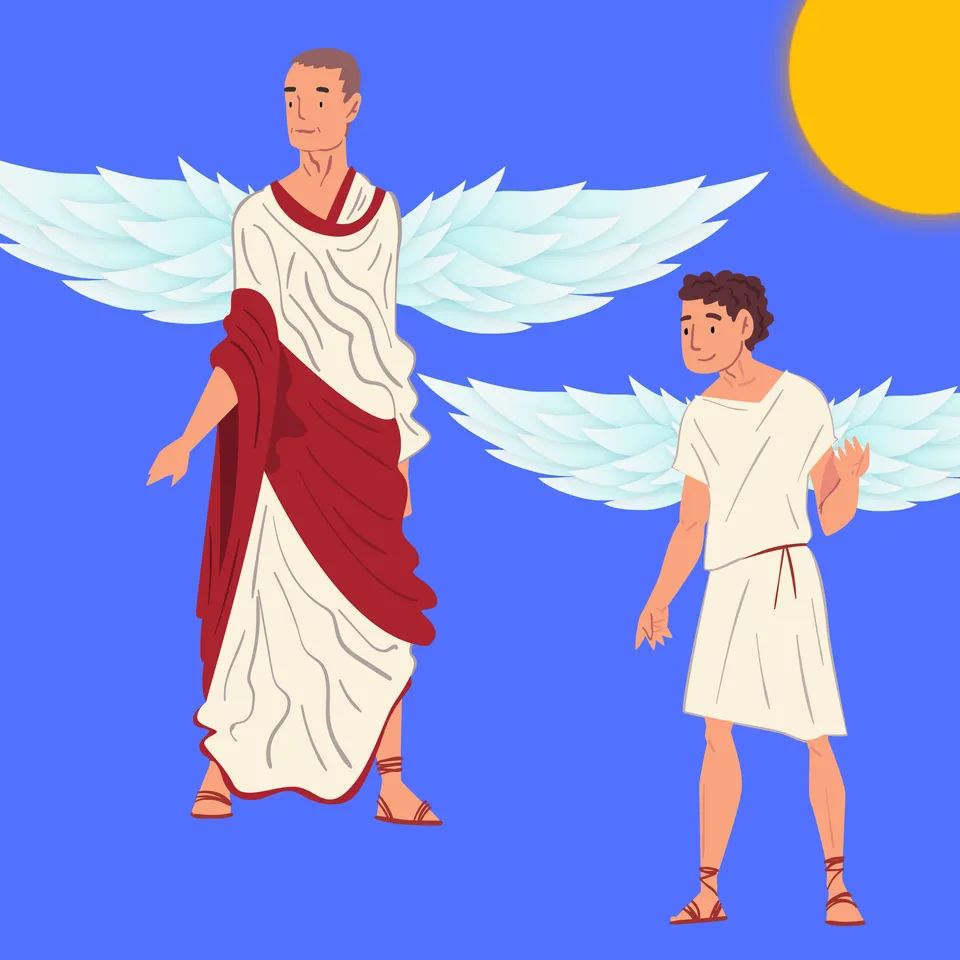
Icarus and Daedalus figure out how to fly. What happens when Icarus flies too high?
Icarus learns how to fly after his father builds wings to help them escape their life in a tower. Kids learn about the importance of listening and humility in this interactive story.
Part of
Standards alignment
Common Core State Standards
- RL.2.2 — Recount stories, including fables and folktales from diverse cultures, and determine their central message, lesson, or moral.
- RL.1.2 — Retell stories, including key details, and demonstrate understanding of their central message or lesson.
- RL.2.7 — Use information gained from the illustrations and words in a print or digital text to demonstrate understanding of its characters, setting, or plot.
- RL.3.2 — Recount stories, including fables, folktales, and myths from diverse cultures; determine the central message, lesson, or moral and explain how it is conveyed through key details in the text.
- L.1.5.c — Identify real-life connections between words and their use (e.g., note places at home that are cozy).
Alabama
- ELA21.2.35 — Demonstrate listening skills and build background knowledge by asking and answering questions about texts read aloud.
- ELA21.3.22c — Identify the central message, theme, or moral in a story, including myths, fables, and folktales, and explain the meaning conveyed in the passage.
- ELA21.2.23e — Identify the theme in myths, fables, and folktales.
- ELA21.2.30c — Draw conclusions based on the text.
Alaska
- RL.2.2 — Retell stories, including fables and folktales from diverse cultures, and determine the author's purpose (e.g., teach a lesson, make you laugh, tell a scary story, describe an imaginary place), lesson or moral.
- L.1.5.c — Identify real-life connections between words and their use (e.g., note places at home that are cozy).
- RL.2.7 — Use information gained from the illustrations and words in a print or digital text to demonstrate understanding of its characters, setting, or plot (e.g., problem-solution; chronology).
Arizona
- 2.RL.2 — Recount stories, including fables and folktales from diverse cultures, and determine their central message, lesson, or moral.
- 2.P4U1.3 — Obtain, evaluate and communicate information about ways heat energy can cause change in objects or materials.
- 2.RL.7 — Use information gained from the illustrations and words in a print or digital text to demonstrate understanding of its characters, setting, or plot.
- 3.RL.2 * — Recount and paraphrase stories, including fables, folktales, and myths from diverse cultures; determine the central message, lesson, or moral and explain how it is conveyed through key details in text.
- 4.L.5.b — Recognize and explain the meaning of common idioms, adages, and proverbs.
Arkansas
- 2.RC.2.RF — Answer questions about key details in a text.
- 2.RC.5.RF — Use background knowledge and details, including illustrations, charts, and graphs, to make predictions and inferences about what happens in a text.
- 2.RC.4.RF — Build general and academic vocabulary and background knowledge of age and grade-appropriate topics through discussion, reading, and writing.
- 4.RC.9.RL — Determine the theme of a story.
- 2.RC.8.RL — Identify the main story elements (characters, settings, events, problem, and solution) in a text.
California
- RL.3.2 — Recount stories, including fables, folktales, and myths from diverse cultures; determine the central message, lesson, or moral and explain how it is conveyed through key details in the text.
- L.1.5.c — Identify real-life connections between words and their use (e.g., note places at home that are cozy).
- RL.2.2 — Recount stories, including fables and folktales from diverse cultures, and determine their central message, lesson, or moral.
- RL.2.7 — Use information gained from the illustrations and words in a print or digital text to demonstrate understanding of its characters, setting, or plot.
- K.1.3 — Know beliefs and related behaviors of characters in stories from times past and understand the consequences of the characters' actions.
Colorado
- RWC20-GR.3-S.2-GLE.1-EO.a.iii — Recount stories, including fables, folktales, and myths from diverse cultures; determine the central message, lesson, or moral and explain how it is conveyed through key details in the text.
- RWC20-GR.1-S.1-GLE.1-EO.b — Ask and answer questions about key details in a text read aloud or information presented orally or through other media.
- RWC20-GR.2-S.2-GLE.1-EO.a.iii — Recount stories, including fables and folktales from diverse cultures, and determine their central message, lesson, or moral.
- RWC20-GR.2-S.2-GLE.1-EO.c.i — Use information gained from the illustrations and words in a print or digital text to demonstrate understanding of its characters, setting, or plot.
- RWC20-GR.4-S.2-GLE.3-EO.d.ii — Recognize and explain the meaning of common idioms, adages, and proverbs.
Connecticut
- RL.3.2 — Recount stories, including fables, folktales, and myths from diverse cultures; determine the central message, lesson, or moral and explain how it is conveyed through key details in the text.
- RL.2.2 — Recount stories, including fables and folktales from diverse cultures, and determine their central message, lesson, or moral.
- RL.2.7 — Use information gained from the illustrations and words in a print or digital text to demonstrate understanding of its characters, setting, or plot.
- L.1.5.c — Identify real-life connections between words and their use (e.g., note places at home that are cozy).
- L.4.5.b — Recognize and explain the meaning of common idioms, adages, and proverbs.
Delaware
- RL.2.2 — Recount stories, including fables and folktales from diverse cultures, and determine their central message, lesson, or moral.
- L.1.5.c — Identify real-life connections between words and their use (e.g., note places at home that are cozy).
- RL.2.7 — Use information gained from the illustrations and words in a print or digital text to demonstrate understanding of its characters, setting, or plot.
- RL.3.2 — Recount stories, including fables, folktales, and myths from diverse cultures; determine the central message, lesson, or moral and explain how it is conveyed through key details in the text.
Florida
- ELA.1.R.1.2 — Identify and explain the moral of a story.
- ELA.2.R.1.2 — Identify and explain a theme of a literary text.
- ELA.1.R.1.1 — Identify and describe the main story elements in a story.
Georgia
- ELAGSE3RL2 — Recount stories, including fables, folktales, and myths from diverse cultures; determine the central message, lesson, or moral and explain how it is conveyed through key details in the text.
- ELAGSE2RL2 — Recount stories, including fables and folktales from diverse cultures, and determine their central message, lesson, or moral.
- ELAGSE2RL3 — Describe how characters in a story respond to major events and challenges.
- ELAGSE2RL7 — Use information gained from the illustrations and words in a print or digital text to demonstrate understanding of its characters, setting, or plot.
- ELAGSE3RL4 — Determine the meaning of words and phrases both literal and non-literal language as they are used in the text.
Hawaii
- 3.RL.2 — Recount stories, including fables, folktales, and myths from diverse cultures; determine the central message, lesson, or moral and explain how it is conveyed through key details in the text.
- 2.RL.2 — Recount stories, including fables and folktales from diverse cultures, and determine their central message, lesson, or moral.
- 2.RL.7 — Use information gained from the illustrations and words in a print or digital text to demonstrate understanding of its characters, setting, or plot.
- 4.L.5b — Recognize and explain the meaning of common idioms, adages, and proverbs.
Idaho
- 2.RC.L.5a — Identify the central message, lesson, or moral of stories (including fables and folktales) from diverse cultures heard or read.
- 1.RC.L.5a — Retell the beginning, middle, and end of familiar stories (including fables and fairy tales) with key details heard or read, demonstrating understanding of their central messages or morals.
- 1.RC.TE.3 — Ask and answer questions about key details in texts heard or read.
- 2.RC.L.5b — Describe how characters in stories heard or read respond to major events and challenges.
- 2.RC.WB.2a — Identify real-life connections between words and their use (e.g., describe weather that is freezing or windy).
Illinois
- RL.3.2 — Recount stories, including fables, folktales, and myths from diverse cultures; determine the central message, lesson, or moral and explain how it is conveyed through key details in the text.
- L.1.5.c — Identify real-life connections between words and their use (e.g., note places at home that are cozy).
- RL.2.2 — Recount stories, including fables and folktales from diverse cultures, and determine their central message, lesson, or moral.
- RL.2.7 — Use information gained from the illustrations and words in a print or digital text to demonstrate understanding of its characters, setting, or plot.
Indiana
- 2.RC.2 — Recount the beginning, middle, and ending of stories, including fables and folktales from diverse cultures, and determine their central message, lesson, or moral.
- 1.RC.4 — Make and confirm predictions about what will happen next in a story.
- 2.RC.1 — Ask and answer questions about the main idea and key details in a text to demonstrate comprehension. (E)
- 3.RC.2 — Recount folktales, fables, and tall tales from diverse cultures; identify the themes in these works. (E)
Iowa
- RL.3.2 — Recount and determine the central message, lesson, or moral of fables, folktales, and myths from diverse cultures and explain how it is conveyed through key details in the text.
- RL.2.2 — Recount and determine the central message, lesson or moral of stories, including but not limited to fables and folktales from diverse cultures.
- RL.2.3 — Describe how characters in a story respond to major events and challenges, drawing on key details.
- RL.2.7 — Use information gained from the illustrations and words in a story to demonstrate understanding of its characters, setting, or plot.
- L.1.5.c — Identify real-life connections between words and their use (e.g., note places at home that are cozy).
Kansas
- RL.3.2 — Recount stories, including fables, folktales, and myths from diverse cultures; determine the central message, lesson, or moral and explain how it is conveyed through key details in the text.
- RL.2.1 — Ask and answer such questions as who, what, where, when, why, and how to demonstrate understanding of key details in a text.
- RL.2.2 — Recount stories, including fables and folktales from diverse cultures, and determine their central message, lesson, or moral.
- RL.2.7 — Use information gained from the illustrations and words in a print or digital text to demonstrate understanding of its characters, setting, or plot.
- RL.2.3 — Describe how characters in a story respond to major events and challenges.
Kentucky
- RL.2.2 — Identify implicit and explicit information from a summary to determine the author’s message, lesson learned and/or moral, including but not limited to fables and folktales from diverse cultures.
- K.C.PR.2 — Describe consequences of following or not following rules.
- RL.2.7 — Use a story’s illustrations and words in print/non-print texts to demonstrate understanding of characters, setting and plot.
- RL.3.2 — Identify and cite relevant implicit and explicit information from a summary to determine the theme, lesson learned and/or moral, including but not limited to fables, folktales and myths from diverse cultures.
Louisiana
- RL.2.2 — Recount stories, including fables and folktales from diverse cultures, and determine their central message, lesson, or moral.
- RL.1.2.b — Recognize and understand the central message or lesson.
- RL.2.7 — Use information gained from the illustrations and words in a print or digital text to demonstrate understanding of its characters, setting, or plot.
- RL.3.2 — Recount stories, including fables, folktales, and myths from diverse cultures; determine the central message, lesson, or moral and explain how it is conveyed through key details in the text.
- L.1.5.c — Identify real-life connections between words and their use (e.g., note places at home that are cozy).
Maine
- R.11.2.a — Use illustrations and words in a print or digital text to demonstrate understanding of its characters, setting, or plot.
- R.7.1.b — Ask and answer questions to help determine or clarify the meaning of words and phrases in a text.
- L.5.1.c — Identify real-life connections between words and their use (e.g., note places at home that are cozy).
Maryland
- RL.3.2 — Recount stories, including fables, folktales, and myths from diverse cultures; determine the central message, lesson, or moral and explain how it is conveyed through key details in the text.
- L.1.5.c — Identify real-life connections between words and their use (e.g., note places at home that are cozy).
- RL.2.2 — Recount stories, including fables and folktales from diverse cultures, and determine their central message, lesson, or moral.
- RL.2.7 — Use information gained from the illustrations and words in a print or digital text to demonstrate understanding of its characters, setting, or plot.
- RL.1.2 — Retell stories, including key details, and demonstrate understanding of their central message or lesson.
Massachusetts
- RL.2.2 — Retell stories, including fables and folktales from diverse cultures, and determine their central message, lesson, or moral.
- K-PS1-1(MA) — Investigate and communicate the idea that different kinds of materials can be solid or liquid depending on temperature.
- RL.3.2 — Retell stories, including fables, folktales, and myths from diverse cultures; determine the central message, lesson, or moral and explain how it is conveyed through key details in the text.
- L.1.5.c — Identify real-life connections between words and their use (e.g., note places at home that are cozy).
Michigan
- RL.3.2 — Recount stories, including fables, folktales, and myths from diverse cultures; determine the central message, lesson, or moral and explain how it is conveyed through key details in the text.
- RL.2.2 — Recount stories, including fables and folktales from diverse cultures, and determine their central message, lesson, or moral.
- RL.2.7 — Use information gained from the illustrations and words in a print or digital text to demonstrate understanding of its characters, setting, or plot.
- L.1.5.c — Identify real-life connections between words and their use (e.g., note places at home that are cozy).
Minnesota
- 3.1.4.2 — Identify the central idea or argument in fables, folktales, and myths, explain how it is supported by key details, and describe the connection between details.
- 2.1.4.2 — Identify the central idea, message, or moral of a text and one or two supporting details.
- 3.1.4.1 — Ask and answer questions to demonstrate understanding of both literal and non literal language in a text, referring explicitly to the texts as the basis for the answers; summarize the text.
- 3.1.4.3 — Describe how details about characters, setting, conflict, resolution and events work together to develop the plot of a literary text.
Mississippi
- RL.3.2 — Recount stories, including fables, folktales, and myths from diverse cultures; determine the central message, lesson, or moral and explain how it is conveyed through key details in the text.
- RL.2.2 — Recount stories, including fables and folktales from diverse cultures, and determine their central message, lesson, or moral.
- RL.2.7 — Use information gained from the illustrations and words in a print or digital text to demonstrate understanding of its characters, setting, or plot.
- L.1.5.c — Identify real-life connections between words and their use (e.g., note places at home that are cozy).
- P.K.5A.1 — Generate questions and investigate the differences between liquids and solids and develop awareness that a liquid can become a solid and vice versa.
- RL.1.3 — Describe characters, settings, and major events in a story, using key details.
Missouri
- 2.R.1.A.d — retelling a story’s beginning, middle, and end and determining its central message, lesson, or moral
- 2.R.2.A.a — describe the setting, problems, solutions, sequence of events (plot), and big idea or moral lesson
- 3.R.1.A.c — summarizing a story’s beginning, middle, and end determining its central message, lesson, or moral
- 5.R.1.B.d — explaining the meaning of common idioms, adages, similes, metaphors, hyperboles, and other sayings in text
Montana
- RL.2.2 — Recount stories, including fables and folktales from diverse cultures, including American Indian stories, and determine their central message, lesson, or moral.
- RL.2.3 — Describe how characters in a story respond to major events and challenges.
- RL.2.7 — Use information gained from the illustrations and words in a print or digital text to demonstrate understanding of its characters, setting, or plot.
- RL.3.2 — Recount stories, including fables, folktales, and myths from diverse cultures, including those by and about American Indians; determine the central message, lesson, or moral; and explain how it is conveyed through key details in the text.
- RL.1.7 — Use illustrations and details in a story to describe its characters, setting, or events.
Nebraska
- LA.2.RP.1 — Recount narratives and determine their central message, lesson, or moral.
- LA.3.RP.6 — Explain what the text says explicitly and draw inferences when asking and answering questions.
- LA.3.RP.1 — Identify the central message or lesson in a literary text and explain how key details support that idea.
- LA.3.RP.2 — Explain how characters respond to major events and challenges in a literary text.
- LA.4.V.2.b — Recognize and explain the meaning of commonly occurring idioms and adages.
Nevada
- RL.2.2 — Recount stories, including fables and folktales from diverse cultures, and determine their central message, lesson, or moral.
- RL.3.2 — Recount stories, including fables, folktales, and myths from diverse cultures; determine the central message, lesson, or moral and explain how it is conveyed through key details in the text.
- RL.1.2 — Retell stories, including key details, and demonstrate understanding of their central message or lesson.
- RL.2.7 — Use information gained from the illustrations and words in a print or digital text to demonstrate understanding of its characters, setting, or plot.
- SS.1.10 — Share stories that illustrate honesty, courage, friendship, respect, and responsibility; have students explain how the stories show these qualities.
New Hampshire
- RL.3.2 — Recount stories, including fables, folktales, and myths from diverse cultures; determine the central message, lesson, or moral and explain how it is conveyed through key details in the text.
- RL.2.2 — Recount stories, including fables and folktales from diverse cultures, and determine their central message, lesson, or moral.
- RL.2.7 — Use information gained from the illustrations and words in a print or digital text to demonstrate understanding of its characters, setting, or plot.
- L.1.5.c — Identify real-life connections between words and their use (e.g., note places at home that are cozy).
New Jersey
- RL.2.2 — Recount stories, including fables and folktales from diverse cultures, and determine their central message/theme, lesson, or moral.
- RL.3.2 — Recount stories, including fables, folktales, and myths from diverse cultures; determine the central message/theme, lesson, or moral and explain how it is revealed through key details in the text.
- RL.2.3 — Describe how characters in a story respond to major events and challenges using key details.
- RL.2.7 — Use information gained from the illustrations and words in a print or digital text to demonstrate understanding of its characters, setting, or plot.
- RI.1.4 — Ask and answer questions to help determine or clarify the meaning of words and phrases in a text.
New Mexico
- RL.3.2 — Recount stories, including fables, folktales, and myths from diverse cultures; determine the central message, lesson, or moral and explain how it is conveyed through key details in the text.
- K.8 — Identify the consequences of following and not following rules.
- L.1.5.c — Identify real-life connections between words and their use (e.g., note places at home that are cozy).
- RL.1.NM.2 — Identify characters and simple story lines from selected myths and stories from around the world.
- RL.2.7 — Use information gained from the illustrations and words in a print or digital text to demonstrate understanding of its characters, setting, or plot.
New York
- 2R7 — Demonstrate understanding of story elements and/or topics by applying information gained from illustrations or text features. (RI&RL)
- K.8b — People use folktales, legends, oral histories, and music to teach values, ideas, traditions, and important events from the past.
- 1L5c — Use words for identification and description, making connections between words and their use (e.g., places at home that are cozy).
- 1R2 — Identify a main topic or central idea in a text and retell important details. (RI&RL)
- 4L5b — Recognize and explain the meaning of common idioms, adages, and proverbs.
North Carolina
- RL.3.2 — Recount stories, including fables, folktales, and myths from diverse cultures; determine the central message, lesson, or moral and explain how it is conveyed through key details in the text.
- RL.2.2 — Recount stories, including fables and folktales from diverse cultures, and determine their central message, lesson, or moral.
- SL.1.2 — Ask and answer questions about key details in a text read aloud or information presented orally or through other media.
North Dakota
- 1.R.5 — Determine the meaning of unknown and multiple-meaning words and phrases through read-alouds or other text-listening experiences.
- 1.R.3.b — Identify characters, setting, and plot in a literary text during or after a shared reading or other text-listening experience.
- 4.R.4 — Identify a theme based on textual evidence.
- 3.R.8a — Describe characters' feelings, traits, motivations, and actions after reading a story.
Ohio
- RL.2.2.a — Determine the lesson or moral.
- RL.2.7 — Use information gained from the illustrations and words in a print or digital text to demonstrate understanding of its characters, setting, or plot.
- L.1.5.c — Identify real-life connections between words and their use (e.g., note places at home that are cozy).
- RL.2.3 — Describe how characters in a story respond to major events and challenges.
Oklahoma
- Possible solutions to a problem are limited by available materials and resources (constraints). (4.PS3.4)
- 2.PS1.4 — Construct an argument with evidence that some changes caused by heating or cooling can be reversed and some cannot.
- Events have causes that generate observable patterns. (K.PS3.1, K.PS3.2, K.ESS3.2, 1.ESS3.1, 2.PS1.4, 2.LS2.1)
- Every human-made product is designed by applying some knowledge of the natural world and is built using materials derived from the natural world. (1.LS1.1, 2.PS1.2)
Oregon
- 2.RL.2 — Recount stories, including fables and folktales from diverse cultures, and determine their central message, lesson, or moral.
- 2.RL.3 — Describe how characters in a story respond to major events and challenges, including identifying the characters' feelings, the plot or problem, and how it is resolved.
- 2.RL.7 — Use information gained from the illustrations and words in a print or digital text to demonstrate understanding of its characters, setting, or plot.
- 3.RL.2 — Recount and summarize stories, including fables, folktales, and myths from diverse cultures; determine the central message, lesson, or moral, and explain how it is conveyed through key details in the text.
Pennsylvania
- CC.1.3.2.A — Recount stories and determine their central message, lesson, or moral.
- 3.5.K-2.V — Explain that materials are selected for use because they possess desirable properties and characteristics.
- CC.1.3.1.A — Retell stories, including key details, and demonstrate understanding of their central message or lesson.
- CC.1.3.2.G — Use information from illustrations and words, in print or digital text, to demonstrate understanding of characters, setting, or plot.
Rhode Island
- RL.2.2 — Retell stories, including fables and folktales from diverse cultures, and determine their central message, lesson, or moral.
- L.1.5.c — Identify real-life connections between words and their use (e.g., note places at home that are cozy).
- RL.2.7 — Use information gained from the illustrations and words in a print or digital text to demonstrate understanding of its characters, setting, or plot.
- RL.3.2 — Retell stories, including fables, folktales, and myths from diverse cultures, determine the central message, lesson, or moral and explain how it is conveyed through key details in a text.
South Carolina
- ELA.1.AOR.2.1 — Retell a story using main story elements and identify a lesson in a literary text.
- ELA.1.AOR.8.1 — Determine the effectiveness of an author’s use of words and phrases in literary, informational, and multimedia texts: a. ask and answer questions about words and phrases to determine their meaning; b. sort words and phrases into categories (e.g., apple, fruit and carrot, vegetable) to develop an understanding of word relationships; and c. define words by their category and simple attributes (e.g., an owl is a bird that flies).
- ELA.2.AOR.2.1 — Identify and explain an explicit theme in a literary text.
South Dakota
- 2.RL.2 — Retell stories, those from diverse cultures, and determine their central message/theme, lesson, or moral
- 2.RL.7 — Use illustrations and words in a print or digital text to demonstrate understanding of its characters, setting, or plot.
- 3.RL.2 — Retell stories, including those from diverse cultures; determine the central message/theme, lesson, or moral and explain how it is revealed through key details in the text.
- Classifying different materials by their observable properties. Determining which of those properties are best suited for a specific purpose. Designing devices that require the assembly or disassembly of smaller objects. Understanding the effects of heating and cooling on the properties of matter.
Tennessee
- 2.RL.KID.2 — Recount stories, including fables and folktales from diverse cultures, and determine their central message, lesson, or moral.
- 3.RL.KID.2 — Recount stories, including fables, folktales, and myths from diverse cultures; determine the central message, lesson, or moral and explain how it is conveyed through key details in the text.
- 1.RL.KID.2 — Retell stories, including key details, and demonstrate understanding of their central message or lesson.
- 4.FL.VA.7.b.ii — Recognize and explain the meaning of common idioms and proverbs.
Texas
- 3.10A — explain the author's purpose and message within a text;
- 3.9A — demonstrate knowledge of distinguishing characteristics of well-known children's literature such as folktales, fables, fairy tales, legends, and myths;
- K.5B — observe, record, and discuss how materials can be changed by heating or cooling.
- 3.7G — discuss specific ideas in the text that are important to the meaning.
Utah
- 2.R.12 — Demonstrate understanding of story elements and/or topics by applying information gained from illustrations or text features. (RL & RI)
- 1.2.1.g — Predict possible consequences for a variety of actions.
- 1.R.7 — Describe characters, settings, and important events in a story (RL) or pieces of information in a text. (RI)
- 2.3.4 — Obtain, evaluate, and communicate information about changes in matter caused by heating or cooling. Emphasize that some changes can be reversed and some cannot. Examples of reversible changes could include freezing water or melting crayons. Examples of irreversible changes could include cooking an egg or burning wood. (PS1.B)
- 2.3.2 — Construct an explanation showing how the properties of materials influence their intended use and function. Examples could include using wood as a building material because it is lightweight and strong or the use of concrete, steel, or cotton due to their unique properties. (PS1.A)
Vermont
- RL.3.2 — Recount stories, including fables, folktales, and myths from diverse cultures; determine the central message, lesson, or moral and explain how it is conveyed through key details in the text.
- RL.2.2 — Recount stories, including fables and folktales from diverse cultures, and determine their central message, lesson, or moral.
- RL.2.7 — Use information gained from the illustrations and words in a print or digital text to demonstrate understanding of its characters, setting, or plot.
- L.4.5.b — Recognize and explain the meaning of common idioms, adages, and proverbs.
Virginia
- 2.RL.1.A — Retell stories sequentially, including their overall structure, essential story events, and the central message, lesson, or moral.
- 2.RL.1.D — Generate predictions about story characters and events using the text.
- 2.RV.1.A — Discuss meanings of new words or phrases acquired through conversations and literature.
- 3.RL.1.A — Identify thematic topics of stories (e.g. friendship, survival, determination) and the lessons learned.
Washington
- RL.2.2 — Recount stories, including fables and folktales from diverse cultures, and determine their central message, lesson, or moral.
- L.1.5.c — Identify real-life connections between words and their use (e.g., note places at home that are cozy).
- RL.2.7 — Use information gained from the illustrations and words in a print or digital text to demonstrate understanding of its characters, setting, or plot.
- RL.3.2 — Recount stories, including fables, folktales, and myths from diverse cultures; determine the central message, lesson, or moral and explain how it is conveyed through key details in the text.
Washington, D.C.
- RL.3.2 — Recount stories, including fables, folktales, and myths from diverse cultures; determine the central message, lesson, or moral and explain how it is conveyed through key details in the text.
- L.1.5.c — Identify real-life connections between words and their use (e.g., note places at home that are cozy).
- RL.2.2 — Recount stories, including fables and folktales from diverse cultures, and determine their central message, lesson, or moral.
- RL.2.7 — Use information gained from the illustrations and words in a print or digital text to demonstrate understanding of its characters, setting, or plot.
- RL.1.3 — Describe characters, settings, and major events in a story, using key details.
West Virginia
- ELA.3.2 — Recount stories, including fables, folktales, and myths from diverse cultures; determine the central message, lesson, or moral and explain how it is conveyed through key details in the literary text.
- ELA.1.31 — Ask and answer questions about key details in a text read aloud or information presented orally or through other media.
- ELA.2.2 — Recount stories, including fables and folktales from diverse cultures and determine their central message, lesson, or moral in literary text.
- ELA.1.40.c — Identify real-life connections between words and their use (e.g., note places at home that are cozy).
Wisconsin
- ELA.2.R.1 — Develop and answer questions to demonstrate an understanding of key ideas and details in a text. (RI&RL)
- ELA.2.R.2 — Summarize portions of a text in order to identify a main topic or central idea and key details in a text. (RI&RL)
- ELA.2.R.3 — Describe how characters respond to major events and challenges. (RL) Describe the connections between ideas, concepts, or a series of events. (RI)
- ELA.2.R.7 — Demonstrate understanding of story elements and/or topics by applying information gained from illustrations or text features. (RI&RL)
- ELA.2.R.4 — Explain how specific words and phrases express feelings, appeals to the senses, or determine the meaning of content-specific words within a text. (RI&RL)
- ELA.2.SL.2 — Recount or describe key ideas or details from a text read aloud or information presented orally or through other media.
Wyoming
- RL.3.2 — Recount stories, including fables, folktales, and myths from diverse cultures; determine the central message, lesson, or moral and explain how it is conveyed through key details in the text.
- L.1.5.c — Identify real-life connections between words and their use (e.g., note places at home that are cozy).
- RL.2.2 — Recount stories, including fables and folktales from diverse cultures, and determine their central message, lesson, or moral.
- RL.2.7 — Use information gained from the illustrations and words in a print or digital text to demonstrate understanding of its characters, setting, or plot.
- L.4.5.b — Recognize and explain the meaning of common idioms, adages, and proverbs.