Owls
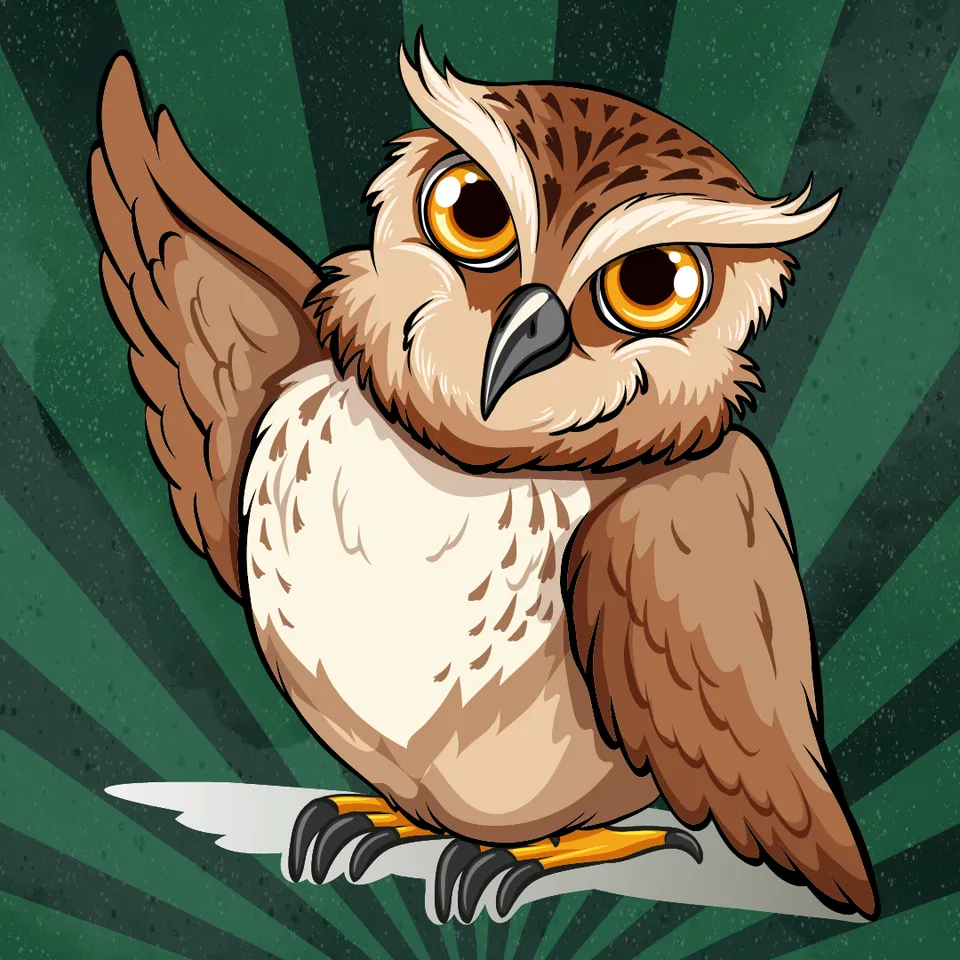
Ages 3–6 · 7 minutes · English, Science
Adventuring with owls is a HOOT!
In this lesson, students will:
- Investigate owl diets and habitats
- Label owl features
- Choose your favorite owl!
- Explore nocturnal animals and predators
- Interact and make connections to the story
Part of
Standards alignment
Common Core State Standards
- ELD-SI.K-3.Narrate — Multilingual learners will… • Share ideas about one's own and others' lived experiences and previous learning • Connect stories with images and representations to add meaning • Ask questions about what others have shared • Recount and restate ideas • Discuss how stories might end or next steps
- ELD-SI.K-3.Explain — Multilingual learners will… • Share initial thinking with others • Follow and describe cycles in diagrams, steps in procedures, or causes and effects • Compare and contrast objects or concepts • Offer ideas and suggestions • Act on feedback to revise understandings of how or why something works
Alabama
- ELA21.K.2 — Actively engage in teacher-led reading experiences and collaborative discussions with peers to build background knowledge needed to be successful as they learn to read and, later, read to learn.
- ELA21.K.22 — Use content knowledge built during read-alouds of informational texts by participating in content-specific discussions with peers and/or through drawing or writing.
- SC23.K.4 — Use observations to determine patterns of what plants and animals (including humans) need to survive, including light, water, and nutrients.
Alaska
- RI.K.10 — Actively engage in shared reading activities using a range of topics and texts with purpose and understanding, with scaffolding as needed.
- Make observations (firsthand or from media) to collect data that can be used to make comparisons.
- RL.K.10 — Actively engage in shared reading activities using literature from a variety of cultures with purpose and understanding, and scaffolding as needed.
Arizona
- K.L1U1.6 — Obtain, evaluate, and communicate information about how organisms use different body parts for survival.
- K.L1U1.7 — Observe, ask questions and explain how specialized structures found on a variety of plants and animals (including humans) help them sense and respond to their environment.
- 1.L2U2.7 — Develop and use models about how living things use resources to grow and survive; design and evaluate habitats for organisms using earth materials.
Arkansas
- K-ESS3-1 — Use a model to represent the relationship between the needs of different plants or animals (including humans) and the places they live.
- K-LS1-1 — Use observations to describe patterns of what plants and animals (including humans) need to survive.
- K.RC.4.RF — Build general and academic vocabulary and background knowledge of age and grade-appropriate topics through discussion, reading, and writing.
- K.RC.7.RF — Demonstrate comprehension of age and grade-appropriate texts by speaking or writing.
California
- K-ESS3-1 — Use a model to represent the relationship between the needs of different plants and animals (including humans) and the places they live.
- RL.K.10 — Actively engage in group reading activities with purpose and understanding.
Colorado
- LS1.C — Organization for Matter and Energy Flow in Organisms: All animals need food in order to live and grow. They obtain their food from plants or from other animals. Plants need water and light to live and grow.
- RWC20-GR.PS-S.2-GLE.1-EO.a — Show interest in shared reading experiences and looking at books independently.
- SC.P.2.1.a — Observe, describe and discuss living things.
- SC.P.2.1.c — Observe and describe how natural habitats provide for the basic needs of plants and animals with respect to shelter, food, water, air and light.
- SC.P.3.2.e — Observe and describe patterns observed over the course of a number of days and nights (e.g., differences in the activities or appearance of plants and animals).
Connecticut
- RL.K.10 — Actively engage in group reading activities with purpose and understanding.
- RI.K.10 — Actively engage in group reading activities with purpose and understanding.
Delaware
- RL.K.10 — Actively engage in group reading activities with purpose and understanding.
- Read grade-appropriate texts and/or use media to obtain scientific and/or technical information to determine patterns in and/or evidence about the natural and designed world(s).
- RI.K.10 — Actively engage in group reading activities with purpose and understanding.
Florida
- SC.K.L.14.3 — Observe plants and animals, describe how they are alike and how they are different in the way they look and in the things they do.
- SC.K.N.1.4 — Observe and create a visual representation of an object which includes its major features.
- ELA.K.R.2.2 — Identify the topic of and multiple details in a text.
Georgia
- ELAGSEKRL1 — With prompting and support, ask and answer questions about key details in a text.
- ELAGSEKRL10 — Actively engage in group reading activities with purpose and understanding.
- S1L1.b — Ask questions to compare and contrast the basic needs of plants (air, water, light, and nutrients) and animals (air, water, food, and shelter).
- SKL2.a — Construct an argument supported by evidence for how animals can be grouped according to their features.
Hawaii
- K.RI.10 — Actively engage in group reading activities with purpose and understanding.
- K.RL.10 — Actively engage in group reading activities with purpose and understanding.
- K.W.8 — With guidance and support from adults, recall information from experiences or gather information from provided sources to answer a question.
Idaho
- K-ESS-1.2 — Students who demonstrate understanding can: With guidance and support, use evidence to construct an explanation of how plants and animals interact with their environment to meet their needs.
- K-ESS-2.1 — Students who demonstrate understanding can: Use a model to represent the relationship between the needs of different plants and animals and the places they live.
- K.RS.DR.2 — Listen to a series of texts organized around a variety of conceptually related topics to build knowledge about the world.
Illinois
- RL.K.10 — Actively engage in group reading activities with purpose and understanding.
- SL.K.1 — Participate in collaborative conversations with diverse partners about kindergarten topics and texts with peers and adults in small and larger groups.
- INFO-P1 — Read grade-appropriate texts and use media to obtain scientific information to determine patterns in the natural world.
Indiana
- K.LS.2 — Describe and compare the physical features of common living plants and animals.
- K.LS.3 — Use observations to describe patterns of what plants and animals (including humans) need to survive.
- K.RC.1 — With support, ask and answer questions about main topics and key details in a text heard or read. (E)
- K.CC.3 — Ask and answer questions about key details in a text read aloud or information presented orally or through other media. (E)
Iowa
- RL.K.10 — Actively engage in group reading activities with purpose and understanding.
- RI.K.10 — Actively engage in group reading activities with purpose and understanding.
Kansas
- RL.K.1 — With prompting and support, ask and answer questions about key details in a text.
- RL.K.13 — Listen to high quality prose and poetry of appropriate complexity for Kindergarten.
Kentucky
- RL.K.1 — With prompting and support, ask and answer explicit questions about key ideas and details, and make logical inferences to construct meaning from the text.
- RL.K.10 — With prompting and support, flexibly use a variety of comprehension strategies (i.e., questioning, monitoring, visualizing, inferencing, summarizing, using prior knowledge, determining importance) to make sense of grade-level appropriate, complex literary texts.
Louisiana
- RL.K.10 — Actively engage in group reading activities with purpose and understanding.
Maine
- K-ESS3-1 — Use a model to represent the relationship between the needs of different plants and animals (including humans) and the places they live.
- K-LS1-1 — Use observations to describe patterns of what plants and animals (including humans) need to survive.
- SL.2.K.a — Confirm understanding of a text read aloud or information presented orally or through other media by asking and answering questions about key details to seek help if something is not understood.
- Participate in collaborative conversations about kindergarten topics and texts with peers and adults in small and larger groups.
Massachusetts
- PreK-LS1-1(MA) — Compare, using descriptions and drawings, the external body parts of animals (including humans) and plants and explain functions of some of the observable body parts.
- PreK-LS2-2(MA) — Using evidence from the local environment, explain how familiar plants and animals meet their needs where they live.
- K-LS1-1 — Observe and communicate that animals (including humans) and plants need food, water, and air to survive. Animals get food from plants or other animals. Plants make their own food and need light to live and grow.
- SL.PK.2 — Recall information for short periods of time and retell, act out, or represent information from a text read aloud, a recording, or a video (e.g., watch a video about birds and their habitats and make drawings or constructions of birds and their nests).
Michigan
- RL.K.10 — Actively engage in group reading activities with purpose and understanding.
- RI.K.10 — Actively engage in group reading activities with purpose and understanding.
Minnesota
- 0.2.5.2 — Verbally or visually respond to a story, with support and guidance.
- 0L.1.2.1.2 — Make observations of plants and animals to compare the diversity of life in different habitats. (P: 3, CC: 1, CI: LS4)
- 0L.2.1.1.3 — Record and use observations to describe patterns of what plants and animals (including humans) need to survive. (P: 4, CC: 1, CI: LS1)
- 0.1.2.1 — With guidance and support, read and monitor understanding of grade-level text, self-correcting as needed, using strategies including, but not limited to, decoding, asking questions and making connections.
Mississippi
- L.K.1B.1 — Develop and use models to exemplify how animals use their body parts to (a) obtain food and other resources, (b) protect themselves, and (c) move from place to place.
- L.K.3B.1 — Observe and communicate that animals get food from plants or other animals. Plants make their own food and need light to live and grow.
- L.K.3A.2 — Construct explanations using observations to describe and report what animals need to live and grow (food, water, shelter, and space).
Missouri
- K.R.1.A — With assistance, develop and demonstrate reading skills in response to read-alouds by:
- K.R.1.D.a — engaging with text as developmentally appropriate
- Read grade-appropriate texts and/or use media to obtain scientific and/or technical information to determine patterns in and/or evidence about the natural and designed world(s).
- K.ESS3.A.1 — Use a model to represent the relationship between the needs of different plants or animals (including humans) and the places they live.
Montana
- K-ESS3-1 — use a model to represent the relationship between the needs of different plants or animals, including humans, and the places they live;
- K-LS1-1 — use observations to describe patterns of what plants and animals, including humans, need to survive.
- SL.K.2 — Confirm understanding of a text read aloud or information presented orally or through other media by asking and answering questions about key details and requesting clarification if something is not understood.
- RL.K.10 — Actively engage in group reading activities with purpose and understanding.
Nebraska
- LA.K.RI.8 — Actively engage in group reading activities with purpose and understanding.
- SC.K.7.2.A — Use observations to describe patterns of what plants and animals (including humans) need to survive.
- LA.K.RI.1 — With prompting and support, identify the main topic and key details in an informational text.
Nevada
- RL.K.10 — Actively engage in group reading activities with purpose and understanding.
- Read grade-appropriate texts and/or use media to obtain scientific and/or technical information to determine patterns in and/or evidence about the natural and designed world(s).
- RI.K.10 — Actively engage in group reading activities with purpose and understanding.
New Hampshire
- RL.K.10 — Actively engage in group reading activities with purpose and understanding.
- Read grade-appropriate texts and/or use media to obtain scientific and/or technical information to determine patterns in and/or evidence about the natural and designed world(s).
New Jersey
- K-ESS3-1 — Use a model to represent the relationship between the needs of different plants and animals (including humans) and the places they live.
- RL.K.10 — Actively engage in group reading activities with purpose and understanding.
- SL.K.2 — Confirm understanding of a text read aloud or information presented orally or through other media by asking and answering questions about key details and requesting clarification if something is not understood.
- Read grade-appropriate texts and/or use media to obtain scientific and/or technical information to determine patterns in and/or evidence about the natural and designed world(s).
New Mexico
- RL.K.10 — Actively engage in group reading activities with purpose and understanding.
- RL.K.NM.1 — Identify the main topic, retell key details of a text, and make predictions.
New York
- KRF4 — Will engage with emergent level texts and read-alouds to demonstrate comprehension.
- P-LS1-1 — Observe familiar plants and animals (including humans) and describe what they need to survive.
- P-LS1-2 — Plan and conduct an investigation to determine how familiar plants and/or animals use their external parts to help them survive in the environment.
- PKL4 — Explore and use new vocabulary in child-centered, authentic, play-based experiences.
North Carolina
- LS.K.1.2 — Use models to exemplify how animals use their body parts to obtain food and other resources, protect themselves, and move from place to place.
- LS.K.2.1 — Analyze and interpret data to compare the characteristics of different types of the same animal to determine individual similarities and differences.
- RL.K.10 — Actively engage in group reading activities with purpose and understanding.
North Dakota
- K.R.6 — Identify photographs, illustrations, and labels during or after a shared reading or other text-listening experience.
- 1.R.3.a — Identify the topic of an informational text, photograph, or illustration during or after a shared reading or other text-listening experiences.
Ohio
- K.LS.2 — Living things have physical traits and behaviors, which influence their survival.
- RL.K.10 — Actively engage in group reading activities with purpose and understanding. Activate prior knowledge and draw on previous experiences in order to make text-to-self or text-to-text connections and comparisons.
- SL.K.2 — Confirm understanding of a text read aloud or information presented in various media and other formats (e.g., orally) by asking and answering questions about key details and requesting clarification if something is not understood.
- 1.LS.1 — Living things have basic needs, which are met by obtaining materials from the physical environment.
Oklahoma
- PK.8.R — Students will listen and respond to read-alouds, participate in shared reading, and interact independently with texts.
- K.8.R — Students will listen and respond to read-alouds, participate in shared reading, and interact independently with texts.
- PK.4.R.3 — Students will begin to acquire new vocabulary and relate new words to prior knowledge.
- K.4.R.3 — Students will begin to acquire new vocabulary and relate new words to prior knowledge.
Oregon
- K.RI.1 — With prompting and support, ask and answer questions about key details in a text.
- K.RI.10 — Actively engage in group reading activities with purpose and understanding.
- K.RL.1 — With prompting and support, ask and answer questions about key details in a text.
- K.RL.10 — Actively engage in group reading activities with purpose and understanding.
Pennsylvania
- CC.1.3.PK.K — With prompting and support, actively engage in group reading activities with purpose and understanding.
- CC.1.3.K.K — Actively engage in group reading activities with purpose and understanding.
Rhode Island
- RL.K.10 — Actively engage in group reading activities with purpose and understanding.
- RI.K.10 — Actively engage in group reading activities with purpose and understanding.
- W.K.8 — With guidance and support from adults, recall information from experiences or gather information from provided sources to answer a question.
South Carolina
- ELA.K.AOR.2.2 — Retell familiar texts by identifying the topic and supporting details in an informational text.
- ELA.K.AOR.7.1 — Determine the meaning of known and unknown words and phrases, choosing from an array of strategies: a. ask and answer questions about words and phrases to determine their meaning; and b. use words and phrases acquired through conversations, being read to, and responding to texts.
- K-LS1-1.SEP.A: — Analyzing and Interpreting Data Analyzing data in K-2 builds on prior experiences and progresses to collecting, recording, and sharing observations. Use observations (firsthand or from media) to describe patterns in the natural world in order to answer scientific questions. NRC Framework Link
South Dakota
- K-ESS3-1 — Use a model to represent the relationship between the needs of different plants or animals (including humans) and the places they live.
- K.SL.2 — Confirm understanding from a source of information by asking and answering questions about key details and requesting clarification if something is not understood.
- K.SL.1 — Participate in collaborative conversations about kindergarten topics and texts with peers and adults in small and larger groups.
Tennessee
- K.RL.RRTC.10 — With prompting and support, read stories and poems of appropriate complexity for Kindergarten.
- 1.RL.KID.1 — Ask and answer questions about key details in a text.
Texas
- 1.10A — investigate how the external characteristics of an animal are related to where it lives, how it moves, and what it eats;
- K.13B — identify the different structures that animals have that allow them to interact with their environment such as seeing, hearing, moving, and grasping objects;
- 1.13A — identify the external structures of different animals and compare how those structures help different animals live, move, and meet basic needs for survival;
Utah
- K.2.2 — Obtain, evaluate, and communicate information about patterns in the relationships between the needs of different living things (plants and animals, including humans) and the places they live. Emphasize that living things need water, air, and resources and that they live in places that have the things they need. Examples could include investigating plants grown in various locations and comparing the results or comparing animals with the places they live. (LS2.A, LS2.B, ESS3.A)
- 1.2.2 — Construct an explanation by observing patterns of external features of living things that survive in different locations. Emphasize how plants and nonhuman animals, found in specific surroundings, share similar physical characteristics. Examples could include that plants living in dry areas are more likely to have thick outer coatings that hold in water, animals living in cold locations have longer and thicker fur, or most desert animals are awake at night. (LS1.A, LS1.D)
Virginia
- 1.5.b — Animals have different physical characteristics that perform specific functions.
- K.7.a — Living things need adequate food, water, shelter, air, and space to survive.
- K.RL.1.A — With prompting and support, activate prior (experience) and background (content) knowledge and make connections to what is read.
- K.9.c — The student will investigate and understand that there are patterns in nature. Key patterns include day and night.
Washington
- RL.K.10 — Actively engage in group reading activities with purpose and understanding.
- Read grade-appropriate texts and/or use media to obtain scientific and/or technical information to determine patterns in and/or evidence about the natural and designed world(s).
- W.K.8 — With guidance and support from adults, recall information from experiences or gather information from provided sources to answer a question.
Washington, D.C.
- RL.K.10 — Actively engage in group reading activities with purpose and understanding.
- RI.K.10 — Actively engage in group reading activities with purpose and understanding.
West Virginia
- ELA.PK.FR.BA.1 — Show interest in shared reading and looking at books independently.
- Building and appropriately using science domain vocabulary and phrases
Wisconsin
- ELA.K.SL.2 — With guidance and support, ask and answer questions about key details in a text read aloud or information presented orally or through other media.
- Students use observations and texts to communicate new information. This includes the following: Read developmentally-appropriate texts or use media to obtain scientific and technical information. Use the information to determine patterns in or evidence about the natural and designed worlds. Describe how specific images (e.g., a diagram showing how a machine works) support a scientific or engineering idea. Obtain information using various texts, text features (e.g., headings, tables of contents, glossaries, electronic menus, icons), and other media that will be useful in answering scientific questions or supporting scientific claims. Communicate information or design ideas and solutions with others in oral or written forms. Use models, drawings, writing, or numbers that provide detail about scientific ideas, practices, or design ideas.
- ELA.K.W.9 — With guidance and support from adults, recall facts from literary and informational text to research characters, setting, key detail, specified information, and ideas presented in a text.
Wyoming
- Animals obtain food they need from plants or other animals. Plants need water and light.
- All organisms have external parts that they use to perform daily functions.
- RL.K.10 — Actively engage in group reading activities with purpose and understanding.
- A range of different organisms lives in different places.