Habitats
Ages 3–6 · 6 minutes · English, Science
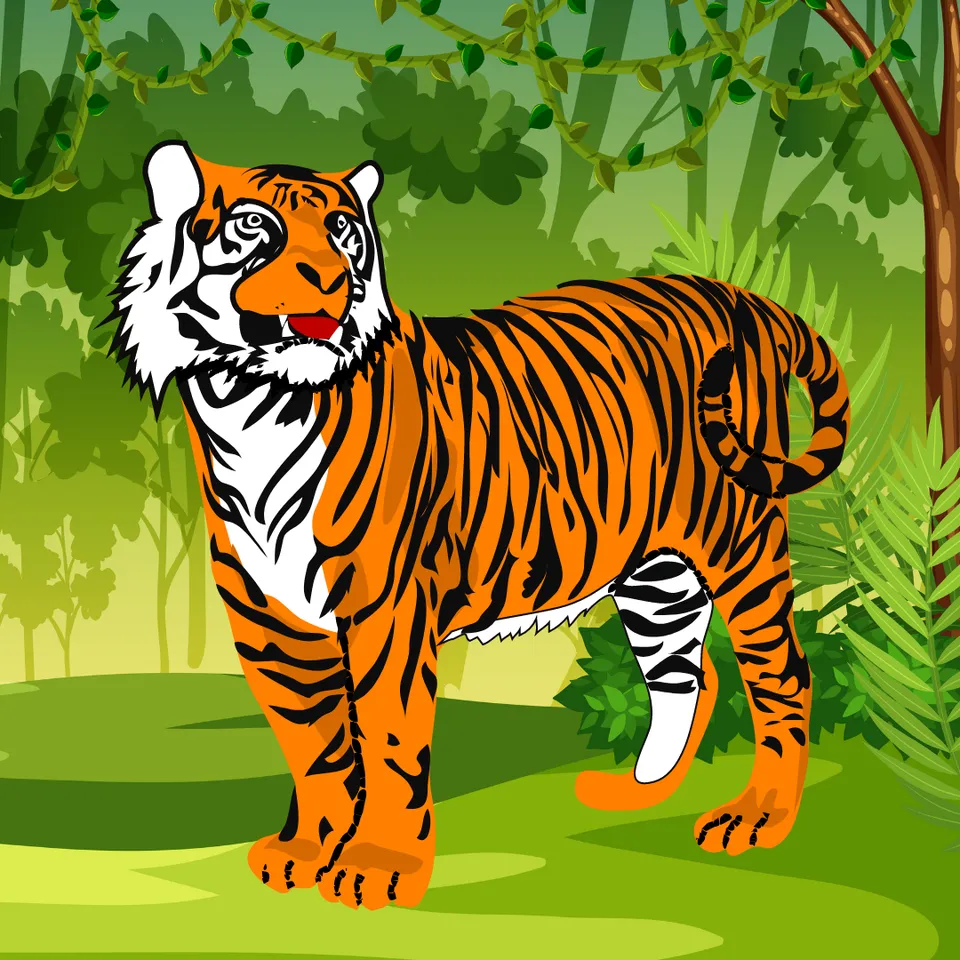
Lions, Tigers, and Penguins, Oh My! Come explore habitats!
In this lesson, students will:
- Play a game to place the animal in the correct habitat!
- Explain why certain animals live in their habitats
- Discover actual habitat and animal footage
- Interact and make connections to the story
Part of
Standards alignment
Common Core State Standards
- There are many different kinds of living things in any area, and they exist in different places on land and in water.
- K-ESS3-1 — Use a model to represent the relationship between the needs of different plants and animals (including humans) and the places they live.
- ELD-SI.K-3.Inform — Multilingual learners will… • Define and classify objects or concepts • Describe characteristics, patterns, or behavior • Describe parts and wholes • Sort, clarify, and summarize ideas • Summarize information from interaction with others and from learning experiences
Alabama
- ELA21.K.20 — Name and sort pictures of objects into categories based on common attributes while relating vocabulary to prior knowledge and building background knowledge.
- SC23.K.6 — Use models of natural habitats to represent the interdependence among plants and animals native to their community.
Alaska
- Living things need water, air, and resources from the land, and they live in places that have the things they need. Humans use natural resources for everything they do.
- There are many different kinds of living things in any area, and they exist in different places on land and in water.
- K-ESS3-1 — Use a model to represent the relationship between the needs of different plants and animals (including humans) and the places they live.
- L.K.5.a — Sort common objects into categories (e.g., shapes, foods) to gain a sense of the concepts the categories represent.
Arizona
- 1.L2U2.7 — Develop and use models about how living things use resources to grow and survive; design and evaluate habitats for organisms using earth materials.
Arkansas
- Living things need water, air, and resources from the land, and they live in places that have the things they need. Humans use natural resources for everything they do.
- K-ESS3-1 — Use a model to represent the relationship between the needs of different plants or animals (including humans) and the places they live.
California
- K-ESS3-1 — Use a model to represent the relationship between the needs of different plants and animals (including humans) and the places they live.
- There are many different kinds of living things in any area, and they exist in different places on land and in water.
- Living things need water, air, and resources from the land, and they live in places that have the things they need. Humans use natural resources for everything they do.
- L.K.5.a — Sort common objects into categories (e.g., shapes, foods) to gain a sense of the concepts the categories represent.
Colorado
- SC.K.3.2 — Plants and animals meet their needs in their habitats and impact one another; people can prepare for severe weather.
- SC.K.3.2.a — Use a model to represent the relationship between the needs of different plants and animals (including humans) and the places they live.
- SC.P.2.1.c — Observe and describe how natural habitats provide for the basic needs of plants and animals with respect to shelter, food, water, air and light.
- SC.P.2.1.a — Observe, describe and discuss living things.
Connecticut
- K-ESS3-1 — Use a model to represent the relationship between the needs of different plants and animals (including humans) and the places they live.
- There are many different kinds of living things in any area, and they exist in different places on land and in water.
Delaware
- There are many different kinds of living things in any area, and they exist in different places on land and in water.
- K-ESS3-1 — Use a model to represent the relationship between the needs of different plants and animals (including humans) and the places they live.
- L.K.5.a — Sort common objects into categories (e.g., shapes, foods) to gain a sense of the concepts the categories represent.
Florida
- SC.2.L.17.2 — Recognize and explain that living things are found all over Earth, but each is only able to live in habitats that meet its basic needs.
- ELA.K.V.1.3 — Identify and sort common words into basic categories, relating vocabulary to background knowledge.
- SC.1.L.17.1 — Through observation, recognize that all plants and animals, including humans, need the basic necessities of air, water, food, and space.
Georgia
- SKL2.a — Construct an argument supported by evidence for how animals can be grouped according to their features.
- SKL1.b — Develop a model to represent how a set of organisms and non-living objects are sorted into groups based on their attributes.
Hawaii
- K-ESS3-1 — Use a model to represent the relationship between the needs of different plants and animals (including humans) and the places they live.
- There are many different kinds of living things in any area, and they exist in different places on land and in water.
- Living things need water, air, and resources from the land, and they live in places that have the things they need. Humans use natural resources for everything they do.
- K.L.5a — Sort common objects into categories (e.g., shapes, foods) to gain a sense of the concepts the categories represent.
Idaho
- Living things need water, air, and resources from the land. They live in places that have the things they need. (K-ESS-2.1)
- K-ESS-2.1 — Students who demonstrate understanding can: Use a model to represent the relationship between the needs of different plants and animals and the places they live.
- K-ESS-1.2 — Students who demonstrate understanding can: With guidance and support, use evidence to construct an explanation of how plants and animals interact with their environment to meet their needs.
Illinois
- ESS3.A-P1 — Living things need water, air, and resources from the land, and they live in places that have the things they need. Humans use natural resources for everything they do.
- K-ESS3-1 — Use a model to represent the relationship between the needs of different plants and animals (including humans) and the places they live.
- LS4.D-P1 — There are many different kinds of living things in any area, and they exist in different places on land and in water.
- INFO-P1 — Read grade-appropriate texts and use media to obtain scientific information to determine patterns in the natural world.
Indiana
- K.LS.3 — Use observations to describe patterns of what plants and animals (including humans) need to survive.
- K.RC.7 — Identify and sort pictures of objects into categories (e.g., colors, shapes, opposites) through oral discussions. (E)
- 1.LS.4 — Use a model to represent the relationship between the needs of different plants and animals (including humans) and the places they live.
- K.CC.3 — Ask and answer questions about key details in a text read aloud or information presented orally or through other media. (E)
Iowa
- K-ESS3-1 — Use a model to represent the relationship between the needs of different plants and animals (including humans) and the places they live.
- There are many different kinds of living things in any area, and they exist in different places on land and in water.
Kansas
- K-ESS3-1 — Use a model to represent the relationship between the needs of different plants and animals (including humans) and the places they live.
- Living things need water, air, and resources from the land, and they live in places that have the things they need. Humans use natural resources for everything they do.
- There are many different kinds of living things in any area, and they exist in different places on land and in water.
- Use observations (firsthand or from media) to describe patterns and/or relationships in the natural and designed world(s) in order to answer scientific questions and solve problems.
Kentucky
- K-ESS3-1 — Use a model to represent the relationship between the needs of different plants and animals (including humans) and the places they live.
- There are many different kinds of living things in any area, and they exist in different places on land and in water.
- L.K.5.a — Sort common objects into categories (e.g., shapes, foods) to gain a sense of the concepts the categories represent.
Louisiana
- K-ESS3-1 — Use a model to represent the relationship between the needs of different plants and animals (including humans) and the places they live.
- L.K.5.a — Sort common objects into categories (e.g., shapes, foods) to gain a sense of the concepts the categories represent.
- Use observations (firsthand or from media) to describe patterns and/or relationships in the natural and designed world(s) in order to answer scientific questions and solve problems.
Maine
- K-ESS3-1 — Use a model to represent the relationship between the needs of different plants and animals (including humans) and the places they live.
- L.5.K.a — Sort common objects into categories (e.g., shapes, foods) to gain a sense of the concepts the categories represent.
- K-LS1-1 — Use observations to describe patterns of what plants and animals (including humans) need to survive.
- R.4.K.a — Ask and answer questions with prompting and support about who, what, when, where, and how.
Maryland
- DCI.LS4.D.K-2.1 — There are many different kinds of living things in any area, and they exist in different places on land and in water.
- K-ESS3-1 — Use a model to represent the relationship between the needs of different plants and animals (including humans) and the places they live.
Massachusetts
- PreK-ESS2-1(MA) — Raise questions and engage in discussions about how different types of local environments (including water) provide homes for different kinds of living things.
- PreK-LS2-2(MA) — Using evidence from the local environment, explain how familiar plants and animals meet their needs where they live.
- SL.PK.2 — Recall information for short periods of time and retell, act out, or represent information from a text read aloud, a recording, or a video (e.g., watch a video about birds and their habitats and make drawings or constructions of birds and their nests).
Michigan
- K-ESS3-1 — Use a model to represent the relationship between the needs of different plants or animals (including humans) and the places they live.
- K-LS1-1 — Use observations to describe patterns of what plants and animals (including humans) need to survive.
Minnesota
- 0L.1.2.1.2 — Make observations of plants and animals to compare the diversity of life in different habitats. (P: 3, CC: 1, CI: LS4)
- 0L.3.1.1.1 — Develop a simple model to represent the relationship between the needs of different plants and animals (including humans) and the places they live. (P: 2, CC: 4, CI: LS2)
Mississippi
- L.K.3A.2 — Construct explanations using observations to describe and report what animals need to live and grow (food, water, shelter, and space).
Missouri
- There are many different kinds of living things in any area, and they exist in different places on land and in water.
- K.ESS3.A.1 — Use a model to represent the relationship between the needs of different plants or animals (including humans) and the places they live.
- Living things need water, air, and resources from the land, and they live in places that have the things they need. Humans use natural resources for everything they do.
Montana
- K-ESS3-1 — use a model to represent the relationship between the needs of different plants or animals, including humans, and the places they live;
- L.K.5.a — Sort common objects into categories (e.g., shapes, foods) to gain a sense of the concepts the categories represent.
- K-LS1-1 — use observations to describe patterns of what plants and animals, including humans, need to survive.
Nebraska
- There are many different kinds of living things in any area, and they exist in different places on land and in water.
- SC.K.7.2.C — Use a model to represent the relationship between the needs of different plants or animals (including humans) and the places they live..
- LA.K.RI.8 — Actively engage in group reading activities with purpose and understanding.
Nevada
- K-ESS3-1 — Use a model to represent the relationship between the needs of different plants and animals (including humans) and the places they live.
- There are many different kinds of living things in any area, and they exist in different places on land and in water.
- Make observations (firsthand or from media) to collect data that can be used to make comparisons.
New Hampshire
- There are many different kinds of living things in any area, and they exist in different places on land and in water.
- Living things need water, air, and resources from the land, and they live in places that have the things they need. Humans use natural resources for everything they do.
- K-ESS3-1 — Use a model to represent the relationship between the needs of different plants and animals (including humans) and the places they live.
- L.K.5.a — Sort common objects into categories (e.g., shapes, foods) to gain a sense of the concepts the categories represent.
- Use observations (firsthand or from media) to describe patterns and/or relationships in the natural and designed world(s) in order to answer scientific questions and solve problems.
New Jersey
- There are many different kinds of living things in any area, and they exist in different places on land and in water.
- Living things need water, air, and resources from the land, and they live in places that have the things they need. Humans use natural resources for everything they do.
- K-ESS3-1 — Use a model to represent the relationship between the needs of different plants and animals (including humans) and the places they live.
- L.K.5.a — Sort common objects into categories (e.g., shapes, foods) to gain a sense of the concepts the categories represent.
New Mexico
- K-ESS3-1 — Use a model to represent the relationship between the needs of different plants and animals (including humans) and the places they live.
- There are many different kinds of living things in any area, and they exist in different places on land and in water.
- Living things need water, air, and resources from the land, and they live in places that have the things they need. Humans use natural resources for everything they do.
- L.K.5.a — Sort common objects into categories (e.g., shapes, foods) to gain a sense of the concepts the categories represent.
New York
- There are many different kinds of living things in any area, and they exist in different places on land and in water.
- K-ESS3-1 — Use a model to represent the relationship between the needs of different plants and animals (including humans) and the places they live.
- PKL4 — Explore and use new vocabulary in child-centered, authentic, play-based experiences.
North Carolina
- SL.K.3 — Ask and answer questions in order to seek help, get information, or clarify something that is not understood.
North Dakota
- K-ESS3-1 — Represent the relationship between the needs of different plants and animals (including humans) and the places they live using a model.
- Living things need water, air, and resources from the land, and they live in places that have the things they need. Humans use natural resources for everything they do.
- K.DPS.D.1 — Sort and classify objects (up to 10) based on attributes and explain the reasoning used.
Ohio
- 1.LS.2 — Living things survive only in environments that meet their needs.
- L.K.5.a — Sort common objects into categories (e.g., shapes, foods) to gain a sense of the concepts the categories represent.
- K.LS.2 — Living things have physical traits and behaviors, which influence their survival.
- RL.K.10 — Actively engage in group reading activities with purpose and understanding. Activate prior knowledge and draw on previous experiences in order to make text-to-self or text-to-text connections and comparisons.
Oklahoma
- K.4.R.1 — Students will name and sort familiar objects into categories based on similarities and differences with prompting.
- K.8.R — Students will listen and respond to read-alouds, participate in shared reading, and interact independently with texts.
- K.ESS3.1 — Use a model to represent the relationship between the needs of different plants or animals (including humans) and the places they live.
- K.7.R — Students will explore ideas and topics in multimodal content.
Oregon
- K.ESS3.1 — Use a model to represent the relationship between the needs of different plants or animals (including humans) and the places they live. [Clarification Statement: Examples of relationships could include that deer eat buds and leaves, therefore, they usually live in forested areas; and, grasses need sunlight so they often grow in meadows. Plants, animals, and their surroundings make up a system.][assessment boundary: modeling is limited to describing the relationship and does not include patterns of structure and function to show how needs are met. impact on the environment is beyond the standard.]
- K.L.5a — Sort common objects into categories to gain a sense of the concepts the categories represent.
- K.SL.4 — Describe familiar people, places, things, and events and, with prompting and support, provide additional detail.
Pennsylvania
- There are many different kinds of living things in any area, and they exist in different places on land and in water.
- 3.3.K.C — Use a model to represent the relationship between the needs of different plants or animals (including humans) and the places they live.
- 3.1.K.A — Use observations to describe patterns of what plants and animals (including humans) need to survive.
Rhode Island
- There are many different kinds of living things in any area, and they exist in different places on land and in water.
- K-ESS3-1 — Use a model to represent the relationship between the needs of different plants and animals (including humans) and the places they live.
- L.K.5.a — Sort common objects into categories (e.g., shapes, foods) to gain a sense of the concepts the categories represent.
South Carolina
- K-ESS3-1. — Use a model to represent the relationship between the needs of different plants or animals (including humans)and the places they live. Clarification Statement: Examples of relationships could include that deer eat buds and leaves; therefore, they usually live in forested areas, humans use soil and water to grow food, and grasses need sunlight so they often grow in meadows. Plants, animals, and their surroundings make up a system. State Assessment Boundary: Assessment does not include specific habitats or biomes.
- K-ESS3-1.DCI.A: — Natural Resources Living things need water, air, and resources from the land, and they live in places that have the things they need. Humans use natural resources for everything they do. NRC Framework Link
- K-ESS3-1.SEP.A: — Developing and Using Models Modeling in K-2 builds on prior experiences and progresses to include using and developing models (i.e., diagram, drawing, physical replica, diorama, dramatization, storyboard) that represent concrete events or design solutions. Use a model to represent relationships in the natural world. NRC Framework Link
South Dakota
- K-ESS3-1 — Use a model to represent the relationship between the needs of different plants or animals (including humans) and the places they live.
- What is the relationship between animals and what they eat, and how does that determine where they live?
- Use observations (firsthand or from media) to describe patterns and/or relationships in the natural and designed world(s) in order to answer scientific questions and solve problems.
- K-LS1-1 — Describe patterns of what plants and animals (including humans) need to survive.
Tennessee
- K.ESS3.1 — Use a model to represent the relationship between the basic needs (shelter, food, water) of different plants and animals (including humans) and the places they live.
- K.ETS1.1 — Ask and answer questions about the scientific world and gather information using the senses.
Texas
- K.12 — Organisms and environments. The student knows that plants and animals depend on the environment to meet their basic needs for survival. The student is expected to:
- K.12B — observe and identify the dependence of animals on air, water, food, space, and shelter.
Utah
- K.2.2 — Obtain, evaluate, and communicate information about patterns in the relationships between the needs of different living things (plants and animals, including humans) and the places they live. Emphasize that living things need water, air, and resources and that they live in places that have the things they need. Examples could include investigating plants grown in various locations and comparing the results or comparing animals with the places they live. (LS2.A, LS2.B, ESS3.A)
Vermont
- K-ESS3-1 — Use a model to represent the relationship between the needs of different plants and animals (including humans) and the places they live.
- There are many different kinds of living things in any area, and they exist in different places on land and in water.
Virginia
- K.1.c.ii — Classify and/or sequence objects based on a single physical characteristic or property.
- K.7.a — Living things need adequate food, water, shelter, air, and space to survive.
- 1.5.a — Animals need air, food, water, shelter, and space (habitat).
Washington
- There are many different kinds of living things in any area, and they exist in different places on land and in water.
- K-ESS3-1 — Use a model to represent the relationship between the needs of different plants and animals (including humans) and the places they live.
Washington, D.C.
- K-ESS3-1 — Use a model to represent the relationship between the needs of different plants and animals (including humans) and the places they live.
- K-LS1-1 — Use observations to describe patterns of what plants and animals (including humans) need to survive.
West Virginia
- S.K.5 — Use a model to represent the relationship between the needs of different plants or animals (including humans) and the places they live.
- S.K.3 — Use observations to describe patterns of what plants and animals (including humans) need to survive.
Wisconsin
- Living things need water, air, and resources from the land, and they live in places that have the things they need. Humans use natural resources for everything they do.
- ELA.K.SL.4 — With guidance and support, describe familiar people, places, things, and events.
- Students collect, record, and share observations. This includes the following: Record information (observations, thoughts, and ideas). Use and share pictures, drawings, or writings of observations. Use observations (firsthand or from media) to describe patterns or relationships in the natural and designed worlds in order to answer scientific questions and solve problems. Compare predictions (based on prior experiences) to what occurred (observable events). Analyze data from tests of an object or tool to determine if the object or tool works as intended.
Wyoming
- A range of different organisms lives in different places.
- K-ESS3-1 — Use a model to represent the relationship between the needs of different plants and animals (including humans) and the places they live.
- L.K.5.a — Sort common objects into categories (e.g., shapes, foods) to gain a sense of the concepts the categories represent.