The Little Mermaid
Ages 3–7 · 19 minutes · English, Stories
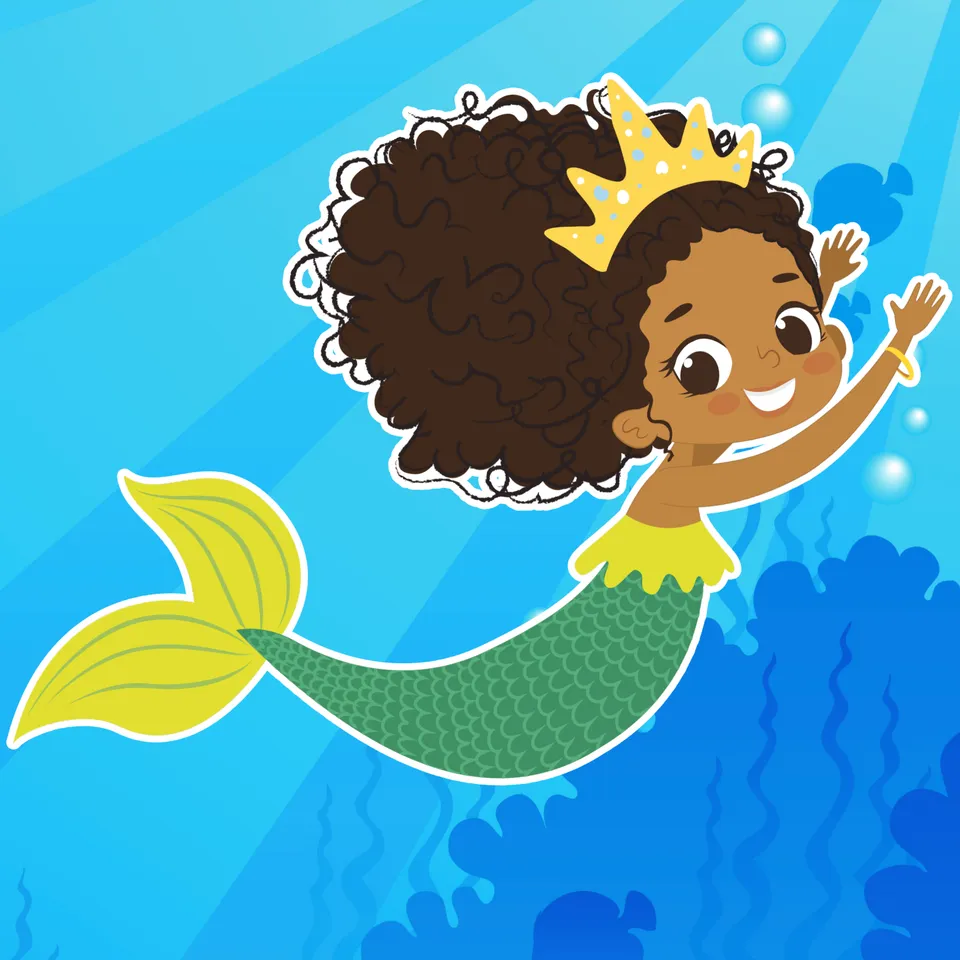
A Little Mermaid decides she wants to be a human. But a deal with the sea witch may wreck everything!
A Little Mermaid decides she wants to become a human, marry a prince, and live happily ever after. But a bad deal with a sea witch might wreck everything!
Part of
Standards alignment
Common Core State Standards
- ELD-SI.K-3.Narrate — Multilingual learners will… • Share ideas about one's own and others' lived experiences and previous learning • Connect stories with images and representations to add meaning • Ask questions about what others have shared • Recount and restate ideas • Discuss how stories might end or next steps
- RL.1.3 — Describe characters, settings, and major events in a story, using key details.
- CCRA.R.4 — Interpret words and phrases as they are used in a text, including determining technical, connotative, and figurative meanings, and analyze how specific word choices shape meaning or tone.
- CCRA.SL.1 — Prepare for and participate effectively in a range of conversations and collaborations with diverse partners, building on others' ideas and expressing their own clearly and persuasively.
Alabama
- ELA21.1.2 — Actively participate in shared reading experiences and collaborative discussions to build background knowledge and learn how oral reading should sound.
- ELA21.1.22 — Ask and answer questions about key details in literary and informational texts.
- ELA21.K.21b — Use new words and phrases acquired through conversations, reading and being read to, and responding to text.
- ELA21.K.28 — With prompting and support, use text clues to determine main ideas and make predictions about an ending in a literary text.
Alaska
- RL.K.1 — With prompting and support, ask and answer questions about a literary text using key details from the text.
- SL.K.2 — Confirm understanding of a text read aloud or information presented orally or through other media by asking and answering questions about key details and requesting clarification if something is not understood.
- SL.K.1 — Participate in collaborative conversations with diverse partners about kindergarten topics and texts with peers and adults in small and larger groups.
- RL.1.7 — Use illustrations and details in a story read or read aloud to describe its characters, events, setting, or problem-solution.
Arizona
- K.RL.1 — With prompting and support, ask and answer questions about key details in a text.
- K.SL.2 — Confirm understanding of a text read aloud or information presented orally or through other media by asking and answering questions about key details and requesting clarification if something is not understood.
- 1.RL.1 — Ask and answer questions such as who, what, where, why, when, and how about key details in a text.
- 1.RL.7 — Use illustrations and details in a story to describe its characters, setting, or events.
- K.RL.3 — With prompting and support, identify characters, settings, and major events in a story.
Arkansas
- K.RC.6.RF — Use background knowledge and details, including illustrations, charts, and graphs, to make predictions and inferences about what happens in a text.
- 1.RC.5.RF — Use background knowledge and details, including illustrations, charts, and graphs, to make predictions and inferences about what happens in a text.
- K.RC.4.RF — Build general and academic vocabulary and background knowledge of age and grade-appropriate topics through discussion, reading, and writing.
- K.RC.7.RF — Demonstrate comprehension of age and grade-appropriate texts by speaking or writing.
- K.RC.11.RL — Explain how visual images support understanding of a text.
California
- RL.K.1 — With prompting and support, ask and answer questions about key details in a text.
- RL.1.10.b — Confirm predictions about what will happen next in a text.
- RL.1.7 — Use illustrations and details in a story to describe its characters, setting, or events.
Colorado
- RWC20-GR.K-S.2-GLE.1-EO.a.i — With prompting and support, ask and answer questions about key details in a text.
- RWC20-GR.1-S.1-GLE.1-EO.b — Ask and answer questions about key details in a text read aloud or information presented orally or through other media.
- RWC20-GR.1-S.2-GLE.1-EO.c.i — Use illustrations and details in a story to describe its characters, setting, or events.
- RWC20-GR.K-S.1-GLE.2-EO.h — Use new vocabulary that is directly taught through reading, speaking, and listening.
- RWC20-GR.K-S.1-GLE.1 — Communicate using verbal and nonverbal language.
Connecticut
- RL.K.1 — With prompting and support, ask and answer questions about key details in a text.
- SL.K.2 — Confirm understanding of a text read aloud or information presented orally or through other media by asking and answering questions about key details and requesting clarification if something is not understood.
- RL.1.7 — Use illustrations and details in a story to describe its characters, setting, or events.
- SL.1.2 — Ask and answer questions about key details in a text read aloud or information presented orally or through other media.
- SL.K.6 — Speak audibly and express thoughts, feelings, and ideas clearly.
Delaware
- RL.K.1 — With prompting and support, ask and answer questions about key details in a text.
- RL.1.7 — Use illustrations and details in a story to describe its characters, setting, or events.
- SL.K.2 — Confirm understanding of a text read aloud or information presented orally or through other media by asking and answering questions about key details and requesting clarification if something is not understood.
- SL.K.6 — Speak audibly and express thoughts, feelings, and ideas clearly.
Florida
- ELA.K.R.1.1 — Describe the main character(s), setting, and important events in a story.
- ELA.K.R.3.1 — Identify and explain descriptive words in text(s).
- ELA.K.R.2.1 — Use titles, headings, and illustrations to predict and confirm the topic of texts.
Georgia
- ELAGSEKSL2 — Confirm understanding of written texts read aloud or information presented orally or through media by asking and answering questions about key details and requesting clarification if something is not understood.
- ELAGSEKRL1 — With prompting and support, ask and answer questions about key details in a text.
- ELAGSEKRL7 — With prompting and support, describe the relationship between illustrations and the story (how illustrations support the text).
- ELAGSEKSL1 — Participate in collaborative conversations with diverse partners about kindergarten topics and texts with peers and adults in small and larger groups.
- ELAGSE1L6 — Use words and phrases acquired through conversations, reading and being read to, and responding to texts. Include frequently occurring conjunctions to signal simple relationships (e.g., I named my hamster Nibblet because she nibbles too much because she likes that).
Hawaii
- K.RL.1 — With prompting and support, ask and answer questions about key details in a text.
- K.SL.2 — Confirm understanding of a text read aloud or information presented orally or through other media by asking and answering questions about key details and requesting clarification if something is not understood.
- 1.RL.7 — Use illustrations and details in a story to describe its characters, setting, or events.
- K-12.R.R.4 — Interpret words and phrases as they are used in a text, including determining technical, connotative, and figurative meanings, and analyze how specific word choices shape meaning or tone.
Idaho
- K.RC.TE.3 — Ask and answer questions about key details in texts heard.
- 1.RC.TE.3 — Ask and answer questions about key details in texts heard or read.
- K.ODC.OC.2 — With support, confirm understanding of a text read aloud or information presented orally by asking and answering questions.
- K.RC.L.5b — Describe the connection between characters, settings, and major events in stories heard.
Illinois
- RL.K.1 — With prompting and support, ask and answer questions about key details in a text.
- SL.K.2 — Confirm understanding of a text read aloud or information presented orally or through other media by asking and answering questions about key details and requesting clarification if something is not understood.
- RL.1.7 — Use illustrations and details in a story to describe its characters, setting, or events.
- SL.1.2 — Ask and answer questions about key details in a text read aloud or information presented orally or through other media.
- SL.K.6 — Speak audibly and express thoughts, feelings, and ideas clearly.
Indiana
- K.CC.3 — Ask and answer questions about key details in a text read aloud or information presented orally or through other media. (E)
- K.CC.1 — Participate in collaborative conversations about grade-appropriate topics and texts with peers and adults in small and larger groups. (E)
- K.RC.3 — Identify important elements within a text (e.g., characters, settings, or events). (E)
- K.RC.4 — With support, make predictions about what will happen in a text.
- 1.RC.5 — Identify the basic characteristics of familiar narrative text genres (e.g., fairy tales, nursery rhymes, storybooks).
Iowa
- SL.K.2 — Confirm understanding of a text read aloud or information presented orally or through other media by asking and answering questions about key details and requesting clarification if something is not understood.
- RL.1.1 — Ask and answer questions about key details in a text.
- RL.1.7 — Use illustrations and details in a story to describe its characters, setting, or events.
- SL.K.1.b — Continue a conversation through multiple exchanges.
Kansas
- RL.K.1 — With prompting and support, ask and answer questions about key details in a text.
- RL.K.13 — Listen to high quality prose and poetry of appropriate complexity for Kindergarten.
- RL.K.4 — Ask and answer questions about unknown words in a text.
- RL.K.7 — With prompting and support, describe the relationship between illustrations and the story in which they appear (e.g., what moment in a story an illustration depicts).
- SL.1.2 — Ask and answer questions about key details in a text read aloud or information presented orally or through other media.
Kentucky
- RL.K.1 — With prompting and support, ask and answer explicit questions about key ideas and details, and make logical inferences to construct meaning from the text.
- RL.K.3 — With prompting and support, identify characters, settings and major events in a story in order to make meaning of the story development.
- L.K.4 — Determine or clarify the meaning of unknown and multiple-meaning words and phrases based on kindergarten reading and content.
- RL.K.10 — With prompting and support, flexibly use a variety of comprehension strategies (i.e., questioning, monitoring, visualizing, inferencing, summarizing, using prior knowledge, determining importance) to make sense of grade-level appropriate, complex literary texts.
- RL.K.7 — With prompting and support, describe the relationship between illustrations and the story in which they appear.
Louisiana
- RL.K.1 — With prompting and support, ask and answer questions about key details in a text.
- SL.K.2 — Confirm understanding of a text read aloud or information presented orally or through other media by asking and answering questions about key details and requesting clarification if something is not understood.
- RL.1.7 — Use illustrations and details in a story to describe its characters, setting, or events.
- RL.1.3 — Describe characters, settings, and major events in a story, using key details.
Maine
- SL.2.K.a — Confirm understanding of a text read aloud or information presented orally or through other media by asking and answering questions about key details to seek help if something is not understood.
- Participate in collaborative conversations about kindergarten topics and texts with peers and adults in small and larger groups.
- R.7.K.a — With prompting and support, ask and answer questions about unknown words in a text.
- SL.2.1.a — Ask and answer questions about key details in a text read aloud or information presented orally or through other media.
- R.11.K.c — With prompting and support, describe the relationship between the text and what person, place, thing, or idea the illustration depicts.
Maryland
- RL.K.1 — With prompting and support, ask and answer questions about key details in a text.
- RL.PK.4 — With modeling and support, answer questions about unknown words in stories and poems.
- RL.PK.7 — With modeling and support, tell how the illustrations support the story
- SL.PK 2 — Confirm understanding of a text read aloud or information presented orally or through other media by asking and answering questions about key details with modeling and support.
Massachusetts
- L.PK.4 — Ask and answer questions about the meanings of new words and phrases introduced through books, activities, and play.
- RL.PK.1 — With prompting and support, ask and answer questions about a story or poem read aloud.
- RL.PK.7 — With prompting and support, make predictions about what happens next in a picture book after examining and discussing the illustrations.
- SL.1.2 — Ask and answer questions about key details in a text read aloud or information presented orally or through other media.
Michigan
- RL.K.1 — With prompting and support, ask and answer questions about key details in a text.
- SL.1.2 — Ask and answer questions about key details in a text read aloud or information presented orally or through other media.
- RL.1.7 — Use illustrations and details in a story to describe its characters, setting, or events.
- RL.K.3 — With prompting and support, identify characters, settings, and major events in a story.
Minnesota
- 0.1.4.1 — Ask and answer questions about key details in a text, with prompting and support.
- 0.2.5.2 — Verbally or visually respond to a story, with support and guidance.
- 1.1.4.1 — Ask and answer questions including who, what and where to demonstrate understanding of key details in a text; retell key details.
- 0.1.5.3 — Recognize the connection between illustrations and text.
Mississippi
- RL.K.1 — With prompting and support, ask and answer questions about key details in a text.
- SL.K.2 — Confirm understanding of a text read aloud or information presented orally or through other media by asking and answering questions about key details and requesting clarification if something is not understood.
- RL.1.7 — Use illustrations and details in a story to describe its characters, setting, or events.
- SL.K.1 — Participate in collaborative conversations with diverse partners about kindergarten topics and texts with peers and adults in small and larger groups.
Missouri
- K.R.1.A.b — asking and responding to questions about texts read aloud
- K.R.1.A.a — predicting what might happen next in a text based on the cover, title, and illustrations
- K.R.1.D.a — engaging with text as developmentally appropriate
Montana
- RL.K.1 — With prompting and support, ask and answer questions about key details in a text.
- RL.K.3 — With prompting and support, identify characters, settings, and major events in a story.
- SL.K.2 — Confirm understanding of a text read aloud or information presented orally or through other media by asking and answering questions about key details and requesting clarification if something is not understood.
- RL.1.7 — Use illustrations and details in a story to describe its characters, setting, or events.
Nebraska
- LA.K.RP.6 — With prompting and support, ask and answer questions about key details in a literary text.
- LA.1.RP.6 — Ask and answer questions about key details in a literary text.
- LA.1.RP.2 — Identify the main character(s), setting, and important events, drawing on key details in a literary text.
- LA.K.SL.1.e — Complete a task following one/two-step directions.
Nevada
- RL.K.1 — With prompting and support, ask and answer questions about key details in a text.
- SL.K.2 — Confirm understanding of a text read aloud or information presented orally or through other media by asking and answering questions about key details and requesting clarification if something is not understood.
- RL.1.7 — Use illustrations and details in a story to describe its characters, setting, or events.
New Hampshire
- RL.K.1 — With prompting and support, ask and answer questions about key details in a text.
- SL.K.2 — Confirm understanding of a text read aloud or information presented orally or through other media by asking and answering questions about key details and requesting clarification if something is not understood.
- RL.1.7 — Use illustrations and details in a story to describe its characters, setting, or events.
- SL.1.2 — Ask and answer questions about key details in a text read aloud or information presented orally or through other media.
New Jersey
- SL.K.2 — Confirm understanding of a text read aloud or information presented orally or through other media by asking and answering questions about key details and requesting clarification if something is not understood.
- RL.1.7 — Use illustrations and details in a story to describe its characters, setting, or events.
- SL.1.2 — Ask and answer questions about key details in a text read aloud or information presented orally or through other media.
- SL.K.1 — Participate in collaborative conversations with diverse partners about kindergarten topics and texts with peers and adults in small and larger groups.
- NJSLSA.R.4 — Interpret words and phrases as they are used in a text, including determining technical, connotative, and figurative meanings, and analyze how specific word choices shape meaning or tone.
New Mexico
- RL.K.1 — With prompting and support, ask and answer questions about key details in a text.
- SL.K.2 — Confirm understanding of a text read aloud or information presented orally or through other media by asking and answering questions about key details and requesting clarification if something is not understood.
- RL.1.7 — Use illustrations and details in a story to describe its characters, setting, or events.
- RL.K.NM.1 — Identify the main topic, retell key details of a text, and make predictions.
- SL.1.2 — Ask and answer questions about key details in a text read aloud or information presented orally or through other media.
New York
- KR3 — Identify characters, settings, major events in a story, or pieces of information in a text. (RI&RL)
- KRF4 — Will engage with emergent level texts and read-alouds to demonstrate comprehension.
- KSL1 — Participate in collaborative conversations with diverse peers and adults in small and large groups and during play.
- 1SL2 — Develop and answer questions about key details in diverse texts and formats.
- PKR3 — Develop and answer questions about characters, major events, and pieces of information in a text. (RI&RL)
North Carolina
- SL.K.2 — Confirm understanding of a text read aloud or information presented orally or through other media by asking and answering questions about key details and requesting clarification if something is not understood.
- RL.1.1 — Ask and answer questions about key details in a text.
- RL.1.7 — Use illustrations and details in a story to describe its characters, setting, or events.
- SL.1.2 — Ask and answer questions about key details in a text read aloud or information presented orally or through other media.
- SL.K.1 — Participate in collaborative conversations with diverse partners about kindergarten topics and texts with peers and adults in small and larger groups.
North Dakota
- 1.R.3.b — Identify characters, setting, and plot in a literary text during or after a shared reading or other text-listening experience.
- 1.R.8a — Identify characters' feelings or traits in a story, poem,or nursery rhyme during or after a shared reading or other text-listening experience.
- K.R.3.b — Tell about characters and setting in a literary text during or after a shared reading or other text-listening experience.
- K.R.8a — Respond to or reenact characters' feelings in a story, poem,or nursery rhyme during or after a shared reading or other text-listening experience.
Ohio
- RL.K.1 — With prompting and support, ask and answer questions about key details in a text.
- RL.K.3 — With prompting and support, identify characters, settings, and major events in a story.
- SL.1.2 — Ask and answer questions about key details in a text read aloud or information presented in various media and other formats (e.g., orally).
- RL.1.7 — Use illustrations and details in a story to describe its characters, setting, or events.
Oklahoma
- K.8.R — Students will listen and respond to read-alouds, participate in shared reading, and interact independently with texts.
- PK.8.R — Students will listen and respond to read-alouds, participate in shared reading, and interact independently with texts.
- K.3.R.3 — Students will describe characters and setting in a story with prompting.
Oregon
- K.RL.1 — With prompting and support, ask and answer questions about key details in a text.
- K.SL.2 — Confirm understanding of a text read aloud or information presented orally or through other media by asking and answering questions about key details and requesting clarification if something is not understood.
- 1.RL.7 — Use illustrations and details in a story to describe its characters, setting, or events.
- K.SL.1 — Participate in collaborative conversations with diverse partners about kindergarten topics and texts with peers and adults in small and larger groups.
Pennsylvania
- CC.1.3.K.B — Answer questions about key details in a text.
- CC.1.5.K.B — Ask and answer questions about key details in a text read aloud or information presented orally or through other media.
- CC.1.3.K.G — Make connections between the illustrations and the text in a story (read or read aloud).
- CC.1.3.PK.F — Answer questions about unfamiliar words read aloud from a story.
Rhode Island
- RL.K.1 — With prompting and support, ask and answer questions about key details in a text.
- SL.K.2 — Confirm understanding of a text read aloud or information presented orally or through other media by asking and answering questions about key details and requesting clarification if something is not understood.
- RL.1.7 — Use illustrations and details in a story to describe its characters, setting, or events.
- RL.1.5 — Identify characteristics of common types of stories, including folktales and fairy tales.
South Carolina
- ELA.K.AOR.1.1 — Identify and describe the main character(s), setting, and events that move the plot forward.
- ELA.K.AOR.1.1.INIS — Indicator Insights: Characters can be described by appearance, feelings, and actions. Events that move the plot forward are what characters do or events that happen; events can include, but are not limited to, cause and effect and problem and solution relationships.
South Dakota
- K.RL.1 — With prompting and support, ask and answer questions about key details in a text.
- 1.RL.7 — Use illustrations and details in a story to describe its characters, setting, or events.
- 1.SL.2 — Ask and answer questions about key details in a text read aloud, information presented orally, or through other media.
- K.RL.4 — With prompting and support, ask and answer questions about unknown words in stories, poems, nursery rhymes, or songs.
Tennessee
- K.RL.KID.1 — With prompting and support, ask and answer questions about key details in a text.
- 1.SL.CC.2 — Ask and answer questions about key details in a text read aloud or information presented orally or through other media.
- K.RL.CS.4 — With prompting and support, ask and answer questions about unknown words in text.
- K.RL.KID.3 — With prompting and support, orally identify characters, setting, and major events in a story.
- K.RL.IKI.7 — With prompting and support, orally describe the relationship between illustrations and the story in which they appear.
Texas
- K.8A — demonstrate knowledge of distinguishing characteristics of well-known children's literature such as folktales, fables, fairy tales, and nursery rhymes;
Utah
- P4.R.5 — With prompting and support, ask and answer questions and make connections about a text. (RL & RI)
- 1.R.5 — Ask and answer questions about key details in a text. (RL & RI)
- P3.SL.1 — With prompting and support, participate in conversations with peers and adults.
- P4.SL.2 — Speak clearly and audibly in sentences of varying lengths to communicate wants, needs, experiences, thoughts, and emotions.
Vermont
- CCRA.R.4 — Interpret words and phrases as they are used in a text, including determining technical, connotative, and figurative meanings, and analyze how specific word choices shape meaning or tone.
- RL.1.3 — Describe characters, settings, and major events in a story, using key details.
- RL.2.3 — Describe how characters in a story respond to major events and challenges.
- CCRA.SL.1 — Prepare for and participate effectively in a range of conversations and collaborations with diverse partners, building on others' ideas and expressing their own clearly and persuasively.
Virginia
- K.RL.1.A — With prompting and support, activate prior (experience) and background (content) knowledge and make connections to what is read.
- K.RL.1.D — With prompting and support, generate predictions about story characters and events using the text.
- K.RL.3.C — With prompting and support, monitor listening comprehension.
- 1.RL.1.D — Generate predictions about story characters and events using the text.
Washington
- RL.K.1 — With prompting and support, ask and answer questions about key details in a text.
- SL.K.2 — Confirm understanding of a text read aloud or information presented orally or through other media by asking and answering questions about key details and requesting clarification if something is not understood.
- RL.1.7 — Use illustrations and details in a story to describe its characters, setting, or events.
- SL.K.6 — Speak audibly and express thoughts, feelings, and ideas clearly.
Washington, D.C.
- RL.K.1 — With prompting and support, ask and answer questions about key details in a text.
- SL.K.2 — Confirm understanding of a text read aloud or information presented orally or through other media by asking and answering questions about key details and requesting clarification if something is not understood.
- RL.1.7 — Use illustrations and details in a story to describe its characters, setting, or events.
- SL.K.6 — Speak audibly and express thoughts, feelings, and ideas clearly.
West Virginia
- ELA.K.1 — With prompting and support, ask and answer questions about key details in a literary text.
- ELA.K.31 — Confirm understanding of a text read aloud or information presented orally or through other media by asking and answering questions about key details and requesting clarification if something is not understood.
- ELA.K.30 — Participate in collaborative conversations with diverse partners about kindergarten topics and texts with peers and adults in small and larger groups.
- ELA.1.13 — Use illustrations and details in a story to describe its characters, setting, or events in literary texts.
Wisconsin
- ELA.K.R.1 — With prompting and support, develop and answer questions about a text. (RI&RL)
- ELA.K.SL.2 — With guidance and support, ask and answer questions about key details in a text read aloud or information presented orally or through other media.
- ELA.K.L.3.a — Ask and answer questions about unknown words.
- ELA.K.SL.1 — With guidance and support, participate in collaborative conversations with diverse partners about topics and texts with peers and adults in small and larger groups.
- ELA.K.R.7 — With prompting and support, describe the relationship between illustrations and the text. (RI&RL)
Wyoming
- RL.K.1 — With prompting and support, ask and answer questions about key details in a text.
- RL.1.7 — Use illustrations and details in a story to describe its characters, setting, or events.
- SL.1.2 — Ask and answer questions about key details in a text read aloud or information presented orally or through other media.
- RL.1.1 — Ask and answer questions about key details in a text.