Hercules: Part 1
Ages 6–10 · 18 minutes · English, Stories
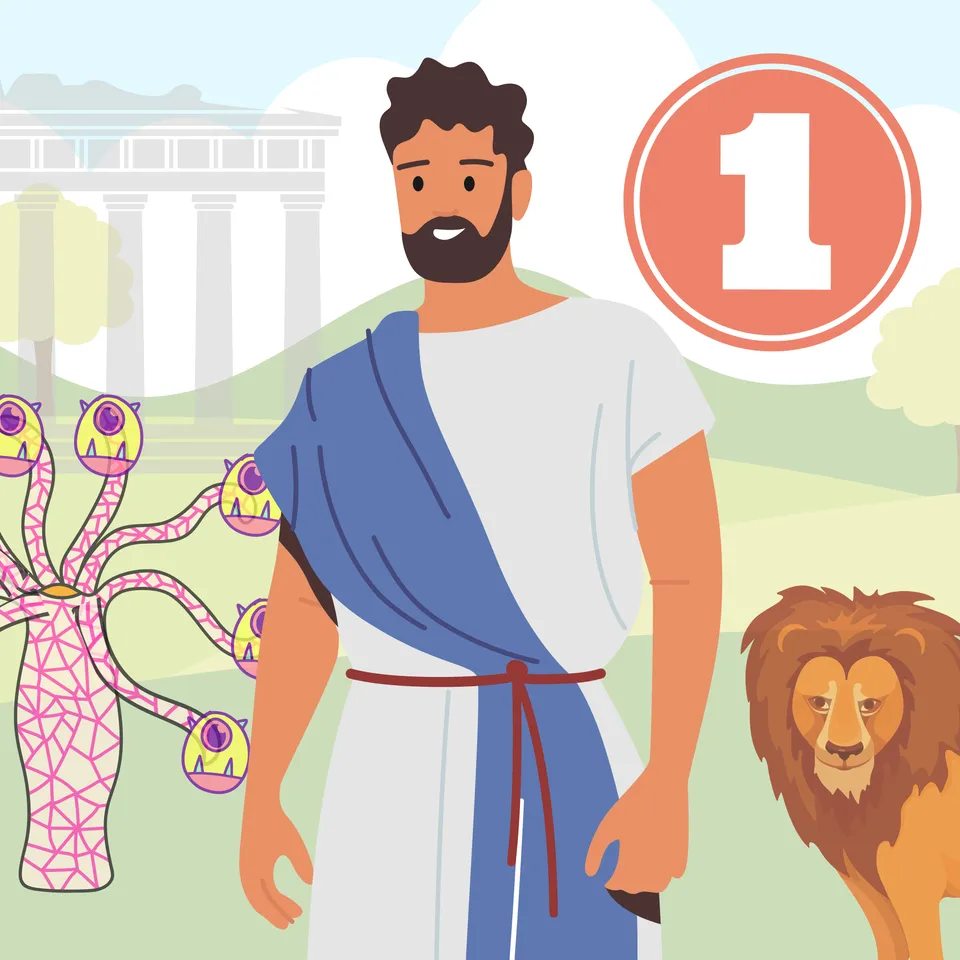
Meet the hero Hercules and help him complete the first six of his twelve tasks!
In this storytelling lesson, students will meet the hero Hercules and help him complete the first six of his twelve tasks to outsmart some misbehaving creatures and monsters. Highlights include helping Hercules face off with a nine-headed hydra, capture a hiding boar, and spot some pesky birds.
Part of
Standards alignment
Common Core State Standards
- RL.2.3 — Describe how characters in a story respond to major events and challenges.
- RL.3.2 — Recount stories, including fables, folktales, and myths from diverse cultures; determine the central message, lesson, or moral and explain how it is conveyed through key details in the text.
- RL.1.2 — Retell stories, including key details, and demonstrate understanding of their central message or lesson.
Alabama
- ELA21.4.19a — Determine and state an implied theme, explicit theme, or life lesson from a myth, story, or other traditional literature.
Alaska
- RL.2.3 — Describe how characters in a story, play or poem respond to major events, problems, and challenges.
- RL.1.3 — Describe characters, settings, major events, and problem-solution in a story, play, or poem, using key details.
- RL.1.7 — Use illustrations and details in a story read or read aloud to describe its characters, events, setting, or problem-solution.
- Possible solutions to a problem are limited by available materials and resources (constraints). The success of a designed solution is determined by considering the desired features of a solution (criteria). Different proposals for solutions can be compared on the basis of how well each one meets the specified criteria for success or how well each takes the constraints into account.
Arizona
- 2.RL.3 — Describe how characters in a story respond to major events and challenges.
- 3.RL.2 * — Recount and paraphrase stories, including fables, folktales, and myths from diverse cultures; determine the central message, lesson, or moral and explain how it is conveyed through key details in text.
Arkansas
- 3.RC.7.RL — Describe how characters respond to major events and challenges.
- K.RC.8.RL — Identify the major characters in a text.
California
- K.1.2 — Learn examples of honesty, courage, determination, individual responsibility, and patriotism in American and world history from stories and folklore.
- K.1.3 — Know beliefs and related behaviors of characters in stories from times past and understand the consequences of the characters' actions.
- K.4.1 — Determine the relative locations of objects using the terms near/far, left/right, and behind/in front.
- RL.2.3 — Describe how characters in a story respond to major events and challenges.
- RL.3.2 — Recount stories, including fables, folktales, and myths from diverse cultures; determine the central message, lesson, or moral and explain how it is conveyed through key details in the text.
Colorado
- RWC20-GR.2-S.2-GLE.1-EO.a.iv — Describe how characters in a story respond to major events and challenges.
- RWC20-GR.3-S.2-GLE.1-EO.a.iii — Recount stories, including fables, folktales, and myths from diverse cultures; determine the central message, lesson, or moral and explain how it is conveyed through key details in the text.
- RWC20-GR.1-S.2-GLE.1-EO.a.ii — Retell stories, including key details, and demonstrate understanding of their central message or lesson.
Connecticut
- RL.2.3 — Describe how characters in a story respond to major events and challenges.
- RL.1.3 — Describe characters, settings, and major events in a story, using key details.
- RL.2.7 — Use information gained from the illustrations and words in a print or digital text to demonstrate understanding of its characters, setting, or plot.
- RL.3.2 — Recount stories, including fables, folktales, and myths from diverse cultures; determine the central message, lesson, or moral and explain how it is conveyed through key details in the text.
Delaware
- RL.2.3 — Describe how characters in a story respond to major events and challenges.
- RL.1.3 — Describe characters, settings, and major events in a story, using key details.
- RL.3.2 — Recount stories, including fables, folktales, and myths from diverse cultures; determine the central message, lesson, or moral and explain how it is conveyed through key details in the text.
- Possible solutions to a problem are limited by available materials and resources (constraints). The success of a designed solution is determined by considering the desired features of a solution (criteria). Different proposals for solutions can be compared on the basis of how well each one meets the specified criteria for success or how well each takes the constraints into account.
Florida
- SS.K.A.2.4 — Listen to and retell stories about people in the past who have shown character ideals and principles including honesty, courage, and responsibility.
- ELA.1.R.1.2 — Identify and explain the moral of a story.
Georgia
- ELAGSE2RL3 — Describe how characters in a story respond to major events and challenges.
- ELAGSE3RL2 — Recount stories, including fables, folktales, and myths from diverse cultures; determine the central message, lesson, or moral and explain how it is conveyed through key details in the text.
- ELAGSE1RL2 — Retell stories, including key details, and demonstrate understanding of their central message or lesson.
Hawaii
- 1.RL.3 — Describe characters, settings, and major events in a story, using key details.
- 2.RL.3 — Describe how characters in a story respond to major events and challenges.
- 2.RL.7 — Use information gained from the illustrations and words in a print or digital text to demonstrate understanding of its characters, setting, or plot.
Idaho
- 2.RC.L.5b — Describe how characters in stories heard or read respond to major events and challenges.
- 3.RC.L.5a — Describe key details from stories (including folktales, fables, and tall tales) from diverse cultures and explain how they support the central lesson, moral, or theme.
- K.SS.4.1.3 — Identify personal traits, such as courage, honesty, and responsibility.
Illinois
- RL.2.3 — Describe how characters in a story respond to major events and challenges.
- RL.2.7 — Use information gained from the illustrations and words in a print or digital text to demonstrate understanding of its characters, setting, or plot.
- RL.3.2 — Recount stories, including fables, folktales, and myths from diverse cultures; determine the central message, lesson, or moral and explain how it is conveyed through key details in the text.
- RL.1.3 — Describe characters, settings, and major events in a story, using key details.
Indiana
- 1.RC.2 — Retell stories, fables, and fairy tales in sequence, including key details, and demonstrate comprehension of their central message or lesson.
Iowa
- RL.1.2 — Retell stories, including key details, and demonstrate understanding of their central message or lesson.
- RL.3.2 — Recount and determine the central message, lesson, or moral of fables, folktales, and myths from diverse cultures and explain how it is conveyed through key details in the text.
Kansas
- RL.2.3 — Describe how characters in a story respond to major events and challenges.
- RL.3.2 — Recount stories, including fables, folktales, and myths from diverse cultures; determine the central message, lesson, or moral and explain how it is conveyed through key details in the text.
- RL.1.3 — Describe characters, settings, and major events in a story, using key details.
- RL.2.7 — Use information gained from the illustrations and words in a print or digital text to demonstrate understanding of its characters, setting, or plot.
Kentucky
- RL.1.3 — Describe characters, settings and major events in a story, using key details in order to make meaning of the story development.
- RL.1.7 — Use a story’s illustrations and details to describe its characters, setting and events.
- RL.2.3 — Describe how characters in a story respond to major events and challenges in order to make meaning of the story development.
- KY.K.G.1.b — Describe the relative positions of these objects using terms above, below, in front of, behind and next to.
Louisiana
- RL.2.3 — Describe how characters in a story respond to major events and challenges.
- RL.3.2 — Recount stories, including fables, folktales, and myths from diverse cultures; determine the central message, lesson, or moral and explain how it is conveyed through key details in the text.
Maine
- R.6.2.a — Describe how characters in a story respond to major events and challenges.
Maryland
- RL.2.3 — Describe how characters in a story respond to major events and challenges.
- RL.1.3 — Describe characters, settings, and major events in a story, using key details.
- RL.2.7 — Use information gained from the illustrations and words in a print or digital text to demonstrate understanding of its characters, setting, or plot.
- RL.3.2 — Recount stories, including fables, folktales, and myths from diverse cultures; determine the central message, lesson, or moral and explain how it is conveyed through key details in the text.
- analyzing examples of how cooperation helps accomplish tasks at home and school.
Massachusetts
- K.T2.1 — Describe the location of people, objects, and places, using correctly words and phrases such as up, down, near, far, left, right, straight, back, behind, in front of, next to, between.
- K.T4.1 — With prompting and support, describe some things people do when they work inside and outside of the home, drawing on personal experience, literature, and informational texts.
- RL.2.3 — Describe how characters in a story respond to major events and challenges.
- RL.3.2 — Retell stories, including fables, folktales, and myths from diverse cultures; determine the central message, lesson, or moral and explain how it is conveyed through key details in the text.
Michigan
- RL.2.3 — Describe how characters in a story respond to major events and challenges.
- RL.3.2 — Recount stories, including fables, folktales, and myths from diverse cultures; determine the central message, lesson, or moral and explain how it is conveyed through key details in the text.
- RL.1.2 — Retell stories, including key details, and demonstrate understanding of their central message or lesson.
Minnesota
- 3.1.4.2 — Identify the central idea or argument in fables, folktales, and myths, explain how it is supported by key details, and describe the connection between details.
Mississippi
- RL.2.3 — Describe how characters in a story respond to major events and challenges.
- RL.3.2 — Recount stories, including fables, folktales, and myths from diverse cultures; determine the central message, lesson, or moral and explain how it is conveyed through key details in the text.
- RL.1.2 — Retell stories, including key details, and demonstrate understanding of their central message or lesson.
Missouri
- 2.R.2.A.a — describe the setting, problems, solutions, sequence of events (plot), and big idea or moral lesson
- Possible solutions to a problem are limited by available materials and resources (constraints). The success of a designed solution is determined by considering the desired features of a solution (criteria). Different proposals for solutions can be compared on the basis of how well each one meets the specified criteria for success or how well each takes the constraints into account.
- 5.R.2.A.f — introduce origin myths and culturally significant characters/events in mythology
Montana
- RL.2.3 — Describe how characters in a story respond to major events and challenges.
Nebraska
- LA.1.RP.1 — Retell familiar stories, including key details, and demonstrate understanding of their central message or lesson from a literary text.
- LA.2.RP.1 — Recount narratives and determine their central message, lesson, or moral.
Nevada
- RL.2.3 — Describe how characters in a story respond to major events and challenges.
- RL.2.7 — Use information gained from the illustrations and words in a print or digital text to demonstrate understanding of its characters, setting, or plot.
- RL.3.2 — Recount stories, including fables, folktales, and myths from diverse cultures; determine the central message, lesson, or moral and explain how it is conveyed through key details in the text.
- SS.1.10 — Share stories that illustrate honesty, courage, friendship, respect, and responsibility; have students explain how the stories show these qualities.
New Hampshire
- SS.CV.2.4.1 — Examine the responsibilities of individuals as members of a family, school and community, e.g., community helpers or chores at home and school. (Themes: B: Civic Ideals, Practices, and Engagement, C: People, Places and Environment)
- RL.2.3 — Describe how characters in a story respond to major events and challenges.
- RL.3.2 — Recount stories, including fables, folktales, and myths from diverse cultures; determine the central message, lesson, or moral and explain how it is conveyed through key details in the text.
New Jersey
- RL.2.7 — Use information gained from the illustrations and words in a print or digital text to demonstrate understanding of its characters, setting, or plot.
- 6.1.2.HistorySE.1 — Use examples of regional folk heroes, stories, and/or songs and make inferences about how they have contributed to the development of a culture's history.
- RL.1.3 — Describe characters, settings, and major event(s) in a story, using key details.
- RL.2.3 — Describe how characters in a story respond to major events and challenges using key details.
New Mexico
- RL.1.NM.2 — Identify characters and simple story lines from selected myths and stories from around the world.
- RL.2.3 — Describe how characters in a story respond to major events and challenges.
New York
- E.2.1 — The study of world history requires an understanding of world cultures and civilizations, including an analysis of important ideas, social and cultural values, beliefs, and traditions. This study also examines the human condition and the connections and interactions of people across time and space and the ways different people view the same event or issue from a variety of perspectives.
- K.8b — People use folktales, legends, oral histories, and music to teach values, ideas, traditions, and important events from the past.
- KR3 — Identify characters, settings, major events in a story, or pieces of information in a text. (RI&RL)
- 3.4 — Each community or culture has a unique history, including heroic figures, traditions, and holidays.
- K.4b — Children can be responsible members of a family or classroom and can perform important duties to promote the safety and general welfare of the group.
North Carolina
- RL.2.3 — Describe how characters in a story respond to major events and challenges.
- RL.3.2 — Recount stories, including fables, folktales, and myths from diverse cultures; determine the central message, lesson, or moral and explain how it is conveyed through key details in the text.
- K.B.1.3 — Summarize stories that illustrate how positive character traits such as empathy, resilience, and respect, help people contribute to their communities.
Ohio
- RL.2.3 — Describe how characters in a story respond to major events and challenges.
Oklahoma
- K.1.S.3 — Students will ask and answer relevant questions with prompting.
- K.8.R — Students will listen and respond to read-alouds, participate in shared reading, and interact independently with texts.
- K.3.R.3 — Students will describe characters and setting in a story with prompting.
- K.7.R — Students will explore ideas and topics in multimodal content.
Oregon
- 2.RL.3 — Describe how characters in a story respond to major events and challenges, including identifying the characters' feelings, the plot or problem, and how it is resolved.
- 3.RL.2 — Recount and summarize stories, including fables, folktales, and myths from diverse cultures; determine the central message, lesson, or moral, and explain how it is conveyed through key details in the text.
- 1.RL.2 — Retell stories, including key details, and demonstrate understanding of their central message or lesson.
Pennsylvania
- CC.1.3.1.C — Describe characters, settings, and major events in a story, using key details.
- CC.1.3.2.C — Describe how characters in a story respond to major events and challenges.
- CC.1.3.2.G — Use information from illustrations and words, in print or digital text, to demonstrate understanding of characters, setting, or plot.
- 3.5.K-2.K — Safely use tools to complete tasks.
Rhode Island
- RL.2.3 — Describe how characters in a story respond to major events and challenges.
- RL.1.3 — Describe characters, settings, and major events in a story, using key details.
- RL.3.2 — Retell stories, including fables, folktales, and myths from diverse cultures, determine the central message, lesson, or moral and explain how it is conveyed through key details in a text.
South Carolina
- ELA.1.AOR.2.1 — Retell a story using main story elements and identify a lesson in a literary text.
South Dakota
- 2.RL.3 — Describe how characters in a story respond to major events and challenges.
- 2.RL.7 — Use illustrations and words in a print or digital text to demonstrate understanding of its characters, setting, or plot.
- K.RL.4 — With prompting and support, ask and answer questions about unknown words in stories, poems, nursery rhymes, or songs.
Tennessee
- 2.RL.KID.3 — Describe how characters in a story respond to major events and challenges.
- 3.RL.KID.2 — Recount stories, including fables, folktales, and myths from diverse cultures; determine the central message, lesson, or moral and explain how it is conveyed through key details in the text.
- 1.RL.KID.2 — Retell stories, including key details, and demonstrate understanding of their central message or lesson.
Texas
- 2.8C — describe and understand plot elements, including the main events, the conflict, and the resolution, for texts read aloud and independently; and
- 3.9A — demonstrate knowledge of distinguishing characteristics of well-known children's literature such as folktales, fables, fairy tales, legends, and myths;
- 1.8B — describe the main character(s) and the reason(s) for their actions;
Utah
- K.2.1.d — Identify examples of honesty, responsibility, patriotism, and courage from history, literature, and folklore, as well as from everyday life (e.g., heroes of diverse cultures).
Vermont
- RL.2.3 — Describe how characters in a story respond to major events and challenges.
- RL.1.2 — Retell stories, including key details, and demonstrate understanding of their central message or lesson.
- RL.3.2 — Recount stories, including fables, folktales, and myths from diverse cultures; determine the central message, lesson, or moral and explain how it is conveyed through key details in the text.
- D4.1.K-2 — Individually and with others, students use writing, visualizing, and speaking to… Construct an argument with reasons.
Virginia
- 2.RL.1.C — Describe character’s attributes (e.g., traits, motivations, or feelings) and how they respond to major events and challenges.
- 2.RL.1.D — Generate predictions about story characters and events using the text.
- 2.RL.3.A — Set a purpose for reading by providing guiding questions, activating prior (experience) and background (content) knowledge.
Washington
- RL.2.3 — Describe how characters in a story respond to major events and challenges.
- RL.2.7 — Use information gained from the illustrations and words in a print or digital text to demonstrate understanding of its characters, setting, or plot.
- RL.3.2 — Recount stories, including fables, folktales, and myths from diverse cultures; determine the central message, lesson, or moral and explain how it is conveyed through key details in the text.
- RL.3.3 — Describe characters in a story (e.g., their traits, motivations, or feelings) and explain how their actions contribute to the sequence of events.
Washington, D.C.
- RL.2.3 — Describe how characters in a story respond to major events and challenges.
- RL.3.2 — Recount stories, including fables, folktales, and myths from diverse cultures; determine the central message, lesson, or moral and explain how it is conveyed through key details in the text.
- RL.1.2 — Retell stories, including key details, and demonstrate understanding of their central message or lesson.
West Virginia
- SS.K.16 — Investigate the past and explore the differences in other people, times and cultures through stories of people, heroes, pictures, songs, holidays, customs, traditions or legends.
- ELA.3.2 — Recount stories, including fables, folktales, and myths from diverse cultures; determine the central message, lesson, or moral and explain how it is conveyed through key details in the literary text.
Wyoming
- RL.2.3 — Describe how characters in a story respond to major events and challenges.
- RL.1.3 — Describe characters, settings, and major events in a story, using key details.
- RL.2.7 — Use information gained from the illustrations and words in a print or digital text to demonstrate understanding of its characters, setting, or plot.
- RL.3.2 — Recount stories, including fables, folktales, and myths from diverse cultures; determine the central message, lesson, or moral and explain how it is conveyed through key details in the text.