Addition: Up to 5
Ages 4–6 · 10 minutes · Math
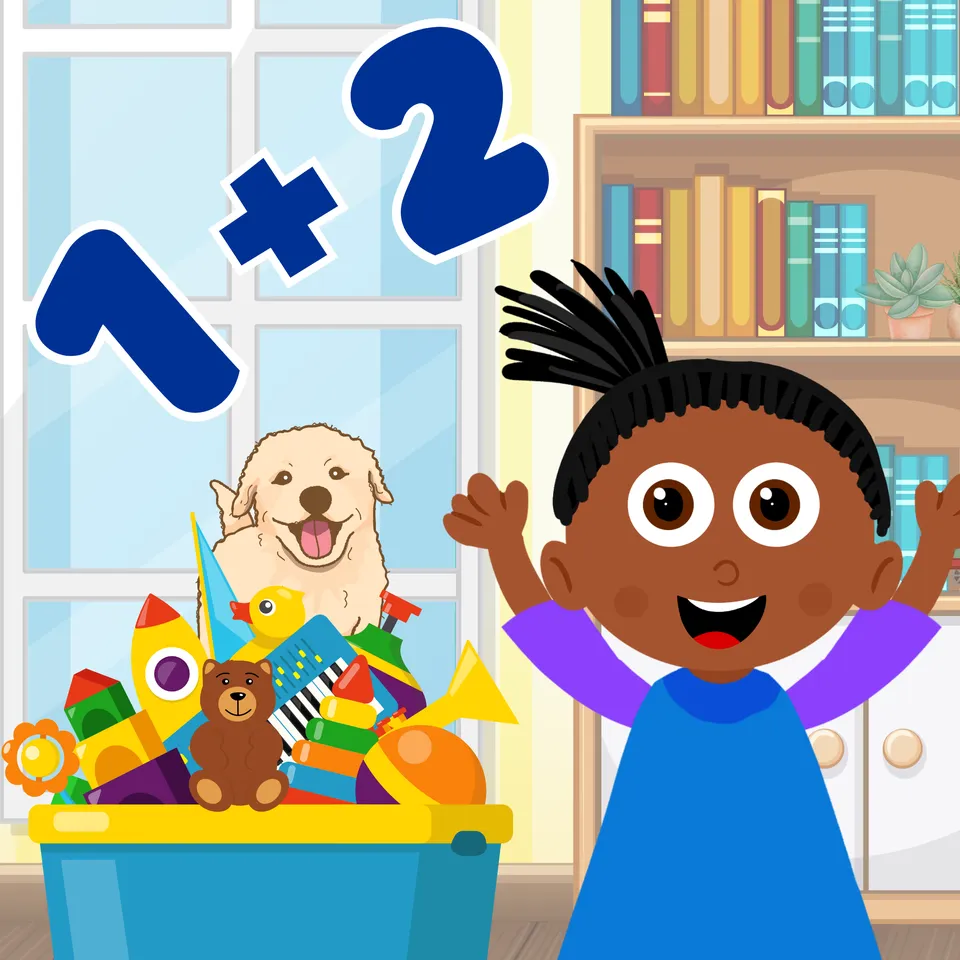
Maya and her trusty friend Nugget will teach you to add small numbers with sums up to 5
In this lesson, the student will be introduced to the concept of addition as joining things together. They will get practice adding with different types of toys. They will learn about the plus sign and the equals sign, and they will get practice making addition equations.
Part of
Standards alignment
Common Core State Standards
- K.OA.A.1 — Represent addition and subtraction with objects, fingers, mental images, drawings, sounds (e.g., claps), acting out situations, verbal explanations, expressions, or equations.
- K.OA.A.5 — Fluently add and subtract within 5.
- K.CC.B.5 — Count to answer "how many?" questions about as many as 20 things arranged in a line, a rectangular array, or a circle, or as many as 10 things in a scattered configuration; given a number from 1—20, count out that many objects.
- K.OA.A.2 — Solve addition and subtraction word problems, and add and subtract within 10, e.g., by using objects or drawings to represent the problem.
- K.CC.B.4.c — Understand that each successive number name refers to a quantity that is one larger.
Alabama
- MA19.K.12 — Fluently add and subtract within 5.
- MA19.K.8 — Represent addition and subtraction up to 10 with concrete objects, fingers, pennies, mental images, drawings, claps or other sounds, acting out situations, verbal explanations, expressions, or equations.
- MA19.K.5 — Count to answer "how many?" questions.
- MA19.K.9 — Solve addition and subtraction word problems, and add and subtract within 10, by using concrete objects or drawings to represent the problem.
Alaska
- K.OA.1 — Represent addition and subtraction with objects, fingers, mental images, drawings, sounds (e.g., claps) acting out situations, verbal explanations, expressions, or equations.
- K.OA.5 — Fluently add and subtract numbers up to 5.
- K.CC.5 — Count to answer "how many?" questions about as many as 20 things arranged in a line, a rectangular array or a circle, or as many as 10 things in a scattered configuration; given a number from 1-20, count out that many objects.
- K.OA.2 — Add or subtract whole numbers to 10 (e.g., by using objects or drawings to solve word problems).
Arizona
- K.OA.A.1 — Represent addition and subtraction concretely. See Table 1.
- K.OA.A.5 — Fluently add and subtract within 5.
- K.CC.B.5 — Count to answer "how many?" questions about as many as 20 things arranged in a line, a rectangular array, or a circle, or as many as 10 things in a scattered configuration; given a number from 1—20, count out that many objects.
Arkansas
- K.CAR.1. — Use objects, fingers, mental images, drawings, sounds, acting out situations, or verbal explanations to represent addition and subtraction from 0 to 10.
- K.CAR.5 — Solve real-world problems involving addition and subtraction within 10, using objects, drawings, or equations to represent the problem.
- K.CAR.4 — Use manipulatives and various strategies to fluently add and subtract within 10.
- K.NPV.2 — Count a set of objects up to 20 using one-to-one correspondence, demonstrating that the last number stated indicates the number of objects in the set regardless of the arrangement.
California
- K.OA.A.1 — Represent addition and subtraction with objects, fingers, mental images, drawings, sounds (e.g., claps), acting out situations, verbal explanations, expressions, or equations.
- K.OA.A.5 — Fluently add and subtract within 5.
- K.CC.B.5 — Count to answer "how many?" questions about as many as 20 things arranged in a line, a rectangular array, or a circle, or as many as 10 things in a scattered configuration; given a number from 1—20, count out that many objects.
- K.OA.A.2 — Solve addition and subtraction word problems, and add and subtract within 10, e.g., by using objects or drawings to represent the problem.
- K.CC.B.4.b — Understand that the last number name said tells the number of objects counted. The number of objects is the same regardless of their arrangement or the order in which they were counted.
Colorado
- K.OA.A.1 — Represent addition and subtraction with objects, fingers, mental images, drawings (drawings need not show details, but should show the mathematics in the problem), sounds (e.g., claps), acting out situations, verbal explanations, expressions, or equations.
- K.OA.A.5 — Fluently add and subtract within 5.
- P.OA.A.1 — Represent addition and subtraction in different ways, such as with fingers, objects, and drawings.
- P.OA.A.2 — Solve addition and subtraction problems set in simple contexts. Add and subtract up to at least five to or from a given number to find a sum or difference up to 10.
- P.CC.C.4 — Use the number name of the last object counted to answer “How many?” questions for up to approximately 10 objects.
Connecticut
- K.OA.A.1 — Represent addition and subtraction with objects, fingers, mental images, drawings, sounds (e.g., claps), acting out situations, verbal explanations, expressions, or equations.
- K.OA.A.5 — Fluently add and subtract within 5.
- K.CC.B.5 — Count to answer "how many?" questions about as many as 20 things arranged in a line, a rectangular array, or a circle, or as many as 10 things in a scattered configuration; given a number from 1—20, count out that many objects.
- K.OA.A.2 — Solve addition and subtraction word problems, and add and subtract within 10, e.g., by using objects or drawings to represent the problem.
- K.CC.B.4.c — Understand that each successive number name refers to a quantity that is one larger.
Delaware
- K.OA.A.1 — Represent addition and subtraction with objects, fingers, mental images, drawings, sounds (e.g., claps), acting out situations, verbal explanations, expressions, or equations.
- K.OA.A.5 — Fluently add and subtract within 5.
- K.CC.B.5 — Count to answer "how many?" questions about as many as 20 things arranged in a line, a rectangular array, or a circle, or as many as 10 things in a scattered configuration; given a number from 1—20, count out that many objects.
- K.OA.A.2 — Solve addition and subtraction word problems, and add and subtract within 10, e.g., by using objects or drawings to represent the problem.
Florida
- MA.K.NSO.3.1 — Explore addition of two whole numbers from 0 to 10, and related subtraction facts.
- MA.K.AR.1.3 — Solve addition and subtraction real-world problems using objects, drawings or equations to represent the problem.
- MA.K.AR.2.1 — Explain why addition or subtraction equations are true using objects or drawings.
Georgia
- K.NR.5 — Explain the concepts of addition, subtraction, and equality and use these concepts to solve real-life problems within 10.
- K.NR.5.4 — Fluently add and subtract within 5 using a variety of strategies to solve practical, mathematical problems.
- K.NR.1.2 — When counting objects, explain that the last number counted represents the total quantity in a set (cardinality), regardless of the arrangement and order.
- K.NR.5.2 — Represent addition and subtraction within 10 from a given authentic situation using a variety of representations and strategies.
- K.NR.5.3 — Use a variety of strategies to solve addition and subtraction problems within 10.
Hawaii
- K.OA.A.1 — Represent addition and subtraction with objects, fingers, mental images, drawings, sounds (e.g., claps), acting out situations, verbal explanations, expressions, or equations.
- K.OA.A.5 — Fluently add and subtract within 5.
- K.CC.B.5 — Count to answer "how many?" questions about as many as 20 things arranged in a line, a rectangular array, or a circle, or as many as 10 things in a scattered configuration; given a number from 1—20, count out that many objects.
- K.OA.A.2 — Solve addition and subtraction word problems, and add and subtract within 10, e.g., by using objects or drawings to represent the problem.
Idaho
- K.OA.A.1 — Represent addition and subtraction of two whole numbers within ten. Use objects, fingers, mental images, drawings, sounds (e.g., claps), acting out situations, verbal explanations, expressions, or equations.
- K.OA.A.5 — Fluently add and subtract within five, including zero.
- K.OA.A.2 — Solve addition and subtraction word problems within ten by using physical, visual, and symbolic representations.
Illinois
- K.OA.A.1 — Represent addition and subtraction with objects, fingers, mental images, drawings, sounds (e.g., claps), acting out situations, verbal explanations, expressions, or equations.
- K.OA.A.5 — Fluently add and subtract within 5.
- K.CC.B.5 — Count to answer "how many?" questions about as many as 20 things arranged in a line, a rectangular array, or a circle, or as many as 10 things in a scattered configuration; given a number from 1—20, count out that many objects.
- K.OA.A.2 — Solve addition and subtraction word problems, and add and subtract within 10, e.g., by using objects or drawings to represent the problem.
Indiana
- K.CA.1 — Solve real-world problems that involve addition and subtraction within 10 using modeling with objects or drawings. (E)
- K.NS.3 — Say the number names in standard order when counting objects, pairing each object with one and only one number name and each number name with one and only one object. Understand that the last number name said describes the number of objects counted and that the number of objects is the same regardless of their arrangement or the order in which they were counted. Count out the number of objects, given a number from 1 to 20. (E)
Iowa
- K.OA.A.1 — Represent addition and subtraction situations in a variety of ways. For example, with objects, fingers, mental images, drawings, sounds (claps), acting out situations, verbal explanations, expressions, or equations.
- K.OA.A.2 — Add and subtract within 10 and solve word problems involving the different problem types listed below. For example, by using objects or drawings to represent the problem. • Add-to with result unknown. • Take-from with result unknown. • Put-together/take-apart with total unknown. • Put-together with both addends unknown. (See Problem Types Table 1 in Appendix A)
- K.CC.B.5 — Count to answer "how many?" questions about as many as 20 things arranged in a line, a rectangular array, or a circle, or as many as 10 things in a scattered configuration. Given a number from 1–20, count out that many objects.
- K.OA.A.5 — Fluently add and subtract within 5 using efficient mental strategies. • Counting on. • Counting back. • Using the relationship between addition and subtraction. • Creating equivalent, but easier or known sums. By the end of kindergarten, flexibly, efficiently and accurately find all sums within 5.
Kansas
- K.OA.1 — Represent addition and subtraction with objects, fingers, mental images, drawings, sounds (e.g. claps), acting out situations, verbal explanations, expressions, or equations.
- K.OA.5 — Fluently (efficiently, accurately, and flexibly) add and subtract within 5.
- K.CC.5 — Count to answer “how many?” up to 20 concrete or pictorial objects arranged in a line, a rectangular array, or a circle, or as many as 10 objects in a scattered configuration; given a number from 1 to 20, count out that many objects.
- K.OA.2 — Solve addition and subtraction word problems, and add and subtract within 10, (e.g. by using objects or drawings to represent the problem.)
Kentucky
- KY.K.OA.1 — Represent addition and subtraction with objects, fingers, mental images, drawings, sounds, acting out situations, verbal explanations, expressions, or equations.
- KY.K.OA.5 — Fluently add and subtract within 5.
- KY.K.CC.5.b — Count to answer “how many?” questions with as many as 10 things in a scattered configuration.
Louisiana
- K.OA.A.1 — Represent addition and subtraction with objects, fingers, mental images, drawings, sounds (e.g., claps), acting out situations, verbal explanations, expressions, or equations.
- K.OA.A.5 — Fluently add and subtract within 5.
- K.CC.B.5 — Count to answer "how many?" questions.
- K.OA.A.2 — Solve addition and subtraction word problems, and add and subtract within 10, e.g., by using objects or drawings to represent the problem.
- K.CC.B.4.c — Understand that each successive number name refers to a quantity that is one larger.
Maine
- K.OA.A.1 — Represent addition and subtraction with objects, fingers, mental images, drawings sounds (e.g., claps), acting out situations, verbal explanations, expressions, or equations.
- K.OA.A.5 — Fluently add and subtract within 5 including zero.
- K.CC.B.5 — Count to answer “how many?” questions about as many as 20 things arranged in a line, a rectangular array, or a circle, or as many as 10 things in a scattered configuration; given a number from 1-20, count out that many objects.
- K.OA.A.2 — Solve addition and subtraction word problems, and add and subtract within 10, (e.g., by using objects or drawings to represent the problem).
Maryland
- K.OA.A.1 — Represent addition and subtraction with objects, fingers, mental images, drawings, sounds (e.g., claps), acting out situations, verbal explanations, expressions, or equations.
- PK.OA.A.1 — Represent simple addition and subtraction problems with objects, fingers, mental images, drawings, sounds (e.g., claps), acting out situations, or verbal explanations, up to 5
- K.OA.A.5 — Fluently add and subtract within 5.
- PK.CC.B.4 — Understand the relationship between numbers and quantities to 5, then to 10; connect counting to cardinality.
- K.OA.A.2 — Solve addition and subtraction word problems, and add and subtract within 10, e.g., by using objects or drawings to represent the problem.
Massachusetts
- K.OA.A.1 — Represent addition and subtraction with objects, fingers, mental images, drawings, sounds (e.g., claps), acting out situations, verbal explanations, expressions, or equations.
- PK.OA.A.1 — Use concrete objects to model real-world addition (putting together) and subtraction (taking away) problems up through five.
- K.OA.A.5 — Fluently add and subtract within 5, including zero.
- PK.CC.C.4 — Count many kinds of concrete objects and actions up to ten, using one-to-one correspondence, and accurately count as many as seven things in a scattered configuration. Recognize the "one more," "one less" patterns.
Michigan
- K.OA.A.1 — Represent addition and subtraction with objects, fingers, mental images, drawings, sounds (e.g., claps), acting out situations, verbal explanations, expressions, or equations.
- K.OA.A.5 — Fluently add and subtract within 5.
- K.CC.B.5 — Count to answer "how many?" questions about as many as 20 things arranged in a line, a rectangular array, or a circle, or as many as 10 things in a scattered configuration; given a number from 1—20, count out that many objects.
- K.OA.A.2 — Solve addition and subtraction word problems, and add and subtract within 10, e.g., by using objects or drawings to represent the problem.
Minnesota
- K.1.2.1 — Use objects and draw pictures to find the sums and differences of numbers between 0 and 10.
- K.1.2.2 — Compose and decompose numbers up to 10 with objects and pictures. For example: A group of 7 objects can be decomposed as 5 and 2 objects, or 2 and 3 and 2, or 6 and 1.
- K.1.1.1 — Recognize that a number can be used to represent how many objects are in a set or to represent the position of an object in a sequence. For example: Count students standing in a circle and count the same students after they take their seats. Recognize that this rearrangement does not change the total number, but may change the order in which students are counted.
- K.1.1.4 — Find a number that is 1 more or 1 less than a given number.
Mississippi
- K.OA.1 — Represent addition and subtraction, in which all parts and whole of the problem are within 10, with objects, fingers, mental images, drawings, sounds (e.g., claps), acting out situations,verbal explanations, expressions, or equations.
- K.OA.5 — Fluently add and subtract within 5.
- K.CC.5 — Count to answer “how many?” questions about as many as 20 things arranged in a line, a rectangular array, or a circle, or as many as 10 things in a scattered configuration; given a number from 1–20, count out that many objects.
- K.OA.2 — Solve addition and subtraction word problems within 10 involving situations of adding to, taking from, putting together and taking apart with unknowns in all positions by using objects or drawings to represent the problem.
Missouri
- K.RA.A.1 — Represent addition and subtraction within 10.
- K.RA.A.2 — Demonstrate fluency for addition and subtraction within 5.
- K.NS.B.6 — Demonstrate that the last number name said tells the number of objects counted and the number of objects is the same regardless of their arrangement or the order in which they were counted.
- K.NS.B.7 — Demonstrate that each successive number name refers to a quantity that is one larger than the previous number.
- K.NS.B.5 — Say the number names when counting objects, in the standard order, pairing each object with one and only one number name and each number name with one and only one object.
Montana
- K.OA.A.1 — Represent addition and subtraction with objects, fingers, mental images, drawings, sounds (e.g., claps), acting out situations, verbal explanations, expressions, or equations.
- K.OA.A.5 — Fluently add and subtract within 5.
- K.CC.B.5 — Count to answer "how many?" questions about as many as 20 things arranged in a line, a rectangular array, or a circle, or as many as 10 things in a scattered configuration; given a number from 1-20, count out that many objects from a variety of cultural contexts, including those of Montana American Indians.
- K.OA.A.2 — Solve addition and subtraction word problems from a variety of cultural contexts, including those of Montana American Indians, and add and subtract within 10, e.g., by using objects or drawings to represent the problem.
Nebraska
- K.N.4 — Number and Algebraic Relationships: Students will understand and demonstrate the meaning of addition and subtraction.
- K.N.4.a — Represent and explain addition and subtraction as part-whole relationships, with addition as putting together and/or adding to and subtraction as taking apart and/or taking from, using objects, drawings, numbers, and equations.
- K.N.4.d — Efficiently, flexibly, and accurately add and subtract within 5.
- K.N.2.a — Use one-to-one correspondence when counting objects to show the relationship between numbers and quantities and understand the last number counted is a direct representation of the total objects in a given set.
Nevada
- K.OA.A.1 — Represent addition and subtraction with objects, fingers, mental images, drawings, sounds (e.g., claps), acting out situations, verbal explanations, expressions, or equations.
- K.OA.A.5 — Fluently add and subtract within 5.
- K.CC.B.5 — Count to answer "how many?" questions about as many as 20 things arranged in a line, a rectangular array, or a circle, or as many as 10 things in a scattered configuration; given a number from 1—20, count out that many objects.
- K.OA.A.2 — Solve addition and subtraction word problems, and add and subtract within 10, e.g., by using objects or drawings to represent the problem.
- K.CC.B.4.c — Understand that each successive number name refers to a quantity that is one larger.
New Hampshire
- K.OA.A.1 — Represent addition and subtraction with objects, fingers, mental images, drawings, sounds (e.g., claps), acting out situations, verbal explanations, expressions, or equations.
- K.OA.A.5 — Fluently add and subtract within 5.
- K.CC.B.5 — Count to answer "how many?" questions about as many as 20 things arranged in a line, a rectangular array, or a circle, or as many as 10 things in a scattered configuration; given a number from 1—20, count out that many objects.
- K.OA.A.2 — Solve addition and subtraction word problems, and add and subtract within 10, e.g., by using objects or drawings to represent the problem.
New Jersey
- K.OA.A.1 — Represent addition and subtraction up to 10 with objects, fingers, mental images, drawings , sounds (e.g., claps), acting out situations, verbal explanations, expressions, or equations.
- K.OA.A.5 — Demonstrate fluency for addition and subtraction within 5.
- K.CC.B.5 — Count to answer “how many?” questions about as many as 20 things arranged in a line, a rectangular array, or a circle, or as many as 10 things in a scattered configuration; given a number from 1–20, count out that many objects.
- K.OA.A.2 — Solve addition and subtraction word problems, and add and subtract within 10, e.g., by using objects or drawings to represent the problem.
New Mexico
- K.OA.A.1 — Represent addition and subtraction with objects, fingers, mental images, drawings, sounds (e.g., claps), acting out situations, verbal explanations, expressions, or equations.
- K.OA.A.5 — Fluently add and subtract within 5.
- K.CC.B.5 — Count to answer "how many?" questions about as many as 20 things arranged in a line, a rectangular array, or a circle, or as many as 10 things in a scattered configuration; given a number from 1—20, count out that many objects.
- K.OA.A.2 — Solve addition and subtraction word problems, and add and subtract within 10, e.g., by using objects or drawings to represent the problem.
New York
- NY-K.OA.1 — Represent addition and subtraction using objects, fingers, pennies, drawings, sounds, acting out situations, verbal explanations, expressions, equations, or other strategies.
- NY-PK.OA.1 — Explore addition and subtraction by using objects, fingers, and responding to real world situations.
- NY-K.OA.5 — Fluently add and subtract within 5.
- NY-PK.CC.4.a — Answer counting questions using as many as 10 objects arranged in a line, a rectangular array, and a circle. Answer counting questions using as many as 5 objects in a scattered configuration.
North Carolina
- NC.K.OA.1 — Represent addition and subtraction, within 10: • Use a variety of representations such as objects, fingers, mental images, drawings, sounds, acting out situations, verbal explanations, or expressions. • Demonstrate understanding of addition and subtraction by making connections among representations.
- NC.K.OA.6 — Recognize and combine groups with totals up to 5 (conceptual subitizing).
- NC.K.CC.5 — Count to answer “How many?” in the following situations: • Given a number from 1–20, count out that many objects. • Given up to 20 objects, name the next successive number when an object is added, recognizing the quantity is one more/greater. • Given 20 objects arranged in a line, a rectangular array, and a circle, identify how many. • Given 10 objects in a scattered arrangement, identify how many.
- NC.K.OA.5 — Demonstrate fluency with addition and subtraction within 5.
- NC.K.OA.2 — Solve addition and subtraction word problems, within 10, using objects or drawings to represent the problem, when solving: • Add to/Take From-Result Unknown • Put Together/ Take Apart (Total Unknown and Two Addends Unknown)
North Dakota
- K.AR.OA.1 — Automatically add and subtract within 5.
- K.AR.OA.4 — Solve authentic word problems with addition by putting together or adding to within 10.
- 1.AR.OA.6 — Distinguish and use the +, -, and = symbols accurately in an equation.
- K.NO.CC.5 — Count and tell how many objects up to 20 are in an arranged pattern or up to 10 objects in a scattered configuration. Represent a quantity of up to 20 with a numeral.
Ohio
- K.OA.1 — Represent addition and subtraction with objects, fingers, mental images, drawings, sounds such as claps, acting out situations, verbal explanations, expressions, or equations. Drawings need not show details, but should show the mathematics in the problem.
- K.OA.2 — Solve addition and subtraction problems (written or oral), and add and subtract within 10 by using objects or drawings to represent the problem.
- K.OA.5 — Fluently add and subtract within 5.
- K.CC.5 — Count to answer “how many?” questions about as many as 20 things arranged in a line, a rectangular array, or a circle, or as many as 10 things in a scattered configuration; given a number from 1-20, count out that many objects.
Oklahoma
- K.N.2 — Develop conceptual understanding with addition and subtraction (up to 10) using objects and pictures.
- K.N.1.2 — Recognize that a number can be used to represent how many objects are in a set up to 10.
- K.N.2.1 — Compose and decompose numbers up to 10 using objects and pictures.
- PK.N.2.3 — Understand the last numeral spoken when counting aloud tells how many total objects are in a set up to 10.
Oregon
- K.OA.A.1 — Represent addition as putting together and adding to and subtraction as taking apart and taking from using objects, drawings, physical expressions, numbers or equations.
- K.OA.A.5 — Fluently add and subtract within 5 with accurate, efficient, and flexible strategies.
- K.NCC.B.4 — Understand the relationship between numbers and quantities; connect counting to cardinality.
- K.NCC.B.5 — Count to answer “how many?” questions using up to 20 objects arranged in a variety of configurations or as 10 objects in a scattered configuration. Given a number from 1-20, count out that many objects.
Pennsylvania
- CC.2.2.K.A.1 — Extend the concepts of putting together and taking apart to add and subtract within 10.
- CC.2.2.PreK.A.1 — Understand addition as putting together and adding to, and understand subtraction as taking apart and taking from.
- CC.2.1.K.A.2 — Apply one-to-one correspondence to count the number of objects.
- CC.2.1.PreK.A.2 — Count to tell the number of objects.
Rhode Island
- K.OA.A.1 — Represent addition and subtraction with objects, fingers, mental images, drawings, sounds (e.g., claps), acting out situations, verbal explanations, expressions, or equations.
- K.OA.A.5 — Fluently add and subtract within 5 including zero.
- K.CC.B.5 — Count to answer "how many?" questions about as many as 20 things arranged in a line, a rectangular array, or a circle, or as many as 10 things in a scattered configuration; given a number from 1—20, count out that many objects.
- K.OA.A.2 — Solve addition and subtraction word problems, and add and subtract within 10, e.g., by using objects or drawings to represent the problem.
- K.CC.B.4.c — Understand that each successive number name refers to a quantity that is one larger. Recognize the one more pattern of counting using objects
South Carolina
- K.ATO.1 — Model situations that involve addition and subtraction within 10 using objects, fingers, mental images, drawings, acting out situations, verbal explanations, expressions, and equations.
- K.ATO.5 — Add and subtract fluently within 5.
- K.ATO.2 — Solve real-world/story problems using objects and drawings to find sums up to 10 and differences within 10.
- K.PS.2d — Connect the meaning of mathematical operations to the context of a given situation.
South Dakota
- K.OA.A.1 — Represent addition and subtraction with objects, fingers, mental images, drawings, sounds (e.g., claps), acting out situations, verbal explanations, expressions, or equations.
- K.OA.A.5 — Fluently add and subtract within 5. (See strategies chart on page 9.)
- K.CC.B.5 — Count to answer "how many?"
- K.OA.A.2.a — Solve addition and subtraction word problems (within 10), involving result unknown problems, put together/take apart total unknown, and put together/take apart addend unknown, e.g., using objects or drawings to represent the problem. (see appendix for K-2 Common Addition and Subtraction Situations).
Tennessee
- K.OA.A.1 — Represent addition and subtraction with objects, fingers, drawings, acting out situations, verbal explanations, expressions, or equations.
- K.OA.A.2 — Add and subtract within 10 to solve contextual problems with result/total unknown involving situations of add to, take from, and put together/take apart. Use objects, drawings, or equations to represent the problem.
- K.CC.B.6 — Count to answer “how many?” questions about as many as 20 things arranged in a line, a rectangular array, a circle, or as many as 10 things in a scattered configuration. Given a number from 1-20, count out that many objects.
- K.CC.B.5.b — Recognize that the last number name said tells the number of objects counted. The number of objects is the same regardless of their arrangement or the order in which they were counted.
Texas
- K.3A — model the action of joining to represent addition and the action of separating to represent subtraction;
- K.3C — explain the strategies used to solve problems involving adding and subtracting within 10 using spoken words, concrete and pictorial models, and number sentences.
- K.2C — count a set of objects up to at least 20 and demonstrate that the last number said tells the number of objects in the set regardless of their arrangement or order;
- K.3B — solve word problems using objects and drawings to find sums up to 10 and differences within 10; and
Utah
- K.OA.1 — Represent addition and subtraction with objects, fingers, mental images, simple drawings, or sounds.For example, use clapping, act out situations, and use verbal explanations, expressions, or equations.
- K.OA.5 — Fluently add and subtract using numbers within 5.
- K.OA.2 — Solve addition and subtraction word problems within 10. Use objects or drawings to represent the problem.
Vermont
- K.OA.A.1 — Represent addition and subtraction with objects, fingers, mental images, drawings, sounds (e.g., claps), acting out situations, verbal explanations, expressions, or equations.
- K.OA.A.5 — Fluently add and subtract within 5.
- K.CC.B.5 — Count to answer "how many?" questions about as many as 20 things arranged in a line, a rectangular array, or a circle, or as many as 10 things in a scattered configuration; given a number from 1—20, count out that many objects.
- K.OA.A.2 — Solve addition and subtraction word problems, and add and subtract within 10, e.g., by using objects or drawings to represent the problem.
Virginia
- K.CE.1 — The student will model and solve single-step contextual problems using addition and subtraction with whole numbers within 10. Students will demonstrate the following Knowledge and Skills:
- K.CE.1a — Use objects, drawings, words, or numbers to compose and decompose numbers less than or equal to 5 in multiple ways.
- K.CE.1f — Model and solve single-step contextual problems (join, separate, and part-part-whole) using 10 or fewer concrete objects.
- 1.CE.1h — Identify and use (+) as a symbol for addition and (-) as a symbol for subtraction.
- K.CE.1b — Recognize and describe with fluency part-part-whole relationships for numbers up to 5 in a variety of configurations.
Washington
- K.OA.A.1 — Represent addition and subtraction with objects, fingers, mental images, drawings, sounds (e.g., claps), acting out situations, verbal explanations, expressions, or equations.
- K.OA.A.5 — Fluently add and subtract within 5.
- K.CC.B.5 — Count to answer "how many?" questions about as many as 20 things arranged in a line, a rectangular array, or a circle, or as many as 10 things in a scattered configuration; given a number from 1—20, count out that many objects.
- K.OA.A.2 — Solve addition and subtraction word problems, and add and subtract within 10, e.g., by using objects or drawings to represent the problem.
Washington, D.C.
- K.OA.A.1 — Represent addition and subtraction with objects, fingers, mental images, drawings, sounds (e.g., claps), acting out situations, verbal explanations, expressions, or equations.
- K.OA.A.5 — Fluently add and subtract within 5.
- K.CC.B.5 — Count to answer "how many?" questions about as many as 20 things arranged in a line, a rectangular array, or a circle, or as many as 10 things in a scattered configuration; given a number from 1—20, count out that many objects.
- K.OA.A.2 — Solve addition and subtraction word problems, and add and subtract within 10, e.g., by using objects or drawings to represent the problem.
West Virginia
- M.K.12 — Fluently (efficiently, flexibly, and accurately) add and subtract within 5 using various strategies.
- M.K.8 — Represent addition and subtraction with strategies using objects, fingers, mental images, drawings, sounds (e.g., claps), and acting out situations, verbal explanations, expressions, and equations.
- M.K.5 — Count to answer questions (e.g., "How many?") about as many as 20 things arranged in a line, a rectangular array, a circle, or as many as 10 things in a scattered configuration; given a number from 1-20, count out that many objects.
- M.K.9 — Solve addition and subtraction word problems and add and subtract within 10 by using objects or drawings to represent the problem.
Wisconsin
- M.K.OA.A.1 — Represent addition and subtraction with objects, fingers, mental images, drawings, sounds (e.g., claps), acting out situations, verbal explanations, or numbers. Drawings need not show details but should show the mathematics in the problem.
- M.K.OA.A.5 — Flexibly and efficiently add and subtract within 5 using mental images and composing or decomposing numbers up to 5.
- M.K.CC.B.6 — Count to answer "how many?" questions about as many as 20 things arranged in a line, a rectangular array, or a circle, or as many as 10 things in a scattered configuration; given a number from 1-20, count out that many objects.
- M.K.OA.A.2 — Solve addition and subtraction word problems, and add and subtract within 10, e.g., by using objects or drawings to represent the problem.
Wyoming
- K.OA.D — Understand addition as putting together and adding to, and understand subtraction as taking apart and taking from.
- K.OA.D.1 — Model situations that involve representing addition and subtraction with objects, fingers, mental images, drawings, sounds (e.g., claps), acting out situations, verbal explanations, expressions, or equations.
- K.OA.D.5 — Fluently add and subtract within 5.
- K.CC.B.5.A — Answer the question "how many?" by counting up to 20 objects arranged in a line, a rectangular array, a circle, or as many as 10 objects in a scattered configuration.
- K.OA.D.2 — Solve word problems using objects and drawings to find sums up to 10 and differences within 10.