South America
Ages 4–6 · 9 minutes · Geography
Explore South America's amazing Amazon Rainforest and learn about its many animals!
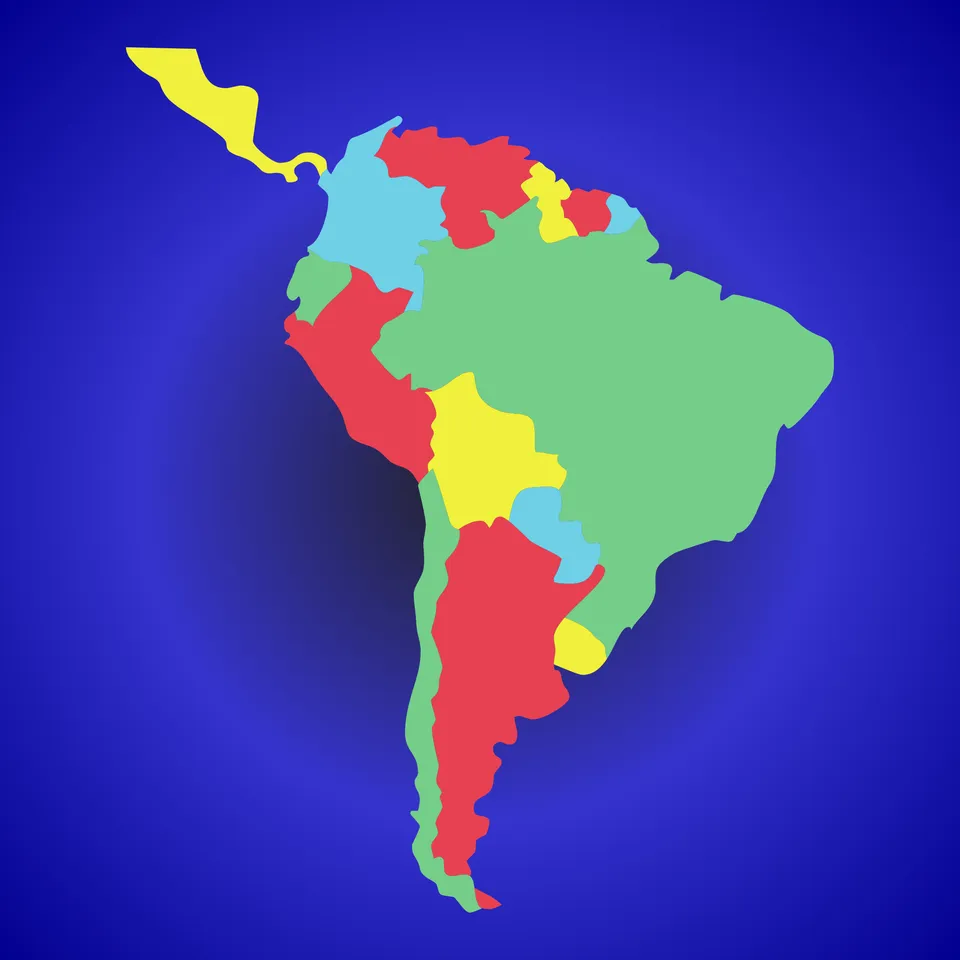
In this lesson, students will learn about the geography of South America, focusing mainly on the Amazon Rainforest. They will examine the four layers of the rainforest, checking out the flora and fauna inside.
Part of
Standards alignment
Common Core State Standards
- D2.Geo.6.K-2 — Individually and with others, students… Identify some cultural and environmental characteristics of specific places.
- There are many different kinds of living things in any area, and they exist in different places on land and in water.
- D2.Geo.2.K-2 — Individually and with others, students… Use maps, graphs, photographs, and other representations to describe places and the relationships and interactions that shape them.
- Make observations (firsthand or from media) to collect data that can be used to make comparisons.
Alabama
- SS10.K.9 — Differentiate between land forms and bodies of water on maps and globes.
- SC23.2.7 — Obtain information to explain that there are many different kinds of living things that exist in habitats on land and in water.
- SS10.1.8 — Identify land masses, bodies of water, and other physical features on maps and globes.
- SS10.1.8.3 — Using vocabulary associated with geographical features, including _river, lake, ocean,_ and _mountain_
Alaska
- There are many different kinds of living things in any area, and they exist in different places on land and in water.
- 1 — know that places have distinctive geographic characteristics;
- All animals need food in order to live and grow. They obtain their food from plants or from other animals. Plants need water and light to live and grow.
- 7 — understand that a region is a distinct area defined by one or more cultural or physical features; and
- K-LS1-1 — Use observations to describe patterns of what plants and animals (including humans) need to survive.
- Make observations (firsthand or from media) to collect data that can be used to make comparisons.
Arizona
- 2.G1.1 — Use and construct maps, graphs, and other geographic representations of familiar and unfamiliar places in the world; and locate physical and human features. • Key physical features include but are not limited to seven continents, oceans, lakes, rivers, mountain ranges, coasts, seas, and deserts • Key human features include but are not limited to equator, hemispheres, North and South Pole, cities, states, countries, regions, and landmarks
- 1.L2U1.8 — Construct an explanation describing how organisms obtain resources from the environment including materials that are used again by other organisms.
- 1.L4U1.10 — Develop a model to describe how animals and plants are classified into groups and subgroups according to their similarities.
Arkansas
- G.1.K.2 — Identify and describe the physical characteristics of a place such as rivers, mountains, and forests using maps, globes, and photographs.
- All animals need food in order to live and grow. They obtain their food from plants or from other animals. Plants need water and light to live and grow.
- K-LS1-1 — Use observations to describe patterns of what plants and animals (including humans) need to survive.
- K.RC.4.RF — Build general and academic vocabulary and background knowledge of age and grade-appropriate topics through discussion, reading, and writing.
- 2-LS4-1 — Make observations of plants and animals to compare the diversity of life in different habitats.
California
- There are many different kinds of living things in any area, and they exist in different places on land and in water.
- 1.2.1 — Locate on maps and globes their local community, California, the United States, the seven continents, and the four oceans.
- K-LS1-1 — Use observations to describe patterns of what plants and animals (including humans) need to survive.
- 2-LS4-1 — Make observations of plants and animals to compare the diversity of life in different habitats.
Colorado
- SC.P.2.1.a — Observe, describe and discuss living things.
- LS1.C — Organization for Matter and Energy Flow in Organisms: All animals need food in order to live and grow. They obtain their food from plants or from other animals. Plants need water and light to live and grow.
- PGS.4 — Examine the characteristics of places and regions, and the changing nature among geographic and human interactions.
- SC.P.2.1.c — Observe and describe how natural habitats provide for the basic needs of plants and animals with respect to shelter, food, water, air and light.
- SS.P.2.1 — Develop spatial understanding, perspectives, and connections to the world
- LS4.D — Biodiversity and Humans: There are many different kinds of living things in any area, and they exist in different places on land and in water.
Connecticut
- There are many different kinds of living things in any area, and they exist in different places on land and in water.
- GEO 1.2 — Use maps, graphs, photographs and other representations to describe places and the relationships and interactions that shape them.
- GEO 1.3 — Use maps, globes, and other simple geographic models to identify cultural and environmental characteristics of places.
- 2-LS4-1 — Make observations of plants and animals to compare the diversity of life in different habitats.
Delaware
- Make observations (firsthand or from media) to collect data that can be used to make comparisons.
- All animals need food in order to live and grow. They obtain their food from plants or from other animals. Plants need water and light to live and grow.
- 2-LS4-1 — Make observations of plants and animals to compare the diversity of life in different habitats.
- K-3a — Students will use the concepts of place and region to explain simple patterns of connections between and among places across the country and the world. Grade 3
Florida
- SC.K.L.14.3 — Observe plants and animals, describe how they are alike and how they are different in the way they look and in the things they do.
- SS.K.G.1.4 — Differentiate land and water features on simple maps and globes.
- SS.K.G.3.2 — Identify basic bodies of water.
- SS.K.G.3.1 — Identify basic landforms.
Georgia
- SS1G3.a — Locate all of the continents: North America, South America, Africa, Europe, Asia, Antarctica, and Australia.
- SS1G3.b — Locate the major oceans: Arctic, Atlantic, Pacific, Southern, and Indian Ocean.
Hawaii
- There are many different kinds of living things in any area, and they exist in different places on land and in water.
- SS.1.2.13.2 — Describe some physical features of continents and oceans in the world
- Make observations (firsthand or from media) to collect data that can be used to make comparisons.
- All animals need food in order to live and grow. They obtain their food from plants or from other animals. Plants need water and light to live and grow.
- 2-LS4-1 — Make observations of plants and animals to compare the diversity of life in different habitats.
Idaho
- 1.SS.2.1.4 — Identify continents and large bodies of water on a globe or a map.
- All animals need food in order to live and grow. They obtain their food from plants or from other animals. Plants need water and light to live and grow. (K-LS-1.1)
- There are many different kinds of living things in any area, and they exist in different places on land and in water. (2-LS-2.1)
- K.SS.2.1.2 — Distinguish between land masses and water on a globe or map.
- K.RS.DR.2 — Listen to a series of texts organized around a variety of conceptually related topics to build knowledge about the world.
Illinois
- LS4.D-P1 — There are many different kinds of living things in any area, and they exist in different places on land and in water.
- 2-LS4-1 — Make observations of plants and animals to compare the diversity of life in different habitats.
- INV-P4 — Make observations (firsthand or from media) to collect data that can be used to make comparisons.
- LS1.C-P1 — All animals need food in order to live and grow. They obtain their food from plants or from other animals. Plants need water and light to live and grow.
Indiana
- K.G.2 — Identify maps and globes as ways of representing Earth and understand the basic difference between a map and globe, including the difference in water/oceans and land/continents.
- 1.G.2 — Identify and describe continents, hemispheres, oceans, cities, and roads on maps and globes. (E)
- 1.LS.3 — Make observations of plants and animals to compare the diversity of life in different habitats.
- K.LS.2 — Describe and compare the physical features of common living plants and animals.
Iowa
- There are many different kinds of living things in any area, and they exist in different places on land and in water.
- 2-LS4-1 — Make observations of plants and animals to compare the diversity of life in different habitats.
- K-ESS3-1 — Use a model to represent the relationship between the needs of different plants and animals (including humans) and the places they live.
- SS.K.14. — Compare environmental characteristics in Iowa with other places.
Kansas
- There are many different kinds of living things in any area, and they exist in different places on land and in water.
- Make observations (firsthand or from media) to collect data that can be used to make comparisons.
- All animals need food in order to live and grow. They obtain their food from plants or from other animals. Plants need water and light to live and grow.
- K-LS1-1 — Use observations to describe patterns of what plants and animals (including humans) need to survive.
Kentucky
- There are many different kinds of living things in any area, and they exist in different places on land and in water.
- All animals need food in order to live and grow. They obtain their food from plants or from other animals. Plants need water and light to live and grow.
- K-LS1-1 — Use observations to describe patterns of what plants and animals (including humans) need to survive.
- Make observations (firsthand or from media) to collect data that can be used to make comparisons.
- 2-LS4-1 — Make observations of plants and animals to compare the diversity of life in different habitats.
Louisiana
- 2.21 — Describe geographic features and physical characteristics of places in the United States and the world, including mountains, hills, plains, deserts, coasts, islands, peninsulas, lakes, oceans, and rivers.
- K-LS1-1 — Use observations to describe patterns of what plants and animals (including humans) need to survive.
- K.19 — Identify basic landforms and bodies of water in a variety of visual representations, including mountains, hills, coasts, islands, lakes, and rivers.
- 2-LS4-1 — Make observations of plants and animals to compare the diversity of life in different habitats.
Maine
- Read grade-appropriate texts and/or use media to obtain scientific and/or technical information to determine patterns in and/or evidence about the natural and designed world(s).
- 2-LS4-1 — Make observations of plants and animals to compare the diversity of life in different habitats.
- K-ESS3-1 — Use a model to represent the relationship between the needs of different plants and animals (including humans) and the places they live.
- K-LS1-1 — Use observations to describe patterns of what plants and animals (including humans) need to survive.
- SL.2.1.a — Ask and answer questions about key details in a text read aloud or information presented orally or through other media.
Maryland
- identifying continents and oceans near and far from Maryland on maps and on a globe.
- DCI.LS4.D.K-2.1 — There are many different kinds of living things in any area, and they exist in different places on land and in water.
- identifying continents and oceans near and far from Maryland on maps and globe.
Massachusetts
- 2-LS4-1 — Use texts, media, or local environments to observe and compare (a) different kinds of living things in an area, and (b) differences in the kinds of living things living in different types of areas.
- SL.K.2 — Confirm understanding of a text read aloud or information presented orally or through other media by asking and answering questions about key details and requesting clarification if something is not understood.
- K-LS1-1 — Observe and communicate that animals (including humans) and plants need food, water, and air to survive. Animals get food from plants or other animals. Plants make their own food and need light to live and grow.
Michigan
- 1–G1.0.3 — Distinguish between landmasses and bodies of water using maps and globes.
- 2-LS4-1 — Make observations of plants and animals to compare the diversity of life in different habitats.
- K-LS1-1 — Use observations to describe patterns of what plants and animals (including humans) need to survive.
Minnesota
- 0.3.2.3.1 — Identify the physical and human characteristics of places, including real and imagined places. For example: Physical characteristics—landforms (Rocky Mountains, Mount Everest), ecosystems (forest), bodies of water (Hudson Bay, Indian Ocean, Amazon River), soil, vegetation, weather and climate. Human characteristics—structures (Great Wall of China, Eiffel Tower), bridges (Golden Gate Bridge), canals (Erie Canal), cities, political boundaries, population distribution, settlement patterns, language, ethnicity, nationality, religious beliefs.
- 0L.1.2.1.2 — Make observations of plants and animals to compare the diversity of life in different habitats. (P: 3, CC: 1, CI: LS4)
- 0L.2.1.1.3 — Record and use observations to describe patterns of what plants and animals (including humans) need to survive. (P: 4, CC: 1, CI: LS1)
Mississippi
- L.K.3B.1 — Observe and communicate that animals get food from plants or other animals. Plants make their own food and need light to live and grow.
- E.1.9B.1 — Locate, classify, and describe bodies of water (oceans, rivers, lakes, and ponds) on the Earth’s surface using maps, globes, or other media.
Missouri
- There are many different kinds of living things in any area, and they exist in different places on land and in water.
- All animals need food in order to live and grow. They obtain their food from plants or from other animals. Plants need water and light to live and grow.
- 2.EG.5.B.b — Name and locate regions of the world.
- 2.EG.5.C.a — Identify and describe physical characteristics of the world.
- Make observations (firsthand or from media) to collect data that can be used to make comparisons.
Montana
- K-ESS3-1 — use a model to represent the relationship between the needs of different plants or animals, including humans, and the places they live;
- K-LS1-1 — use observations to describe patterns of what plants and animals, including humans, need to survive.
- SS.G.K — The geography content standard for kindergarten is that each student will use maps, and other representations, to describe place characteristics.
- 2-LS4-1 — make observations of plants and animals to compare and contrast the diversity of life in different habitats.
Nebraska
- There are many different kinds of living things in any area, and they exist in different places on land and in water.
- SS 1.3.1.d — Distinguish between continents and oceans.
- SS 1.3.2.a — Identify and differentiate between physical features on maps, globes, graphics, and in the physical world.
- SS K.3.2 — Explore places and regions.
- SS K.3.2.a — Identify physical characteristics of place.
Nevada
- There are many different kinds of living things in any area, and they exist in different places on land and in water.
- 2-LS4-1 — Make observations of plants and animals to compare the diversity of life in different habitats.
- K-LS1-1 — Use observations to describe patterns of what plants and animals (including humans) need to survive.
New Hampshire
- SS.GE.2.1.3 — Identify major physical and human features in the United States and on Earth, e.g., cities, oceans, or continents. (Themes: C: People, Places and Environment, G: Science, Technology, and Society)
- SS.GE.2.3.2 — Explore the components and distribution of ecosystems, e.g., desert or rain forest. (Themes: C: People, Places and Environment)
- There are many different kinds of living things in any area, and they exist in different places on land and in water.
- SS.CV.2.3.1 — Explain that the world is divided into different countries. (Themes: A: Conflict and Cooperation, B: Civic Ideals, Practices, and Engagement, E: Cultural Development, Interaction, and Change)
- SS.GE.2.2.2 — Recognize that areas of the Earth's surface share unifying geographic characteristics, e.g., towns, deserts or woodlands. (Themes: C: People, Places and Environment)
New Jersey
- There are many different kinds of living things in any area, and they exist in different places on land and in water.
- 6.1.2.Geo.SV.1 — Use maps to identify physical features (e.g., continents, oceans, rivers, lakes, mountains).
- 6.1.2.Geo.GI.2 — Use technology to understand the culture and physical characteristics of regions.
- K-LS1-1 — Use observations to describe patterns of what plants and animals (including humans) need to survive.
New Mexico
- Make observations (firsthand or from media) to collect data that can be used to make comparisons.
- There are many different kinds of living things in any area, and they exist in different places on land and in water.
- All animals need food in order to live and grow. They obtain their food from plants or from other animals. Plants need water and light to live and grow.
- K-LS1-1 — Use observations to describe patterns of what plants and animals (including humans) need to survive.
- 2-LS4-1 — Make observations of plants and animals to compare the diversity of life in different habitats.
New York
- There are many different kinds of living things in any area, and they exist in different places on land and in water.
- E.3.1 — Geography can be divided into six essential elements which can be used to analyze important historic, geographic, economic, and environmental questions and issues. These six elements include: the world in spatial terms, places and regions, physical settings (including natural resources), human systems, environment and society, and the use of geography. (Adapted from The National Geography Standards, 1994: Geography for Life)
- All animals need food in order to live and grow. They obtain their food from plants or from other animals. Plants need water and light to live and grow.
- Make observations (firsthand or from media) to collect data that can be used to make comparisons.
North Carolina
- K.G.1.1 — Use maps, globes, and/or digital representations to locate places in the classroom, school, community, and around the world.
- K.G.1.2 — Identify physical features of places using maps, globes, and/or digital representations.
- LS.K.1.2 — Use models to exemplify how animals use their body parts to obtain food and other resources, protect themselves, and move from place to place.
North Dakota
- Make observations (firsthand or from media) to collect data that can be used to make comparison._Question
- 2-LS4-1 — Make observations of plants and animals to compare the diversity of life in different habitats.
- K-LS1-1 — Describe patterns, through observation, of what plants and animals (including humans) need to survive.
- 1.R.2 — Ask and answer questions about a variety of texts, genres, photographs, or illustrations before, during, and after shared reading or other text-listening experiences to compare, contrast, predict, or infer.
Ohio
- 1.5 — Places are distinctive because of their physical characteristics (land forms and bodies of water) and human characteristics (structures built by people).
- K.LS.2 — Living things have physical traits and behaviors, which influence their survival.
- L.1.5.b — Define words by category and by one or more key attributes (e.g., a duck is a bird that swims; a tiger is a large cat with stripes).
- SL.1.2 — Ask and answer questions about key details in a text read aloud or information presented in various media and other formats (e.g., orally).
- 1.LS.1 — Living things have basic needs, which are met by obtaining materials from the physical environment.
Oklahoma
- K.7.R — Students will explore ideas and topics in multimodal content.
- There are many different kinds of living things in any area and they exist in different places on land and in water. (2.LS4.1)
- 2.LS4.1 — Make observations of plants and animals to compare the diversity of life in different habitats.
- K.3.R.2 — Students will ask and answer basic questions (e.g., who, what, where, and when) about texts, photographs, or illustrations during shared reading or other text experiences with prompting.
- K.4.R.3 — Students will begin to acquire new vocabulary and relate new words to prior knowledge.
Oregon
- K.ESS3.1 — Use a model to represent the relationship between the needs of different plants or animals (including humans) and the places they live. [Clarification Statement: Examples of relationships could include that deer eat buds and leaves, therefore, they usually live in forested areas; and, grasses need sunlight so they often grow in meadows. Plants, animals, and their surroundings make up a system.][assessment boundary: modeling is limited to describing the relationship and does not include patterns of structure and function to show how needs are met. impact on the environment is beyond the standard.]
- K.LS1.1 — Use observations to describe patterns of what plants and animals (including humans) need to survive. [Clarification Statement: Examples of patterns could include that animals need to take in food but plants do not; the different kinds of food needed by different types of animals; the requirement of plants to have light; and, that all living things need water.][assessment boundary: assessment is limited to patterns of light, food, or water as sources of matter and energy needed for growth. the process of photosynthesis is beyond the standard at this grade level.]
- 2.LS4.1 — Make observations of plants and animals to compare the diversity of life in different habitats. [Clarification Statement: Emphasis is on the diversity of living things in each of a variety of different habitats.] [Assessment Boundary: Assessment does not include specific animal and plant names in specific habitats.]
- K.9 — Identify, compare, and contrast pictures, maps, and globes.
- K.SL.4 — Describe familiar people, places, things, and events and, with prompting and support, provide additional detail.
Pennsylvania
- There are many different kinds of living things in any area, and they exist in different places on land and in water.
- 3.1.2.C — Make observations of plants and animals to compare the diversity of life in different habitats.
- 3.1.K.A — Use observations to describe patterns of what plants and animals (including humans) need to survive.
- All animals need food in order to live and grow. They obtain their food from plants or from other animals. Plants need water and light to live and grow.
Rhode Island
- There are many different kinds of living things in any area, and they exist in different places on land and in water.
- SS2.1.2 — Physical features of the globe Explain global physical and geographical features
- 2-LS4-1 — Make observations of plants and animals to compare the diversity of life in different habitats.
- K-LS1-1 — Use observations to describe patterns of what plants and animals (including humans) need to survive.
South Carolina
- 2-LS4-1. — Make observations of plants and animals to compare patterns of diversity within different habitats. Clarification Statement: Emphasis is on the diversity of living things in a variety of different habitats. State Assessment Boundary: Assessment does not include specific animal and plant names in specific habitats.
- 2-LS4-1.DCI.D: — Biodiversity and Humans There are many different kinds of living things in any area, and they exist in different places on land and in water. NRC Framework Link
- 2-LS4-1.SEP.A: — Planning and Carrying Out Investigations Planning and carrying out investigations to answer questions or test solutions to problems in K-2 builds on prior experiences and progresses to simple investigations, based on fair tests, which provide data to support explanations or design solutions. Make observations (firsthand or from media) to collect data which can be used to make comparisons. NRC Framework Link
- K-LS1-1. — Use observations to describe patterns of what plants and animals (including humans) need to survive. Clarification Statement: Examples of patterns could include that animals need to take in food, but plants make food; the different kinds of food needed by different types of animals; the requirement of plants to have light; and that all living things need water. Patterns could be described using multiple modes of representation.
- K.G.2 — Utilize sources of geographic information (e.g., digital sources, maps, or photographs/images) to define and identify cultural and/or natural features.This indicator was developed to encourage inquiry into natural features, such as mountains, oceans, and rivers and cultural features, such as buildings, restaurants, roads, and stores.
South Dakota
- What is the relationship between animals and what they eat, and how does that determine where they live?
- Read grade-appropriate texts and/or use media to obtain scientific and/or technical information to determine patterns in and/or evidence about the natural and designed world(s).
- 1.G.1.3 — Distinguish between landmasses and bodies of water using maps and globes
- K-LS1-1 — Describe patterns of what plants and animals (including humans) need to survive.
- 2-LS4-1 — Make observations of plants and animals to compare the diversity of life in different habitats.
Tennessee
- 2.12 — Identify and locate the four hemispheres (i.e., Northern, Southern, Eastern, and Western), equator, prime meridian, North and South Poles, and the seven continents.
- 2.LS1.1 — Use evidence and observations to explain that many animals use their body parts and senses in different ways to see, hear, grasp objects, protect themselves, move from place to place, and seek, find, and take in food, water, and air.
- 1.13 — Distinguish the difference between a lake, mountain, ocean, and river.
Texas
- 1.10A — investigate how the external characteristics of an animal are related to where it lives, how it moves, and what it eats;
- K.4A — identify the physical characteristics of place such as landforms, bodies of water, Earth's resources, and weather; and
- 1.13A — identify the external structures of different animals and compare how those structures help different animals live, move, and meet basic needs for survival;
- 1.5A — identify and describe the physical characteristics of place such as landforms, bodies of water, Earth's resources, and weather; and
- 2.4A — identify major landforms and bodies of water, including each of the seven continents and each of the oceans, on maps and globes; and
- K.13B — identify the different structures that animals have that allow them to interact with their environment such as seeing, hearing, moving, and grasping objects;
Utah
- 1.3.2.b — Locate physical features (i.e. continents, oceans, rivers, lakes), and man-made features (equator, North and South poles, countries) on a map and on a globe.
- 2.2.1 — Obtain, evaluate, and communicate information about patterns of living things (plants and animals, including humans) in different habitats. Emphasize the diversity of living things in land and water habitats. Examples of *patterns*in habitats could include descriptions of temperature or precipitation and the types of plants and animals found in land habitats. (LS2.C, LS4.C, LS4.D)
- 2.3.2.d — Locate and label the following on a map or a globe: the seven continents, the five oceans, the poles, and the equator.
- 2.3 — Standard 3: Students will use geographic tools and skills to locate and describe places on earth.
- K.3.1.b — Identify and describe physical features (e.g., mountain/hill, lake/ocean, river, road/highway).
Vermont
- D2.Geo.6.K-2 — Individually and with others, students… Identify some cultural and environmental characteristics of specific places.
- There are many different kinds of living things in any area, and they exist in different places on land and in water.
- Make observations (firsthand or from media) to collect data that can be used to make comparisons.
- D2.Geo.2.K-2 — Individually and with others, students… Use maps, graphs, photographs, and other representations to describe places and the relationships and interactions that shape them.
- 2-LS4-1 — Make observations of plants and animals to compare the diversity of life in different habitats.
Virginia
- Skill.2.b — The student will apply history and social science skills to the content by applying geographic skills to identify and understand geographic features and connections.
- 1.5.b — Animals have different physical characteristics that perform specific functions.
- 1.5.c — Animals can be classified based on a variety of characteristics.
Washington
- G1.1.2 — Be able to identify large continental land masses on a map or globe.
- There are many different kinds of living things in any area, and they exist in different places on land and in water.
- G3.1.2 — Identify the common and unique characteristics of different global environments.
- G1.1.3 — Be able to identify major bodies of water on a map or globe.
Washington, D.C.
- 2.4 — Identify and locate the seven continents and five oceans using maps, and describe major geographic features around the world.
- 2-LS4-1 — Make observations of plants and animals to compare the diversity of life in different habitats.
- 2.16 — Locate and identify key geographic characteristics of Central America, South America, Ancient China and Ancient Rome.
- K-LS1-1 — Use observations to describe patterns of what plants and animals (including humans) need to survive.
- 1.18 — Compare the features of a city, county, state, country and continent.
West Virginia
- S.2.7 — Make observations of plants and animals to compare the diversity of life in different habitats.
- SS.2.10 — Identify the continents and oceans on a map and globe.
- SS.K.10 — Identify the difference between bodies of water and land masses on maps and globes, and demonstrate directions (e.g., left/right, up/down, near/far and above/under).
- S.K.3 — Use observations to describe patterns of what plants and animals (including humans) need to survive.
- S.K.5 — Use a model to represent the relationship between the needs of different plants or animals (including humans) and the places they live.
Wisconsin
- Animals obtain food they need from plants or other animals. Plants need water and light.
- There are many different kinds of living things in any area, and they exist in different places on land and in water.
- SS.Geog1.b.1-2 — Identify physical and human characteristics of a place using maps, graphs, photographs, and other representations.
- SS.Geog1 — Wisconsin students will use geographic tools and ways of thinking to analyze the world
Wyoming
- A range of different organisms lives in different places.
- Make observations (firsthand or from media) to collect data that can be used to make comparisons.
- 2-LS4-1 — Make observations of plants and animals to compare the diversity of life in different habitats.
- K-LS1-1 — Use observations to describe patterns of what plants and animals (including humans) need to survive.