Number Sense: Up to 10
Ages 3–5 · 17 minutes · Math
Build number sense for numbers up to 10.
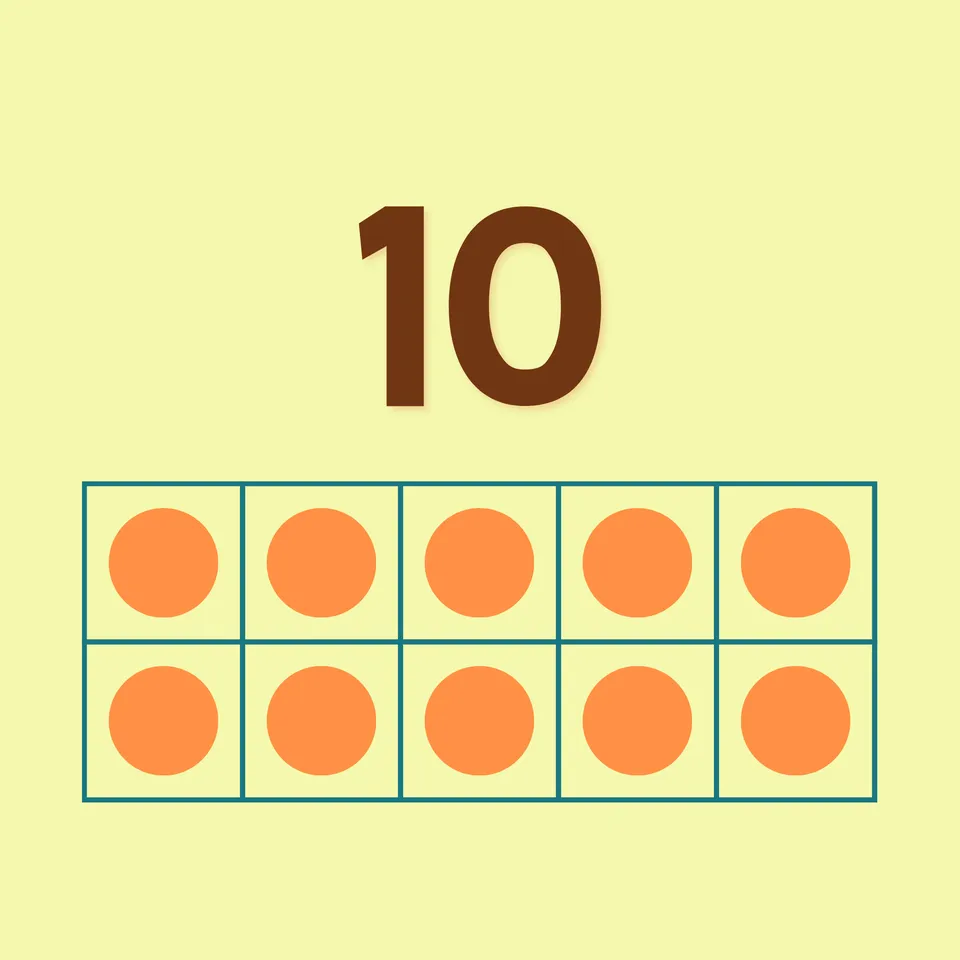
In this lesson, students will learn about the number 10. They will get practice counting up to 10 using animals, foods, shapes, and math cubes. And they’ll get practice counting up and counting down, starting from different numbers.
Part of
Standards alignment
Common Core State Standards
- K.CC.A.2 — Count forward beginning from a given number within the known sequence (instead of having to begin at 1).
- K.CC.B.4.a — When counting objects, say the number names in the standard order, pairing each object with one and only one number name and each number name with one and only one object.
- K.CC.B.5 — Count to answer "how many?" questions about as many as 20 things arranged in a line, a rectangular array, or a circle, or as many as 10 things in a scattered configuration; given a number from 1—20, count out that many objects.
- K.CC.B.4 — Understand the relationship between numbers and quantities; connect counting to cardinality.
- K.CC.B.4.b — Understand that the last number name said tells the number of objects counted. The number of objects is the same regardless of their arrangement or the order in which they were counted.
Alabama
- MA19.K.1 — Count forward orally from 0 to 100 by ones and by tens. Count backward orally from 10 to 0 by ones.
- MA19.K.4a — Say the number names in consecutive order when counting objects.
- MA19.K.5 — Count to answer "how many?" questions.
- MA19.K.2 — Count to 100 by ones beginning with any given number between 0 and 99.
- MA19.K.4b — Indicate that the last number name said tells the number of objects counted in a set.
- MA19.K.5b — Count using no more than 10 concrete objects in a scattered configuration.
Alaska
- K.CC.2 — Count forward beginning from a given number within the known sequence.
- K.CC.4.a — When counting objects, say the number names in standard order, pairing each object with one and only one number name and each number name with one and only one object.
- K.CC.5 — Count to answer "how many?" questions about as many as 20 things arranged in a line, a rectangular array or a circle, or as many as 10 things in a scattered configuration; given a number from 1-20, count out that many objects.
- K.CC.4.b — Understand that the last number name said tells the number of objects counted. The number of objects is the same regardless of their arrangement or the order in which they were counted.
- K.CC.3 — Write numbers from 0 to 20. Represent a number of objects with a written numeral 0-20 (with 0 representing a count of no objects).
Arizona
- K.CC.A.2 — Count forward from a given number other than one, within the known sequence (e.g., "Starting at the number 5, count up to 11.").
- K.CC.B.5 — Count to answer "how many?" questions about as many as 20 things arranged in a line, a rectangular array, or a circle, or as many as 10 things in a scattered configuration; given a number from 1—20, count out that many objects.
- K.CC.B.4.a — When counting objects, say the number names in the standard order, pairing each object with one and only one number name and each number name with one and only one object.
- K.CC.B.4.b — Understand that the last number name said tells the number of objects counted. The number of objects is the same regardless of their arrangement or the order in which they were counted.
- K.CC.A.3 — Write numbers from 0 to 20. Represent a number of objects with a written numeral 0-20 (with 0 representing a count of no objects).
Arkansas
- K.NPV.2 — Count a set of objects up to 20 using one-to-one correspondence, demonstrating that the last number stated indicates the number of objects in the set regardless of the arrangement.
- K.NPV.1 — Count to 100 by ones and tens; count forward by ones from any given number up to 100.
- K.NPV.5 — Read, write, and represent whole numbers from 0 to 20.
California
- K.CC.A.2 — Count forward beginning from a given number within the known sequence (instead of having to begin at 1).
- K.CC.B.4.a — When counting objects, say the number names in the standard order, pairing each object with one and only one number name and each number name with one and only one object.
- K.CC.B.5 — Count to answer "how many?" questions about as many as 20 things arranged in a line, a rectangular array, or a circle, or as many as 10 things in a scattered configuration; given a number from 1—20, count out that many objects.
- K.CC.B.4.b — Understand that the last number name said tells the number of objects counted. The number of objects is the same regardless of their arrangement or the order in which they were counted.
- K.CC.A.3 — Write numbers from 0 to 20. Represent a number of objects with a written numeral 0-20 (with 0 representing a count of no objects).
Colorado
- P.CC.C.3 — Say or sign the number names in order when counting, pairing one number word that corresponds with one object, up to at least 10.
- P.CC.C.4 — Use the number name of the last object counted to answer “How many?” questions for up to approximately 10 objects.
- K.CC.A.2 — Count forward beginning from a given number within the known sequence (instead of having to begin at 1).
- P.CC.C.10 — Recognize and, with support, write some numerals up to 10.
Connecticut
- K.CC.A.2 — Count forward beginning from a given number within the known sequence (instead of having to begin at 1).
- K.CC.B.4.a — When counting objects, say the number names in the standard order, pairing each object with one and only one number name and each number name with one and only one object.
- K.CC.B.5 — Count to answer "how many?" questions about as many as 20 things arranged in a line, a rectangular array, or a circle, or as many as 10 things in a scattered configuration; given a number from 1—20, count out that many objects.
- K.CC.B.4.b — Understand that the last number name said tells the number of objects counted. The number of objects is the same regardless of their arrangement or the order in which they were counted.
- K.CC.A.3 — Write numbers from 0 to 20. Represent a number of objects with a written numeral 0-20 (with 0 representing a count of no objects).
Delaware
- K.CC.A.2 — Count forward beginning from a given number within the known sequence (instead of having to begin at 1).
- K.CC.B.4.a — When counting objects, say the number names in the standard order, pairing each object with one and only one number name and each number name with one and only one object.
- K.CC.B.5 — Count to answer "how many?" questions about as many as 20 things arranged in a line, a rectangular array, or a circle, or as many as 10 things in a scattered configuration; given a number from 1—20, count out that many objects.
- K.CC.B.4 — Understand the relationship between numbers and quantities; connect counting to cardinality.
- K.CC.B.4.b — Understand that the last number name said tells the number of objects counted. The number of objects is the same regardless of their arrangement or the order in which they were counted.
Florida
- MA.K.NSO.1.1 — Given a group of up to 20 objects, count the number of objects in that group and represent the number of objects with a written numeral. State the number of objects in a rearrangement of that group without recounting.
- MA.K.NSO.2.1 — Recite the number names to 100 by ones and by tens. Starting at a given number, count forward within 100 and backward within 20.
Georgia
- K.NR.1.1 — Count up to 20 objects in a variety of structured arrangements and up to 10 objects in a scattered arrangement.
- K.NR.2.2 — Count forward beginning from any number within 100 and count backward from any number within 20.
- K.NR.1.2 — When counting objects, explain that the last number counted represents the total quantity in a set (cardinality), regardless of the arrangement and order.
- K.NR.4.1 — Identify written numerals 0- 20 and represent a number of objects with a written numeral 0-20 (with 0 representing a count of no objects).
Hawaii
- K.CC.A.2 — Count forward beginning from a given number within the known sequence (instead of having to begin at 1).
- K.CC.B.4a — When counting objects, say the number names in the standard order, pairing each object with one and only one number name and each number name with one and only one object.
- K.CC.B.5 — Count to answer "how many?" questions about as many as 20 things arranged in a line, a rectangular array, or a circle, or as many as 10 things in a scattered configuration; given a number from 1—20, count out that many objects.
- K.CC.B.4b — Understand that the last number name said tells the number of objects counted. The number of objects is the same regardless of their arrangement or the order in which they were counted.
- K.CC.A.3 — Write numbers from 0 to 20. Represent a number of objects with a written numeral 0-20 (with 0 representing a count of no objects).
Idaho
- K.CC.A.2 — Starting at a given number, count forward within 100 and backward within 20.
- K.CC.B.4.a — When counting objects, say the number names in the standard order, pairing each object with one and only one number name and each number name with one and only one object.
- K.CC.B.5 — Given a group of up to 20 objects, count the number of objects in that group and state the number of objects in a rearrangement of that group without recounting. Given a verbal or written number from zero to 20, count out that many objects.
- K.CC.B.4 — Understand the relationship between numbers and quantities; connect counting to cardinality.
- K.CC.B.4.b — Understand that the last number name said tells the number of objects counted. The number of objects is the same regardless of their arrangement or the order in which they were counted.
Illinois
- K.CC.A.2 — Count forward beginning from a given number within the known sequence (instead of having to begin at 1).
- K.CC.B.4.a — When counting objects, say the number names in the standard order, pairing each object with one and only one number name and each number name with one and only one object.
- K.CC.B.5 — Count to answer "how many?" questions about as many as 20 things arranged in a line, a rectangular array, or a circle, or as many as 10 things in a scattered configuration; given a number from 1—20, count out that many objects.
- K.CC.B.4.b — Understand that the last number name said tells the number of objects counted. The number of objects is the same regardless of their arrangement or the order in which they were counted.
- K.CC.B.4.c — Understand that each successive number name refers to a quantity that is one larger.
Indiana
- K.NS.1 — Count to at least 100 by ones and tens. Count by one from any given number. (E)
- K.NS.3 — Say the number names in standard order when counting objects, pairing each object with one and only one number name and each number name with one and only one object. Understand that the last number name said describes the number of objects counted and that the number of objects is the same regardless of their arrangement or the order in which they were counted. Count out the number of objects, given a number from 1 to 20. (E)
- K.NS.7 — Define and model a "ten" as a group of ten ones. Model equivalent forms of whole numbers from 10 to 20 as groups of tens and ones using objects and drawings. (E)
Iowa
- K.CC.A.2 — Count forward beginning from any given number within the range of 0–100.
- K.CC.B.5 — Count to answer "how many?" questions about as many as 20 things arranged in a line, a rectangular array, or a circle, or as many as 10 things in a scattered configuration. Given a number from 1–20, count out that many objects.
- K.CC.IA.A.2 — Count backwards beginning from any given number within the range of 0–20.
- K.CC.B.4.b — Each object must be paired with one and only one number name and each number name with one and only one object (one-to-one correspondence).
- K.CC.B.4.c — The last number name said tells the number of objects counted, objects may be counted in any order (cardinality).
Kansas
- K.CC.2 — Count forward beginning from a given number within the known sequence (instead of having to begin at 1).
- K.CC.4.a — When counting objects, say each number’s name in sequential order, pairing each object with one and only one number name and each number name with one and only one object.
- K.CC.5 — Count to answer “how many?” up to 20 concrete or pictorial objects arranged in a line, a rectangular array, or a circle, or as many as 10 objects in a scattered configuration; given a number from 1 to 20, count out that many objects.
- K.CC.4 — Understand the relationship between numbers and quantities; connect counting to cardinality.
- K.CC.4.b — Understand that the last number name said tells the number of objects counted. The number of objects is the same regardless of their arrangement or the order in which they were counted.
Kentucky
- KY.K.CC.1.b — Count backwards from 30 by ones.
- KY.K.CC.2 — Count forward beginning from a given number within the known sequence within 100 (instead of having to begin at 1).
- KY.K.CC.4.a — When counting objects, say the number names in the standard order, pairing each object with one and only one number name and each number name with one and only one object.
- KY.K.CC.5.b — Count to answer “how many?” questions with as many as 10 things in a scattered configuration.
- KY.K.CC.4.b — Understand that the last number name said tells the number of objects counted. The number of objects is the same regardless of their arrangement or the order in which they were counted.
Louisiana
- K.CC.A.2 — Count forward beginning from a given number within the known sequence (instead of having to begin at 1).
- K.CC.B.4.a — When counting objects in standard order, say the number names as they relate to each object in the group, demonstrating one-to-one correspondence.
- K.CC.B.5 — Count to answer "how many?" questions.
- K.CC.B.4.b — Understand that the last number name said tells the number of objects counted. The number of objects is the same regardless of their arrangement or the order in which they were counted.
- K.CC.B.5.b — Count objects up to 10 in a scattered configuration.
- K.CC.A.3 — Write numbers from 0 to 20. Represent a number of objects with a written numeral 0-20 (with 0 representing a count of no objects).
Maine
- K.CC.A.2 — Count forward beginning from a given number within the known sequence (instead of having to begin at 1)
- K.CC.B.4a — When counting objects, say the number names in the standard order, pairing each object with one and only one number name and each number name with one and only one object.
- K.CC.B.5 — Count to answer “how many?” questions about as many as 20 things arranged in a line, a rectangular array, or a circle, or as many as 10 things in a scattered configuration; given a number from 1-20, count out that many objects.
- K.CC.B.4b — Understand that the last number name said tells the number of objects counted. The number of objects is the same regardless of their arrangement or the order in which they were counted.
Maryland
- PK.CC.A.1 — Verbally count to 10 by ones and then develop rote counting to 20 by ones
- PK.CC.A.2 — Identify which number comes just after or just before a given number in the counting sequence to 10 with visual supports and manipulatives.
- PK.CC.B.4.a — When counting objects 1-10, say the number names in standard order, pairing each object with one and only one number name.
- PK.CC.B.5 — Represent a number by producing sets of objects with concrete materials, pictures, and or numerals. (First 0-5 and then to 10) Can correctly respond when asked "how many" after counting concrete objects.
- PK.CC.B.4.b — Recognize that the last number name said, tells the number of objects counted. Recognize the count remains the same regardless of the order or arrangement of the objects.
Massachusetts
- PK.CC.B.3 — Understand the relationships between numerals and quantities up to 10.
- PK.CC.C.4 — Count many kinds of concrete objects and actions up to ten, using one-to-one correspondence, and accurately count as many as seven things in a scattered configuration. Recognize the "one more," "one less" patterns.
- K.CC.A.2 — Count forward beginning from a given number within the known sequence (instead of having to begin at one).
- PK.CC.A.1 — Listen to and say the names of numbers in meaningful contexts.
- PK.CC.A.2 — Recognize and name written numerals 0–10.
Michigan
- K.CC.A.2 — Count forward beginning from a given number within the known sequence (instead of having to begin at 1).
- K.CC.B.4.a — When counting objects, say the number names in the standard order, pairing each object with one and only one number name and each number name with one and only one object.
- K.CC.B.5 — Count to answer "how many?" questions about as many as 20 things arranged in a line, a rectangular array, or a circle, or as many as 10 things in a scattered configuration; given a number from 1—20, count out that many objects.
- K.CC.B.4 — Understand the relationship between numbers and quantities; connect counting to cardinality.
- K.CC.B.4.b — Understand that the last number name said tells the number of objects counted. The number of objects is the same regardless of their arrangement or the order in which they were counted.
Minnesota
- K.1.1.1 — Recognize that a number can be used to represent how many objects are in a set or to represent the position of an object in a sequence. For example: Count students standing in a circle and count the same students after they take their seats. Recognize that this rearrangement does not change the total number, but may change the order in which students are counted.
- K.1.1.3 — Count, with and without objects, forward and backward to at least 20.
- K.1.1.2 — Read, write, and represent whole numbers from 0 to at least 31. Representations may include numerals, pictures, real objects and picture graphs, spoken words, and manipulatives such as connecting cubes. For example: Represent the number of students taking hot lunch with tally marks.
- K.1.1.4 — Find a number that is 1 more or 1 less than a given number.
Mississippi
- K.CC.2 — Count forward beginning from a given number within the known sequence (instead of having to begin at 1).
- K.CC.4.a — When counting objects, say the number names in the standard order, pairing each object with one and only one number name and each number name with one and only one object.
- K.CC.5 — Count to answer “how many?” questions about as many as 20 things arranged in a line, a rectangular array, or a circle, or as many as 10 things in a scattered configuration; given a number from 1–20, count out that many objects.
- K.CC.4.b — Understand that the last number name said tells the number of objects counted. The number of objects is the same regardless of their arrangement or the order in which they were counted.
- K.CC.3 — Write numbers from 0 to 20. Represent a number of objects with a written numeral 0– 20 (with 0 representing a count of no objects).
Missouri
- K.NS.A.2 — Count forward beginning from a given number between 1 and 20.
- K.NS.A.3 — Count backward from a given number between 10 and 1.
- K.NS.B.5 — Say the number names when counting objects, in the standard order, pairing each object with one and only one number name and each number name with one and only one object.
- K.NS.B.6 — Demonstrate that the last number name said tells the number of objects counted and the number of objects is the same regardless of their arrangement or the order in which they were counted.
- K.NS.B.9 — Demonstrate that a number can be used to represent “how many” are in a set.
- K.NS.A.4 — Read and write numerals and represent a number of objects from 0 to 20.
Montana
- K.CC.A.2 — Count forward beginning from a given number within the known sequence (instead of having to begin at 1).
- K.CC.B.4.a — When counting objects, say the number names in the standard order, pairing each object with one and only one number name and each number name with one and only one object from a variety of cultural contexts, including those of Montana American Indians.
- K.CC.B.5 — Count to answer "how many?" questions about as many as 20 things arranged in a line, a rectangular array, or a circle, or as many as 10 things in a scattered configuration; given a number from 1-20, count out that many objects from a variety of cultural contexts, including those of Montana American Indians.
- K.CC.B.4 — Understand the relationship between numbers and quantities; connect counting to cardinality.
- K.CC.B.4.b — Understand that the last number name said tells the number of objects counted. The number of objects is the same regardless of their arrangement or the order in which they were counted.
Nebraska
- K.N.2.a — Use one-to-one correspondence when counting objects to show the relationship between numbers and quantities and understand the last number counted is a direct representation of the total objects in a given set.
- K.N.2.e — Count verbally forward and backward from any given number within 20.
- K.N.2 — Counting and Cardinality: Students will understand the relationship between numbers and quantities.
- K.N.2.b — Understand that each successive number name refers to a quantity that is one larger.
- K.N.2.d — Count up to 20 objects arranged in a line, a rectangular array, or a circle, and count up to 10 objects in a scattered configuration.
Nevada
- K.CC.A.2 — Count forward beginning from a given number within the known sequence (instead of having to begin at 1).
- K.CC.B.4.a — When counting objects, say the number names in the standard order, pairing each object with one and only one number name and each number name with one and only one object.
- K.CC.B.5 — Count to answer "how many?" questions about as many as 20 things arranged in a line, a rectangular array, or a circle, or as many as 10 things in a scattered configuration; given a number from 1—20, count out that many objects.
- K.CC.B.4.b — Understand that the last number name said tells the number of objects counted. The number of objects is the same regardless of their arrangement or the order in which they were counted.
New Hampshire
- K.CC.A.2 — Count forward beginning from a given number within the known sequence (instead of having to begin at 1).
- K.CC.B.4.a — When counting objects, say the number names in the standard order, pairing each object with one and only one number name and each number name with one and only one object.
- K.CC.B.5 — Count to answer "how many?" questions about as many as 20 things arranged in a line, a rectangular array, or a circle, or as many as 10 things in a scattered configuration; given a number from 1—20, count out that many objects.
- K.CC.B.4 — Understand the relationship between numbers and quantities; connect counting to cardinality.
- K.CC.B.4.b — Understand that the last number name said tells the number of objects counted. The number of objects is the same regardless of their arrangement or the order in which they were counted.
New Jersey
- K.CC.A.2 — Count forward beginning from a given number within the known sequence (instead of having to begin at 1).
- K.CC.B.4a — When counting objects, say the number names in the standard order, pairing each object with one and only one number name and each number name with one and only one object.
- K.CC.B.5 — Count to answer “how many?” questions about as many as 20 things arranged in a line, a rectangular array, or a circle, or as many as 10 things in a scattered configuration; given a number from 1–20, count out that many objects.
- K.CC.B.4 — Understand the relationship between numbers and quantities; connect counting to cardinality.
- K.CC.B.4b — Understand that the last number name said tells the number of objects counted. The number of objects is the same regardless of their arrangement or the order in which they were counted.
New Mexico
- K.CC.A.2 — Count forward beginning from a given number within the known sequence (instead of having to begin at 1).
- K.CC.B.4.a — When counting objects, say the number names in the standard order, pairing each object with one and only one number name and each number name with one and only one object.
- K.CC.B.5 — Count to answer "how many?" questions about as many as 20 things arranged in a line, a rectangular array, or a circle, or as many as 10 things in a scattered configuration; given a number from 1—20, count out that many objects.
- K.CC.B.4.b — Understand that the last number name said tells the number of objects counted. The number of objects is the same regardless of their arrangement or the order in which they were counted.
- K.CC.A.3 — Write numbers from 0 to 20. Represent a number of objects with a written numeral 0-20 (with 0 representing a count of no objects).
New York
- NY-PK.CC.3 — Understand the relationship between numbers and quantities to 10; connect counting to cardinality.
- NY-PK.CC.3.a — When counting objects, say the number names in the standard order, pairing each object with one and only one number name and each number name with one and only one object. (1:1 correspondence)
- NY-PK.CC.1 — Count to 20.
- NY-PK.CC.3.b — Explore and develop the concept that the last number name said tells the number of objects counted, (cardinality). The number of objects is the same regardless of their arrangement or the order in which they were counted.
- NY-PK.CC.4.a — Answer counting questions using as many as 10 objects arranged in a line, a rectangular array, and a circle. Answer counting questions using as many as 5 objects in a scattered configuration.
North Carolina
- NC.K.CC.2 — Count forward beginning from a given number within the known sequence, instead of having to begin at 1.
- NC.K.CC.4 — Understand the relationship between numbers and quantities. • When counting objects, say the number names in the standard order, pairing each object with one and only one number name and each number name with one and only one object (one-to-one correspondence). • Recognize that the last number named tells the number of objects counted regardless of their arrangement (cardinality). • State the number of objects in a group, of up to 5 objects, without counting the objects (perceptual subitizing).
- NC.K.CC.5 — Count to answer “How many?” in the following situations: • Given a number from 1–20, count out that many objects. • Given up to 20 objects, name the next successive number when an object is added, recognizing the quantity is one more/greater. • Given 20 objects arranged in a line, a rectangular array, and a circle, identify how many. • Given 10 objects in a scattered arrangement, identify how many.
- NC.K.CC.3 — Write numbers from 0 to 20. Represent a number of objects with a written numeral 0-20, with 0 representing a count of no objects.
North Dakota
- K.NO.CC.2 — Count backward from 20 by ones and from a given number within 10.
- K.NO.CC.5 — Count and tell how many objects up to 20 are in an arranged pattern or up to 10 objects in a scattered configuration. Represent a quantity of up to 20 with a numeral.
- K.NO.CC.1 — Count verbally in sequential order by ones and tens to 100, making accurate decuple transitions (e.g., 89 to 90). Count verbally forward from any given number within 100.
- K.NO.CC.3 — Identify and write any given numeral within 20.
Ohio
- K.CC.2 — Count forward within 100 beginning from any given number other than 1.
- K.CC.4.a — When counting objects, establish a one-to-one relationship by saying the number names in the standard order, pairing each object with one and only one number name and each number name with one and only one object.
- K.CC.5 — Count to answer “how many?” questions about as many as 20 things arranged in a line, a rectangular array, or a circle, or as many as 10 things in a scattered configuration; given a number from 1-20, count out that many objects.
- K.CC.4.b — Understand that the last number name said tells the number of objects counted and that the number of objects is the same regardless of their arrangement or the order in which they were counted.
- K.CC.4.c — Understand that each successive number name refers to a quantity that is one larger.
Oklahoma
- PK.N.1.1 — Count aloud forward in sequence by 1s to 20.
- PK.N.2.2 — Use one-to-one correspondence in counting objects and matching groups of objects up to 10.
- PK.N.2.3 — Understand the last numeral spoken when counting aloud tells how many total objects are in a set up to 10.
- K.N.1.5 — Count forward, with and without objects, from any given number up to 20.
- PK.N.1.2 — Recognize and name written numerals 0-10.
Oregon
- K.NCC.A.2 — Count forward beginning from a given number within 100 of a known sequence.
- K.NCC.A.3 — Identify number names, write numbers, and the count sequence from 0-20. Represent a number of objects with a written number 0-20.
- K.NCC.B.5 — Count to answer “how many?” questions using up to 20 objects arranged in a variety of configurations or as 10 objects in a scattered configuration. Given a number from 1-20, count out that many objects.
- K.NCC.B.4 — Understand the relationship between numbers and quantities; connect counting to cardinality.
Pennsylvania
- CC.2.1.PreK.A.1 — Know number names and the count sequence.
- CC.2.1.PreK.A.2 — Count to tell the number of objects.
- CC.2.1.K.A.2 — Apply one-to-one correspondence to count the number of objects.
Rhode Island
- K.CC.A.2 — Count forward beginning from a given number within the known sequence (instead of having to begin at one).
- K.CC.B.4.a — When counting objects, say the number names in the standard order, pairing each object with one and only one number name and each number name with one and only one object.
- K.CC.B.5 — Count to answer "how many?" questions about as many as 20 things arranged in a line, a rectangular array, or a circle, or as many as 10 things in a scattered configuration; given a number from 1—20, count out that many objects.
- K.CC.B.4.b — Understand that the last number name said tells the number of objects counted. The number of objects is the same regardless of their arrangement or the order in which they were counted.
- K.CC.B.4.c — Understand that each successive number name refers to a quantity that is one larger. Recognize the one more pattern of counting using objects
South Carolina
- K.NS.2 — Count forward by ones beginning from any number less than 100.
- K.NS.4a — Understand the relationship between number and quantity. Connect counting to cardinality by demonstrating an understanding that the last number said tells the number of objects in the set (cardinality).
- K.NS.5 — Count a given number of objects from 1 – 20 and connect this sequence in a one-to-one manner.
- K.NS.4b — Understand the relationship between number and quantity. Connect counting to cardinality by demonstrating an understanding that the number of objects is the same regardless of their arrangement or the order in which they are counted (conservation of number).
- K.NS.4c — Understand the relationship between number and quantity. Connect counting to cardinality by demonstrating an understanding that each successive number name refers to a quantity that is one more and each previous number name refers to a quantity that is one less.
South Dakota
- K.CC.A.2 — Count forward beginning from any given number within 100 (instead of having to begin at 1). Count backwards beginning from any given number within 20.
- K.CC.B.5 — Count to answer "how many?"
- K.CC.B.5.a — When counting, answer questions about as many as 20 things arranged in a line, a rectangular array, or a circle, or and as many as 10 things in a scattered configuration.
- K.CC.B.4.a — When counting objects, say the number names in the standard order, pairing each object with one and only one number name and each number name with one and only one object. (one-to-one correspondence).
- K.CC.B.4.b — Understand that the last number name said tells the number of objects counted. (cardinality) The number of objects is the same regardless of their arrangement or the order in which they were counted.
- K.CC.A.3 — Write numbers from 0 to 20. Represent a number of objects with a written numeral 0-20 (with 0 representing a count of no objects).
Tennessee
- K.CC.A.1 — Count to 100 by ones, fives, and tens. Count backward from 10.
- K.CC.A.2 — Count forward by ones beginning from any given number within the known sequence (instead of having to begin at 1).
- K.CC.B.5.a — When counting objects 1-20, say the number names in the standard order, using one-to-one correspondence.
- K.CC.B.6 — Count to answer “how many?” questions about as many as 20 things arranged in a line, a rectangular array, a circle, or as many as 10 things in a scattered configuration. Given a number from 1-20, count out that many objects.
- K.CC.B.5.b — Recognize that the last number name said tells the number of objects counted. The number of objects is the same regardless of their arrangement or the order in which they were counted.
- K.CC.B.5.c — Recognize that each successive number name refers to a quantity that is one greater and each previous number is one less.
Texas
- K.2A — count forward and backward to at least 20 with and without objects;
- K.2C — count a set of objects up to at least 20 and demonstrate that the last number said tells the number of objects in the set regardless of their arrangement or order;
- K.2B — read, write, and represent whole numbers from 0 to at least 20 with and without objects or pictures;
- K.2F — generate a number that is one more than or one less than another number up to at least 20;
Utah
- K.CC.2 — Count forward beginning from a given number within the known sequence (instead of having to begin at 1).
- K.CC.4.a — When counting objects, say the numbers in the standard order. Pair each quantity of objects with one and only one number and each number with the correct quantity of objects.
- K.CC.5 — Use counting to answer questions about "how many." For example, 20 or fewer objects arranged in a line, a rectangular array, or circle; 10 or fewer objects in a scattered configuration. Using a number from 1–20, count out that many objects.
- K.CC.4.b — Understand that the last number said represents the number of objects counted. The number of objects is the same regardless of their arrangement or the order in which they were counted.
- K.CC.3 — Read and write numbers using base ten numerals from 0 to 20. Represent a number of objects with a written numeral, in or out of sequence (0 represents a count of no objects).
Vermont
- K.CC.A.2 — Count forward beginning from a given number within the known sequence (instead of having to begin at 1).
- K.CC.B.4.a — When counting objects, say the number names in the standard order, pairing each object with one and only one number name and each number name with one and only one object.
- K.CC.B.5 — Count to answer "how many?" questions about as many as 20 things arranged in a line, a rectangular array, or a circle, or as many as 10 things in a scattered configuration; given a number from 1—20, count out that many objects.
- K.CC.B.4.b — Understand that the last number name said tells the number of objects counted. The number of objects is the same regardless of their arrangement or the order in which they were counted.
- K.CC.A.3 — Write numbers from 0 to 20. Represent a number of objects with a written numeral 0-20 (with 0 representing a count of no objects).
Virginia
- K.NS.1a — Use one-to-one correspondence to determine how many are in a given set containing 30 or fewer concrete objects (e.g., cubes, pennies, balls), and describe the last number named as the total number of objects counted.
- K.NS.1e — Count forward orally by ones, within 100, starting at any given number.
- K.NS.1f — Count backward orally by ones when given any number between 1 and 20.
- K.NS.1g — State the number after, without counting, when given any number between 0 and 30.
- K.NS.2a — Read, write, and identify the numerals 0 through 30.
Washington
- K.CC.A.2 — Count forward beginning from a given number within the known sequence (instead of having to begin at 1).
- K.CC.B.4.a — When counting objects, say the number names in the standard order, pairing each object with one and only one number name and each number name with one and only one object.
- K.CC.B.5 — Count to answer "how many?" questions about as many as 20 things arranged in a line, a rectangular array, or a circle, or as many as 10 things in a scattered configuration; given a number from 1—20, count out that many objects.
- K.CC.B.4.b — Understand that the last number name said tells the number of objects counted. The number of objects is the same regardless of their arrangement or the order in which they were counted.
- K.CC.A.3 — Write numbers from 0 to 20. Represent a number of objects with a written numeral 0-20 (with 0 representing a count of no objects).
Washington, D.C.
- K.CC.A.2 — Count forward beginning from a given number within the known sequence (instead of having to begin at 1).
- K.CC.B.4.a — When counting objects, say the number names in the standard order, pairing each object with one and only one number name and each number name with one and only one object.
- K.CC.B.5 — Count to answer "how many?" questions about as many as 20 things arranged in a line, a rectangular array, or a circle, or as many as 10 things in a scattered configuration; given a number from 1—20, count out that many objects.
- K.CC.B.4.b — Understand that the last number name said tells the number of objects counted. The number of objects is the same regardless of their arrangement or the order in which they were counted.
- K.CC.A.3 — Write numbers from 0 to 20. Represent a number of objects with a written numeral 0-20 (with 0 representing a count of no objects).
West Virginia
- M.K.2 — Count forward beginning from a given number within the known sequence (instead of having to begin at 1).
- M.K.4 — Understand the relationship between numbers and quantities; connect counting to cardinality. a. When counting objects, say the number names in the standard order, pairing each object with one and only one number name and each number name with one and only one object. b. Understand that the last number name said tells the number of objects counted and the number of objects is the same regardless of their arrangement or the order in which they were counted. c. Understand that each successive number name refers to a quantity that is one larger.
- M.K.5 — Count to answer questions (e.g., "How many?") about as many as 20 things arranged in a line, a rectangular array, a circle, or as many as 10 things in a scattered configuration; given a number from 1-20, count out that many objects.
- M.K.3 — Write numbers from Oto 20. Represent a number of objects with a written numeral 0-20 (with O representing a count of no objects).
Wisconsin
- M.K.CC.A.2 — Count forward beginning from a given number within the known sequence (instead of having to begin at 1).
- M.K.CC.B.4 — Understand the relationship between numbers and quantities; connect counting to cardinality. a. When counting objects, say the number names in the standard order, pairing each object with one and only one number name and each number name with one and only one object (one to one correspondence). b. When counting objects, say the number names in the standard order, pairing each object with one and only one number name and each number name with one and only one object (one to one correspondence). c. Understand that each successive number name refers to a quantity that is one larger and the previous number is one smaller (hierarchical inclusion).
- M.K.CC.B.6 — Count to answer "how many?" questions about as many as 20 things arranged in a line, a rectangular array, or a circle, or as many as 10 things in a scattered configuration; given a number from 1-20, count out that many objects.
- M.K.CC.A.3 — Write numbers from 0 to 20. Represent a number of objects with a written numeral 0-20 (with 0 representing a count of no objects).
Wyoming
- K.CC.A — Know number names and the count sequence.
- K.CC.A.2 — Count forward beginning from a given number within the known sequence (instead of having to begin at 1).
- K.CC.B.4.A — Use one-to-one correspondence when counting objects.
- K.CC.B.5.A — Answer the question "how many?" by counting up to 20 objects arranged in a line, a rectangular array, a circle, or as many as 10 objects in a scattered configuration.
- K.CC.A.1.B — Count backwards by ones from 20.
- K.CC.B.4.B — Understand that the last number name said, tells the number of objects counted regardless of their arrangement.