A Trip to the Grand Canyon!
Ages 3–7 · 18 minutes · Science, Geography, Stories
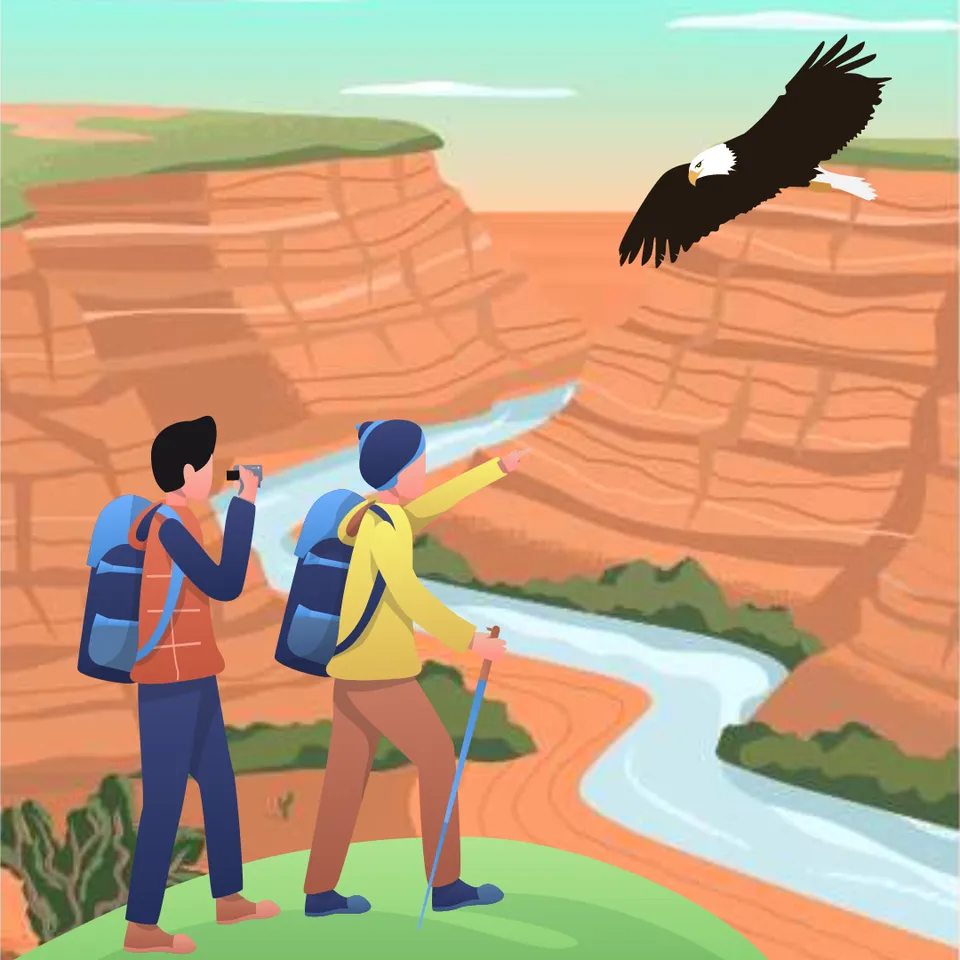
Students will take a trip to: the Grand Canyon! We'll pack everything we need to go on a hike, rafting, explore nature & animals and more!
Students will take a trip to one of our most Popular National Parks: the Grand Canyon!
We will pack everything we need, go on a hike, go rafting, explore nature and animals and many more surprises!
Students will talk about environments, wildlife and experience beautiful scenery and views of the Grand Canyon!
Part of
Standards alignment
Common Core State Standards
- D2.Geo.6.K-2 — Individually and with others, students… Identify some cultural and environmental characteristics of specific places.
- There are many different kinds of living things in any area, and they exist in different places on land and in water.
- D2.Geo.3.K-2 — Individually and with others, students… Use maps, globes, and other simple geographic models to identify cultural and environmental characteristics of places.
Alabama
- SS10.2.10.3 — Recognizing benefits of recreation and tourism at state and national parks (Alabama)
- SC23.1.5 — Use information from observations to explain how various external features help living things survive, grow, and meet their needs.
- SS10.1.8.3 — Using vocabulary associated with geographical features, including _river, lake, ocean,_ and _mountain_
- SS10.1.9.1 — Listing ways to protect our natural resources
- SS10.3.8.2 — Locating state and national parks on a map or globe (Alabama)
Alaska
- 1 — know that places have distinctive geographic characteristics;
- There are many different kinds of living things in any area, and they exist in different places on land and in water.
- SL.K.1.b — Continue a conversation through multiple exchanges.
- SL.K.4 — Describe familiar people, places, things, and events, and with prompting and support, provide additional related details.
Arizona
- 2.G2.1 — Explain how weather, climate, and other environmental characteristics affect people’s lives in a place or region being studied.
- Relative scales allow objects and events to be compared and described (e.g., bigger and smaller; hotter and colder; faster and slower).
- 1.G1.1 — Use, explore and construct maps, graphs and other geographical representations to support content focus. • Key concepts include but are not limited to physical features (rivers, lakes, mountains, landforms, desert) and human features (dams, cities, parks, hospitals, schools, railroad tracks, farms, factories, houses)
- 2.G1.1 — Use and construct maps, graphs, and other geographic representations of familiar and unfamiliar places in the world; and locate physical and human features. • Key physical features include but are not limited to seven continents, oceans, lakes, rivers, mountain ranges, coasts, seas, and deserts • Key human features include but are not limited to equator, hemispheres, North and South Pole, cities, states, countries, regions, and landmarks
Arkansas
- G.1.K.2 — Identify and describe the physical characteristics of a place such as rivers, mountains, and forests using maps, globes, and photographs.
- G.1.K.6 — Identify the influence of weather and climate on people’s daily lives.
- There are many different kinds of living things in any area, and they exist in different places on land and in water.
- G.1.1.6 — Describe the influence of weather, climate, and physical characteristics on people’s daily lives.
California
- 1.2.4 — Describe how location, weather, and physical environment affect the way people live, including the effects on their food, clothing, shelter, transportation, and recreation.
- There are many different kinds of living things in any area, and they exist in different places on land and in water.
- K-ESS3-1 — Use a model to represent the relationship between the needs of different plants and animals (including humans) and the places they live.
- 1.3.3 — Identify American symbols, landmarks, and essential documents, such as the flag, bald eagle, Statue of Liberty, U.S. Constitution, and Declaration of Independence, and know the people and events associated with them.
Colorado
- SC.P.1.1.d — Observe, describe, and discuss living things and natural processes.
- SC.P.3.1.c — Inquire about the natural and physical environment.
- SC.P.3.2.e — Observe and describe patterns observed over the course of a number of days and nights (e.g., differences in the activities or appearance of plants and animals).
- SS.1.2.1 — Use geographic terms and tools to describe places and spaces.
- RWC20-GR.K-S.1-GLE.2-EO.a — Describe familiar people, places, things, and events and, with prompting and support, provide additional detail.
Connecticut
- There are many different kinds of living things in any area, and they exist in different places on land and in water.
- GEO 1.3 — Use maps, globes, and other simple geographic models to identify cultural and environmental characteristics of places.
- GEO 1.4 — Explain how weather, climate, and other environmental characteristics affect people’s lives in places or regions.
- GEO.K.4 — Explain how weather, climate, and other environmental characteristics affect people’s lives in places or regions.
- GEO 1.2 — Use maps, graphs, photographs and other representations to describe places and the relationships and interactions that shape them.
Delaware
- There are many different kinds of living things in any area, and they exist in different places on land and in water.
- G.1.K-3a — Students will understand the nature and uses of maps, globes, and other geo-graphics. Grade K and Grade 3
- G.2.K-3a — Students will distinguish different types of climate and landforms and explain why they occur. Grade 2
- SL.K.4 — Describe familiar people, places, things, and events and, with prompting and support, provide additional detail.
- SL.K.1.b — Continue a conversation through multiple exchanges.
Florida
- SC.2.L.17.2 — Recognize and explain that living things are found all over Earth, but each is only able to live in habitats that meet its basic needs.
- SS.3.G.2.4 — Describe the physical features of the United States, Canada, Mexico, and the Caribbean.
- SS.3.G.2.5 — Identify natural and man-made landmarks in the United States, Canada, Mexico, and the Caribbean.
- SS.3.G.3.1 — Describe the climate and vegetation in the United States, Canada, Mexico, and the Caribbean.
- ELA.K12.EE.4.1 — Use appropriate collaborative techniques and active listening skills when engaging in discussions in a variety of situations.
Georgia
- ELAGSEKSL1.b — Continue a conversation through multiple exchanges.
- ELAGSEKSL4 — Describe familiar people, places, things, and events and, with prompting and support, provide additional detail.
- S3L1.b — Construct an explanation of how external features and adaptations (camouflage, hibernation, migration, mimicry) of animals allow them to survive in their habitat.
- SS1G3.c — Identify and describe landforms (mountains, deserts, valleys, and coasts).
- SSKH2.d — The bald eagle
Hawaii
- SS.2.2.14.1 — Explain how human activities impact the environment
- SS.2.3.13.4 — Describe major geographic features of places using maps, photos, and other geographic representations
- SS.K.3.13.3 — Examine physical characteristics on maps and globes using positional words
- There are many different kinds of living things in any area, and they exist in different places on land and in water.
- K.SL.1b — Continue a conversation through multiple exchanges.
Idaho
- Wind and water can change the shape of the land. (2-ESS-2.1)
- There are many different kinds of living things in any area, and they exist in different places on land and in water. (2-LS-2.1)
- 1.SS.2.2.1 — Describe ways people adjust to their environment.
- K-ESS-2.1 — Students who demonstrate understanding can: Use a model to represent the relationship between the needs of different plants and animals and the places they live.
- K-ESS-2.3 — Students who demonstrate understanding can: Communicate ideas that would enable humans to interact in a beneficial way with the land, water, air, and/or other living things in the local environment.
- K.SS.4.2.1 — Identify symbols of the United States such as the flag, Pledge of Allegiance, Bald Eagle, red, white, and blue, Statue of Liberty, and the President.
Illinois
- LS4.D-P1 — There are many different kinds of living things in any area, and they exist in different places on land and in water.
- SS.1.G.1 — With guidance and support, construct and interpret print and digital maps and other cultural representations of familiar places.
- SS.K.G.1 — With guidance and support, explain how weather, climate and other environmental factors affect people's lives and cultural identities in our region.
- SF-P1 — The shape and stability of structures of natural and designed objects are related to their function(s).
- SL.K.4 — Describe familiar people, places, things, and events and, with prompting and support, provide additional detail.
Indiana
- 1.LS.3 — Make observations of plants and animals to compare the diversity of life in different habitats.
- 2.ESS.3 — Investigate how wind or water change the shape of the land and design solutions for prevention.
- K.LS.2 — Describe and compare the physical features of common living plants and animals.
- 1.LS.4 — Use a model to represent the relationship between the needs of different plants and animals (including humans) and the places they live.
Iowa
- Evaluate Human Environment Interaction
- SS.K.14. — Compare environmental characteristics in Iowa with other places.
Kansas
- There are many different kinds of living things in any area, and they exist in different places on land and in water.
- All organisms have external parts. Different animals use their body parts in different ways to see, hear, grasp objects, protect themselves, move from place to place, and seek, find, and take in food, water and air. Plants also have different parts (roots, stems, leaves, flowers, fruits) that help them survive and grow.
- Maps show where things are located. One can map the shapes and kinds of land and water in any area.
- Living things need water, air, and resources from the land, and they live in places that have the things they need. Humans use natural resources for everything they do.
- 3-ESS2-2 — Obtain and combine information to describe climates in different regions of the world.
Kentucky
- K.G.HE.1 — Identify ways humans interact with their environment.
- There are many different kinds of living things in any area, and they exist in different places on land and in water.
- 2.G.GR.1 — Examine geographic features of places in North America, using a variety of geographic data, including maps, photos and other geographic tools.
- K-ESS3-1 — Use a model to represent the relationship between the needs of different plants and animals (including humans) and the places they live.
Louisiana
- K.19 — Identify basic landforms and bodies of water in a variety of visual representations, including mountains, hills, coasts, islands, lakes, and rivers.
- 2.21 — Describe geographic features and physical characteristics of places in the United States and the world, including mountains, hills, plains, deserts, coasts, islands, peninsulas, lakes, oceans, and rivers.
- 2.7 — Identify and describe national historical figures, celebrations, symbols, and places. a. Identify and describe the Founding Fathers, including George Washington, Thomas Jefferson, Benjamin Franklin, Patrick Henry, John Adams, John Hancock, and James Madison. b. Identify and describe historical female figures, including Abigail Adams, Anne Hutchinson, Dolley Madison, Betsy Ross, and Phillis Wheatley. c. Describe the significance of state and nationally designated holidays, including New Year’s Day, the birthday of Martin Luther King, Jr., Inauguration Day, Washington’s Birthday, Mardi Gras, Memorial Day, Juneteenth, Independence Day, Labor Day, Columbus Day, Veterans Day, Thanksgiving Day, and Christmas Day. d. Describe the history of American symbols, including the Liberty Bell, United States flag (etiquette, customs pertaining to the display and use of the flag), bald eagle, national anthem, Uncle Sam, Statue of Liberty, The Pledge of Allegiance, and the national motto “In God We Trust.” e. Identify and describe man-made American monuments and landmarks including the Gateway Arch, the Golden Gate Bridge, Jefferson Memorial, Dr. Martin Luther King Jr. Memorial in Washington D.C, Lincoln Memorial, Mount Rushmore, Pearl Harbor Museum, September 11 Memorial and Museum, Statue of Liberty, the Tomb of the Unknown Soldier, U.S. Capitol, Washington Monument, and the White House. f. Identify and describe natural American landmarks, including the Grand Canyon, Mississippi River, Monument Valley, Niagara Falls, Rocky Mountains, Smoky Mountains, and Yellowstone National Park.
- K.22 — Explain how weather impacts daily life and choices.
Maine
- SL.1.K.b — Continue a conversation through multiple exchanges.
- 2-LS4-1 — Make observations of plants and animals to compare the diversity of life in different habitats.
- K-ESS3-1 — Use a model to represent the relationship between the needs of different plants and animals (including humans) and the places they live.
- SL.3.K.a — Describe familiar people, places, things, and events and, with prompting and support, provide additional detail.
Maryland
- describing why and how people in Maryland protect the environment.
- identifying ways that people in Maryland adapt to their environment including wearing different types of clothing throughout the year in their school.
- DCI.LS4.D.K-2.1 — There are many different kinds of living things in any area, and they exist in different places on land and in water.
- explaining how people adapt to changes in the environment.
Massachusetts
- 1.T2.1 — Explain that a map represents spaces and helps one identify locations and features.
- PreK-ESS2-1(MA) — Raise questions and engage in discussions about how different types of local environments (including water) provide homes for different kinds of living things.
- PreK-ESS2-6(MA) — Provide examples of the impact of weather on living things.
- 2-LS4-1 — Use texts, media, or local environments to observe and compare (a) different kinds of living things in an area, and (b) differences in the kinds of living things living in different types of areas.
- SL.1.2 — Ask and answer questions about key details in a text read aloud or information presented orally or through other media.
Michigan
- 1–G5.0.1 — Describe ways in which people are part of, modify, and adapt to their physical environments.
- 1–G5.0.2 — Describe ways in which the physical environment in a place or region affects people’s lives.
- K–G1.0.1 — Recognize that maps and globes represent places.
Minnesota
- 0.3.2.3.1 — Identify the physical and human characteristics of places, including real and imagined places. For example: Physical characteristics—landforms (Rocky Mountains, Mount Everest), ecosystems (forest), bodies of water (Hudson Bay, Indian Ocean, Amazon River), soil, vegetation, weather and climate. Human characteristics—structures (Great Wall of China, Eiffel Tower), bridges (Golden Gate Bridge), canals (Erie Canal), cities, political boundaries, population distribution, settlement patterns, language, ethnicity, nationality, religious beliefs.
- 0L.1.2.1.2 — Make observations of plants and animals to compare the diversity of life in different habitats. (P: 3, CC: 1, CI: LS4)
- 2.3.1.1.3 — Use maps, photos or other geographic tools to identify and locate major landmarks or major physical features of the United States. For example: Physical features—the Atlantic Coast, Rocky Mountains, Mississippi River, Lake Superior. Landmarks—Statue of Liberty, Angel Island, Gateway Arch in St. Louis, Mount Rushmore, Crazy Horse Memorial.
- 2E.4.2.1.2 — Obtain and use information from multiple sources, including electronic sources, to describe climates in different regions of the world. (P: 8, CC: 1, CI: ESS2)
- 3L.4.1.1.1 — Construct an argument about strategies animals use to survive. (P: 7, CC: 2, CI: LS2)
Mississippi
- E.3.7B.3 — Develop and use models of weathering, erosion, and deposition processes which explain the appearance of various Earth features (e.g., the Grand Canyon, Arches National Park in Utah, Plymouth Bluff in Columbus, or Red Bluff in Marion County, Mississippi).
- L.2.4.1 — Evaluate and communicate findings from informational text or other media to describe how plants and animals use adaptations to survive (e.g., ducks use webbed feet to swim in lakes and ponds, cacti have waxy coatings and spines to grow in the desert) in distinct environments (e.g., polar lands, saltwater and freshwater, desert, rainforest, woodlands).
- E.1.9B.1 — Locate, classify, and describe bodies of water (oceans, rivers, lakes, and ponds) on the Earth’s surface using maps, globes, or other media.
Missouri
- 2.PC.1.F.b — Recognize and explain the significance of national symbols including national landmarks, national parks, and important memorials.
- There are many different kinds of living things in any area, and they exist in different places on land and in water.
- 1.PC.1.F.a — Recognize and explain the significance of the Statue of Liberty, U.S. Capitol, Bald Eagle and the Liberty Bell.
- 2.EG.5.C.a — Identify and describe physical characteristics of the world.
Montana
- SS.G.K — The geography content standard for kindergarten is that each student will use maps, and other representations, to describe place characteristics.
- SL.K.1.b — Continue a conversation through multiple exchanges.
- SL.K.4 — Describe familiar people, places, things, and events and, with prompting and support, provide additional detail.
- L.1.5.b — Define words by category and by one or more key attributes (e.g., a duck is a bird that swims; a tiger is a large cat with stripes).
Nebraska
- There are many different kinds of living things in any area, and they exist in different places on land and in water.
- SS 1.3.2.a — Identify and differentiate between physical features on maps, globes, graphics, and in the physical world.
- SS K.3.3.a — Identify types of weather and the impact of weather on everyday life.
- SS 1.3.3.b — Identify Earth's natural resources.
Nevada
- There are many different kinds of living things in any area, and they exist in different places on land and in water.
- SS.2.21 — Identify major national landmarks associated with historical events.
New Hampshire
- SS.GE.2.1.3 — Identify major physical and human features in the United States and on Earth, e.g., cities, oceans, or continents. (Themes: C: People, Places and Environment, G: Science, Technology, and Society)
- SS.GE.2.2.1 — Explore the physical and human characteristics of place, e.g., roads, schools or mountains. (Themes: C: People, Places and Environment, E: Cultural Development, Interaction, and Change, G: Science, Technology, and Society)
- There are many different kinds of living things in any area, and they exist in different places on land and in water.
- SS.GE.2.3.2 — Explore the components and distribution of ecosystems, e.g., desert or rain forest. (Themes: C: People, Places and Environment)
- SS.GE.2.4.2 — Identify what are natural resources, e.g., water or trees. (Themes: C: People, Places and Environment)
New Jersey
- 6.1.2.Geo.HE.3 — Identify cultural and environmental characteristics of different regions in New Jersey and the United States.
- There are many different kinds of living things in any area, and they exist in different places on land and in water.
- 6.1.2.Geo.HE.1 — Explain how seasonal weather changes, climate, and other environmental characteristics affect people's lives in a place or region.
- 6.1.2.Geo.SV.1 — Use maps to identify physical features (e.g., continents, oceans, rivers, lakes, mountains).
- SL.K.4 — Describe familiar people, places, things, and events and, with prompting and support, provide additional detail.
New Mexico
- There are many different kinds of living things in any area, and they exist in different places on land and in water.
- 1.18 — Use a variety of maps to locate specific places and identify major landforms, bodies of water, and other places of significance around the United States.
- 1.20 — Explain how people interact with their physical environment in ways that may have a positive or a negative effect on natural resources.
- 2.25 — Describe ways in which individuals and groups use or conserve natural resources.
- K.10 — Identify the local, state, and national symbols (e.g., flag, bird, song).
New York
- There are many different kinds of living things in any area, and they exist in different places on land and in water.
- K.3b — The study of American symbols, holidays, and celebrations helps to develop a shared sense of history, community, and culture.
- K.7a — Climate, seasonal weather changes, and the physical features associated with the community and region all affect how people live.
- K.6b — Places and regions can be located on a map or globe, using geographic vocabulary.
North Carolina
- K.G.1 — Apply simple geographic representations, tools, and terms to describe surroundings.
- K.G.1.1 — Use maps, globes, and/or digital representations to locate places in the classroom, school, community, and around the world.
- K.G.2.1 — Explain ways people around the world use natural resources.
- LS.K.1.2 — Use models to exemplify how animals use their body parts to obtain food and other resources, protect themselves, and move from place to place.
- SL.K.1.b — Continue a conversation through multiple exchanges.
- I.1.2 — Recognize a compelling question with prompting and support.
North Dakota
- 1.R.5 — Determine the meaning of unknown and multiple-meaning words and phrases through read-alouds or other text-listening experiences.
- 1.C.6 — Participate in conversations by listening to others and taking turns speaking about topics, continuing through multiple exchanges.
- There are many kinds of living things in any area, and they exist in different places on land and in water.
- 2-LS4-1 — Make observations of plants and animals to compare the diversity of life in different habitats.
Ohio
- K.LS.2 — Living things have physical traits and behaviors, which influence their survival.
- 1.4 — Maps can be used to locate and identifyplaces.
- 1.5 — Places are distinctive because of their physical characteristics (land forms and bodies of water) and human characteristics (structures built by people).
- K.5 — Terms related to direction and distance, as well as symbols and landmarks, can be used to talk about the relative location of familiar places.
Oklahoma
- K.1.S.3 — Students will ask and answer relevant questions with prompting.
- K.4.R.3 — Students will begin to acquire new vocabulary and relate new words to prior knowledge.
- Maps can help locate different land and water features areas of Earth. (4.ESS2.2)
- 2.LS4.1 — Make observations of plants and animals to compare the diversity of life in different habitats.
- PK.S.2 — Make observations of the physical and natural world. Clarification Statement: Observations should focus on what things look, feel, hear, or smell like, how they might operate or function, and similarities and differences among things inside classroom (e.g., pencils, markers, and highlighters make different marks on paper) and outside a classroom (e.g., leaves look different at different times of year, sticks in different areas of the school yard are different shapes and sizes, it is cooler in the morning than at lunch). Explanations for why things inside and outside the classroom look, feel, or smell the way they do are not expected.
Oregon
- K.SL.4 — Describe familiar people, places, things, and events and, with prompting and support, provide additional detail.
- K.10 — Locate, identify and describe places of importance to self, family, school, and culture.
- K.ESS3.1 — Use a model to represent the relationship between the needs of different plants or animals (including humans) and the places they live. [Clarification Statement: Examples of relationships could include that deer eat buds and leaves, therefore, they usually live in forested areas; and, grasses need sunlight so they often grow in meadows. Plants, animals, and their surroundings make up a system.][assessment boundary: modeling is limited to describing the relationship and does not include patterns of structure and function to show how needs are met. impact on the environment is beyond the standard.]
- K.SL.1b — Continue a conversation through multiple exchanges.
- K.12 — Use terms related to location, direction, and distance (such as over/under, here/there, left/right, above/below, forward/backward, between).
Pennsylvania
- 3.4.K-2.C — Explain ways that places differ in their physical characteristics, their meaning, and their value and/or importance.
- 7.2.3.A — Identify the physical characteristics of places and regions.
- There are many different kinds of living things in any area, and they exist in different places on land and in water.
- 7.1.3.B — Identify and locate places and regions.
Rhode Island
- There are many different kinds of living things in any area, and they exist in different places on land and in water.
- SS2.1.2 — Physical features of the globe Explain global physical and geographical features
- SS3.5.1 — Geography and environment of the Southwest Explain the geography and environment of the Southwestern region of the United States
- L.2.5.a — Identify real-life connections between words and their use (e.g., describe foods that are spicy or juicy).
South Carolina
- ELA.K.C.9.1 — Ask and answer questions in conversation on a topic.
- 2-ESS2-1.DCI.A: — Earth Materials and Systems Wind and water can change the shape of the land. NRC Framework Link
- 2.G.2 — Describe and compare various landforms over time within the U.S. through the use of primary and secondary sources. This indicator was developed to encourage inquiry into using historic images, maps, narratives, texts, or video, to investigate and compare different landforms around the U.S.
- K.G.2 — Utilize sources of geographic information (e.g., digital sources, maps, or photographs/images) to define and identify cultural and/or natural features.This indicator was developed to encourage inquiry into natural features, such as mountains, oceans, and rivers and cultural features, such as buildings, restaurants, roads, and stores.
- 2-LS4-1. — Make observations of plants and animals to compare patterns of diversity within different habitats. Clarification Statement: Emphasis is on the diversity of living things in a variety of different habitats. State Assessment Boundary: Assessment does not include specific animal and plant names in specific habitats.
South Dakota
- K.SL.4 — Describe familiar people, places, things, and events. With prompting and support, provide additional detail.
- 2-LS4-1 — Make observations of plants and animals to compare the diversity of life in different habitats.
- K.SL.1.b — Continue a conversation through multiple exchanges.
- 2-ESS1-1 — Use information from several sources to provide evidence that Earth events can occur quickly or slowly.
- 3-ESS2-2 — Obtain and combine information to describe climates in different regions of the world.
Tennessee
- 3.11 — Identify major physical features of the U.S., including: • Rivers—Colorado, Mississippi, Ohio, Rio Grande • Mountains—Alaska Range, Appalachian, Rockies • Bodies of Water—Great Lakes, Gulf of Mexico • Desert— Great Basin • Landforms—Grand Canyon, Great Plains
- 1.13 — Distinguish the difference between a lake, mountain, ocean, and river.
- 2.20 — Identify and examine the significance of well-known national symbols and landmarks, including: Mt. Rushmore, the White House, the Statue of Liberty, and the bald eagle.
- 3.03 — Examine major physical features on globes and maps, including: • Basin • Desert • Ocean • Sea • Bay • Gulf • Peninsula • Strait • Canal • Island • Plain • Stream • Canyon • Isthmus • Plateau • Valley • Delta • Mountain • River
Texas
- 1.10A — investigate how the external characteristics of an animal are related to where it lives, how it moves, and what it eats;
- 1.10D — describe and record observable characteristics of weather, including hot or cold, clear or cloudy, calm or windy, and rainy or icy, and explain the impact of weather on daily choices.
- 1.4B — locate and explore the community, Texas, and the United States on maps and globes.
- K.4A — identify the physical characteristics of place such as landforms, bodies of water, Earth's resources, and weather; and
- 2.11D — identify symbols such as state and national birds and flowers and Uncle Sam; and
Utah
- 1.2.2 — Construct an explanation by observing patterns of external features of living things that survive in different locations. Emphasize how plants and nonhuman animals, found in specific surroundings, share similar physical characteristics. Examples could include that plants living in dry areas are more likely to have thick outer coatings that hold in water, animals living in cold locations have longer and thicker fur, or most desert animals are awake at night. (LS1.A, LS1.D)
- 2.1.2 — Construct an explanation about changes in Earth's surface that happen quickly or slowly. Emphasize the contrast between fast and slow changes. Examples of fast changes could include volcanic eruptions, earthquakes, or landslides. Examples of slow changes could include the erosion of mountains or the shaping of canyons. (ESS1.C)
- K.1.2 — Obtain, evaluate, and communicate information on the effect of forecasted weather patterns on human behavior. Examples could include how humans respond to local forecasts of typical and severe weather such as extreme heat, high winds, flash floods, thunderstorms, or snowstorms. (ESS3.B)
- K.3.1.b — Identify and describe physical features (e.g., mountain/hill, lake/ocean, river, road/highway).
- K.2.3.b — Recognize state and national symbols (e.g., state and national flags, bald eagle, seagull, Statue of Liberty).
Vermont
- D2.Geo.6.K-2 — Individually and with others, students… Identify some cultural and environmental characteristics of specific places.
- There are many different kinds of living things in any area, and they exist in different places on land and in water.
- D2.Geo.3.K-2 — Individually and with others, students… Use maps, globes, and other simple geographic models to identify cultural and environmental characteristics of places.
Virginia
- 2.12.c — The student will apply history and social science skills to connect geography to landmarks and historic events including, but not limited to Yellowstone National Park.
Washington
- There are many different kinds of living things in any area, and they exist in different places on land and in water.
- G2.K.1 — Explain how weather, climate, and other environmental characteristics affect people’s lives in a place or region.
- G2.K.2 — Identify natural events or physical features such as air, water, land, or wind.
- SL.K.4 — Describe familiar people, places, things, and events and, with prompting and support, provide additional detail.
Washington, D.C.
- 1.23 — Describe how location, weather and physical environment affect the way people live, including the effects on their food, clothing, shelter, transportation and recreation.
- 2.5 — Identify and explain the different climate patterns in different global regions.
West Virginia
- SS.1.10 — Reflect an understanding of cardinal directions, map symbols in a legend, geographic landforms (e.g., mountains, lakes, rivers), and location by interpreting simple maps.
- SS.1.11 — Describe how climate and location affect the way people live, work and play.
- SS.1.14 — Utilize appropriate maps, globes and geographic information systems.
- SS.K.11 — Compare and contrast the ways humans adapt based on seasons and weather.
- ELA.2.40.a — Identify real-life connections between words and their use (e.g., describe foods that are spicy or juicy).
Wisconsin
- SS.Geog4.a.2 — Categorize characteristics of the local community (e.g., weather and climate, population, landforms, vegetation, culture, industry). Describe how certain places have meanings that distinguish them from other places. (e.g., shopping mall, park, places of worship).
- There are many different kinds of living things in any area, and they exist in different places on land and in water.
- SS.Geog5 — Wisconsin students will evaluate the relationship between humans and the environment
- SS.Geog5.b.2 — Identify natural resources (e.g., fertile soil, forests, mining) of a place and provide examples of how those resources are used.
- ELA.K.L.3.d — Connect common words to real life (e.g., colorful).
Wyoming
- A range of different organisms lives in different places.
- SS2.5.4 — Environment and Society Identify how people, including Indigenous Tribes of Wyoming, may adjust to and/or change their environment in order to survive (e.g., clothing, houses, foods, and natural resources). RL.1.2, RL.2.3 RI.1.3, Rl.2.2, RI.2.10 W.K.2, W.K.7 W.1.1, W.1.7 W.2.1 W.2.7 SL.K.4, SL.1.4 SL.2.2 K-2-ETS1-1, 2-ESS2-1
- Weather is the combination of sunlight, wind, snow or rain, and temperature in a particular region and time. People record weather patterns over time.
- SL.K.4 — Describe familiar people, places, things, and events and, with prompting and support, provide additional detail.
- SS2.5.1 — Spatial Use a map, globe, and mental mapping to identify familiar areas and simple patterns and create maps using various media. 2-ESS2-2